How to Inspect and Clean a Sump Pump Safely
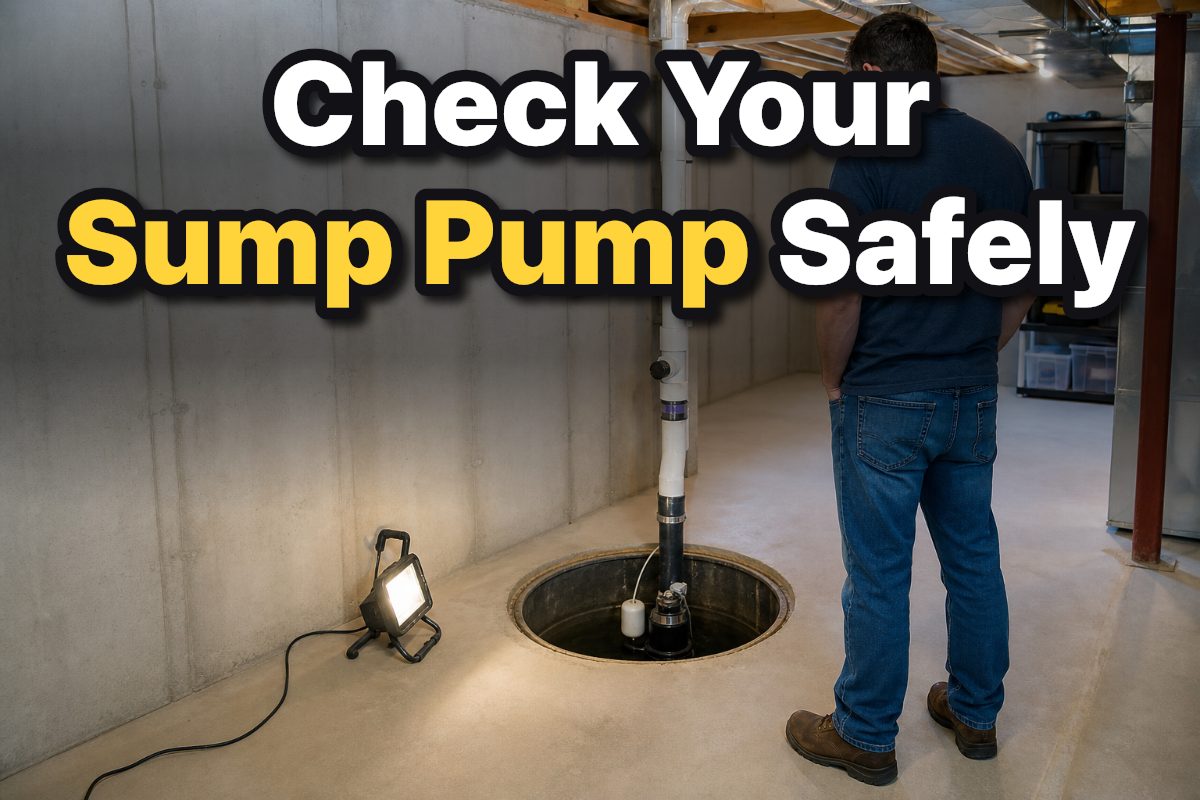
Answer: A useful sump pump inspection checks more than whether the motor makes noise. In a dry, routine maintenance situation, inspect the pit, float, intake, check valve, and discharge path, then restore power and add enough water to confirm the complete automatic cycle: the water rises, the float activates the pump, water is actually discharged, the level falls, and the pump shuts off normally.
- What a Sump Pump Does—and What It Cannot Guarantee
- When Should You Inspect and Test Your Sump Pump?
- Safety Comes Before Cleaning
- A Practical Sump Pump Inspection Checklist
- Step-by-Step: Inspect and Clean the Pump
- Inspect the Check Valve and Discharge Line
- Run a Complete Water Test After Reconnecting Power
- Check Where the Water Goes Outside
- Battery Backup: Test the Backup, Not Just the Primary Pump
- What to Do When the Pump Does Not Pass the Test
- Common Sump Pump Maintenance Mistakes
- A Simple Maintenance Routine for Different Homeowners
- FAQ
- Key Takeaways
Maintenance schedules vary by pump model, so there is no single inspection interval that applies to every residential sump pump. Follow the owner's manual for your unit, and consider an additional functional check before periods of heavy rain or seasonal high water.
What a Sump Pump Does—and What It Cannot Guarantee
A sump pump is part of a foundation drainage system. Water collected around or beneath a basement or crawlspace is directed into a sump pit, or basin, located at a low point. The pump then moves that water through a discharge pipe to an appropriate location outside the home.
The Building America Solution Center, supported by the U.S. Department of Energy, describes foundation drainage systems that direct collected water into a sump pit and pump it away from the building. The goal is to keep collected groundwater and drainage water from rising into the occupied space.
A working sump pump reduces one source of basement water risk, but it does not guarantee that a basement will never flood. FEMA guidance notes that a primary pump can fail, electrical power can be lost, or incoming water during extreme rainfall can exceed the system's pumping capacity.
That distinction matters when inspecting a system. The question is not simply, Does the pump turn on? You need to know whether the entire drainage path works—from water entering the basin to water leaving the property without immediately flowing back toward the foundation.
When Should You Inspect and Test Your Sump Pump?
The manufacturer's instructions for your exact pump should determine the maintenance schedule. Recommendations are not identical across brands and models, so a universal rule such as “every sump pump must be serviced twice a year” is too broad.
For example, the Liberty Pumps 240-Series guidance cited for this article specifies a monthly functional water test when the pump has not otherwise operated, quarterly inspection of corrosion or wear, float operation, check-valve operation, and pit debris, and annual basin inspection and cleaning. These intervals apply to that referenced product guidance and should not be treated as a universal schedule for every sump pump. Superior Pump guidance also uses different intervals for certain maintenance items, including the anti-airlock feature on applicable models.
Local flood-preparedness guidance also supports checking the pump before it is likely to be needed. Guidance from Edina, Minnesota, recommends checking sump pumps regularly, particularly around early spring and before heavy rain is forecast.
- Use the owner's manual first: Follow the schedule and cleaning procedure specified for your pump model.
- Before heavy rain: A functional water test can reveal a stuck float, blocked discharge, or failed pump before incoming water increases.
- During seasonal preparation: Inspect the basin and exterior discharge route when preparing the home for wetter weather.
- After suspected trouble: Investigate unusual operation, failure to start, failure to stop, or poor water removal rather than assuming the motor itself is the only possible problem.
Water around a foundation can also come from sources a sump pump cannot correct. If you suspect a separate plumbing leak, checking for a hidden water leak before opening a wall is a separate maintenance topic to consider rather than assuming every moisture problem originates with the sump system.
Safety Comes Before Cleaning
Routine sump pump maintenance should be performed only under dry, controlled conditions. Water and electrical equipment create a serious hazard, and pump manufacturers instruct users to disconnect electrical power before handling or adjusting the pump system.
Before opening the basin or reaching toward the pump, disconnect the pump from its power source according to the manufacturer's instructions. Do not assume that a pump is safe to touch simply because it is not running at that moment.
Do not treat an already flooded basement as a routine maintenance job. CDC and FEMA safety guidance warns about electrical, contaminated-water, and structural hazards in flooded homes. Do not enter flooded areas unless electrical safety has been established.
If floodwater is already present, avoid improvising with powered equipment. CDC guidance says gasoline-powered generators, pumps, and similar equipment should not be operated inside a home, basement, or garage, or within 20 ft of doors, windows, or vents where carbon monoxide could enter the building.
If you cannot safely isolate electrical power, cannot safely reach the pump, or see damaged electrical components, stop the DIY inspection and use a qualified professional.
A Practical Sump Pump Inspection Checklist
You do not need to dismantle the entire pump to perform a useful inspection. In fact, unnecessary disassembly can create problems because pump construction and manufacturer-approved service procedures vary by model.
| Component | What to Check | Why It Matters |
|---|---|---|
| Sump pit or basin | Rocks, sediment, debris, or objects that could interfere with the pump | Debris can restrict the inlet or obstruct moving components. |
| Float switch | Free movement through its normal travel without contacting the basin, piping, or debris | A restricted float may prevent automatic starting or stopping. |
| Intake or screen | Visible blockage and buildup | Restricted intake can reduce water flow into the pump. |
| Pump condition | Visible corrosion, wear, damage, or loose components | Physical deterioration can indicate a need for further service. |
| Check valve | Evidence that discharged water is flowing back into the basin | The valve is intended to prevent water in the discharge pipe from returning to the pit. |
| Discharge line | Obstruction, restriction, damage, or freezing conditions | A running pump cannot remove water effectively through a blocked line. |
| Outdoor discharge point | Water moves away from the foundation rather than returning toward it | Recirculated water can return to the foundation drainage system. |
| Backup system | Functional operation according to its manual | A backup is useful only if it works when the primary system or power source fails. |
Step-by-Step: Inspect and Clean the Pump
1. Disconnect power before handling the system
Start with the basin area dry and safely accessible. Disconnect electrical power before touching, adjusting, or cleaning the pump or components inside the basin. Follow the manufacturer's procedure for your installation rather than relying on a generic wiring method.
2. Open the basin and inspect before removing anything
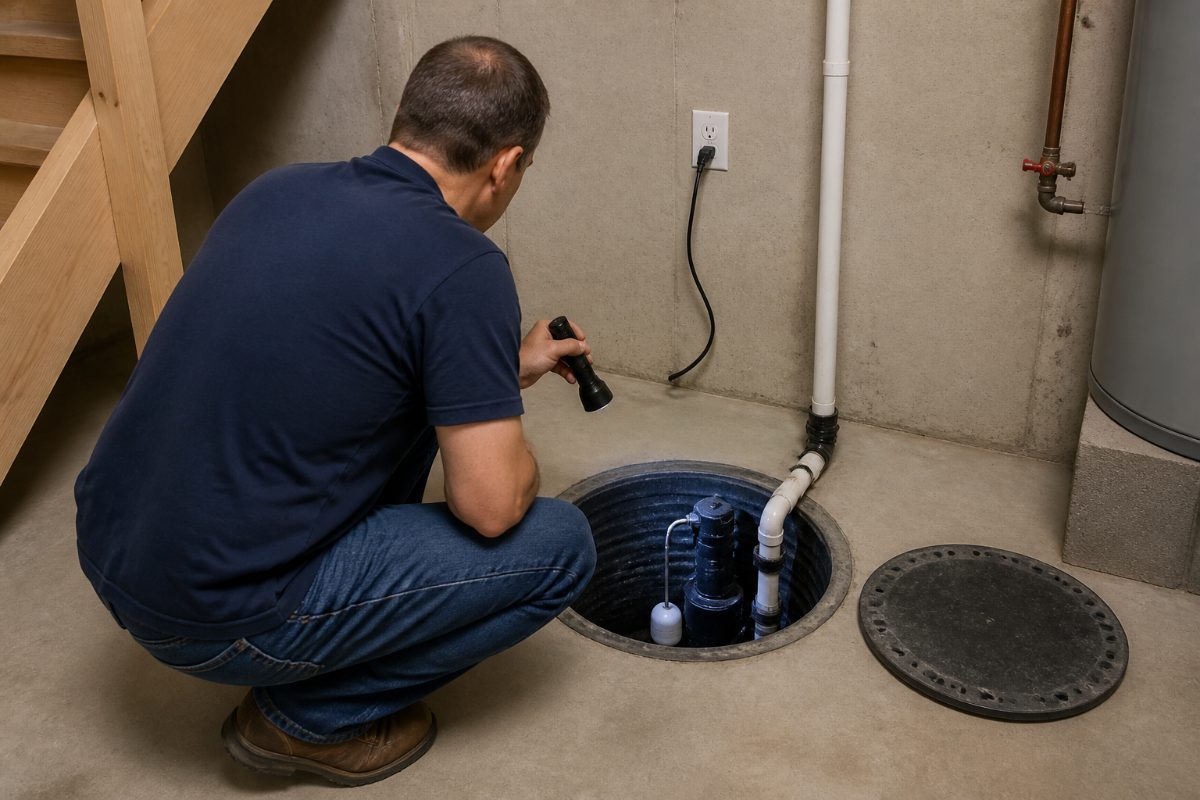
Look into the sump pit with adequate lighting. Check for stones, sediment, and other debris that could obstruct the pump or float. Liberty Pumps maintenance guidance specifically identifies debris, rocks, and other objects capable of jamming a pump as inspection items.
Do not immediately pull the pump apart. First note where the float moves, how the discharge pipe is arranged, and whether anything in the basin could interfere with normal operation.
3. Remove loose debris from the basin
Remove accessible debris that could reach the intake or interfere with the float. Basin cleaning should focus on restoring a clear operating area rather than introducing chemicals that have not been approved for the pump.
No universal bleach, vinegar, detergent, or other chemical-cleaning recipe was established by the manufacturer and government sources used for this guide. If the basin needs more than basic debris removal, check the pump manufacturer's cleaning instructions before using a chemical product.
4. Check the float through its normal range
The float switch tells an automatic sump pump when the water has risen high enough to start pumping. Depending on the design, the float may move vertically or use another manufacturer-specific mechanism.
Move the float only as permitted by the owner's manual and confirm that it is not trapped by the basin wall, discharge piping, power cord, or debris. Manufacturer guidance emphasizes that the float needs to travel freely through its operating range and return toward the off position without obstruction.
A pump that can run perfectly when manually activated can still fail during a storm if the float cannot trigger it automatically.
5. Inspect and clean the intake or screen
Look for debris around the pump intake. Superior Pump maintenance guidance includes cleaning the intake screen and pump base on applicable models. Any removable component should be handled according to the instructions for that exact pump.
Avoid assuming that every pump can be dismantled in the same way. Impeller access and field-service procedures vary, and unauthorized disassembly may affect some manufacturers' warranty coverage. If the manual does not describe homeowner access to the impeller, do not improvise a disassembly procedure.
6. Check model-specific airlock features
Some sump pumps use an anti-airlock or air-bleed hole. Manufacturer maintenance information for applicable pumps calls for inspecting and cleaning this feature because blockage can interfere with operation.
This is a model-specific step. Do not drill a new hole, enlarge an existing opening, or assume that a hole on one pump belongs in the same location on another. Consult the owner's manual to identify whether your pump has an anti-airlock feature and how the manufacturer says to maintain it.
Inspect the Check Valve and Discharge Line
The pump itself is only one part of the system. Water also has to travel through the discharge piping and remain outside the basin after it has been pumped.
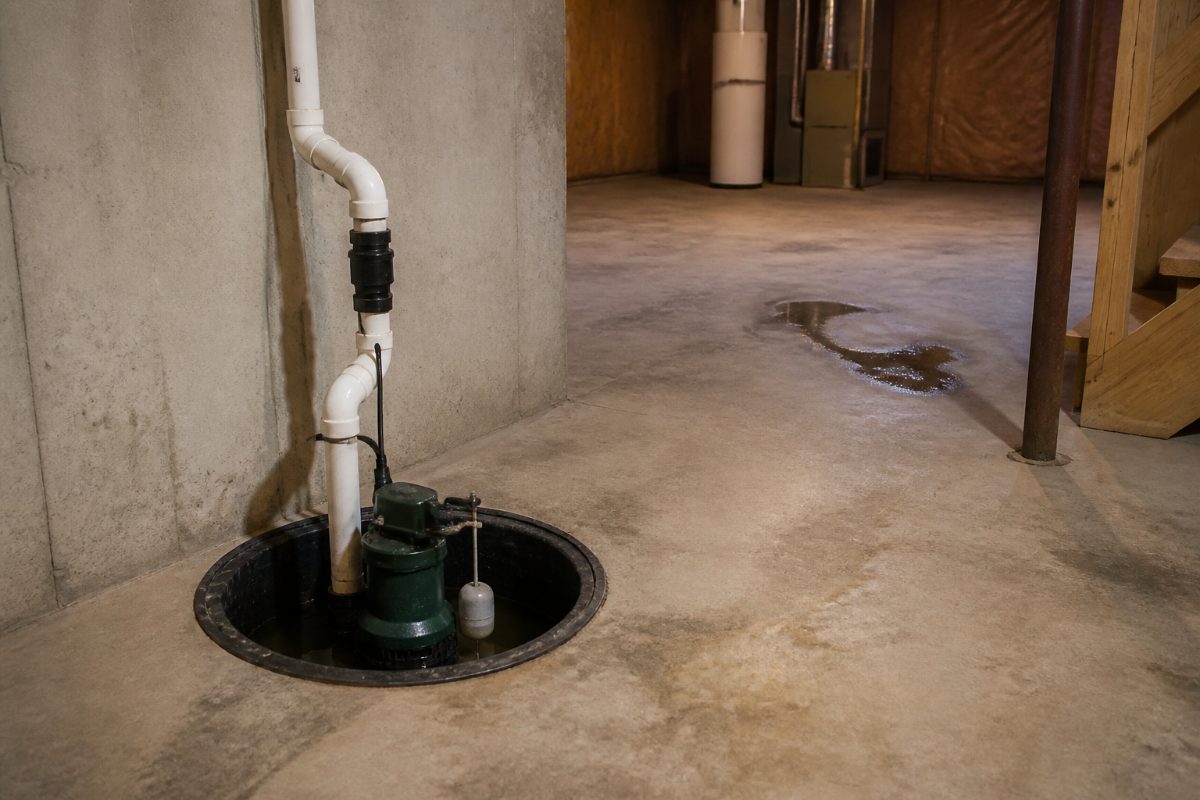
A check valve is a one-way valve intended to stop water sitting in the discharge pipe from draining back into the sump pit. FEMA information describes this type of backflow prevention in sump systems, while manufacturer maintenance guidance includes checking that the valve operates properly.
After a test cycle, watch what happens when the pump stops. Some water movement can depend on the system design, but repeated return of a substantial amount of discharged water into the basin can indicate that the check valve or discharge arrangement needs investigation.
Next, follow the accessible discharge line toward the exterior. Manufacturer troubleshooting information identifies foreign material in the line and, in cold conditions, ice blockage as possible causes of poor pumping performance.
Do not automatically force a hose or cleaning tool into discharge plumbing. The appropriate method depends on the piping arrangement, valve installation, and pump manufacturer's instructions. If a blockage cannot be safely located or cleared, professional service is the safer choice.
Run a Complete Water Test After Reconnecting Power
Once inspection and permitted cleaning are complete, replace or secure components as required by the manufacturer, make sure the float has a clear path, and restore electrical power. Then add enough clean water to the sump pit to activate the automatic system.
The purpose is not to measure an arbitrary bucket-emptying time. The reliable test described in government and manufacturer guidance is functional: add enough water to activate the pump and observe the complete operating cycle.
- Add water to the pit while observing the rising level.
- Confirm that the rising water causes the float mechanism to activate the pump automatically.
- Confirm that water is actually leaving through the discharge system rather than merely hearing the motor run.
- Watch the water level fall as the pump operates.
- Confirm that the pump switches off automatically after the water reaches its normal operating level.
- Watch for water returning through the discharge pipe after shutdown, which may justify checking the check valve.
A pump that hums or runs without lowering the water level has not passed this test. Possible causes identified in manufacturer troubleshooting materials include a restricted intake, obstruction around the impeller, a blocked or restricted discharge line, check-valve problems, or a pumping requirement beyond the unit's capability.
Likewise, a pump that starts but never shuts off needs attention. Manufacturer troubleshooting information identifies heavy continuous water inflow and a float stuck in the on position among possible causes.
Check Where the Water Goes Outside
While the pump is running, inspect the exterior discharge point if it is safe and accessible. The water should be directed to an appropriate location where it drains away rather than immediately flowing back toward the foundation.
Nevada emergency-management guidance recommends discharging sump water several feet away in a location with suitable drainage and avoiding an arrangement that sends the water back toward the home. There is no single nationwide distance established by the sources used here, so avoid treating a specific number as a universal rule.
The correct discharge arrangement depends on site grading, soil, freezing conditions, and local plumbing and stormwater requirements. If water visibly travels back toward the house, the exterior drainage problem should be addressed instead of asking the pump to repeatedly move the same water.
Do not assume a sanitary sewer, floor drain, or septic system is an acceptable destination. Nevada emergency-management guidance warns that sump discharge into a sanitary sewer can overload the system and may be prohibited locally, while discharge into a septic system can create problems for the drain field. Check local requirements before changing the discharge route.
For homes where exterior openings are another source of moisture, inspecting and resealing drafty windows before winter is a separate maintenance task that can help identify deteriorated window seals. It does not replace correcting foundation drainage or sump system problems.
Battery Backup: Test the Backup, Not Just the Primary Pump
Power failure is a major weakness of an ordinary electric sump pump. FEMA identifies power loss, primary-pump failure, and rainfall that exceeds pump capacity as scenarios that can contribute to basement flooding. Ready.gov also recommends considering a battery-equipped sump pump as part of flood preparation.
If your system already includes a battery backup or secondary pump, do not assume its presence means it is ready. Manufacturer instructions for backup systems call for periodic inspection and functional testing.
For applicable Liberty Pumps backup systems, testing includes activating the backup pump with water to verify that it removes water from the basin and also confirming normal primary-pump operation. Follow the manual for your specific backup controller, battery, charger, and pump because the test procedure can differ by system.
A backup pump also does not make the home flood-proof. It provides redundancy for certain failure scenarios; it does not eliminate the possibility that water inflow could exceed the combined system's ability to remove it.
What to Do When the Pump Does Not Pass the Test
| What You Observe | Possible Area to Check | Next Step |
|---|---|---|
| Pump does not start as water rises | Power, float movement, automatic switch, or pump fault | Stop the test and follow the manufacturer's troubleshooting procedure. Use professional service if electrical diagnosis is required. |
| Pump runs but water level barely falls | Intake, impeller area, discharge restriction, check valve, or pump capability | Disconnect power before physical inspection and check only owner-serviceable components. |
| Pump continues running after the level falls | Float obstruction or unusually high continuing inflow | Check whether the float can return freely to its off position. |
| Water quickly returns after shutdown | Check valve or discharge arrangement | Inspect the accessible valve and piping according to the system manual. |
| Exterior discharge flows back toward the house | Discharge location, grading, or drainage | Correct the drainage path in accordance with local requirements. |
| Backup pump does not operate | Backup pump, battery, controller, or associated system | Follow the backup-system manual rather than relying on the primary pump alone. |
There is no well-supported universal replacement age for every residential sump pump in the research used for this article. Avoid replacing a pump solely because it has crossed an arbitrary age threshold, and do not assume an older pump is reliable simply because it worked during the previous storm.
Physical damage, persistent failure to complete a normal test cycle, electrical problems, or performance that cannot be restored through manufacturer-approved maintenance are better reasons to seek professional diagnosis. The appropriate repair-versus-replacement decision depends on the pump and the failure involved.
Common Sump Pump Maintenance Mistakes
Assuming noise means the pump works
A motor sound proves very little about the complete system. The test is successful only when rising water activates the pump, water is removed, the level falls, and the pump shuts off normally.
Ignoring the float
The float needs more than a small amount of movement. It must be able to travel through its required operating range without catching on the basin, pipes, cords, or debris.
Cleaning while the pump remains powered
Manufacturer safety instructions require disconnecting power before handling or adjusting pump components. Do the physical inspection with power disconnected, then reconnect it only when you are ready for the controlled functional test.
Taking apart the impeller without checking the manual
Some pumps provide owner-accessible cleaning procedures, while others should not be field-disassembled in the same way. Use the procedure for the exact model rather than a generic online disassembly method.
Sending discharge water to the wrong place
Moving water out of the pit is only half the job. The discharge needs to comply with local rules and send water to an appropriate location away from the foundation rather than into an unsuitable sewer or septic connection.
Maintaining the pump but ignoring the rest of the house
FEMA flood-risk guidance treats drainage as a broader system. Gutters, downspouts, grading, exterior drainage, and appropriate backflow measures can all affect how much water reaches the foundation.
If you are doing a broader exterior maintenance inspection at the same time, checking exterior door weatherstripping can be handled separately as part of weatherproofing the home.
A Simple Maintenance Routine for Different Homeowners
If you are new to home maintenance: Concentrate on safe visual inspection, keeping debris away from the float and intake, checking the exterior discharge point, and performing the manufacturer-approved water test. Avoid opening electrical components or dismantling the pump unless the manual clearly identifies the procedure as homeowner maintenance.
If your pump rarely runs: Do not assume inactivity proves the system is healthy. A functional water test is particularly useful because it verifies automatic operation before groundwater is actually threatening the basement.
If your pump runs frequently: Pay attention to whether discharged water is returning toward the foundation, whether the check valve appears to allow water back into the pit, and whether there is a continuing source of water around the property. Frequent operation can have causes beyond the pump itself.
If your area is expecting heavy rain: Test the system before conditions deteriorate, while the basement is still dry and the equipment can be approached safely. Also check the exterior discharge route and, if installed, the backup system.
If the basement is already flooded: Do not use this routine-maintenance checklist as a flood-entry procedure. Follow current government flood-safety guidance and establish electrical and structural safety before entering or working in the area.
FAQ
How do I know whether my sump pump is actually working?
Add enough water to the pit to trigger automatic operation. Confirm the full sequence: the float rises, the pump starts, water is actually discharged, the pit level falls, and the pump automatically shuts off at its normal operating level. Hearing the motor alone is not enough.
How often should I test my sump pump?
Follow the maintenance schedule in the owner's manual because manufacturer recommendations vary. As one model-specific example, the Liberty Pumps 240-Series guidance cited for this article specifies a monthly functional water test when the pump has not otherwise operated, quarterly inspection of items including the float, check valve, corrosion, wear, and pit debris, and annual basin inspection and cleaning. These intervals should not be generalized to every pump. Local flood-preparedness guidance also recommends checking the pump before heavy rain and around seasonal high-water periods.
Why is my sump pump running but not removing much water?
Manufacturer troubleshooting information lists possible causes such as a clogged intake or impeller area, a restricted discharge line, check-valve problems, or pumping conditions beyond the unit's capability. Disconnect power before inspecting physical components and follow the model-specific manual.
Do I need a battery-backup sump pump?
FEMA identifies power outages and primary-pump failure as flood-risk scenarios, and Ready.gov recommends considering a battery-equipped sump pump. Whether a backup is appropriate for a particular house depends on its water exposure, system design, and risk tolerance. A backup also requires testing and maintenance.
Can a sump pump guarantee that my basement will not flood?
No. FEMA guidance recognizes that extreme water inflow can exceed pump capacity and that an ordinary electric pump cannot operate normally during a power failure. Foundation drainage, exterior water management, backup measures, and the condition of the rest of the home all contribute to flood resilience.
Key Takeaways
- Test the complete cycle: Confirm automatic startup, actual water removal, falling water level, and automatic shutdown.
- Disconnect power before cleaning: Physical inspection and maintenance should not be performed on an energized pump.
- Keep the float clear: It must move freely without contacting debris, pipes, cords, or the basin wall.
- Inspect the whole drainage path: The intake, check valve, discharge line, and outdoor discharge point matter as much as the pump motor.
- Follow the model manual: Cleaning procedures and maintenance intervals are not identical for every sump pump.
- Test backup equipment: A battery or secondary pump is useful only if the backup system operates when needed.
- Do not improvise during flooding: An already flooded basement presents electrical, contamination, and structural hazards that are different from routine maintenance.
A well-maintained sump pump is one part of basement flood prevention, not a guarantee against every flood. A controlled water test, a clear float and intake, an unobstructed discharge route, and attention to backup power give you a much better picture of whether the system is ready before the next heavy rain.
References
- Drain or Sump Pump Installed in Basements or Crawlspaces | Building America Solution Center
- OEM NV +2 캐시 카운티
- Resources | Superior Pump
- Liberty Pumps 240 Series Sump Pump Installation & Operation Manual | ManualsLib
- GovInfo
- Manuals+
- FEMA +2 FEMA
- Floods | Ready.gov
Information in this post was checked as of 2026-09-25. Policies and prices may change, so please verify important details with official sources.


Comments
Post a Comment