How to Tell If Your Attic Needs More Insulation

Last updated: 2026-09-26 · Checked against 7 sources
Key Takeaways
- How Do I Know If My Attic Needs More Insulation?
- How Can I Check Attic Insulation Myself?
- What R-Value Does My Attic Need?
- How Do I Estimate the R-Value of Existing Attic Insulation?
- Should I Air Seal Before Adding Attic Insulation?
- Can Uneven Insulation Mean I Need More?
- What Should I Check Before Adding New Insulation?
- Can More Insulation Block Attic Ventilation?
- What If I Find Vermiculite Insulation?
- Can I Put New Insulation Over Old Insulation?
- Are High Energy Bills or Ice Dams Proof of Poor Insulation?
- When Is a Professional Home Energy Audit Worth Considering?
- Is There a Federal Tax Credit for Attic Insulation in 2026?
- Is Weatherization Assistance Still Available in 2026?
- A Practical Attic Insulation Decision Checklist
- Common Attic Insulation Mistakes to Avoid
- Frequently Asked Questions
- Key Summary
- If attic floor joists are easy to see because insulation is level with or below them, ENERGY STAR says the attic likely needs additional insulation.
- Do not judge insulation by thickness alone; the useful performance measure is R-value, and ENERGY STAR retrofit recommendations vary by climate zone and existing insulation.
- Check and seal attic air leaks before adding insulation, because insulation alone does not stop all air movement between the house and attic.
- Wet insulation, mold or rot, blocked ventilation, and vermiculite are reasons to stop and address the underlying condition before adding more insulation.
- For insulation placed in service in 2026, the federal Energy Efficient Home Improvement Credit that applied through 2025 is no longer available.
Wondering how to tell if your attic needs more insulation? A useful first check is surprisingly simple: look across the attic floor and see whether the floor joists are clearly visible above or through the insulation. ENERGY STAR says insulation that is level with or below the joists is a sign that adding insulation may be appropriate, while insulation that already covers the joists evenly may not provide the same economic case for adding more.
That visual check is only the beginning. A good attic assessment also considers insulation depth, R-value, low spots, air leakage, moisture, and ventilation, because adding material without addressing those conditions can leave the real problem unresolved.
How Do I Know If My Attic Needs More Insulation?
The clearest visual clue is exposed attic floor joists. ENERGY STAR advises that if you can easily see the joists because the insulation is level with them or lower, you should consider adding more insulation.
Do not inspect only the easiest area near the attic access. Look across accessible portions of the attic for uneven coverage. An attic can appear well insulated in the center while having thinner areas or low spots closer to the eaves.
Insulation that rises above the joists and appears evenly distributed is a different situation. ENERGY STAR notes that if the joists are sufficiently covered and the insulation is distributed evenly, adding more insulation may not be economically worthwhile. You should still consider R-value and your climate zone rather than assuming that appearance alone proves the attic has reached the recommended level.
Signs inside the house that justify an attic check
ENERGY STAR identifies several common symptoms associated with attic insulation and air-sealing projects. These symptoms are useful warning signs, but they are not proof that insulation is the only cause.
- Rooms that feel drafty
- Hot or cold ceilings or rooms
- Noticeable temperature differences between rooms
- High heating or cooling bills
- Ice dams during winter
For example, an uncomfortable room does not automatically mean that you should add insulation. Air leakage and other home-energy issues can produce similar symptoms, so the attic insulation level and possible air leaks should be inspected together. If comfort problems also involve your heating or cooling equipment, how often you should service your HVAC system provides a separate maintenance perspective without assuming the attic is the sole cause.
How Can I Check Attic Insulation Myself?
If the attic is safely accessible, you can perform a basic visual inspection and measure the insulation depth. ENERGY STAR's DIY guidance includes using a flashlight, eye protection, gloves, and a protective mask while inspecting an attic.
Move only where it is safe to do so. ENERGY STAR warns homeowners to step on joists or truss chords rather than exposed ceiling drywall or insulation, because stepping between structural members can result in falling through the ceiling.
- Look across the accessible attic floor before disturbing the insulation.
- Check whether floor joists are clearly visible or already covered by insulation.
- Inspect multiple accessible areas rather than measuring a single convenient location.
- Look for low spots or uneven distribution.
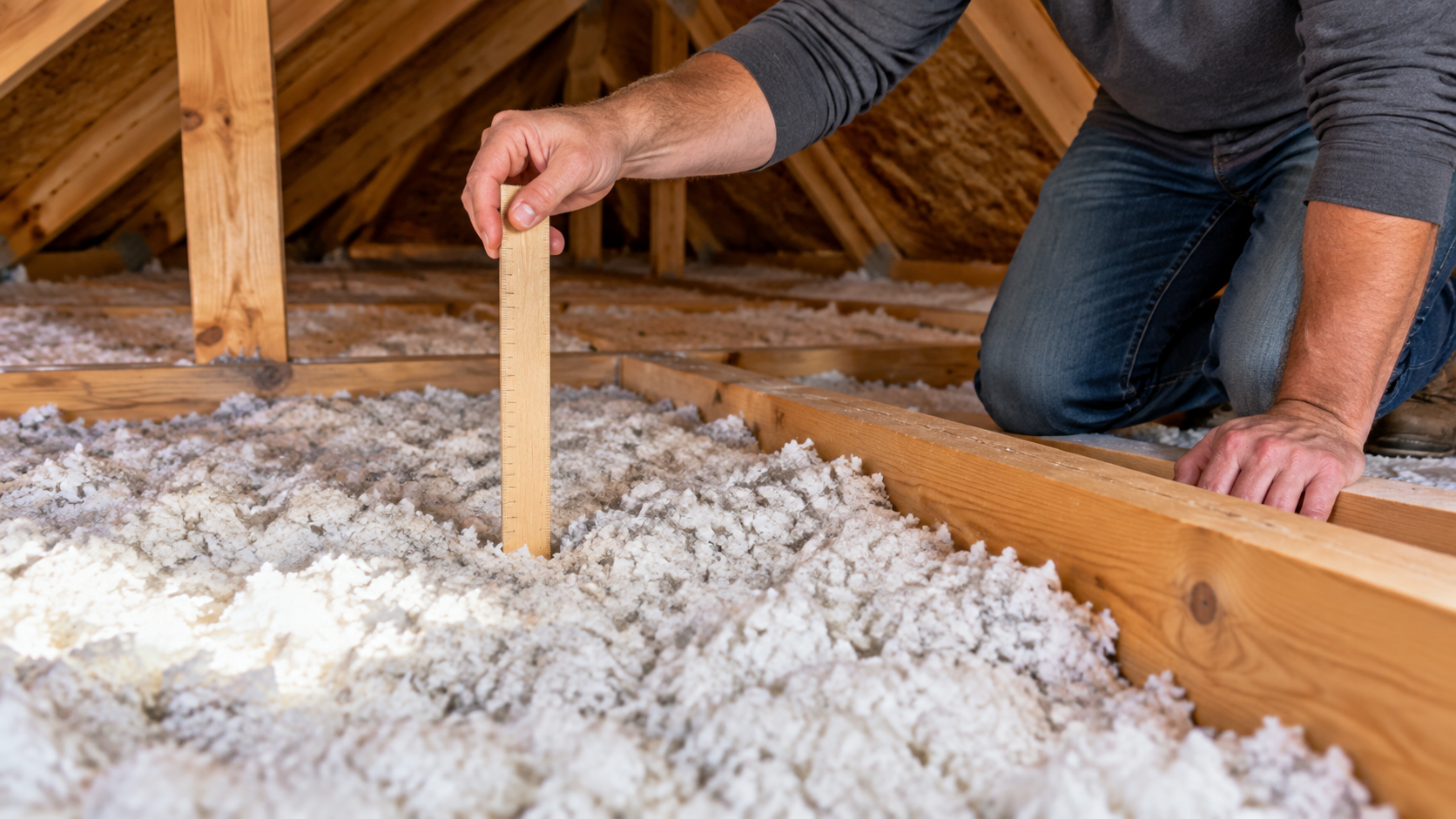
- Measure the insulation depth with a ruler or tape measure where it can be done safely.
- Look for signs of air movement, moisture, ventilation problems, or unusual insulation materials before deciding to add anything.
A depth measurement gives you useful information, but it should not become the final answer. Different insulation materials can provide different thermal resistance for the same thickness, so the next step is to translate the observation into an approximate R-value and compare it with appropriate guidance.
What R-Value Does My Attic Need?
R-value is a measure of how strongly insulation resists heat flow; a higher R-value indicates greater resistance to heat movement. ENERGY STAR's current retrofit guidance does not use one universal attic R-value for every U.S. home.
As checked for this article on September 26, 2026, ENERGY STAR's retrofit table is based on the 2021 IECC Residential Provisions, Chapter 4, Table R402.1.3. Its recommendations depend on the IECC climate zone and whether the attic is uninsulated or already contains about 3–4 inches of insulation.
| IECC Climate Zone | Uninsulated Attic | Existing 3–4 in. Insulation |
|---|---|---|
| Zone 1 | R-30 | R-25 |
| Zone 2 | R-49 | R-38 |
| Zone 3 | R-49 | R-38 |
| Zones 4A/4B | R-60 | R-49 |
| Zones 4C, 5, 6 | R-60 | R-49 |
| Zones 7–8 | R-60 | R-49 |
This table explains why advice that every attic simply needs R-38 can be misleading. ENERGY STAR also has general DIY guidance describing R-38, or roughly 10–14 inches, as a recommended level for most attics, but its more detailed retrofit table varies by climate and existing insulation and reaches R-60 in several zones.
The practical approach is to treat R-38 as a general rule of thumb found in ENERGY STAR guidance rather than a universal target. Identify the applicable climate zone, assess how much insulation is already present, and then use the more specific retrofit guidance for the home.
How Do I Estimate the R-Value of Existing Attic Insulation?
For a quick field estimate, ENERGY STAR says common insulation materials such as fiberglass, cellulose, and mineral wool are roughly R-3 to R-3.5 per inch. Its simple estimating method is to multiply insulation depth in inches by 3.
This calculation is only an estimate. It should not be presented as the exact R-value of a specific product because actual insulation performance depends on the material and product.
Simple screening method: Measure accessible insulation depth, use depth in inches multiplied by 3 as a rough estimate, and then compare the result with the ENERGY STAR retrofit recommendation for the applicable climate zone and existing condition.
This distinction between depth and R-value matters when comparing attics. Two insulation installations that look similarly thick are not necessarily identical in thermal performance. Thickness is something a homeowner can observe easily, while R-value is the performance measure used to evaluate thermal resistance.
Should I Air Seal Before Adding Attic Insulation?
Yes. ENERGY STAR recommends completing attic air sealing before adding attic insulation, rather than simply covering air leaks with another layer of insulation.
Potential leakage locations include areas where walls meet the attic floor, dropped soffits, kneewalls, and penetrations for plumbing or wiring. Dirty insulation can also be a clue that air has been moving through the insulation.
Air sealing and insulation perform related but different jobs. Insulation resists heat transfer, while sealing leakage paths helps control unwanted air movement. This is why an attic can contain a substantial amount of insulation and still have comfort or energy problems if significant leakage paths remain.
Drafts around exterior windows can also deserve a separate inspection rather than automatically being blamed on the attic. For that part of the building envelope, see how to inspect and reseal drafty windows before winter.
Can Uneven Insulation Mean I Need More?
Yes. An attic should not be judged from its deepest section alone, because ENERGY STAR specifically advises checking for low spots and uneven insulation coverage.
Imagine an attic where the center has insulation well above the joists but areas toward the eaves are visibly thin. Calling the entire attic adequately insulated based only on the center measurement would miss the weaker areas. Check multiple accessible locations and record the condition rather than relying on a single depth measurement.
What Should I Check Before Adding New Insulation?
Before adding material, inspect for moisture, damaged framing, unsafe conditions, and ventilation problems. ENERGY STAR advises considering a contractor rather than continuing a straightforward DIY insulation project when conditions such as wet insulation, mold or rot, improper exhaust venting, ventilation deficiencies, or knob-and-tube wiring are present.
| What You Find | What It Means for the Project |
|---|---|
| Wet or damp insulation | Do not simply cover it with new insulation; investigate and address the moisture source first. |
| Moldy or rotted rafters or floor joists | Treat the underlying moisture or building condition as the priority rather than adding insulation. |
| Bathroom, kitchen, or dryer exhaust terminating in the attic | Address the venting condition before treating the project as a routine insulation top-up. |
| Insufficient attic ventilation | Preserve or correct the ventilation path instead of blocking openings with insulation. |
| Knob-and-tube wiring | ENERGY STAR lists this as a condition for which homeowners should consider professional assistance. |
| Vermiculite insulation | Do not disturb it; EPA recommends assuming it may be contaminated with asbestos. |
Moisture is especially important because new insulation does not repair a roof leak or damaged framing. Covering a damp area can hide the visible symptom without correcting the cause.
Can More Insulation Block Attic Ventilation?
Yes, if it is installed incorrectly. ENERGY STAR specifically warns against covering soffit vents with insulation and recommends maintaining airflow near the eaves, including with rafter vents where appropriate.
According to ENERGY STAR guidance, appropriate attic ventilation can help reduce the risk of winter ice dams and can help attic heat and moisture escape during summer. The goal is therefore not to pack every visible cavity indiscriminately.
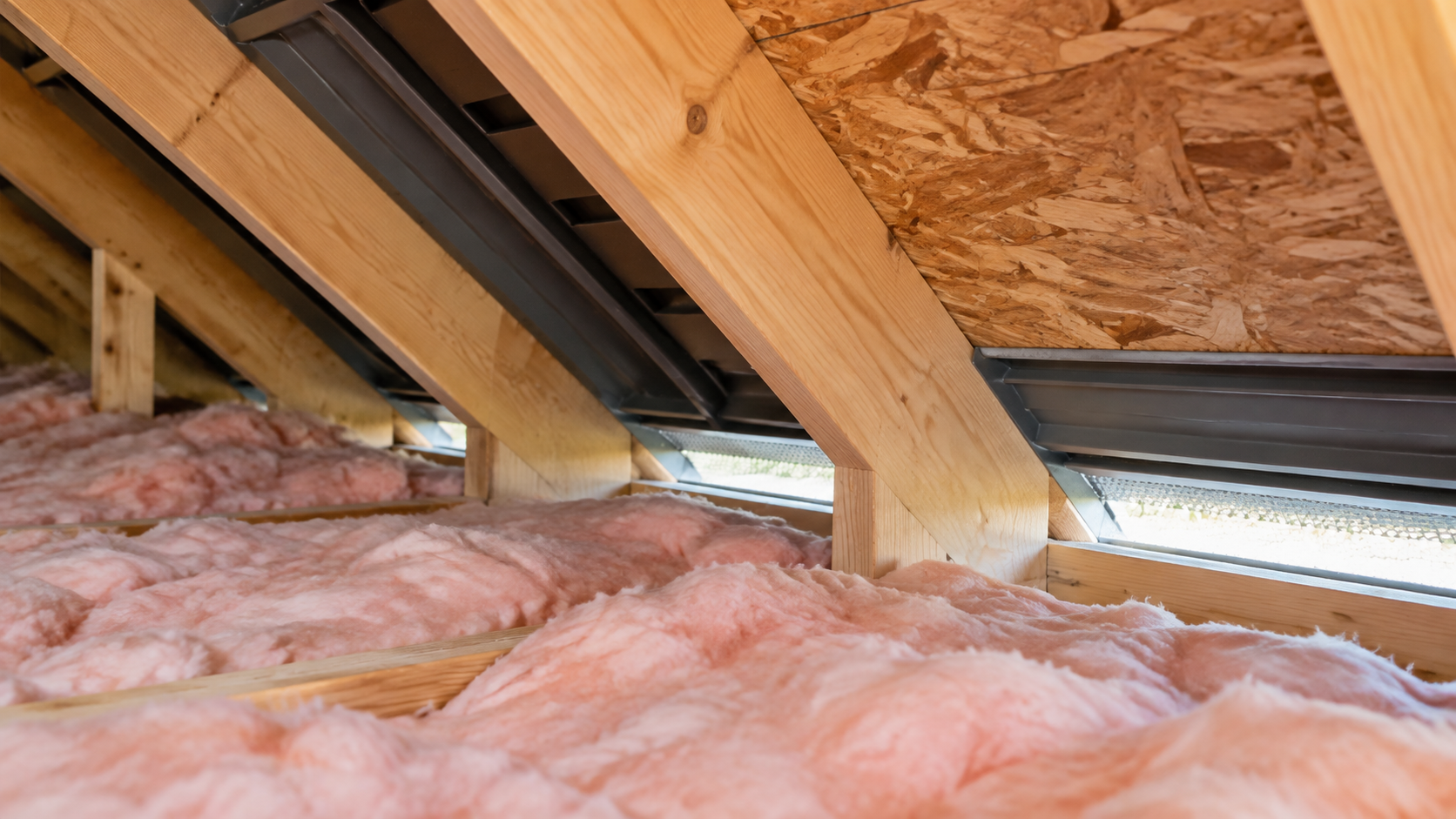
When inspecting insulation near the roof edge, look for whether the ventilation path remains open. If existing insulation is already blocking soffit ventilation, correct that condition rather than simply adding another layer over it.
What If I Find Vermiculite Insulation?
Do not treat vermiculite like ordinary fiberglass insulation. The U.S. Environmental Protection Agency recommends assuming vermiculite insulation may be contaminated with asbestos and avoiding disturbance.
This is a safety situation where conservative EPA guidance takes priority over a routine DIY insulation inspection. Do not dig through, move, or redistribute vermiculite merely to measure the insulation underneath it.
If removal is chosen, EPA recommends using a trained and accredited asbestos abatement contractor. A homeowner who encounters vermiculite should therefore stop treating the attic as a normal add-more-insulation project and follow current EPA asbestos guidance.
Can I Put New Insulation Over Old Insulation?
ENERGY STAR says new insulation does not necessarily have to be the same type as the existing insulation. For example, loose-fill can be added over existing fiberglass.
One specific detail matters when fiberglass batts are installed over loose-fill insulation: ENERGY STAR says the batts should be unfaced, meaning they should not have paper or foil facing. Existing conditions still need to be inspected first, because adding material over wet insulation or another unresolved problem is not the appropriate fix.
This means the decision has two separate parts. First determine whether additional R-value is appropriate; then determine how new insulation can be added without creating ventilation, moisture, or other installation problems.
Are High Energy Bills or Ice Dams Proof of Poor Insulation?
No. ENERGY STAR lists high heating and cooling bills and winter ice dams among common symptoms that can point toward attic insulation or air-sealing problems, but these signs are reasons to investigate rather than a stand-alone diagnosis.
The same caution applies to rooms that are unusually hot, cold, or drafty. Check the insulation level, distribution, and possible air leakage before deciding that buying more insulation is the solution.
Ice dams deserve a broader attic check because insulation, air leakage, and ventilation can all be relevant. Avoid reducing the diagnosis to a single measurement or symptom.
When Is a Professional Home Energy Audit Worth Considering?
A professional home energy audit can be useful when the source of comfort or energy problems is unclear. ENERGY STAR currently recommends professional energy audits as an option for obtaining a more complete assessment of a home's energy performance.
U.S. Department of Energy guidance describes blower-door testing and thermographic, or infrared, scanning as home-energy-assessment techniques. A blower door can be used to investigate air leakage, while infrared inspection can help identify temperature differences around building components such as walls, roofs, windows, and doors.
The DOE guide describing these techniques is older guidance, so it should be treated as an explanation of assessment methods rather than a source for current program rules. For current services, procedures, and qualifications in your area, check the latest official guidance or ask the energy professional what testing will actually be included.
Is There a Federal Tax Credit for Attic Insulation in 2026?
No federal Energy Efficient Home Improvement Credit applies to qualifying property newly placed in service after December 31, 2025, according to IRS information reviewed for this article as of September 26, 2026. Homeowners should not rely on older pages that describe the previous insulation credit as though it were still available for a 2026 installation.
For historical context only: during 2023 through 2025, qualifying insulation and air-sealing materials or systems could qualify for a credit equal to 30% of qualifying costs, subject to the relevant annual limit of up to $1,200. Labor costs for insulation and air sealing were excluded from that calculation. This previous credit does not apply to property placed in service after December 31, 2025, according to IRS Publication 530.
ENERGY STAR also identifies December 31, 2025 as the end date for the residential energy-efficiency federal tax credit described on its attic insulation information. Tax rules can change, so homeowners making later decisions should verify current IRS guidance rather than using an older insulation article or contractor advertisement as the final authority.
Is Weatherization Assistance Still Available in 2026?
The U.S. Department of Energy's Weatherization Assistance Program continues to operate in 2026. DOE issued Program Year 2026 Weatherization guidance on July 9, 2026.
The program serves eligible households through state and local administration, so specific eligibility rules and the improvements available to a particular household must be checked with the relevant local program. Do not assume that a specific insulation project or household automatically qualifies based only on general national information.
A Practical Attic Insulation Decision Checklist
A good decision comes from combining visual evidence, an approximate insulation assessment, and a safety check. The following order keeps the inspection focused on finding the cause before choosing a solution.
- Start with indoor symptoms. Note drafts, uncomfortable rooms, temperature differences, unusually high heating or cooling bills, or winter ice dams without assuming they prove an insulation problem.
- Look at the attic floor. If floor joists are clearly visible because insulation is at or below their height, additional insulation may be appropriate under ENERGY STAR guidance.
- Check several locations. Look for thin areas and low spots rather than judging the attic from its deepest section.
- Measure accessible insulation. Use the depth to make a rough R-value estimate where the insulation type is suitable for ENERGY STAR's simple estimation method.
- Compare with climate-zone guidance. Use the applicable ENERGY STAR retrofit R-value rather than assuming R-38 is correct everywhere.
- Inspect for air leakage. Check accessible penetrations, wall-to-attic-floor connections, dropped soffits, kneewalls, and clues such as dirty insulation.
- Check moisture and ventilation. Do not cover wet insulation, damaged framing, or blocked soffit ventilation with another layer.
- Identify safety concerns. Vermiculite, knob-and-tube wiring, mold, rot, and other unusual conditions can move the project beyond a routine DIY insulation job.
- Use a professional assessment when the evidence is unclear. A home energy audit can help investigate air leakage and heat-loss patterns rather than relying on guesswork.
Common Attic Insulation Mistakes to Avoid
The first common mistake is assuming that a certain number of inches is automatically enough. ENERGY STAR's general R-38 and roughly 10–14 inch guidance should not replace its more specific climate-zone retrofit recommendations.
The second mistake is adding insulation before air sealing. ENERGY STAR recommends addressing attic air leakage first, which prevents the new insulation layer from becoming a substitute for fixing accessible leakage paths.
The third mistake is blocking soffit vents while trying to improve coverage near the eaves. Insulation and ventilation need to work together, so the airflow path should remain open.
The fourth mistake is covering evidence of a different problem. Damp insulation, mold, rotted framing, or improper exhaust venting calls for investigation of the underlying condition rather than another layer of insulation.
The fifth mistake is walking on the wrong surface during inspection. ENERGY STAR advises moving on joists or truss chords and not stepping on exposed ceiling drywall or insulation.
Finally, do not disturb vermiculite to obtain a better measurement. EPA guidance is to assume vermiculite insulation may contain asbestos and leave it undisturbed.
Frequently Asked Questions
How do I know if my attic needs more insulation?
Look across the attic floor. ENERGY STAR says that if the floor joists are easily visible because insulation is level with or below them, adding insulation is appropriate to consider; also check for thin and uneven areas.
Is R-38 enough for an attic?
Not necessarily. ENERGY STAR uses R-38 as a general guideline in some DIY information, but its detailed retrofit recommendations vary by climate zone and existing insulation, with listed targets ranging from R-30 to R-60 for uninsulated attics.
Do I need to air seal before adding insulation?
ENERGY STAR recommends attic air sealing before adding insulation. Check accessible leakage locations such as penetrations, kneewalls, dropped soffits, and connections between walls and the attic floor rather than relying on insulation to stop air movement.
Can I install new insulation over existing insulation?
ENERGY STAR says different insulation types can be added over existing material in appropriate installations. If fiberglass batts are placed over loose-fill insulation, the batts should be unfaced rather than having paper or foil facing.
Is there a federal attic insulation tax credit in 2026?
The Energy Efficient Home Improvement Credit does not apply to property placed in service after December 31, 2025, according to IRS guidance reviewed as of September 26, 2026. Check current IRS information before making a tax decision because tax rules can change.
Key Summary
The most useful first sign that an attic may need more insulation is visible floor joists with insulation at or below joist height. After that visual check, measure accessible insulation, estimate its R-value, compare the result with climate-zone guidance, and inspect for low spots and air leaks.
Do not turn an insulation upgrade into a thickness-only project. Air sealing should be addressed first, soffit ventilation must remain open, and moisture or damaged framing should be corrected before new insulation is added.
Stop a routine DIY inspection if you encounter vermiculite or other conditions that require specialized attention. When the attic looks adequately insulated but the house still has unexplained comfort or energy problems, a professional home energy audit can provide a more complete assessment than simply adding another layer of insulation.
Related Posts
- How to Bleed Hot-Water Baseboard Radiators Safely
- How to Clean a Slow-Draining Floor Drain Safely
- How to Clean Refrigerator Condenser Coils Safely
References
- Adding Attic Insulation | ENERGY STAR
- Recommended Home Insulation R–Values | ENERGY STAR
- The Department of Energy's Energy.gov
- My attic has vermiculite insulation in it. Am I at risk? Should I take it out? | US EPA
- Instructions for Form 5695 (2025) | Internal Revenue Service
- Publication 530 (2025), Tax Information for Homeowners | Internal Revenue Service
- Weatherization Program Notice 26-1: Program Year 2026 Weatherization Grant Application Information | Departmen
Information in this post was checked as of 2026-09-26. Policies and prices may change, so please verify important details with official sources.


Comments
Post a Comment