Where Should a Sump Pump Discharge Line Drain?
Key Takeaways
- Direct sump pump discharge to an approved outdoor location that carries water away from the foundation.
- Choose an outlet where pumped water will not flow back toward your home, collect beside the foundation, or create a problem for a septic field.
- Do not assume a floor drain, sanitary sewer, or stormwater connection is allowed; local rules and approved connection points differ.
- Trace the discharge line to its outlet, then confirm the destination and any local requirements before changing the route.
Table of Contents
- Where should a sump pump discharge line drain?
- How to choose a safe outlet on your property
- Can a sump pump discharge into a sewer or floor drain?
- How should a sump pump discharge line work with a septic system?
- Is a dry well, stormwater line, or yard outlet the better choice?
- How to inspect an existing discharge line before changing it
- What should beginners and experienced homeowners do next?
- Frequently Asked Questions
- Key Takeaway: Identify the Destination First
A sump pump discharge line should drain outdoors to a location where the water can move away from the house without entering a prohibited sewer connection or interfering with a septic system. The right destination depends on the lot’s slope, the outlet’s route, and local rules; a pipe that simply ends outside may still leave water beside the foundation.
Where should a sump pump discharge line drain?
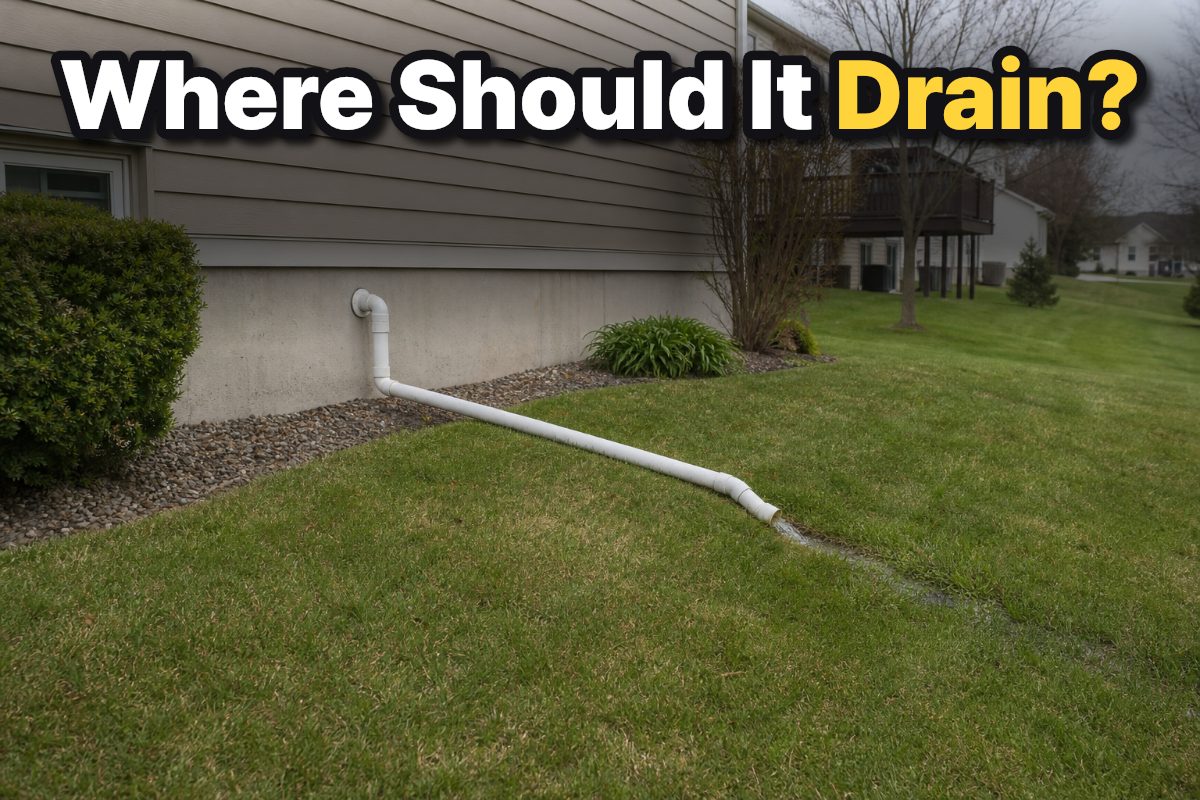
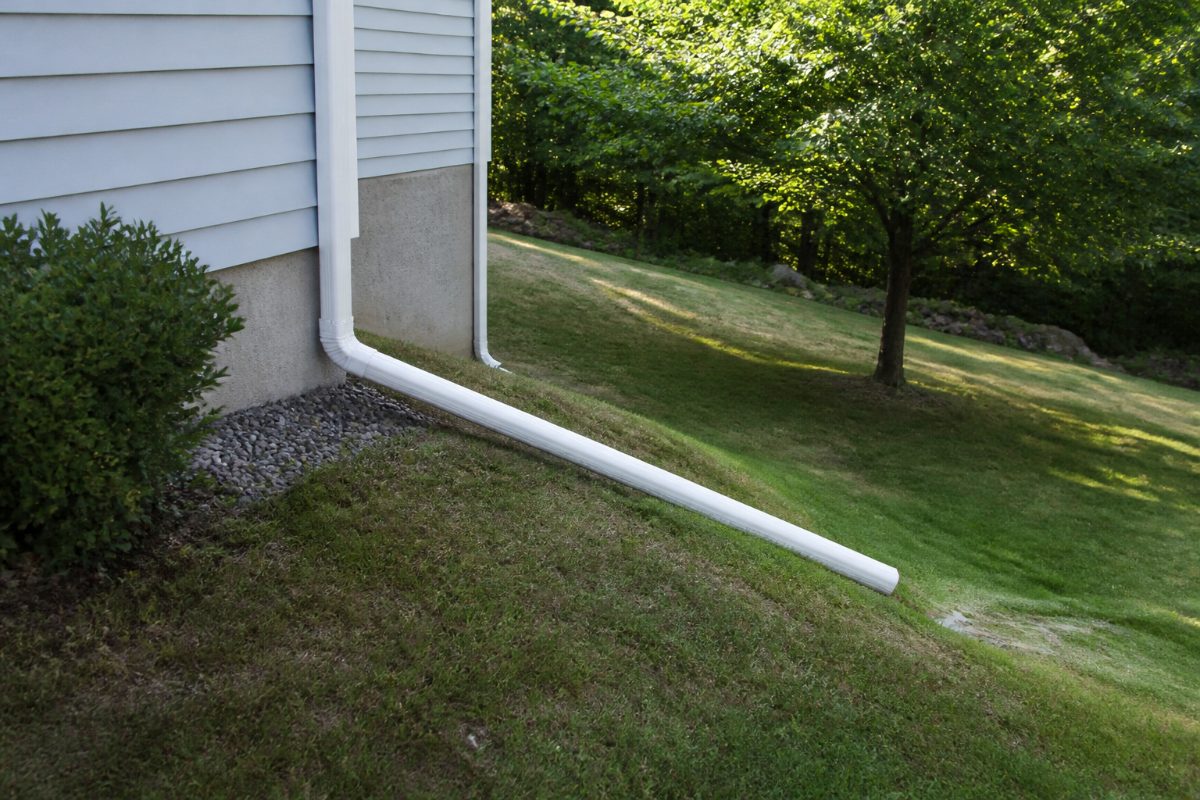
A sump pump discharge line should end at an approved outdoor location that moves water away from the foundation. The American Society of Home Inspectors (ASHI) describes discharge routes to a stormwater system or a downslope location, and notes that the line should carry water away from the home rather than terminate beside the foundation.
Think about the water’s path after it leaves the pipe. The outlet needs to release water where it can drain or disperse without running back toward the basement, pooling against the house, or being sent into a system that is not permitted to receive sump water.
A landscaping article from Ivan’s Landscaping recommends keeping the discharge at least 10 feet from the home. Treat that figure as a practical reference from that source, not as a universal code requirement: the local authority may set a different rule, and the lot’s grade and drainage conditions affect where water can go.
ASHI also notes that some homes discharge to a dry well or to a downslope location. These are different ways to manage water, and neither should be selected by name alone. The receiving area must suit the property and comply with local requirements.
How to choose a safe outlet on your property
Start by tracing the line from the sump pump to the place where water leaves the pipe. The outlet should be far enough from the foundation to avoid returning water to the basement, and the ground should direct runoff away from the home rather than toward its walls.
Look at the whole route, not only the pipe end. A line can discharge onto a lawn yet still send water toward the foundation if the grade slopes that way. Check the visible path during a pump cycle, then observe where the water travels and whether it remains near the house.
- Locate the pipe’s outdoor endpoint and identify whether it is above ground, buried, or connected to another drainage feature.
- Follow the ground’s slope from the outlet. Note whether water can move away from the home or toward a foundation wall, neighboring lot, or septic area.
- Check for a receiving feature, such as a dry well or an approved stormwater connection, and establish whether it is intended to accept sump discharge.
- Compare the proposed route with local requirements before installing a new connection or changing the outlet.
ASHI reports that older homes may have a line leading to a dry well or away from the home, while newer homes may have a line connected to a tight downspout line. Those examples describe arrangements found during inspections; they do not establish that every such connection is permitted or suitable for every property.
Can a sump pump discharge into a sewer or floor drain?
Do not route a sump pump into a sanitary sewer or basement floor drain unless the local authority explicitly approves that connection. ASHI says sump drainage lines cannot be directed into sewer systems in most areas, and North Dakota State University Extension says a home with a septic system should never pump sump water into a basement floor drain.
The distinction between sanitary sewer and stormwater drainage matters. A sanitary sewer carries wastewater from a home, while a stormwater system is intended to manage runoff. Local rules determine which connections are allowed, and some cities provide a designated sump-only tile connection rather than permitting a connection to household plumbing.
The City of Hutchinson, Minnesota, describes a city tile connection that may be available in some areas. Its program allows only sump pump water into that tile, prohibits downspouts and surface inlets from connecting to it, and requires an excavation permit and a city inspection. That is a local example, not a rule that automatically applies elsewhere.
A floor drain is not proof that the sump line is properly connected. ASHI describes incorrect cross-connections in which sump discharge drains to a sanitary sewer, and the City of Hutchinson identifies a sump route connected to a floor drain rather than a sump pit as an incorrect installation in its local guidance.
If you cannot tell where a pipe goes, do not infer its destination from the visible plumbing alone. Trace only the accessible, safe sections and identify the receiving point before making changes. For a sewer or municipal connection, use the city or utility’s own requirements rather than copying a neighbor’s setup.
How should a sump pump discharge line work with a septic system?
Keep sump discharge separate from the septic system and its drain field. North Dakota State University Extension warns that a saturated drain field can already be struggling with normal household flow during wet conditions, so adding sump water through a basement floor drain can add water where the system is not intended to receive it.
The location of the septic field also affects where an outdoor discharge can go. Guidance on artificial drainage of Illinois septic field areas states that pump discharge must be located downslope from the septic field. That is a location-specific technical source, so use it as a reason to consider the field’s position and slope, not as a substitute for local septic requirements.
Before settling on an outlet, identify the septic field on the property plan or from available system records. Compare the proposed discharge route with the field’s location and the direction the ground carries water. Avoid routing sump water into a septic tank, a floor drain that leads to the system, or an area where discharge can flow toward the field.
Septic owners have a common misconception to avoid: an indoor floor drain is not automatically a safe destination just because it accepts water from a basement. NDSU Extension specifically advises against pumping sump water into that drain when a septic system is present.
Is a dry well, stormwater line, or yard outlet the better choice?
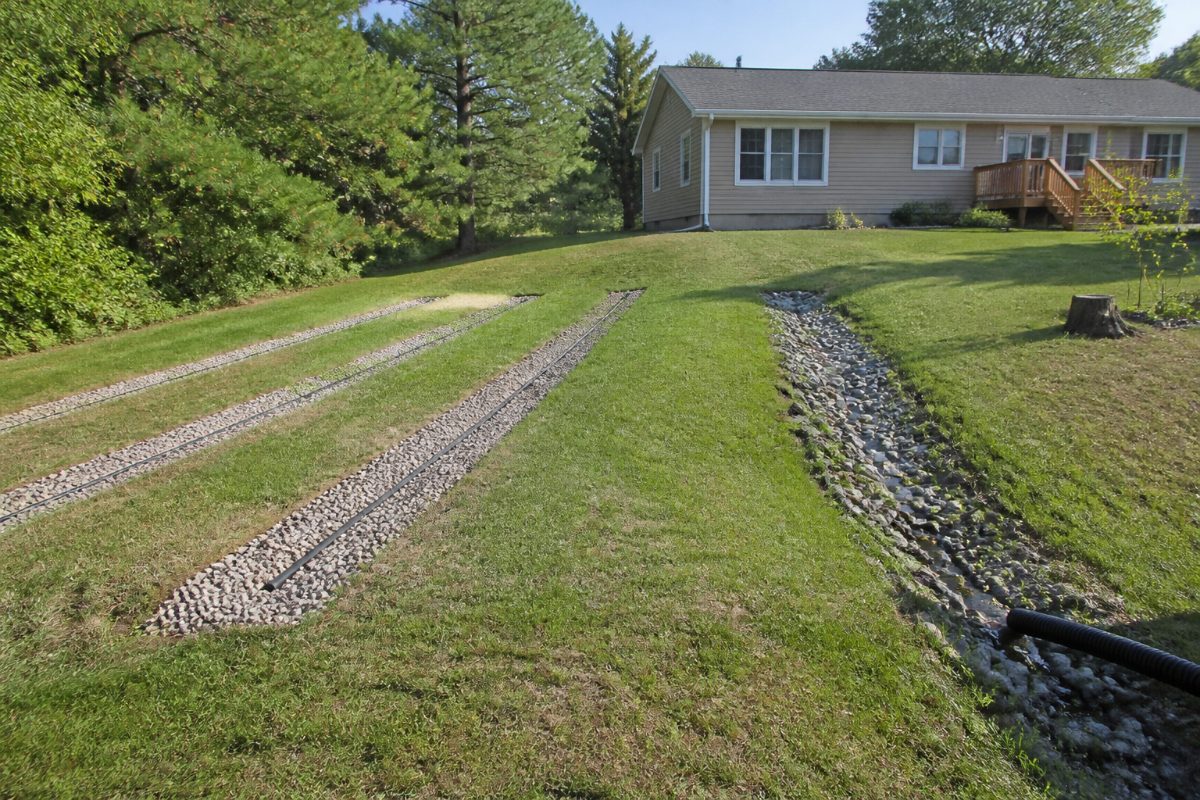
A dry well, an approved stormwater connection, and an outdoor yard outlet are possible discharge arrangements, but the best choice is the one permitted for the property and capable of keeping water away from the foundation. ASHI identifies dry wells, downslope locations, and stormwater systems as routes found in sump installations.
| Possible destination | What to establish | When it may fit |
|---|---|---|
| Yard outlet | Whether the grade carries water away from the house and where it goes afterward | When the property has a suitable downslope receiving area |
| Dry well | Whether the well is intended and approved for this discharge on the property | When a dry well is part of an appropriate drainage plan |
| Stormwater system or city tile | Whether the connection is allowed, and what permits or inspection apply | When the local authority provides an approved connection |
| Sanitary sewer or septic-connected floor drain | Whether the route is prohibited; do not assume it is acceptable | Do not use without explicit local approval |
Each option has a different receiving point, so the pipe’s destination matters as much as the outlet’s appearance. A pop-up emitter or a landscaped gravel area can make an outlet less visible, but hiding the endpoint does not make an unsuitable drainage route acceptable. Ivan’s Landscaping describes pop-up emitters and gravel beds as ways to blend an outlet into a yard; first establish that the underlying route is appropriate.
A downspout-tight line may look like a convenient nearby connection, but that appearance does not confirm it is a permitted destination. ASHI notes that such lines are common in some newer homes, while the City of Hutchinson’s rules illustrate how a municipal tile may have strict limits on what it can receive.
How to inspect an existing discharge line before changing it
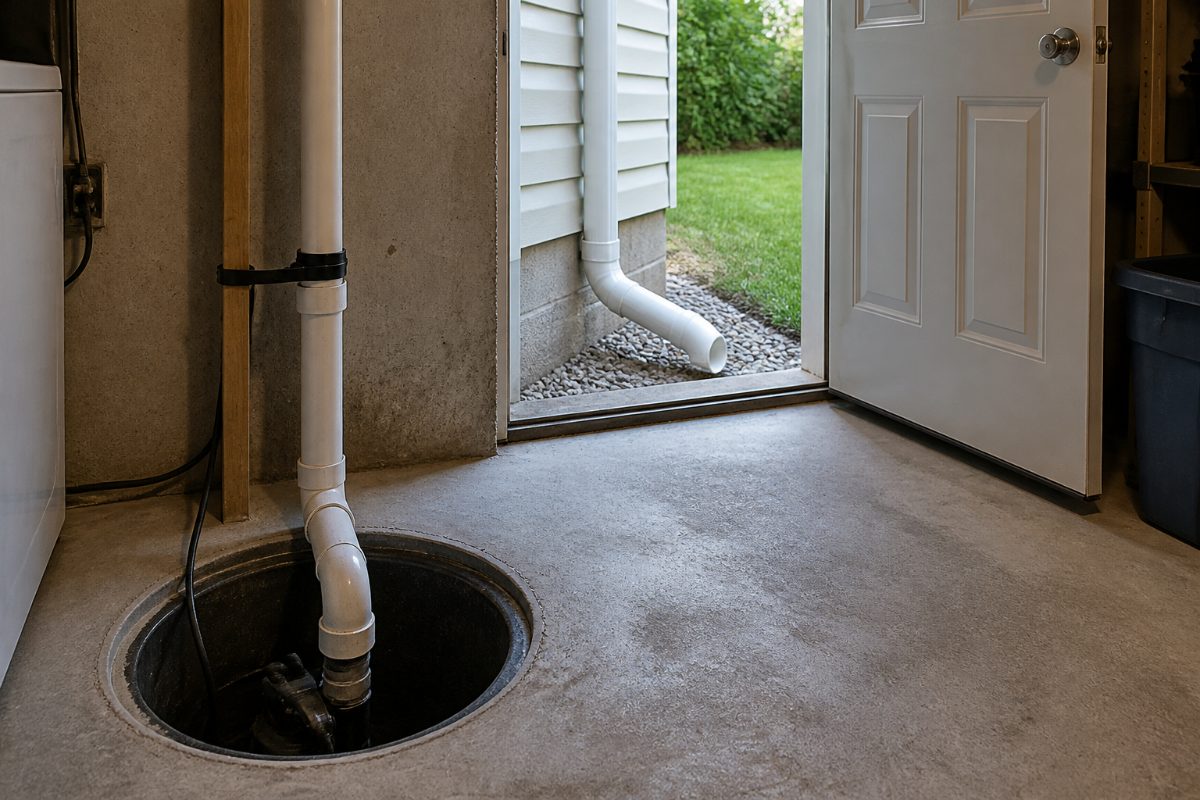
Begin with the visible pipe and follow it to the outlet before digging or disconnecting anything. ASHI recommends tracing the drain outlet during a sump system inspection, since the endpoint can reveal whether water is sent to a stormwater system, a downslope area, a dry well, or a location beside the foundation.
- Find the sump pit and identify the pipe leaving the pump. ASHI describes a check valve as a one-way valve that keeps water from returning through the discharge line.
- Follow the accessible pipe through the basement and note where it exits the building.
- Inspect the outdoor endpoint and record whether it ends above ground or appears to enter a buried line or drainage feature.
- Observe the ground around the outlet during operation. Look for water that returns toward the house, collects near the foundation, or appears to move toward the septic field.
- Write down any connection you cannot identify, then compare it with local sewer, stormwater, and permit requirements before rerouting the line.
This inspection is about identifying the destination, not proving that a system meets local code. A buried route can disappear from view, and a pipe that looks like a stormwater connection may have a different endpoint. For a city connection, Hutchinson’s program shows that an approved installation can require both an excavation permit and an inspection.
What should beginners and experienced homeowners do next?
A first-time homeowner should identify the endpoint and the property’s drainage direction before choosing hardware or extending the pipe. An experienced homeowner who already has a discharge route should verify its destination and confirm that the route still keeps water away from the home and out of prohibited systems.
| Your situation | Best next step | Why it helps |
|---|---|---|
| You are new to the home | Trace the visible pipe and mark its outlet and the direction of the slope | It reveals whether the discharge destination is known and whether water could return toward the house |
| You have a septic system | Locate the drain field and keep sump discharge separate from septic plumbing | NDSU Extension warns against adding sump water through a floor drain connected to a septic system |
| You want a city connection | Ask the municipality which connection is approved and what permit or inspection is required | Hutchinson’s city tile program has connection limits, an excavation permit, and an inspection |
| The current line ends beside the foundation | Trace where it can be extended to a suitable downslope or approved receiving point | ASHI identifies a discharge ending next to the foundation as a condition inspectors encounter |
Do not start by buying a longer pipe or concealing the existing outlet with landscaping. First establish where the water is allowed to go, how the ground slopes, and whether the route crosses or approaches a septic area. That sequence prevents a cosmetic change from hiding an unresolved drainage or connection problem.
For a municipal tile or stormwater connection, look up the requirements for the specific property and connection type. For a septic property, identify the field and keep the sump route separate. Once the destination is settled, adjust the physical route so the outlet directs water away from the home.
Frequently Asked Questions
How far from the house should a sump pump discharge drain?
Ivan’s Landscaping recommends keeping the discharge at least 10 feet from the home, but that figure is not a universal legal setback. Choose an outlet that carries water away from the foundation and follow local requirements for your property.
Can I connect my sump pump to a storm drain?
Some municipalities provide an approved stormwater or tile connection, while others have different rules. The City of Hutchinson, Minnesota, allows a city tile connection in some areas under its program, with permit and inspection requirements; check the rules for the specific connection where you live.
Can sump pump water go into a basement floor drain?
Do not assume a floor drain is a suitable outlet. North Dakota State University Extension says homes with septic systems should not pump sump water into a basement floor drain, and local guidance may restrict sewer connections in other homes as well.
Can sump discharge drain near a septic field?
Keep sump water separate from septic plumbing and avoid directing it toward the drain field. Illinois drainage guidance places pump discharge downslope from the septic field, so consider the field’s location and the lot’s slope when choosing an outdoor outlet.
Key Takeaway: Identify the Destination First
Before changing a sump pump discharge line, trace it to its endpoint, note the direction of the ground’s slope, and identify any septic or municipal drainage features nearby. Then confirm the allowed receiving location and connection requirements with the relevant local authority. Route the pipe only after those details are clear, so the water has a defined path away from the foundation.
References
- Sump Pump Landscaping: Hide the Pipe, Keep Water 10 Feet From Home
- Artificial Drainage of Illinois Septic Field Areas ...
- Sump Pump Systems: Practical Information and Tips for Inspections - American Society of Home Inspectors, Inc.
- Check Your Sump Pumps Now — Water Quality
- Sump Pump Inventory Program - City of Hutchinson
Information in this post was checked as of November 2026. Policies and prices may change, so please verify important details with official sources.


Comments
Post a Comment