Roof Valleys: How to Clear Leaves Before Winter
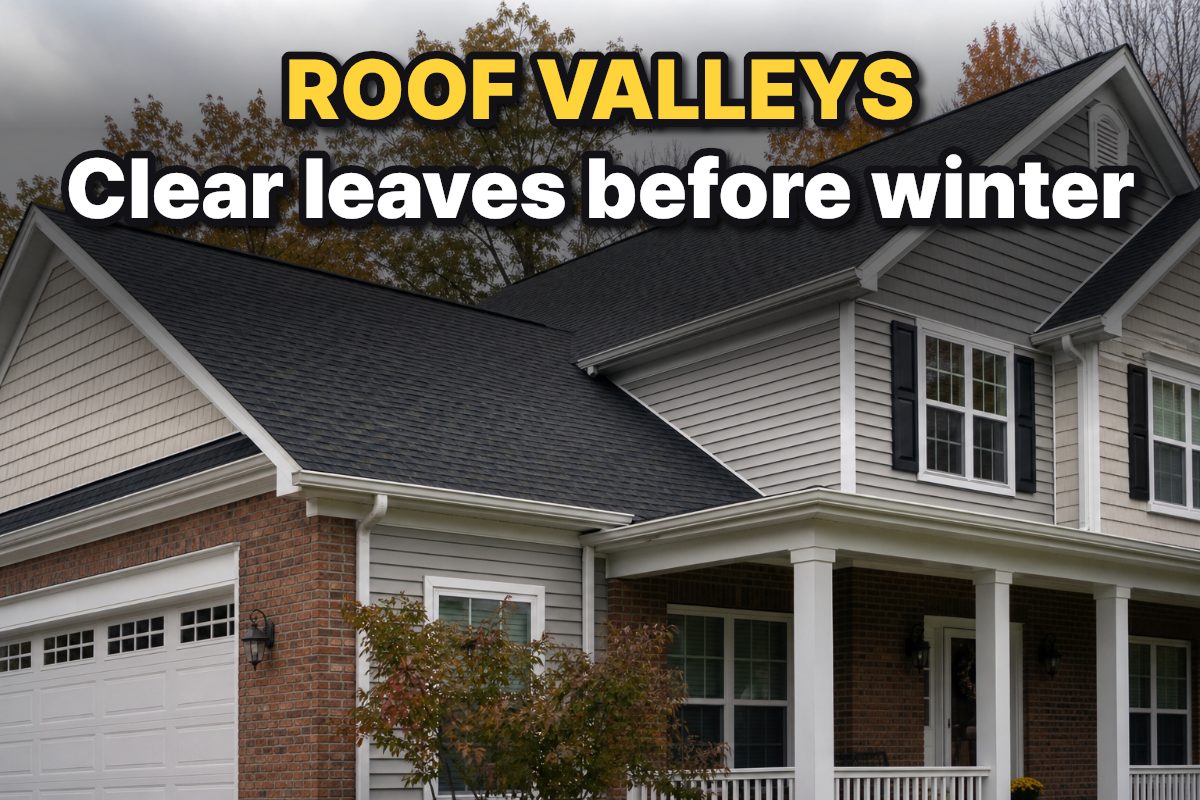
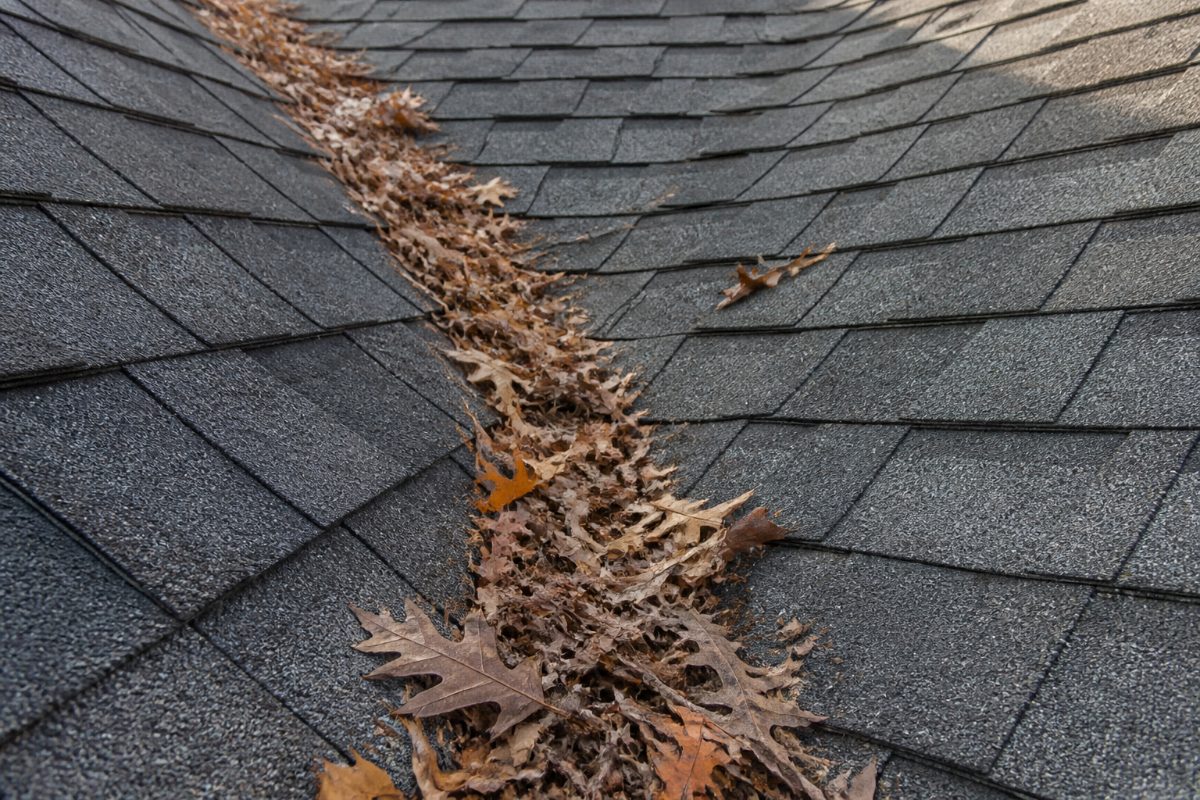
To clear leaves from roof valleys before winter, remove loose leaf litter and small debris before the wet season, using a method that does not scrape or lift the roofing. A roof valley is the channel where two roof sections meet; when leaves collect there, they can obstruct the route rainwater needs to follow.
Key Takeaways
- Plan valley cleanup before the wet season, while the roof and access conditions are safe.
- Use a controlled sweep, leaf blower, or wash rather than dragging tools across shingles.
- Skip roof access if the surface is wet, steep, unfamiliar, or outside your safety setup.
- After removing debris, look for signs that water is still spilling, leaking, or pooling.
Table of Contents
Why clear leaves from roof valleys before winter?
Leaves and small branches can collect where roof sections meet, behind chimneys, and around skylights or vents. Wet debris can hold moisture against roofing and obstruct the path rainwater should take, so removing it before the wet season helps keep the drainage route open.
A valley concentrates runoff from adjoining roof planes. When leaf litter forms a layer in that channel, water has less clear space to move along the roof. The debris may also stay damp against the roofing, a concern for wood shingles and shakes as well as other roof coverings.
Oregon State University Extension recommends removing leaf litter, conifer needles, and debris from roof valleys and from between wood shingles or shakes. For those roofs, regular debris removal also limits conditions that support moss and lichen growth. The timing in its guidance is before the wet season begins; use the same seasonal logic when planning a pre-winter cleanup in your area.
Leaves are only one part of the drainage path. Water that leaves a valley may continue toward a gutter, so a clean-looking valley does not prove the whole route is clear. Treat the valley, its lower edge, and the connected gutter as related parts of one runoff path, without assuming that clearing one section fixes a separate drainage problem.
When should you clean roof valleys, and when should you stay off the roof?
Schedule roof-valley cleanup before the wet season and before winter weather makes roof access harder. Choose a time when the roof surface is dry and your ladder can stand on stable ground; do not climb onto a wet, steep, or unfamiliar roof.
The best time is not simply the first day leaves appear. Look at whether debris is already collecting in the channels and whether rain is approaching. If the valley is filling while leaves are still falling, a single early cleanup may not keep it clear for the rest of the season. Plan a visual follow-up from the ground after another period of leaf fall.
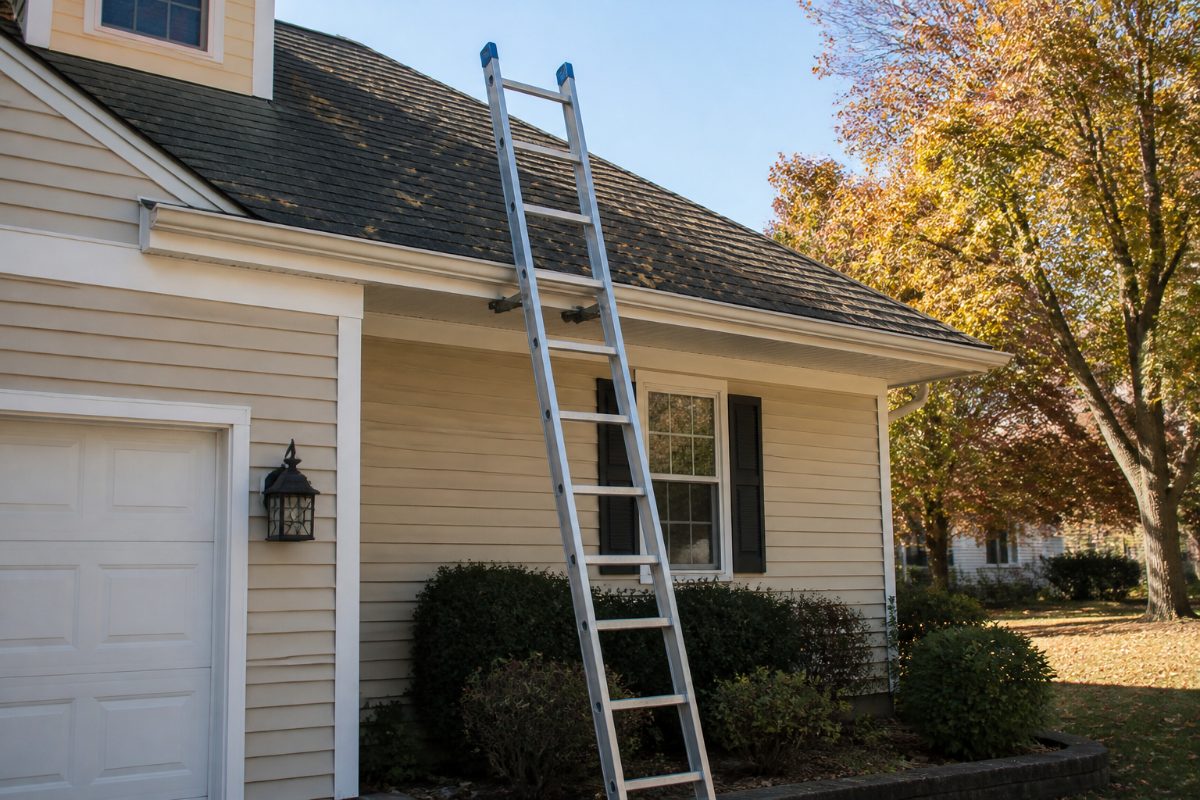
Roof access requires more than a ladder and a clear afternoon. Wear footwear that grips the roof surface and avoid leather-soled shoes. If you use a ladder, place it on stable ground, secure it at the top, and make sure it extends at least 3 feet above the roofline. Oregon State University Extension also identifies safety-line conditions for roof work: a pitch of 5:12 or greater, eaves more than 16 feet above the ground, or work within 6 feet of a roof edge. If you cannot meet the safety requirements for your roof, leave the cleaning to a qualified roofing professional.
Do not carry tools while climbing a ladder. A bucket and rope can be used to move tools and other items to the roof after you reach it. If you are already on a roof and can move safely across it, walking across rather than repeatedly moving up and down can reduce slipping risk; that does not make a steep or unsafe roof suitable for a DIY job.
There is no benefit to forcing a cleanup when the surface or access is unsafe. Wet leaves can make the working area harder to judge, and an unfamiliar roof makes it difficult to assess the route and footing. If the roof is wet, steep, or unfamiliar, inspect from the ground and arrange professional cleaning instead of climbing.
How to remove leaves without damaging the roofing
Use sweeping, leaf-blowing, or washing to remove loose leaf litter and debris from the valley. Work in small sections, move material out of the channel without scraping the roof covering, and stop if shingles or shakes shift or lift.
Look over the roof from the ground first. Identify the valleys and any visible accumulation behind chimneys or around skylights and vents. Note which areas can be viewed safely and which would require walking close to an edge or across a steep section.
Decide whether roof access is appropriate. Consider the surface condition, pitch, height, edge distance, ladder placement, and the safety equipment you can use. A ladder should be secured and extend at least 3 feet above the roofline; do not carry tools up it.
Choose a removal method suited to loose debris. Sweeping, leaf-blowing, and washing are methods used for roof debris removal. Use controlled movements that carry leaves out of the valley rather than pushing them beneath shingle edges or dragging a tool across the roof surface.
Clear one section at a time. Start at a visible section and follow the valley channel, moving leaves and small debris away from the runoff route. Check the surrounding roof areas where leaves may have gathered, including behind chimneys and around vents or skylights.
Look at the cleared surface before moving on. Make sure loose material is no longer covering the channel. If the roofing appears displaced or the debris is embedded in a way that would require force, stop rather than prying at it.
Finish with a ground-level review. Look along the valley and at the connected gutter area from a safe position. During rain, observe from indoors or ground level for overflow, water leaking behind a gutter, runoff missing the channel, or pooling near a downspout.
Wood shingles and shakes need particular care because debris can settle between individual pieces as well as in valleys. The goal is to remove loose material, not to lift roofing pieces to reach every trapped fragment. If debris cannot be removed without prying or disturbing the roof covering, stop and have the area assessed.
Washing is one listed debris-removal method, but the method should still suit the roof surface and the operator’s ability to work safely. Do not turn a cleanup into an aggressive scraping job. A tool that catches an edge or a movement that shifts roofing can create a separate repair problem while trying to clear leaves.
What can you check from the ground after cleanup?
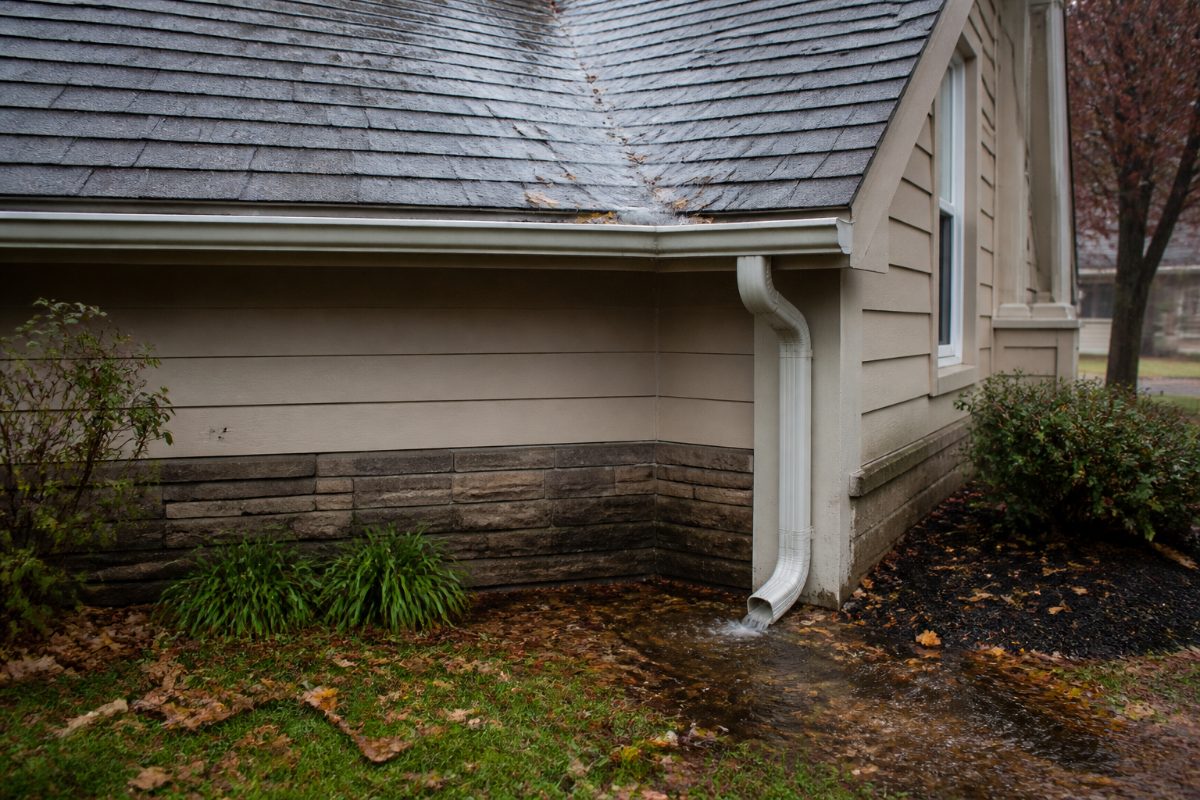
A ground-level review can reveal whether leaves remain visible in the valley and whether runoff is reaching the gutter or downspout area. During heavy rain, watch from indoors or from the ground for water spilling over a gutter edge, leaking behind the gutter, overshooting the channel, or pooling near a downspout.
Before rain, scan the roofline for remaining leaf piles and small branches. Pay attention to the lower end of each visible valley, where runoff leaves the roof, and to areas behind chimneys or around roof openings. If part of the roof is hidden from your viewing position, do not climb to get a better look unless the access conditions and safety equipment make that work appropriate.
Rain provides a useful view of how water is moving. Observe from a sheltered indoor spot or a safe position at ground level; do not stand under a roof edge to watch runoff. Overflow or water tracking behind the gutter can indicate that the drainage issue extends beyond the visible leaves in the valley.
Also look at where downspouts release water. Pooling close to the house after rain is a sign to examine the drainage route, not a reason to assume valley cleanup alone will solve the problem. Keep the observation focused on visible water behavior: where it spills, where it runs, and where it collects.
When does leaf removal need a professional inspection?
Hire a qualified roofing professional when safe access is not possible, debris cannot be removed without disturbing the roof, or water still spills, leaks, or pools after the visible leaves are cleared. A cleanup removes loose material; it does not by itself diagnose damaged roofing, flashing, seals, or a separate gutter problem.
A roof valley may look open from the ground while a nearby roof detail still needs attention. If water continues to leak or runoff behaves abnormally after cleaning, avoid repeating the same cleanup as though more leaf removal must be the answer. The nearby flashing or seals, the connected gutter, or another part of the drainage route may need inspection.
Professional help is also the practical choice when the roof is steep, high, wet, unfamiliar, or requires work close to an edge that you cannot secure safely. The safety criteria are concrete: a 5:12-or-steeper pitch, eaves above 16 feet, or a work position within 6 feet of the roof edge calls for safety lines and belts in the guidance for roof maintenance. If you do not have the appropriate setup, do not improvise one.
For a manageable, dry roof with safe access and loose debris, clear the valley using a controlled sweep, leaf blower, or wash, then observe runoff from the ground during rain. If access is unsafe or water problems remain after the leaves are gone, arrange a professional inspection rather than climbing back up or applying more force.
References
- The Care and Maintenance of Wood Shingle and Shake Roofs | OSU Extension Service
- Tree Damage to Roofs: Branches, Fallen Limbs, Debris | Stellar Roofing Company
- Fall Roof Checklist: 9 Things to Check Before Winter
- essential roof maintenance tips for every season | the design story
- Preparing Your Roof and Gutters for Falling Leaves and Heavy Rain — Signature Exteriors - A St. Charles
- Holiday Weather Prep: How to Protect Your Roof Before Winter
- Prepare Your Roof for Fall and Winter | Tips for a Weather-Ready Home
Information in this post was checked as of November 2026. Policies and prices may change, so please verify important details with official sources.


Comments
Post a Comment