How to Winterize a Sump Pump Before Freezing Weather
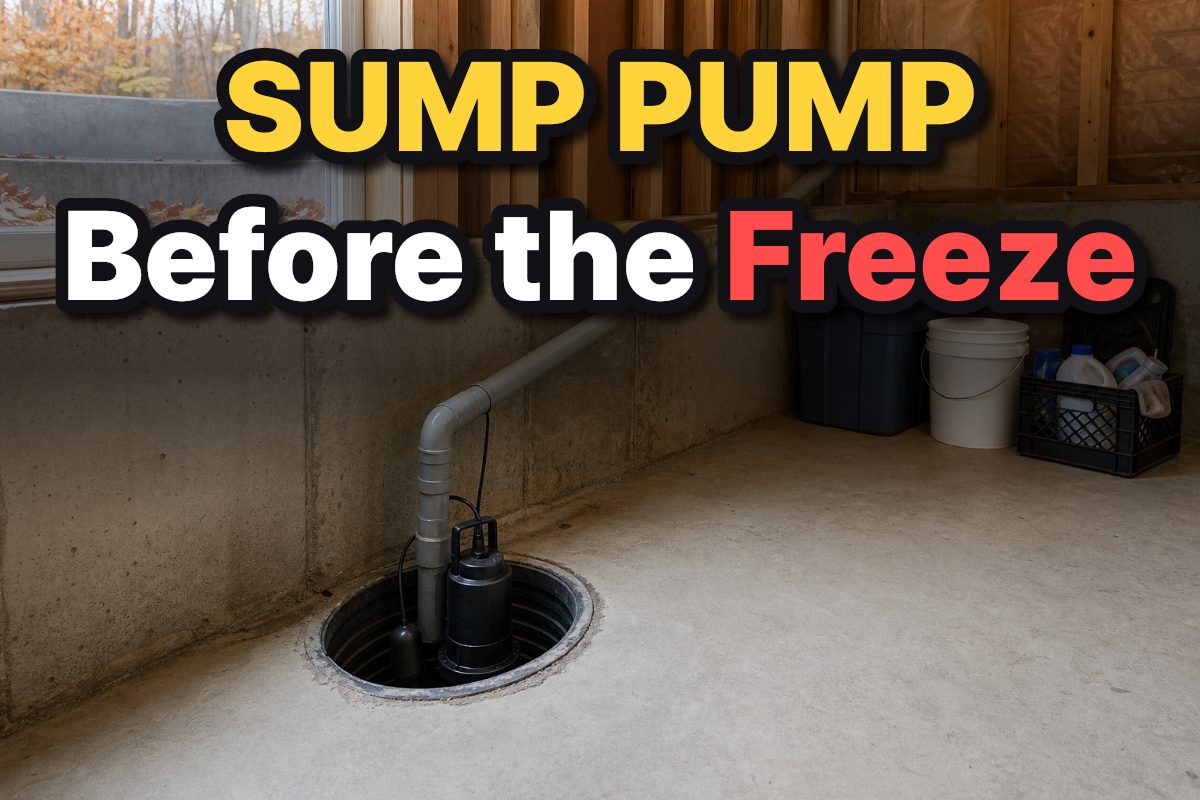
Key Takeaways
- Protect the exposed discharge pipe first: standing water in an above-ground or unheated section can freeze and block the pump’s outlet.
- Turn off power before cleaning or removing a pump, but do not leave an active basement sump system disabled for winter.
- Clear leaves, sludge, and other debris from the pump and pit, then confirm the discharge point is away from the foundation.
- Use insulation or a purpose-made freeze-resistant discharge fitting where appropriate, following the product and pump instructions.
Table of Contents
- What does it mean to winterize a sump pump?
- When should you prepare the sump pump for a freeze?
- How do you inspect the discharge line before winter?
- How can you keep the discharge pipe from freezing?
- How do you clean and inspect the pump and pit?
- What should you check on the outlet and check valve?
- How should you monitor an active sump pump in winter?
- What should you do if the discharge line appears frozen?
- Common winterization mistakes to avoid
- Frequently Asked Questions
- Next step: make a fall sump-pump checklist
A sump pump moves water out of a pit and away from a home, but freezing weather can block the discharge line and leave water with nowhere to go. To winterize a sump pump, prepare the exposed pipe, clear debris, inspect the outlet and check valve, and keep an active basement system ready to operate.
What does it mean to winterize a sump pump?
Winterizing a sump pump means reducing the chance that water will freeze in the pump, pit, or discharge route and prevent water from leaving the home. For a working basement system, that usually means protecting vulnerable pipe sections and keeping the equipment clear—not simply emptying the basin and switching the pump off.
The difference between an indoor sump pump that stays in service and an outdoor or seasonal pump matters. A basement pump may still need to remove groundwater or other inflow during winter. By contrast, a removable outdoor pump that will not be used can be handled differently: the outdoor-pump guidance published by Yahoo describes turning off power, removing a removable pump, draining standing water from the basin, and cleaning the pump and pit.
| System situation | Winter approach | Key point |
|---|---|---|
| Active basement sump pump | Protect the discharge route and maintain the pump and pit. | Do not treat an operating system as equipment to leave switched off. |
| Removable outdoor or seasonal pump | After shutting off power, remove it if designed to come out; drain and clean accessible components. | Do not force a pump that is not intended to be removed. |
| Exposed or unheated discharge line | Inspect the route and consider pipe insulation or a suitable freeze-resistant fitting. | Protect the outlet as well as the section nearest the house. |
Franklin Water explains that pump winterization depends on the application and that water can remain in internal passages after draining. That is why a simple “empty the pit” routine is not a complete plan for every system. Use the pump’s installation or operating instructions when a step could affect how the equipment is configured.
When should you prepare the sump pump for a freeze?
Prepare the sump pump before freezing temperatures become consistent, not after a hard freeze has already left water trapped in the system. Franklin Water recommends completing winterization in fall before overnight temperatures regularly drop below freezing in areas that need freeze protection.
Start with the portions of the system exposed to outdoor air or located in an unheated space. Those are the places where an otherwise working pump can lose its path for moving water. If your pump is used seasonally outdoors, make the decision to shut it down before freezing conditions arrive rather than waiting until the basin or line is already frozen.
- First-time homeowner: Trace the discharge pipe from the pump to where it exits the house and where it releases water. Note any above-ground, outdoor, or unheated sections.
- Existing sump-pump owner: Add the discharge route, outlet, pit, and check valve to the same fall maintenance visit.
- Home with a seasonal outdoor pump: Confirm whether the pump is designed to be removed and whether the system will still be needed during winter.
Franklin Water’s regional guidance distinguishes areas where freezing is uncommon from colder regions where full winterization is more likely to be needed. Rather than relying on a broad climate label alone, use your local forecast and the pump’s location: an exposed pipe can be vulnerable even when the pump itself sits indoors.
How do you inspect the discharge line before winter?
Follow the discharge line from the pump to its outlet and identify every section that is above ground or passes through an unheated space. Sump Pump Central recommends insulating exposed discharge pipe and checking that discharged water exits far enough from the foundation to avoid refreezing against the house or building ice near walkways.
Inspect the route for loose connections, visible damage, debris, and places where water could remain in an exposed section. The main winter concern is not just whether the pipe looks intact; it is whether a frozen or obstructed line could prevent the pump from moving water out of the pit. A clear route and a suitable outlet location work together.
- Locate the pipe where it leaves the house and follow it to the discharge point.
- Mark the parts that are exposed to weather or run through unheated areas.
- Look for an outlet that directs water away from the foundation and does not leave it beside a walkway.
- Check the pump instructions before changing pipe routing or fittings.
A common mistake is to insulate only the short pipe section nearest the basement wall and ignore the rest of the exposed line. Sump Pump Central specifically calls out exposed and unheated sections, while also emphasizing the discharge point. Treat the entire vulnerable route as one system rather than focusing on a single easy-to-reach spot.
How can you keep the discharge pipe from freezing?
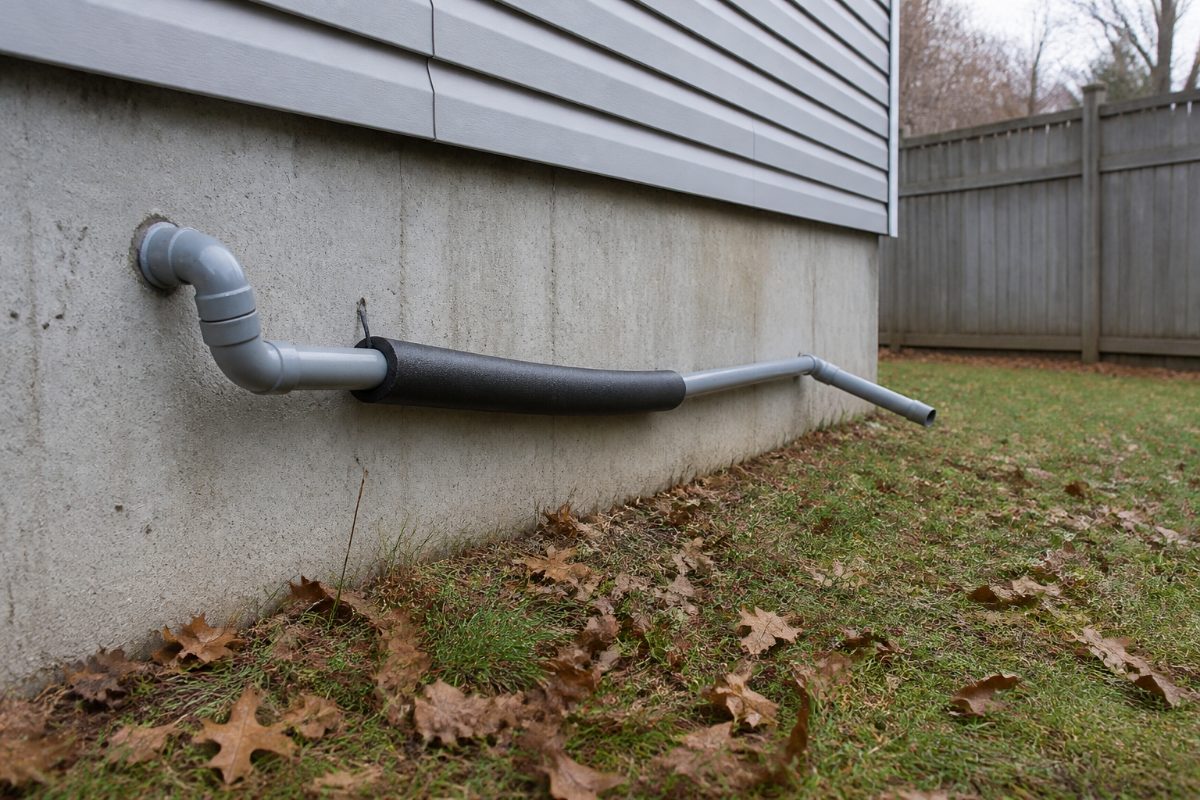
Insulate above-ground and unheated discharge-pipe sections, and consider a freeze-resistant discharge fitting designed to release water if a downstream section freezes. Sump Pump Central describes these measures as ways to reduce freezing risk and limit backup into the pit when the main line is blocked farther downstream.
Use insulation made for pipe and fit it securely over the exposed section; the outdoor-pump winterizing guidance published by Yahoo also describes wrapping a discharge pipe or hose with insulation or heat tape and securing the covering. Follow the instructions for the specific product, especially where heat tape is involved, rather than guessing at installation or combining materials in an unapproved way.
| Protection option | Where it helps | What to verify |
|---|---|---|
| Pipe insulation | Exposed or unheated discharge sections | That the vulnerable section is covered and the insulation stays in place. |
| Heat tape | Pipe sections where the product is suitable for the installation | Product instructions and compatibility with the pipe and location. |
| Freeze-resistant discharge fitting or ice guard | A discharge setup designed to provide an alternate relief path if a downstream section freezes | That the fitting is appropriate for the pump and installed as directed. |
HomeServe’s sump-pump winterizing guide also identifies an ice guard as a preparation item. An ice guard is not a substitute for checking the line’s route or outlet: it addresses a particular blockage scenario, while insulation reduces exposure along the pipe and good discharge placement helps keep water away from the foundation.
A cover over the pump or pit is not a replacement for protecting the discharge line. If the pump has a manufacturer-provided cover or enclosure, use it only as its instructions specify; do not improvise a sealed enclosure that could interfere with access, operation, or the system’s intended setup.
How do you clean and inspect the pump and pit?
Before touching or cleaning a sump pump, disconnect power at the plug or breaker; the outdoor-pump instructions published by Yahoo identify this as the first safety step. Remove the pump only if it is designed to be removable, then clear leaves, debris, and sludge from the pump and pit.
For a removable outdoor pump that is being stored, Yahoo’s guidance describes using a shop vacuum or sponge to remove standing water from the basin. That instruction should not be confused with preparing an active basement sump system: an operating pump needs its pit available to collect water, so do not drain and leave that system out of service as a routine winter step.
- Cut power before handling the pump. Unplug it or switch off the breaker that supplies it.
- Decide whether removal is appropriate. Lift the pump only if it is removable and the system’s instructions allow it.
- Clear debris. Remove leaves, sludge, and loose material that could interfere with the pump or block the pit.
- Drain only when the system is being taken out of service. For a seasonal removable pump, remove standing water as appropriate; do not leave an active basement installation disabled.
- Restore the intended setup. Follow the pump’s instructions for putting it back in service and restoring power.
Cleaning addresses a different winter failure point than insulation. Yahoo notes that debris can block the system and damage the pump. A clear pit and a protected outlet are both necessary checks: either can become the weak link even if the other looks ready.
What should you check on the outlet and check valve?
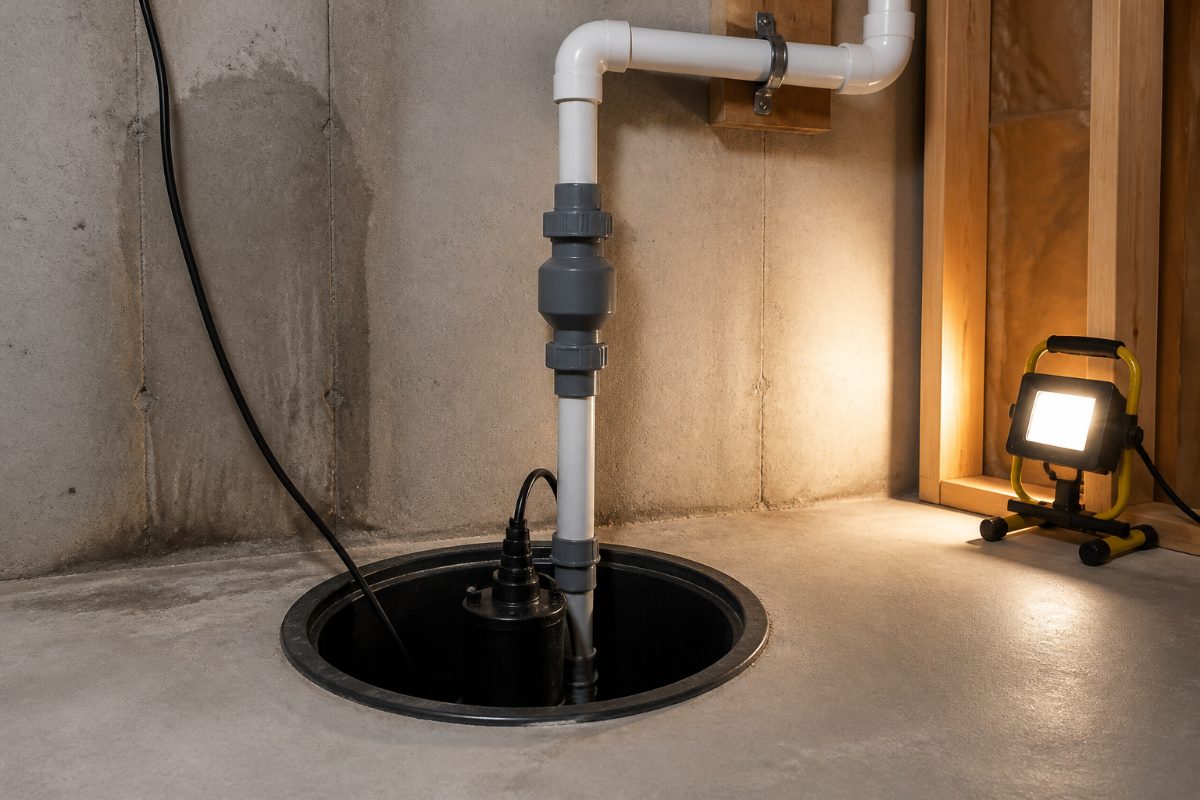
Confirm that the discharge point carries water away from the foundation, then inspect the check valve for sticking or leakage. Sump Pump Central identifies a faulty check valve as a potential route for discharged water to flow back toward the pump, which can add water to the system instead of moving it away.
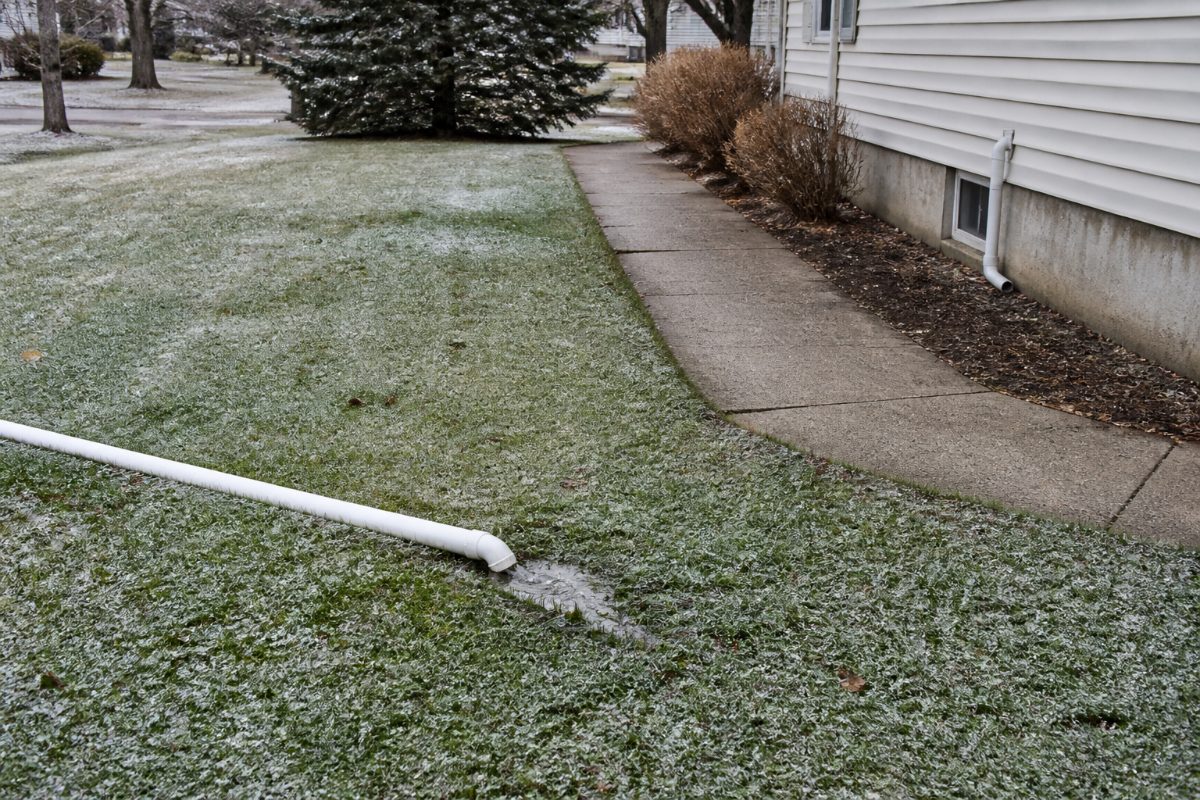
The outlet matters in winter because water discharged too close to the home can refreeze near the foundation or build up as ice beside a walkway. Check the full exit location rather than stopping at the spot where the pipe passes through the wall. If the current setup releases water close to the house, use the pump and drainage instructions to determine a suitable correction instead of improvising a fitting.
- Look for an outlet that is open and not visibly blocked.
- Confirm the outlet directs water away from the foundation and nearby walking areas.
- Check the check valve for sticking or leakage as part of the inspection.
- After restoring an active system, observe whether water exits at the intended point during normal operation.
A common misconception is that a pump is winter-ready as long as the motor turns on. The pump also needs an unobstructed discharge route, a suitable exit point, and a check valve that does not send water back. A running motor alone does not confirm that water is leaving the property as intended.
How should you monitor an active sump pump in winter?
During winter, pay attention to whether water is leaving the discharge outlet and whether water is accumulating in the pit. A pump that runs while the discharge is frozen or blocked may be unable to move water outside, so the useful observation is the whole path—from pit to outlet—not sound alone.
Make a simple route check after preparing the system: inspect the exposed pipe and outlet, then look at the pit and pump without reaching into energized equipment. If the pump is cycling but water is not appearing at the expected discharge point, or the pit’s water level is rising, treat that as a sign that the system is not clearing water effectively.
| What you observe | What it can indicate | Next practical step |
|---|---|---|
| The pump operates and water exits at the intended location. | The route is moving water at the time of the check. | Keep the outlet and exposed pipe in the regular winter inspection routine. |
| The pump operates, but water does not appear at the outlet. | The discharge route may be obstructed or frozen. | Do not assume the system is functioning just because the motor runs; inspect accessible sections and arrange qualified service if the blockage cannot be safely resolved. |
| Water in the pit rises while the pump is not clearing it. | The pump or discharge path may not be removing incoming water. | Address the failure promptly to reduce the risk of water backing up into the home. |
Sump Pump Central explains that a frozen discharge line can cut off the pump’s route for moving water outside and cause backup into the pit. That is the reason for preparing the line before cold weather, rather than waiting for a visible indoor water problem to reveal that the outlet is blocked.
What should you do if the discharge line appears frozen?
If the pump is operating but water is not leaving through the discharge point, a frozen or obstructed line is one possibility. Avoid treating repeated pump operation as proof that the line will clear itself; the pump needs an open route to move water out of the pit.
The available winterizing guidance supports prevention—insulating exposed pipe, using a suitable freeze-resistant fitting, and positioning the discharge away from the foundation—but does not provide a universal thawing procedure for every pipe material and installation. Do not apply an improvised repair that could damage the pipe or alter the pump system. If the line is inaccessible, the blockage persists, or water is rising in the pit, contact a qualified sump-pump or plumbing professional for a system-specific response.
While arranging service, keep the area around the pit accessible and avoid handling electrical components in wet conditions. For an active basement system, do not mistake switching off the pump for a winterization fix: that removes the system’s ability to clear incoming water. The immediate goal is to restore a safe path for discharge and protect the home from backup.
Common winterization mistakes to avoid
The most consequential mistake is focusing on the pump while leaving its discharge line exposed or its outlet poorly placed. Sump Pump Central identifies a frozen discharge line as a way the pump can lose its path to move water outside, while its guidance also calls for attention to the exit location and check valve.
- Switching off an active basement pump for the season: That can leave incoming water without the pump’s normal removal route.
- Removing a pump that is not designed to come out: The outdoor-pump instructions say to remove it only if removable.
- Draining every basin indiscriminately: Basin draining is described for a seasonal outdoor setup, not as a universal step for a basement pump that remains in service.
- Insulating only the pipe at the wall: Exposed and unheated sections farther along the route can also be vulnerable.
- Ignoring where water lands: Water discharged near the foundation can refreeze there or create ice near walkways.
- Assuming a running motor proves the system works: Verify that water can reach the outlet rather than relying on the sound of the pump.
Use the pump’s own instructions to resolve conflicts between general advice and the way your system is installed. Pump winterization differs by application, and Franklin Water notes that water can remain inside pump passages even after draining. If a task involves a component you cannot identify or safely access, stop before altering the system.
Frequently Asked Questions
Should I turn off my basement sump pump for winter?
Not if the pump remains responsible for removing water from the basement pit. Winter preparation for an active system focuses on protecting the discharge route and clearing debris, not leaving the pump disabled.
Should I drain the sump-pump basin before freezing weather?
Draining standing water is described for a removable outdoor pump that is being prepared for storage. It is not a blanket instruction for a basement sump system that must remain ready to collect and remove water.
Is pipe insulation enough to prevent a frozen discharge line?
Insulation reduces freezing risk on exposed or unheated pipe, but it does not replace checking the full discharge route, outlet location, and check valve. A purpose-made freeze-resistant fitting may also be appropriate for a compatible system.
How can I tell if a sump-pump discharge line is frozen?
A pump that operates without water appearing at its discharge point, especially while the pit’s water level rises, may have a blocked or frozen route. Those signs do not identify the cause by themselves, so inspect accessible sections and seek qualified help if the obstruction persists.
Next step: make a fall sump-pump checklist
Before the next freezing spell, write down the pump’s power source, the sections of discharge pipe that are exposed or unheated, the outlet location, and whether the pump is seasonal or remains in service. Then clean the pit, protect the vulnerable line with an appropriate product, and confirm that the outlet directs water away from the foundation. For a removable seasonal pump, follow its instructions for shutdown and storage; for an active basement system, keep its normal water-removal function available.
References
- Protect an Outdoor Sump Pump from Freezing Winter Temperatures
- How to Winterize Your Sump Pump
- How to Winterize a Sump Pump and Discharge Line
- Pump Winterization: Prevent Freeze Damage This Winter | Franklin Water
Information in this post was checked as of October 2026. Policies and prices may change, so please verify important details with official sources.


Comments
Post a Comment