How to Fix a Slow Bathroom Sink Before Holiday Guests Arrive

Key Takeaways
- Start at the pop-up stopper: hair, soap, and toothpaste often collect around the stopper and lift rod.
- Clean the stopper before plunging, then work downward with a sink plunger, a hair snake, and—if needed—a P-trap inspection.
- Avoid boiling water and do not layer chemical drain cleaners; a blocked drain can hold caustic liquid that is hazardous to handle.
- If several bathroom fixtures back up together, treat it as a possible shared-line problem rather than a sink-only clog.
Table of Contents
- Why is the bathroom sink draining slowly?
- How do you clean a bathroom sink pop-up stopper?
- How should you plunge a slow bathroom sink?
- When should you use a drain snake?
- How do you inspect and clean the P-trap?
- Are chemical drain cleaners or boiling water a good shortcut?
- What should you do if guests arrive soon?
- How can you prevent the sink from slowing down again?
- When should you call a plumber?
- Frequently Asked Questions
- Key points to keep in mind
A slow bathroom sink is often clogged at the pop-up stopper or in the P-trap beneath the basin, so start with the easiest place to reach and move downward. Before holiday guests arrive, clear the stopper, try a properly sealed plunge, and use a drain snake or clean the trap only if the earlier steps do not restore flow.
Why is the bathroom sink draining slowly?
A bathroom sink is draining slowly most often because hair, toothpaste, and soap buildup collects on the pop-up stopper or in the P-trap. PipeAnswers describes those two spots as the usual places to investigate first, which is why a top-to-bottom approach is more useful than pouring a product into the drain immediately.
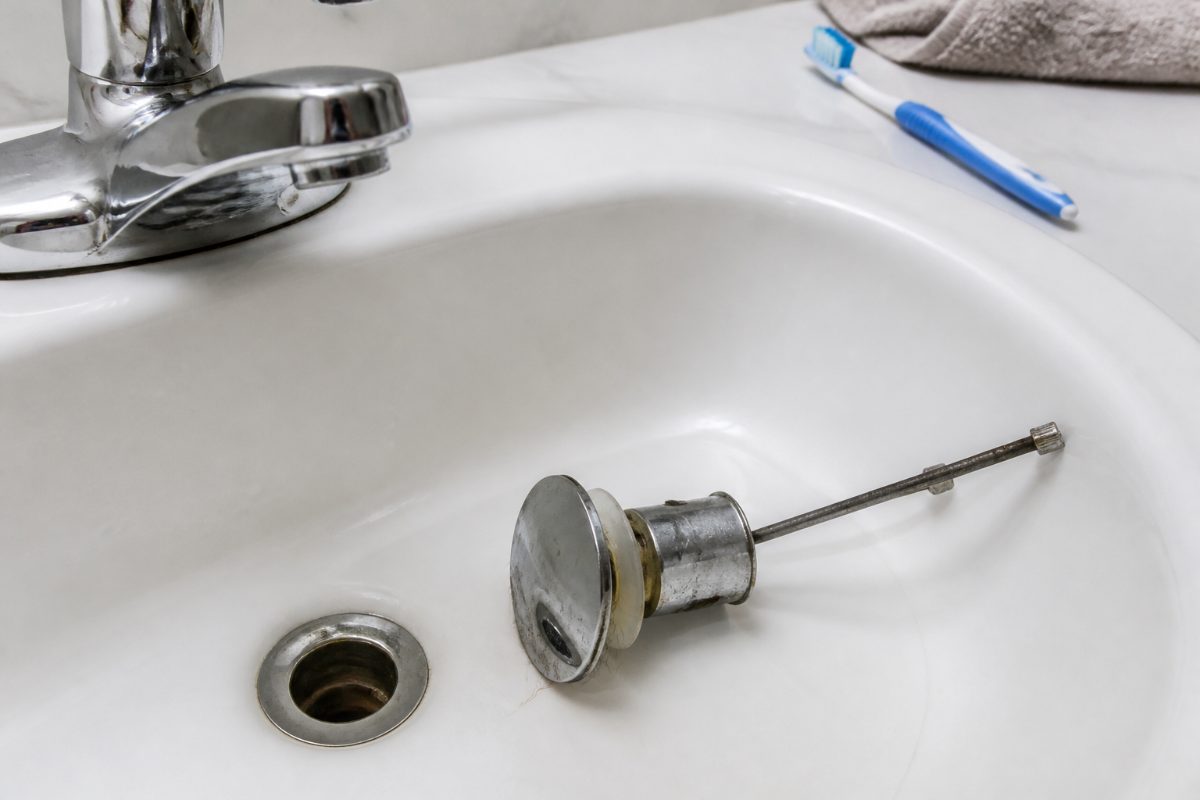
The pop-up stopper is the movable plug controlled by a small rod behind or beneath the faucet. Hair can wrap around the stopper and rod, while residue sticks to the drain opening; material that gets past the stopper can settle in the curved P-trap, the section of pipe under the sink that holds water to block sewer gases.
| What you notice | Where to start | Why |
|---|---|---|
| Water drains slowly from this sink, with no other fixtures affected | Stopper, then sink drain | The blockage may be close to the basin. |
| The stopper moves poorly or does not rise fully | Stopper and lift rod | Hair or residue can restrict movement and drainage. |
| The sink remains slow after the stopper is clean | Plunge, snake, then inspect the P-trap | The obstruction may be farther down the sink branch. |
| The toilet or other fixtures are also backing up | Pause sink-only repairs and assess the shared drain | Lifehacker notes that multiple fixtures backing up can point to a blockage in a larger bathroom drain line. |
A slow sink is not the same as a sink that is backing up with water or debris. If water rises through more than one fixture, stop treating the problem as a simple stopper clog; Lifehacker describes multiple affected fixtures as a clue that the obstruction may be beyond the individual sink.
How do you clean a bathroom sink pop-up stopper?
Remove or raise the pop-up stopper, clean away visible hair and residue, and wipe the drain opening as far as you can comfortably reach. PipeAnswers recommends cleaning the stopper and its rod with an old toothbrush and hot water, then putting the rod back under the stopper and hand-tightening its nut.
Before taking anything apart, look beneath the sink to understand how the lift rod connects to the stopper. Keep a small container or towel nearby for drips, and avoid pulling hard on a rod or linkage that feels stuck; the goal is to clear buildup without bending or forcing the mechanism.
- Lift the stopper and remove visible hair or residue. If it will not lift out, inspect the linkage under the sink rather than forcing it.
- Brush the stopper and rod with an old toothbrush and hot—not boiling—water, as PipeAnswers describes.
- Wipe inside the drain opening only as far as your fingers or cleaning tool can reach safely.
- Return the rod beneath the stopper and hand-tighten the rod nut. Run water and see whether the basin drains more freely.
- Check the stopper’s lift. PipeAnswers reports that it should rise about 3/8 inch when open; Kohler’s adjustment guidance, as cited by PipeAnswers, is to turn the threaded stopper rod in or out.
A stopper that rises too little can interfere with drainage even when it looks clean. Make small adjustments to the threaded rod, then open and close the stopper to confirm that it both seals and lifts; do not overtighten the rod nut.
How should you plunge a slow bathroom sink?
Use a cup-style sink plunger after cleaning and reinstalling the stopper, and make a seal around the drain before plunging. Korky’s sink-plunging guide is cited by PipeAnswers for the details that make plunging work on a bathroom sink; the key practical point is to keep air from escaping through the overflow opening instead of directing pressure into the drain.
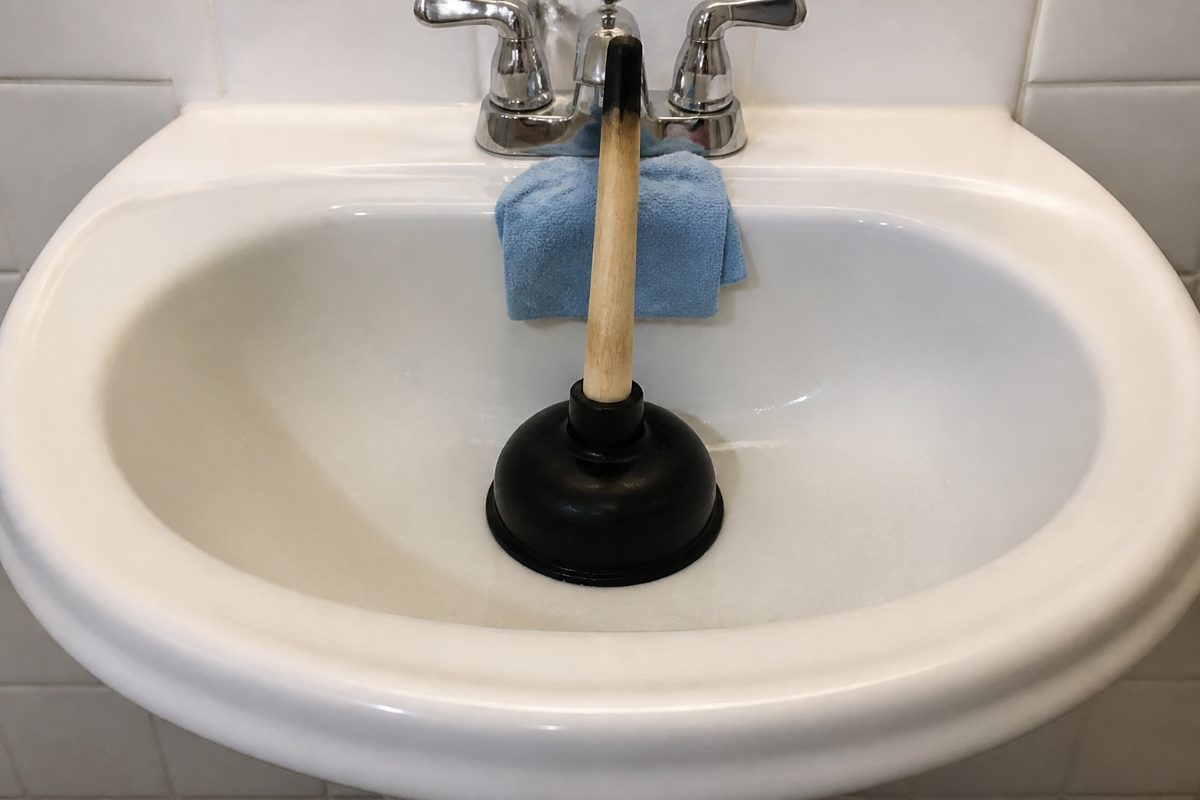
Bathroom sinks often have an overflow opening near the rim. If that opening is uncovered, it can reduce suction, so cover it with a damp cloth while you plunge. Keep enough water in the basin to cover the plunger cup, center the cup over the drain, and use controlled strokes rather than splashing forcefully.
- Remove any loose debris from the basin and make sure the stopper is open.
- Cover the overflow opening with a damp cloth. Keep the plunger cup centered over the drain.
- Press down gently at first to form a seal, then use steady push-pull strokes.
- Lift the plunger, run water, and watch whether the basin clears. Repeat only if the seal remains secure and the water level is manageable.
Do not plunge a drain that contains chemical cleaner. A failed plunge can splash corrosive liquid, and a fully blocked pipe may keep cleaner trapped in the line. If a product has already been poured into the sink, follow its label directions and avoid opening the trap or using a plunger until you know how to handle the product safely.
When should you use a drain snake?
Use a small hand-operated hair snake when cleaning the stopper and plunging do not clear a sink-only clog. A hair snake is designed to catch or pull out hair near the drain; it is a different approach from pushing a blockage deeper with force, and it can help when the clog is beyond the stopper but still within reach.
Feed the tool slowly through the drain opening and follow the tool maker’s directions. If it catches, pull back gently and remove the material rather than forcing the tool through resistance. A tool that binds or will not advance may be meeting a bend or obstruction that needs a different approach.
An Airstream Forums participant wrote on November 29, 2025, that a hair snake had worked well for them. That is one person’s report, not a guarantee for every sink; use it as an example of a simple mechanical option, not proof that every slow drain has the same cause.
How do you inspect and clean the P-trap?
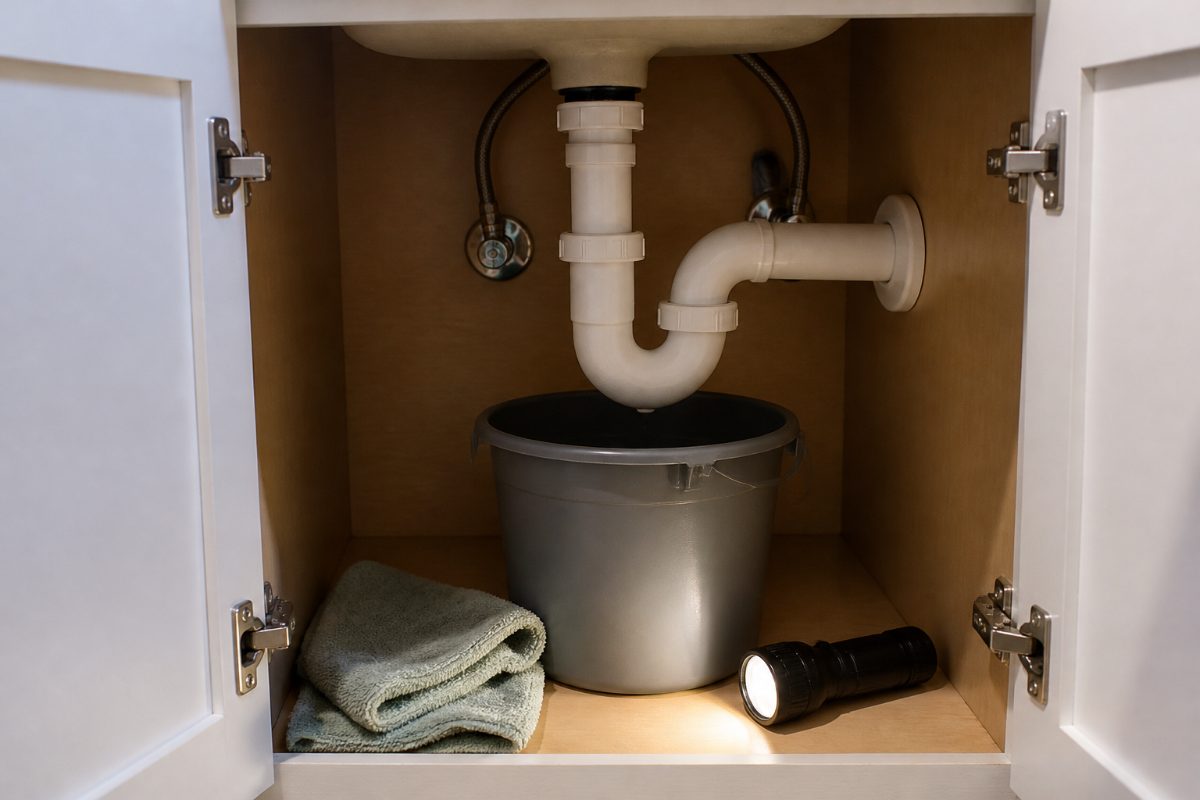
Inspect the P-trap only after the stopper, plunger, and drain snake have not solved a sink-only slowdown. The P-trap is the curved pipe below the basin, and material that passes the stopper can collect there; clearing it can remove a nearby obstruction without using a chemical cleaner.
Place a bucket beneath the trap before loosening any connections, because standing water in the bend will spill out. Take a photo of the pipe arrangement first so you can restore the pieces in the same orientation. If the fittings are corroded, brittle, or difficult to loosen, stop rather than applying force that could damage the drain assembly.
- Clear the cabinet and position a bucket directly under the curved trap.
- Loosen the trap connections carefully, keeping the bucket in place to catch water and debris.
- Remove visible buildup and rinse the trap into a suitable container or utility sink, not back into the bathroom basin.
- Reassemble the trap in its original position and tighten connections securely without forcing them.
- Run water and check each connection for drips. If a leak appears, stop using the sink until the connection is corrected.
Do not open a trap if drain cleaner is in the pipe. Wirecutter reports that caustic products can remain in a fully blocked drain when they fail to dissolve the clog, leaving bleach, lye, or acid in the line. That makes mechanical disassembly a poor next step until the product and its safe handling instructions are known.
Are chemical drain cleaners or boiling water a good shortcut?
Chemical drain cleaners are a last-resort option, not the first move for a slow bathroom sink. Wirecutter reports that Paul Abrams, communications director for Roto-Rooter, described chemical cleaners as a method of last resort, and notes the particular risk when a fully blocked sink leaves caustic product sitting in the drain.
Do not combine drain-cleaning products with each other or with other cleaners, and do not pour a second product into a drain that already contains one. Follow the product label exactly; if the sink is fully blocked, avoid plunging or dismantling the pipe while chemicals may be pooled in the line.
Boiling water is not a dependable bathroom-sink fix. Wirecutter warns that boiling water can damage acrylic sink surfaces, may crack natural stone, and can harm plastic pipes or their seals; if the clog is not grease-based, it may not help at all. Use hot water for cleaning a removed stopper, but skip a kettle poured directly into the drain.
Baking soda and vinegar are sometimes suggested for light residue, but they are not a dependable answer to a solid hair clog. John’s Sewer and Drain Cleaning describes that mixture as more suited to light soap scum and odor than a solid hair blockage, so do not let fizzing stand in for removing a physical clog.
What should you do if guests arrive soon?
Choose the repair step by the time and access available: clean the visible stopper first, plunge only if the drain is chemical-free, and move to a hair snake or trap inspection only when there is enough time to work carefully. If the sink is still slow when guests arrive, keep standing water out of the basin and make another working sink available rather than rushing into a risky repair.
| Your situation | Practical next move | Avoid |
|---|---|---|
| Guests arrive soon; the stopper is visibly dirty | Clean the stopper and test the drain. | Starting a pipe disassembly you cannot finish and test. |
| The stopper is clean; sink is slow but not backing up | Try a sealed plunge, then a hair snake if needed. | Pouring in a chemical cleaner and then plunging. |
| The sink is still clogged and you have time to work | Inspect the P-trap with a bucket ready. | Forcing brittle fittings or leaving a leaking connection. |
| Water backs up in multiple bathroom fixtures | Stop sink-only work and arrange professional drain diagnosis. | Assuming the stopper or P-trap is the only blockage. |
For a temporary guest-ready setup, place a simple note by the affected sink and direct guests to another working basin. Do not disguise a drain that is backing up, and do not leave chemical cleaner in an accessible sink. The practical goal is safe access while the repair is completed, not a quick cosmetic fix that conceals a larger drainage problem.
How can you prevent the sink from slowing down again?
Keep hair from entering the drain and clean the pop-up stopper regularly. John’s Sewer and Drain Cleaning recommends a grid strainer or hair catcher and monthly stopper cleaning; these habits target the material most likely to collect at the drain opening before it reaches the trap.
- Use a drain grid or hair catcher when it fits the sink, and clear collected hair before it washes through.
- Remove and clean the pop-up stopper on a regular schedule; John’s Sewer and Drain Cleaning suggests monthly cleaning.
- Wipe toothpaste and soap residue from the stopper and drain opening instead of letting buildup accumulate.
- Notice whether other fixtures begin draining poorly at the same time. Multiple affected fixtures can indicate a shared-line issue rather than a local sink clog.
One common mistake is treating every slow drain with more product. The cause can be a physical mat of hair on the stopper, a clog in the trap, or a broader line problem; matching the remedy to the location avoids adding chemicals where a brush, plunger, or targeted inspection is more appropriate.
When should you call a plumber?
Call a plumber when the sink remains slow after you have cleaned the stopper, plunged safely, and tried a suitable hair snake, or when the P-trap is damaged, stuck, or leaking after reassembly. If a toilet or other fixtures are also backing up, the problem may be in a shared bathroom drain or farther down the line.
Lifehacker describes the pattern as useful for locating the likely scope: a sink backing up by itself points more toward that fixture’s drain, while both a sink and toilet backing up can indicate a bathroom branch or a line farther downstream. This is a troubleshooting clue, not a reason to keep dismantling the sink when several fixtures are affected.
Before calling, note which fixtures are affected, whether water rises in the basin, and which steps you already tried. If a chemical cleaner was used, tell the plumber the product name and follow its label precautions; that information helps prevent unsafe contact with chemicals remaining in the drain.
Frequently Asked Questions
Why is my bathroom sink slow but not completely clogged?
A partial blockage can still allow water through while slowing the flow. Hair and soap residue on the pop-up stopper or buildup in the P-trap are common places to investigate first.
Should I remove the pop-up stopper before plunging?
Clean and reinstall the stopper before plunging, then make sure it is open. Covering the sink overflow helps keep suction focused at the drain rather than escaping through the overflow opening.
Can I pour boiling water down a bathroom sink?
Skip boiling water: Wirecutter reports possible damage to acrylic and natural-stone sinks, plastic pipes, and seals. Hot water is appropriate for cleaning a removed stopper, but it is not a reliable way to clear a hair clog.
What if the sink is still slow after I clean the stopper?
Try a sink plunger with the overflow covered, then use a small hair snake if the drain is free of chemical cleaner. If those steps fail, inspect the P-trap only if you can work without forcing fittings, or arrange professional help.
What is the first thing to do before holiday guests arrive?
Lift and clean the pop-up stopper, then test the drain. It is the easiest first check, and buildup at the stopper is one of the main causes of a slow bathroom sink described by PipeAnswers.
Key points to keep in mind
Start at the stopper and work downward: clean the pop-up, plunge with the overflow sealed, use a hair snake if needed, and inspect the P-trap only when safe. Avoid boiling water and chemical-cleaner combinations, and treat backup in multiple fixtures as a reason to stop sink-only repairs. Your next step is simple: lift the stopper, remove visible buildup, and run water before choosing a deeper repair.
References
- Slow Draining Bathroom Sink: 4 Fixes, Stopper to P-Trap
- What Plumbers Wish You Knew Before Unclogging Your Sink | Reviews by Wirecutter
- Why Water Is Coming Up Through Your Sink (and How to Fix It) | Lifehacker
- Slow Draining Bathroom Sink | Common Causes & Repair
- Slow-draining bathroom sink - Airstream Forums
Information in this post was checked as of October 2026. Policies and prices may change, so please verify important details with official sources.


Comments
Post a Comment