Do You Need a Battery Backup for a Sump Pump?
Key Takeaways
- A sump pump battery backup is most useful when a power outage could leave a basement vulnerable to rising water.
- Frequent pump cycling, past water intrusion, and valuable or finished basement space are practical reasons to consider backup protection.
- Backup runtime depends on the battery, pump demand, and how often water enters the pit; there is no reliable one-size-fits-all runtime.
- Test the primary pump and backup regularly, and keep the battery charged because cold weather can reduce its usable capacity.
Table of Contents
- Do you need a battery backup for a sump pump?
- How does a sump pump battery backup work?
- Battery, water-powered, or combined backup: what is the difference?
- How long will a sump pump battery backup run?
- Which battery type should you choose?
- How should you maintain and test a battery backup?
- What should you do during a power outage?
- Is the cost of a backup worth it for your home?
- What should you do before the next storm?
- Frequently Asked Questions
- Key points to remember
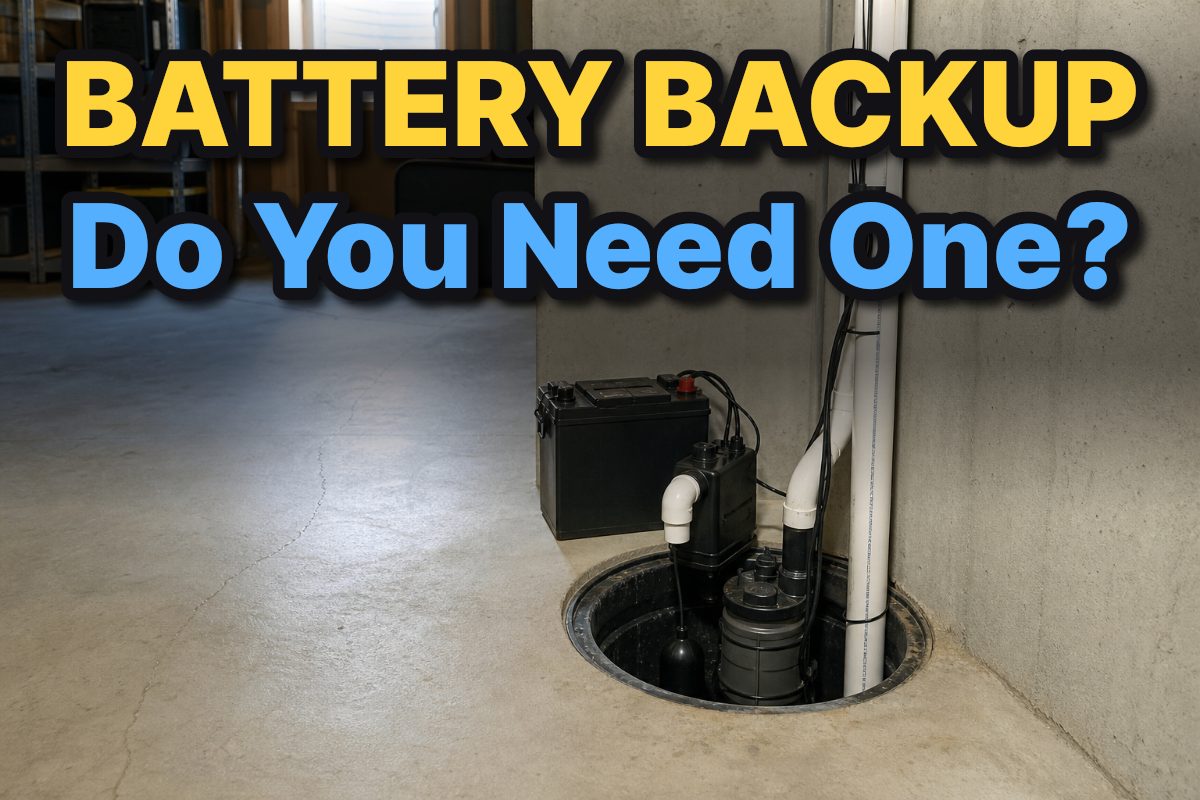
A battery backup for a sump pump is a secondary power source that can keep a backup pump operating when the main pump loses power. You are more likely to need one if your basement has flooded, your pump runs often, or a power outage would leave water-sensitive belongings at risk.
Do you need a battery backup for a sump pump?
A battery backup is a sensible option when your home depends on a sump pump to keep water out and a power failure or pump problem could lead to basement flooding. The decision comes down to the consequences of losing the primary pump, how often that pump runs, and whether other backup methods suit your home.
Use this checklist to make the decision less abstract. A “yes” to several items points toward a backup plan, though it does not by itself determine which system or battery size to buy.
- Has water entered the basement or crawl space before?
- Does the primary pump run repeatedly during wet weather or keep running after a storm?
- Would water damage finished rooms, stored belongings, or equipment you rely on?
- Have you experienced power outages during periods when the sump pump was active?
- Is the existing pump, float switch, or discharge setup unreliable or overdue for attention?
Canada.ca explains that sump pumps can stop working if water enters the pit faster than the pump can handle, if the float switch has a problem, if the pump or discharge pipe is not maintained, or if the unit is nearing the end of its service life. A power outage is another failure point. A battery backup addresses the power-loss scenario; it does not repair a stuck float, a blocked discharge pipe, or an undersized or failing primary pump.
For a first-time homeowner, start by learning when the primary pump runs and whether water has ever reached the basement floor. If you already maintain the system, look at its recent operating pattern and past outages. That history is more useful than buying a backup based only on a general fear of storms.
How does a sump pump battery backup work?
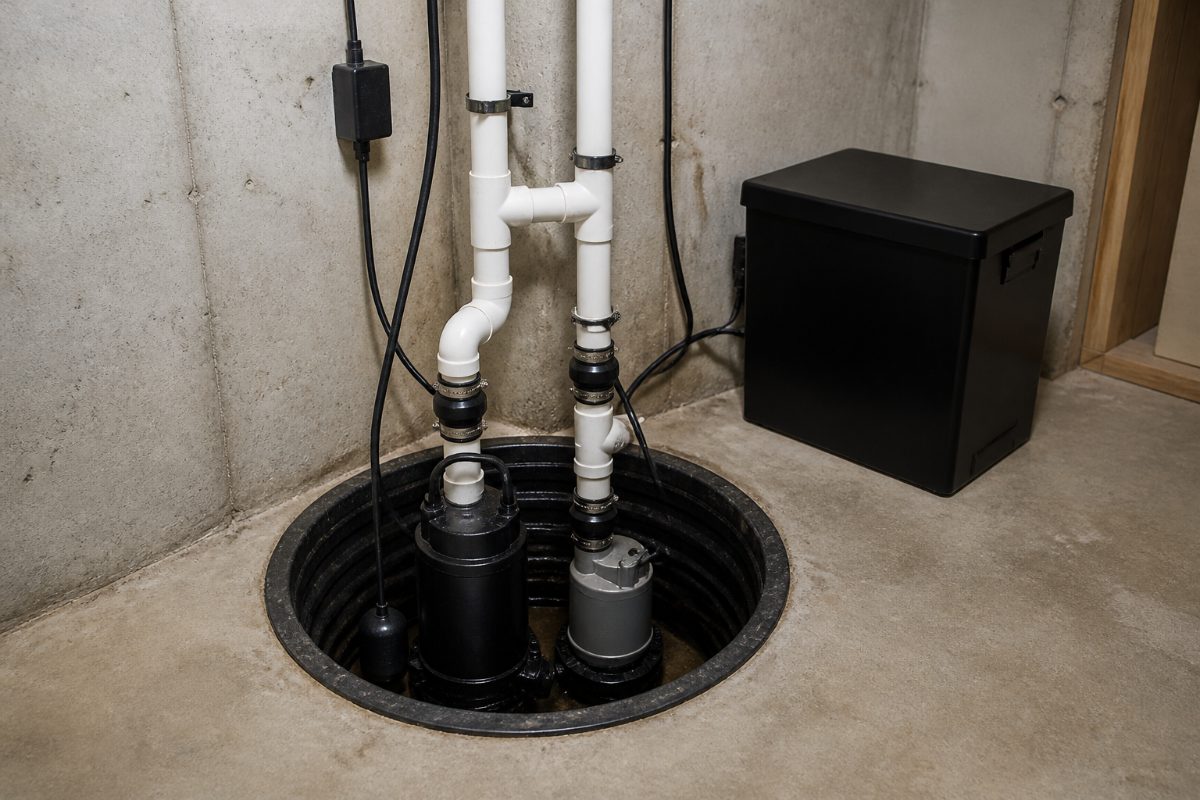
A battery backup supplies power to a secondary pump when the primary pump cannot operate, including during a power outage. The backup pump draws water from the sump pit and sends it through a discharge route, helping manage incoming water while the main pump is unavailable.
The backup system is a separate layer of protection, not a substitute for a working primary pump. Canada.ca describes a secondary backup pump as a way to remove water when the primary system cannot do its job. In practice, homeowners should understand which pump the backup system operates, how it is powered, and how the system signals a problem.
Before choosing equipment, identify the main pump’s power source and the backup system’s instructions. Find the backup control unit, note any alarm or status indicators, and check which battery type and pump models the manufacturer supports. Compatibility matters because a battery and charger must match the system; Thornton Plumbing also advises verifying charger compatibility before selecting a lithium-ion option.
A backup cannot solve every cause of a rising sump level. If water is coming in faster than the available pump can remove it, or if a float or discharge problem prevents pumping, a battery alone will not fix the underlying condition. That is why the backup should be tested as a complete pump-and-discharge setup rather than treated as a battery sitting on a shelf.
Battery, water-powered, or combined backup: what is the difference?
Battery-powered, water-powered, and combined arrangements differ in the resource they use to operate a backup pump. A battery system relies on stored electrical energy, while a water-powered approach uses a connection to a water supply; a combined arrangement is designed to provide more than one backup method.
| Backup approach | What it relies on | What to weigh |
|---|---|---|
| Battery-powered | A charged battery and compatible backup equipment | Battery condition, cold-weather capacity, charger compatibility, and the expected pumping demand |
| Water-powered | A suitable water connection and the equipment designed for that setup | Whether the home and local plumbing requirements support this approach; confirm system details before choosing it |
| Combined arrangement | More than one backup method, such as battery power alongside another option | Whether the added complexity addresses a real weakness in the home’s existing protection plan |
A Reddit homeowner suggested looking into a water-powered backup as an alternative to relying on a battery. That is one user’s suggestion, not a performance comparison or a recommendation for every house. Treat it as a prompt to compare system requirements, then use product instructions and applicable local plumbing guidance to decide whether the option fits.
For many homeowners, the practical choice is between a battery-operated backup and improving the reliability of the existing pump system. A combined arrangement may make sense when a household wants more than one backup method, but the added equipment should be selected around the home’s actual failure risks. Avoid assuming that every sump pit, water connection, or electrical setup can accept every backup type.
How long will a sump pump battery backup run?
There is no dependable universal runtime for a sump pump battery backup. The amount of time it can operate depends on the battery’s usable capacity, the backup pump’s power demand, and how frequently water reaches the pit and triggers pumping.
Start with the backup system’s documented battery requirements and the pump’s operating specifications. A pump that runs continuously during heavy inflow uses stored energy differently from one that cycles occasionally. The shape of the pit, the rate of water entering it, and the amount of water each pumping cycle removes also affect how often the backup must run.
Cold conditions can reduce battery capacity. Fullriver’s battery article reports that lead-acid batteries lose usable capacity in cold weather and cites Battery University’s comparison: a battery at about 80°F that provides 100% of its capacity may deliver roughly 80% near freezing and about 50% near 0°F. Those figures illustrate a temperature effect; they do not predict the runtime of a particular sump pump system.
For a useful estimate, gather the backup pump’s power draw, the battery’s capacity, and the manufacturer’s runtime guidance. Then consider whether the system’s expected workload matches your local conditions and the consequences of an extended outage. If the product documentation does not provide a clear runtime estimate for your setup, do not rely on a generic number from another pump or battery.
A common sizing mistake is to compare batteries by capacity alone. The backup pump must be able to start and move water under the conditions it will face, while the battery must provide enough usable energy for the expected cycling. Fullriver describes deep-cycle AGM batteries as an option intended for standby use and pump startup demands; system compatibility and manufacturer specifications still govern the selection.
Which battery type should you choose?
Choose a battery that the backup system’s manufacturer supports, with enough capacity for the pump’s documented requirements. Battery chemistry affects charging compatibility, indoor installation considerations, and service life, so the battery label alone is not enough to confirm a match.
Thornton Plumbing identifies gel-cell and absorbed glass mat (AGM) batteries as options commonly used for backup sump pump installations. The company reports approximate service-life ranges of three to five years for standard lead-acid batteries and five to seven years for quality deep-cycle AGM batteries. These are reported ranges, not a guaranteed replacement schedule for every product or household.
Thornton Plumbing also notes that lithium-ion options require checking charger compatibility before selection. Do not assume a charger designed for one chemistry can safely or correctly charge another. Confirm the battery type, capacity range, and charging requirements in the backup system’s documentation before installation.
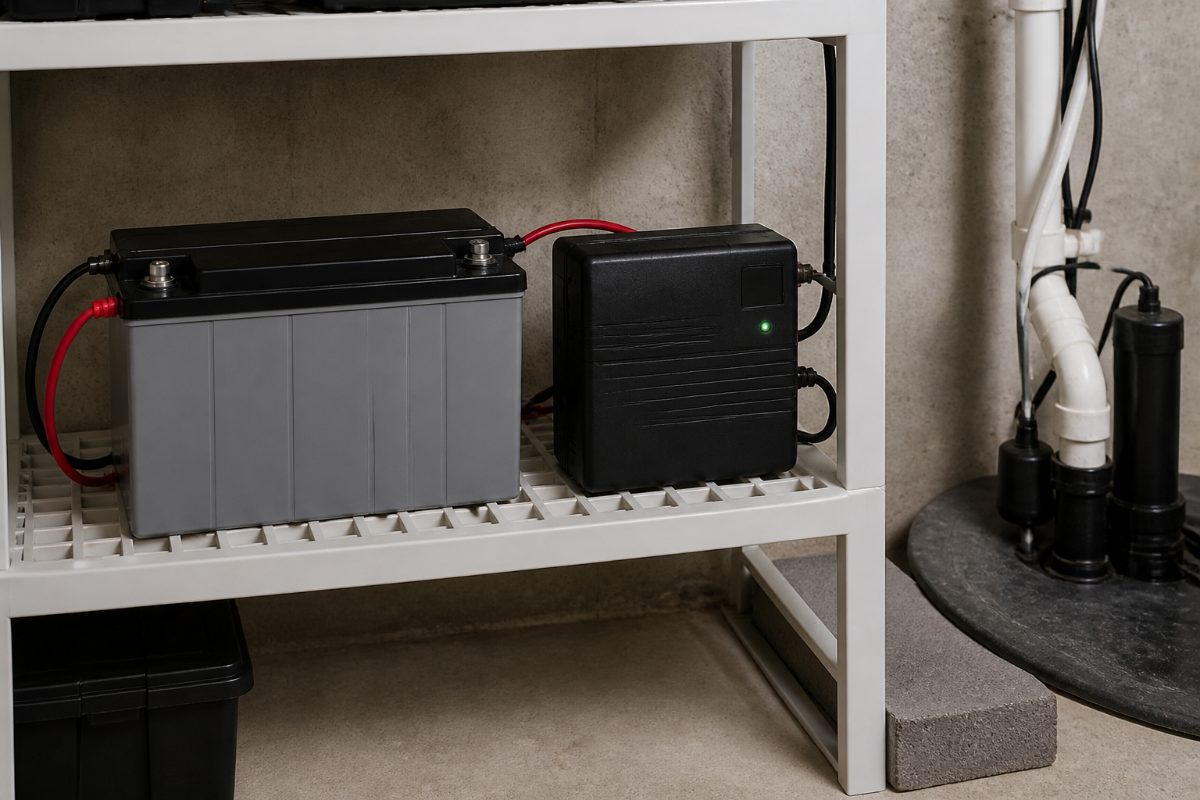
Cold-weather storage deserves attention if the battery sits near a cold foundation wall. Fullriver advises keeping a lead-acid backup battery fully charged through winter, noting that a discharged lead-acid battery can freeze and suffer permanent damage while a fully charged battery is less vulnerable under normal conditions. Keep the battery and charging equipment installed and maintained according to their instructions.
How should you maintain and test a battery backup?
Test the backup as a working system before storm season, then inspect the battery and pump periodically. A test can reveal a weak battery, an obstruction, or a pump that fails to start while there is still time to address the problem.
Tucker’s Plumbing, citing North Dakota State University Extension, recommends slowly adding water to the sump pit and watching the pump turn on, move water, and shut off; its checklist suggests making the pump run at least twice during a test. The same checklist calls for checking that the pit is clean, the float moves freely, the check valve holds, and the discharge line carries water away from the house.
- Read the backup system’s test instructions and locate its status indicators or alarm.
- Inspect the pit for debris that could interfere with the float or pump.
- Use the manufacturer’s approved test method to make the primary pump run, then observe its start, pumping, and shutoff.
- Test the backup system using its own instructions, including the alarm or battery-status feature if the system provides one.
- Look for a clear discharge path and confirm the system returns to its normal standby state after testing.
Tucker’s Plumbing’s checklist says North Dakota State University Extension recommends discharging sump water at least 20 feet from the house. Local rules also matter, including restrictions on sending sump water into a sewer. Use the applicable local requirements and the pump’s installation instructions when checking the discharge route.
Battery maintenance is more than looking for a light on the control panel. Fullriver recommends keeping the backup battery fully charged through winter, and its article highlights the effect of low temperature on lead-acid capacity. Record the date of each inspection and any alarm or failed test so that a recurring problem is easier to spot.
What should you do during a power outage?
During a power outage, first determine whether the backup system has started and whether water is continuing to enter the sump pit. Check the system’s status or alarm, listen for pump operation, and observe whether water is being discharged; these observations help distinguish a working backup from a battery or pump fault.
Use a simple sequence rather than repeatedly resetting equipment:
- Look at the backup controller for a battery, power, or alarm indication and follow its instructions.
- Check whether the backup pump is operating when the water level rises.
- Observe the discharge area from a safe, dry location to see whether water is leaving the system.
- If the pump does not start, the alarm indicates a fault, or the water level keeps rising, move water-sensitive belongings away from the affected area if it is safe to do so.
- After power returns, confirm that the primary pump resumes operation and that the backup returns to its intended standby mode.
A backup battery does not correct a jammed float, a clogged or poorly maintained discharge route, or a pump that has reached the end of its service life. Canada.ca lists these among reasons a sump pump may stop working. If the water continues to rise despite a running backup, treat the pumping capacity or equipment condition as a separate problem rather than assuming the battery is the only issue.
One Reddit user described the battery alarm as the first thing that began beeping during occasional power problems. That account is a useful reminder to learn what your own system’s alarm means while the basement is dry. The sound may alert you to a battery condition, but the controller’s manual is needed to identify the specific signal on your equipment.
Is the cost of a backup worth it for your home?
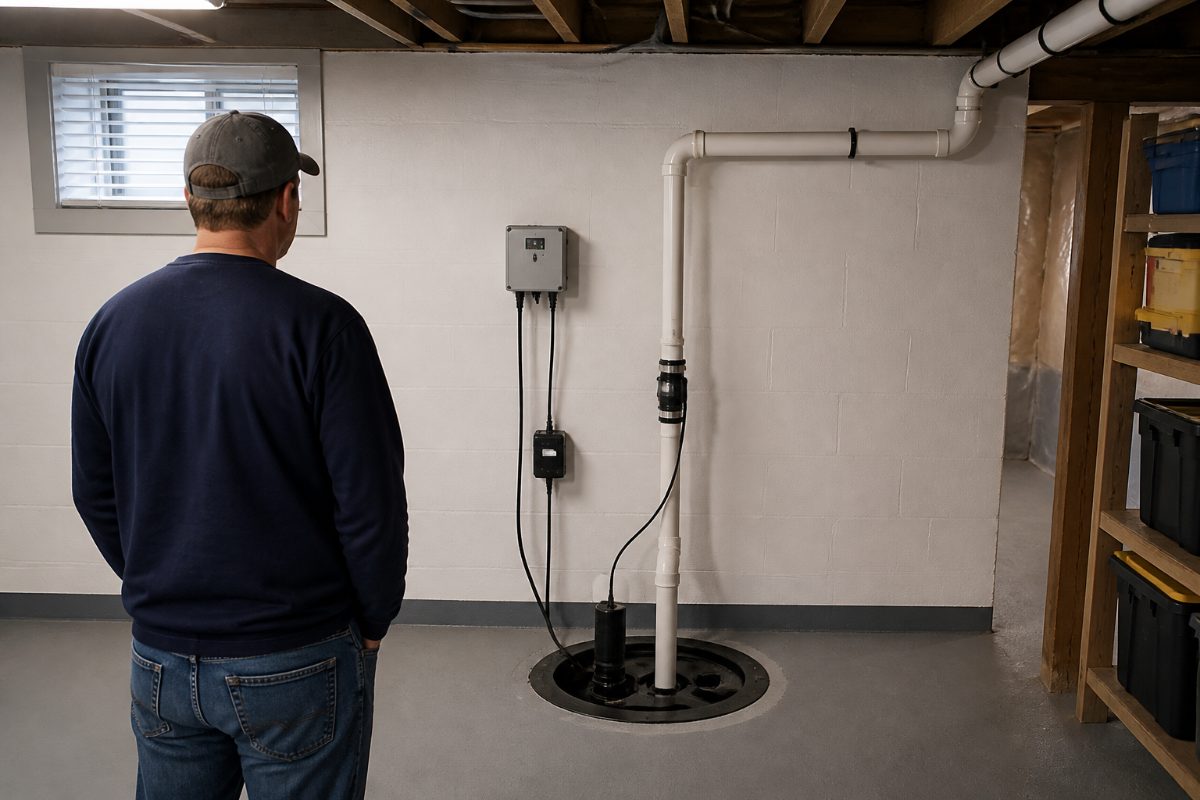
A backup is easier to justify when a pump failure could damage a finished basement, stored belongings, or other property you would need to replace. There is no price or avoided-damage figure that applies to every home, so compare the installed system cost with the financial and practical impact of water entering your particular basement.
Make the comparison with your own facts. List the items and rooms that could be affected, note whether water has entered before, and consider how often the primary pump runs during wet periods. Then get the total cost of a compatible backup setup, including any installation work needed for your home, rather than comparing battery prices alone.
| Home situation | Practical next step |
|---|---|
| Basement has flooded before | Prioritize finding the cause and confirming the primary pump, float, and discharge route work; then assess backup power. |
| Pump runs often during storms | Track how frequently it cycles and size any backup around the actual pump and system specifications. |
| Basement is mostly unfinished and has little stored there | Compare the system cost with your personal exposure, while still maintaining and testing the primary pump. |
| Existing pump has a known fault | Address the pump, float, or discharge problem first; a battery backup will not repair that fault. |
When budget is tight, start with maintenance and testing rather than buying an incompatible battery or a backup system that does not match the pump. A working primary pump, a free-moving float, and a clear discharge route are essential parts of the protection plan whether or not you add a battery. If those checks reveal a fault, compare the repair with the cost of a suitable replacement or backup system.
What should you do before the next storm?
Before the next storm, test the primary pump and backup, review the battery’s condition, and make sure the discharge route is clear. This short preparation sequence gives you a practical basis for deciding whether the current system is reliable enough or needs repair or additional backup.
- Write down the primary pump model and the backup system’s battery requirements.
- Test the primary pump and backup using their instructions; observe the float, pump cycle, alarm, and discharge.
- Check the battery’s charge and age, and confirm its chemistry matches the system’s charger.
- Note any prior flooding, frequent cycling, or outage-related pump failures.
- Use those observations to choose the next step: maintenance, repair, battery replacement, or a compatible backup system.
For a step-by-step check of the primary pump, use the existing guide How to Test a Sump Pump Before Winter. If the pump or discharge setup fails a test, correct that issue before relying on a battery backup to protect the basement.
Frequently Asked Questions
Will a battery backup run my main sump pump?
Some backup systems operate a secondary pump rather than powering the primary pump itself. Check the system’s specifications to see which pump it supports and how it switches to backup operation.
Does a battery backup protect against a stuck float switch?
No. A battery can provide power, but it does not free a stuck float switch or repair a faulty pump. Test the float and pump as part of routine system checks.
Can cold weather affect a sump pump battery?
Yes. Fullriver reports that lead-acid battery capacity declines in cold temperatures and cites lower available capacity near freezing and around 0°F than at about 80°F. Keep the battery charged and follow the manufacturer’s storage and charging instructions.
How often should I test the backup pump?
Follow the backup system’s instructions and include testing in your regular sump-pump maintenance. Tucker’s Plumbing, citing North Dakota State University Extension, describes testing the pump by adding water slowly and suggests making it run at least twice during a test.
Key points to remember
A battery backup is most relevant when power loss could leave your basement exposed to incoming water. Choose a compatible system based on the pump’s actual requirements, test the full setup, and keep the battery maintained. Your next useful step is to run a system test and record any fault before deciding whether you need additional backup.
References
- Sump Pump Battery Backup: What You Need Before Winter - Fullriver Battery Blog
- Sump Pump Battery Backup Installation | Thornton Plumbing, HVAC & Electrical
- Sump pumps - Canada.ca
- Sump Pump Checklist Before Storm Season | Tucker's Plumbing
- Sump pump battery backup : r/homeowners
- Are battery backup sump pumps a sham? Or am I doing ...
Information in this post was checked as of November 2026. Policies and prices may change, so please verify important details with official sources.


Comments
Post a Comment