Why a Garage Door Opener Struggles in Cold Weather
Key Takeaways
- Cold weather can make lubricants less fluid, increase mechanical resistance, weaken battery performance, and freeze the door’s bottom seal to the floor.
- A struggling opener does not automatically mean the motor has failed; the door, tracks, springs, seals, and power source can all contribute.
- Start with safe visual checks and stop if the door is stuck, uneven, unusually heavy, or showing signs of spring or cable damage.
- Keep the door and moving parts maintained with products intended for garage doors and cold conditions, and use the opener’s manual override only as its instructions direct.
Table of Contents
- Why does a garage door opener struggle in cold weather?
- How cold affects lubricant, metal, and moving parts
- Could the opener’s battery or the door seal be the problem?
- How to tell whether the opener or the garage door is at fault
- What to do when the door is slow, noisy, or reverses
- Winter maintenance that reduces opener strain
- When should you call a garage door professional?
- Advice for first-time troubleshooters and experienced DIYers
- Frequently Asked Questions
- Your next step
A garage door opener can struggle in cold weather because the opener is moving a door system that has become harder to move. Cold can thicken some lubricants, reduce battery performance, contract metal parts, and freeze the bottom seal against the floor. Before blaming the motor, look for signs that the door itself is binding or frozen.
Why does a garage door opener struggle in cold weather?
Cold affects more than the opener’s motor. The door’s rollers, hinges, tracks, springs, weather seals, and power source all influence how much effort an opening cycle requires. If several parts add resistance at once, a system that works in mild weather may slow down, make more noise, or stop partway through its travel.
Vision Overhead Doors describes cold-weather performance as a system issue: thickened lubricant, metal contraction, battery limitations, and frozen seals can all contribute. That distinction matters because replacing an opener will not fix a door that is stuck to the floor or difficult to move along its tracks.
| What you notice | Possible cold-weather cause | What it suggests |
|---|---|---|
| The door moves slowly or sounds strained | More resistance in moving parts or the door system | Look for binding or poor door movement before assuming the motor is defective. |
| The door will not lift from the floor | The bottom seal may be frozen to the concrete | Do not keep forcing powered cycles against a stuck door. |
| The opener is unresponsive or stalls | A weak power source or battery performance affected by cold | Consider whether the opener has battery backup and whether the issue is limited to an outage. |
| The door closes, then reverses | Something may be obstructing or resisting door travel | Check the door’s path and visible hardware rather than repeatedly pressing the control. |
These clues are not a diagnosis by themselves. A slow door can have more than one cause, so note what the door does, what sounds different, and whether the problem appears only during cold conditions. That short description helps separate a seasonal change in resistance from a persistent opener or door fault.
How cold affects lubricant, metal, and moving parts
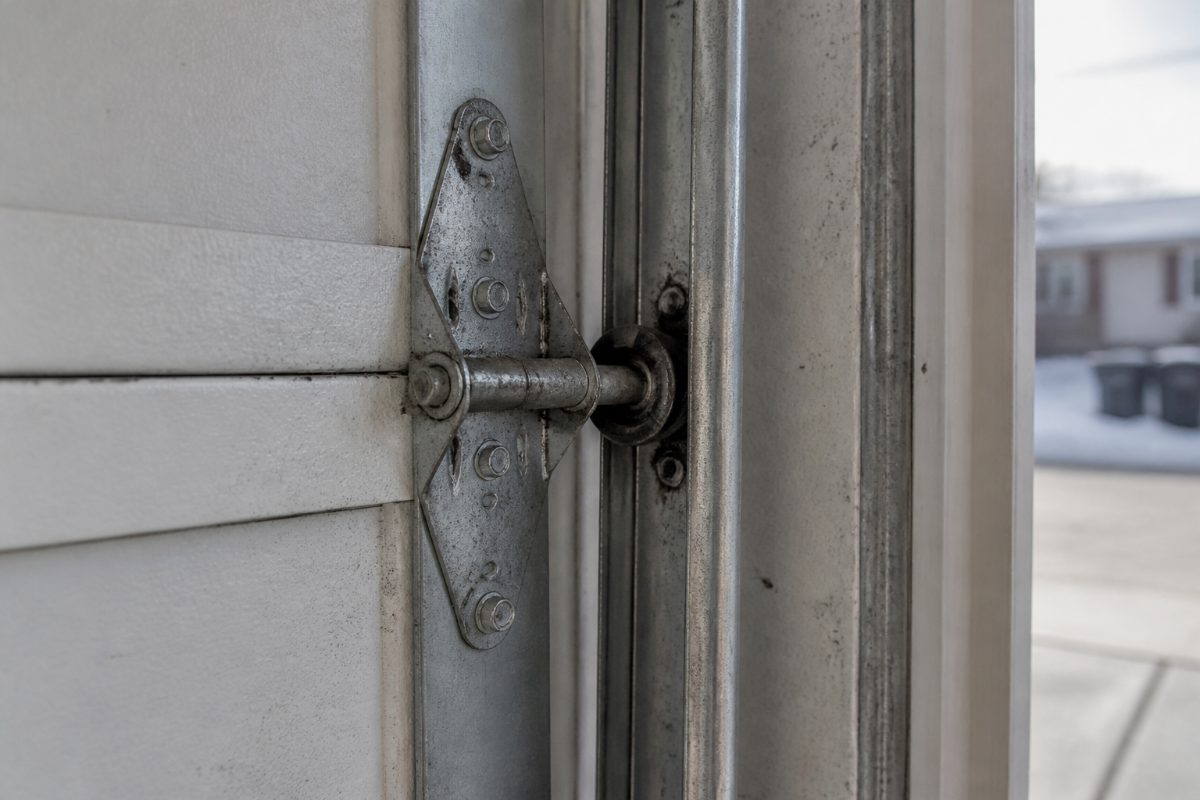
Lubricant that moves freely in warmer weather can become thicker in the cold, making rollers, hinges, and other moving parts harder to move. Metal contraction can also change the fit or alignment of components, adding friction to a system that depends on smooth travel.
Metro Garage Doors’ 2026 buyer’s guide says screw-drive opener lubricant thickens below 20°F and can make that type of opener struggle. Treat that temperature as a detail from its guide, not a universal cutoff for every opener, lubricant, or garage. The useful takeaway is that drive type and lubricant choice can matter during a cold snap.
When movement is stiff, the opener has to work against added resistance. That can sound like a motor problem even when the source lies elsewhere in the door assembly. A quick look at the visible track and door path can reveal an obstruction, but do not adjust tracks or hardware just because the door sounds different.
American Door Works recommends using a garage-door-specific lubricant suited to cold weather on rollers, hinges, and tracks, and maintaining springs as part of winter preparation. Another cold-weather maintenance article from Overhead Door Northland recommends a garage-door-specific silicone or lithium-based spray for hinges, metal rollers, and a light application to springs. Use the product label and your door or opener instructions to decide what is suitable; a general household lubricant is not automatically the right choice.
Lubrication is maintenance, not a repair for a bent track, damaged roller, loose part, or failing spring. If a component looks damaged or the door moves unevenly, stop instead of applying more lubricant and running the opener again. Lubricant can reduce friction, but it cannot restore a damaged part or correct a door that is out of balance.
Could the opener’s battery or the door seal be the problem?
Yes. Cold can reduce battery performance, while moisture at the bottom seal can freeze the door to the garage floor. These causes can look like a weak opener because the door either will not start moving or cannot complete its normal travel.
Front Range Raynor notes that low temperatures slow battery performance and can cause battery-reliant openers to stall or fail. Vision Overhead Doors also identifies battery power loss and frozen seals as cold-weather concerns. If your opener includes battery backup, distinguish a problem during a power outage from one that happens while household power is available; the backup battery is intended to provide a separate source of power, not to remove mechanical resistance from the door.
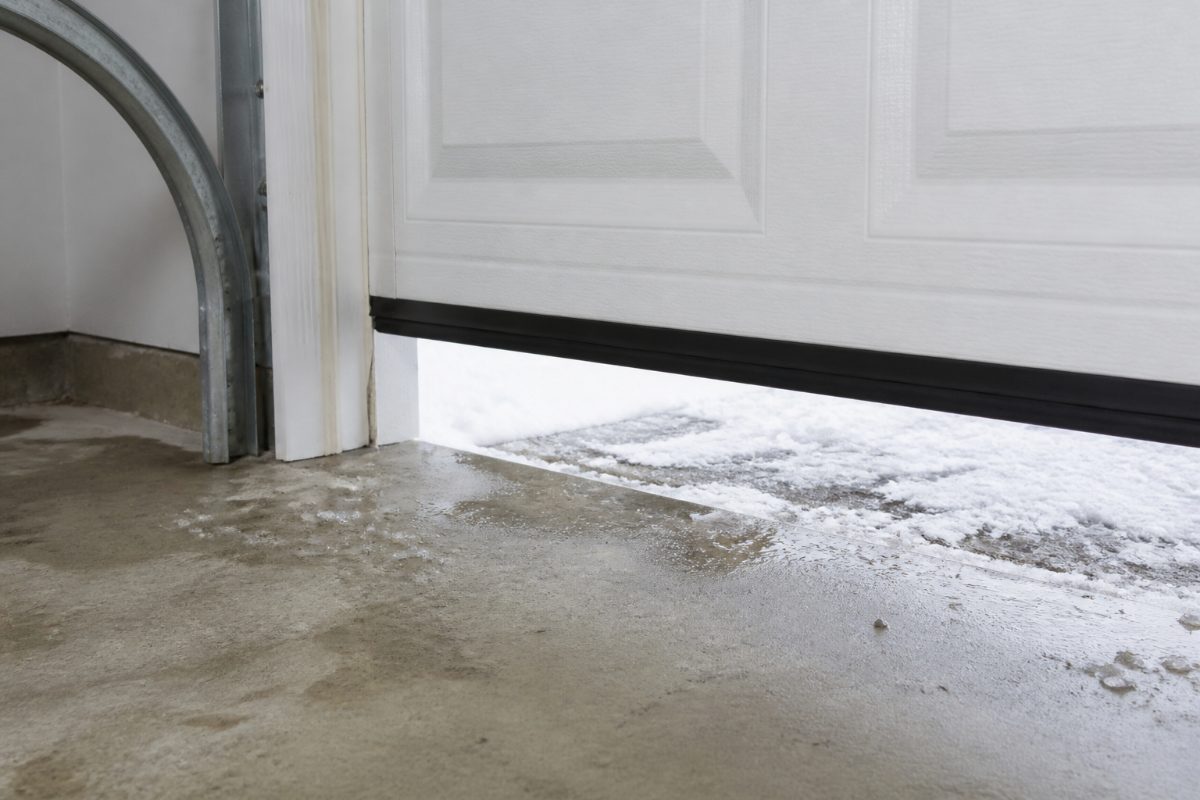
A bottom seal that has frozen to the floor creates a physical bond between the door and the concrete. Pressing the wall control repeatedly does not release that bond; it simply asks the opener to pull against it. If the door’s lower edge appears frozen down, do not force it with the opener. The blog already covers the specific process for a frozen door in its separate guide, How to Free a Garage Door Frozen to the Ground.
For a battery-related issue, identify whether the opener is using backup power and consult the opener’s manual for the battery type and its care instructions. Do not infer that the motor needs replacement from a single cold-weather failure. A battery can explain a lack of power, but it cannot explain a door that is visibly stuck to the floor or crooked in its opening.
How to tell whether the opener or the garage door is at fault
Start by observing the door before changing settings or disconnecting equipment. The key question is whether the door appears to move freely and evenly, or whether it is stuck, crooked, unusually heavy, or obstructed. Springs and cables help balance and lift the door, so symptoms around those parts call for caution rather than a DIY adjustment.
- Look at the closed door. Check whether the bottom edge is stuck to the floor, whether anything blocks the door’s path, and whether one side appears lower than the other. Skylift Garage Doors lists a stuck door, partial opening, a door that closes too quickly, and one side sagging lower as signs associated with spring problems.
- Observe one normal operating attempt. If the door begins moving and then stops, note where it stops and whether it reverses. If it does not move at all, note whether the opener has power and whether the problem began during an outage. Avoid repeated attempts when the door is visibly frozen or binding.
- Listen for a change in the system. A strained or louder sound paired with slow movement points toward added resistance, but sound alone cannot identify the failed part. A running opener with a door that does not move should not be treated as proof that the motor is the only problem.
- Stop when the door looks unsafe or unbalanced. Do not pull on cables, loosen spring hardware, or try to lift a crooked door. A door that is stuck, partly open, or behaving unpredictably needs a professional assessment before more powered cycles.
- Use manual release instructions carefully. Springfield Utility Board advises people with automatic garage doors to know how to use the manual override before a power outage. Find the opener’s own instructions and learn the release procedure in advance; a release does not correct a frozen seal, damaged spring, or heavy door.
This sequence does not require taking the opener apart. It helps establish whether the visible problem is power-related, a frozen seal, a travel obstruction, or a door that may not be balanced. If the cause is not clear and the door is heavy, uneven, or stuck, stop the test rather than trying to prove that the opener can lift it.
What to do when the door is slow, noisy, or reverses
Match the response to the symptom instead of treating every cold-weather problem as a motor failure. American Door Works lists increased sticking or closing trouble among winter concerns, and Skylift Garage Doors identifies partial opening and a door that closes too quickly as possible spring-problem signs. Those symptoms deserve different responses.
| Symptom | Safe next step | Avoid |
|---|---|---|
| Slow movement, with no visible damage | Inspect the door path and visible tracks for an obstruction; note whether the problem began with the cold. | Repeatedly cycling the opener to see if it will eventually work. |
| Door seems frozen at the bottom | Stop powered operation and address the frozen-seal situation using a suitable door-specific method. | Pulling hard with the opener or forcing the door upward. |
| One side hangs lower, or the door drops or closes too quickly | Leave the door in a safe position and arrange professional service. | Adjusting spring tension or handling cables. |
| Opener is silent during a power outage | Use the opener’s manual and learn the manual-override procedure. | Assuming the backup battery can overcome a mechanical jam. |
| Door closes and then reverses | Check for an obstruction in the door’s travel path and observe whether the door is binding. | Changing opener force settings without identifying the cause. |
A reversing door is a symptom, not a reason to increase the opener’s force. If the door is obstructed or mechanically resistant, adjusting force can mask the underlying issue instead of removing it. Clear only a visible, accessible obstruction; leave adjustments to tracks, springs, cables, and opener force settings to someone equipped to diagnose the system.
If the opener still struggles after a visible obstruction is removed and the door is not frozen, document the conditions: whether the issue occurs only in cold weather, whether the door completes a full cycle, and whether the opener has battery backup. These observations are more useful than repeatedly operating a door that may be binding.
Winter maintenance that reduces opener strain
Before a cold stretch, focus on the contact points and moving parts that can add resistance. American Door Works recommends checking or replacing weatherstripping before freezing conditions, lubricating rollers, hinges, and tracks with a cold-weather-friendly product, and maintaining the opener and springs. Its advice also cautions against slamming or forcing a door in freezing conditions.
- Inspect weatherstripping. Look at the bottom seal and the seals around the door for visible gaps or damage. A sound seal limits drafts, while a damaged or wet bottom edge can contribute to sticking in freezing conditions.
- Use the correct lubricant. Choose a garage-door-specific product that is suitable for cold weather, then apply it only where the product and equipment instructions allow. Overhead Door Northland specifies silicone- or lithium-based spray for certain door parts, but follow the product directions rather than treating all components alike.
- Keep the travel path clear. Remove items that could interfere with the door and check that the visible track path is unobstructed. This simple step matters because a door cannot travel normally if something is in its way.
- Learn the manual override before an outage. Springfield Utility Board includes knowing how to use the manual override among its outage-preparation steps for automatic garage doors. Read the opener manual while the door is operating normally, not during a power interruption.
- Do not turn maintenance into spring repair. American Door Works recommends maintaining springs, but a homeowner should not interpret that as permission to adjust spring tension. If a spring or cable looks damaged, or the door is uneven, stop and arrange service.
An insulated garage door can help with temperature control, but it does not directly fix a binding door or a weak opener. Front Range Raynor discusses insulation as part of cold-climate door selection, while its guidance also treats opener performance as a separate consideration. If you are choosing between a door upgrade and opener repair, first identify whether the immediate problem is heat loss, mechanical resistance, power, or a combination.
When should you call a garage door professional?
Arrange professional service when the door is stuck, opens only partway, moves unevenly, closes too quickly, or shows visible spring or cable wear. Skylift Garage Doors lists these kinds of symptoms among signs that can accompany spring trouble, and the opener should not be expected to compensate for a door that is difficult or unsafe to move.
Stop operating the opener if it strains against a frozen door, if one side sags, or if the door’s movement becomes unpredictable. Avoid touching or adjusting springs, cables, and track hardware. These are not ordinary lubrication points; a visible problem in these parts can affect the door’s balance and movement.
If the door looks straight and unobstructed but the opener still stalls, the service visit can be more focused when you report the exact symptom. Note whether the opener is silent, whether its motor runs without moving the door, whether the problem occurs only in cold weather, and whether the unit has battery backup. That information helps separate a power issue from a door-resistance problem without risking more cycles.
For a power outage, use the manual override only according to the opener manufacturer’s instructions and only when the door’s condition allows safe handling. Springfield Utility Board’s outage guidance supports learning the override procedure ahead of time; it does not make an unbalanced or stuck door safe to move manually.
Advice for first-time troubleshooters and experienced DIYers
If this is your first winter with an automatic garage door, keep the inspection simple: observe the door’s path, look for a frozen bottom edge, and note whether the opener has power. Do not remove covers, adjust force settings, or touch springs and cables. A short record of the symptom is more useful than a string of powered attempts.
If you already handle routine maintenance, inspect seals and visible moving parts before cold weather and use only a product intended for garage doors and the relevant component. The 2026 Metro Garage Doors guide’s below-20°F observation concerns screw-drive lubricant, so do not apply that number as a universal operating limit for every opener. Check the model’s manual for the drive type and the manufacturer’s maintenance directions.
For either group, separate three questions: Is the opener receiving power? Is the door physically free to move? Does the door appear balanced and even? A battery or outage points toward power; a frozen seal or obstruction points toward door resistance; a sagging or fast-closing door points toward a mechanical problem that should not be adjusted as a DIY fix.
Frequently Asked Questions
Can cold weather damage a garage door opener?
Cold weather can reduce battery performance and make some lubricants thicker, while the door system may face added resistance from frozen seals or changes in metal fit. Those conditions can make an opener stall or work harder, but a cold-weather symptom alone does not prove the motor is damaged.
Why does my garage door opener hum but the door does not move?
The door may be stuck or mechanically resistant, including from a bottom seal frozen to the floor. Stop repeated attempts and inspect the door’s visible condition; if it is crooked, heavy, or still will not move after a safe obstruction check, arrange service.
Should I increase the opener’s force setting in winter?
Do not increase force just because the door struggles in cold weather. A frozen seal, obstruction, or spring problem needs to be identified first; raising force can hide resistance rather than correct its cause.
Is a screw-drive opener more likely to struggle in the cold?
Metro Garage Doors’ 2026 buyer’s guide says screw-drive lubricant can thicken below 20°F and cause struggling. That is a guide-specific observation, not a universal temperature threshold, so use your opener’s drive type and manufacturer’s cold-weather instructions when evaluating performance.
What should I check before calling for service?
Note whether the opener has power, whether the bottom seal appears frozen, whether anything blocks the visible door path, and whether the door moves evenly. Do not test a door with suspected spring or cable damage; report the symptoms and stop operating it.
Your next step
On the next cold-weather failure, stop after one safe observation and identify whether the issue is power, a frozen seal, an obstruction, or uneven door movement. If the door is stuck, heavy, crooked, or closes too quickly, leave the springs and cables alone and arrange professional service; if it appears normal, consult the opener manual for its battery and maintenance instructions before changing any settings.
References
- Best Garage Door Opener for Cold Climate 2026
- How to Choose a Garage Door for Cold Climates
- How Cold Weather Affects Garage Door Openers
- Outage Preparation – Springfield Utility Board
- Your Garage Door in Cold Weather: What to Know & Do
- Garage Door Spring Repair in Maryville, TN | Skylift Garage Doors
- Garage Door Opener Buyer's Guide (2026) · Metro Garage Doors
- How Cold Weather Affects Garage Door Springs & Motors
Information in this post was checked as of October 2026. Policies and prices may change, so please verify important details with official sources.


Comments
Post a Comment