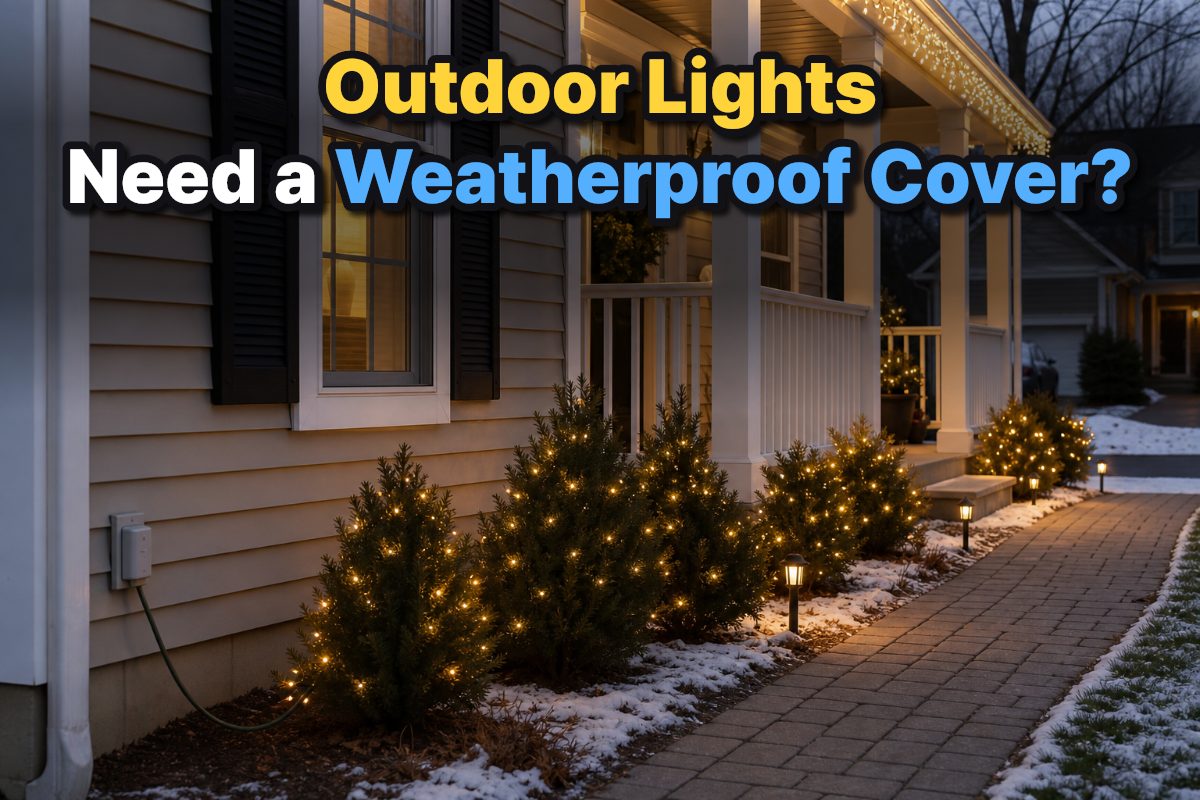
Weatherproof Covers for Outdoor Christmas Lights: Needed?
Key Takeaways
- Use a weatherproof cover or protective box when outdoor Christmas light plugs or connections are exposed to rain, snow, or moisture.
- A basic outlet cover may not protect a plug while it is connected; choose a cover designed to close around connected cords.
- Protect the plug connection as well as the receptacle, and use products that match the outdoor equipment and installation.
- Set up lights on a dry day, test one section at a time, and keep cords out of walkways.
Table of Contents
- Do outdoor outlets need weatherproof covers for Christmas lights?
- What is the difference between a standard cover and an in-use cover?
- How can you tell whether your existing outlet cover is suitable?
- How do you protect the full Christmas-light connection?
- How should you install and test lights before the display is complete?
- How do you check light strings and extension cords?
- How should you route cords to reduce trip hazards?
- How many light strings can you connect to one outlet?
- Which protection should you choose for your setup?
- What should you do if a plug or connection gets wet?
- Frequently Asked Questions
- Quick checklist before switching on the display
Yes—outdoor Christmas light plugs need protection when they are exposed to rain, snow, or damp conditions. A weatherproof cover that closes around connected plugs can shield the outlet connection; a standard cover that only closes over an unused receptacle may not do that job.
The practical question is not simply whether an outlet is outdoors. It is whether the outlet cover, connected plug, and any extension-cord joint are protected together while the lights are operating. Here is how to choose the right protection and check the setup before switching the display on.
Do outdoor outlets need weatherproof covers for Christmas lights?
Outdoor outlets need weatherproof protection when Christmas-light plugs are exposed to rain, snow, or other moisture. A cover or protective box should shield the connection while the plug is in use, because an ordinary cover may leave the connected plug exposed.
Linkind’s outdoor-lighting safety guide recommends weatherproof outlet covers and connection protectors to keep moisture away while plugs remain connected. DEWENWILS likewise advises against leaving outdoor outlets and extension-cord connections open to rain or snow. These recommendations support a simple rule: protect the whole connection, not just the empty receptacle.
That does not mean every outdoor outlet needs the same accessory in every setup. The right solution depends on the shape of the existing cover, how the cord exits, and whether the cover can close without pressing or pinching the plug or cable. Follow the product instructions for the outlet cover, lights, and any protection box you use.
What is the difference between a standard cover and an in-use cover?
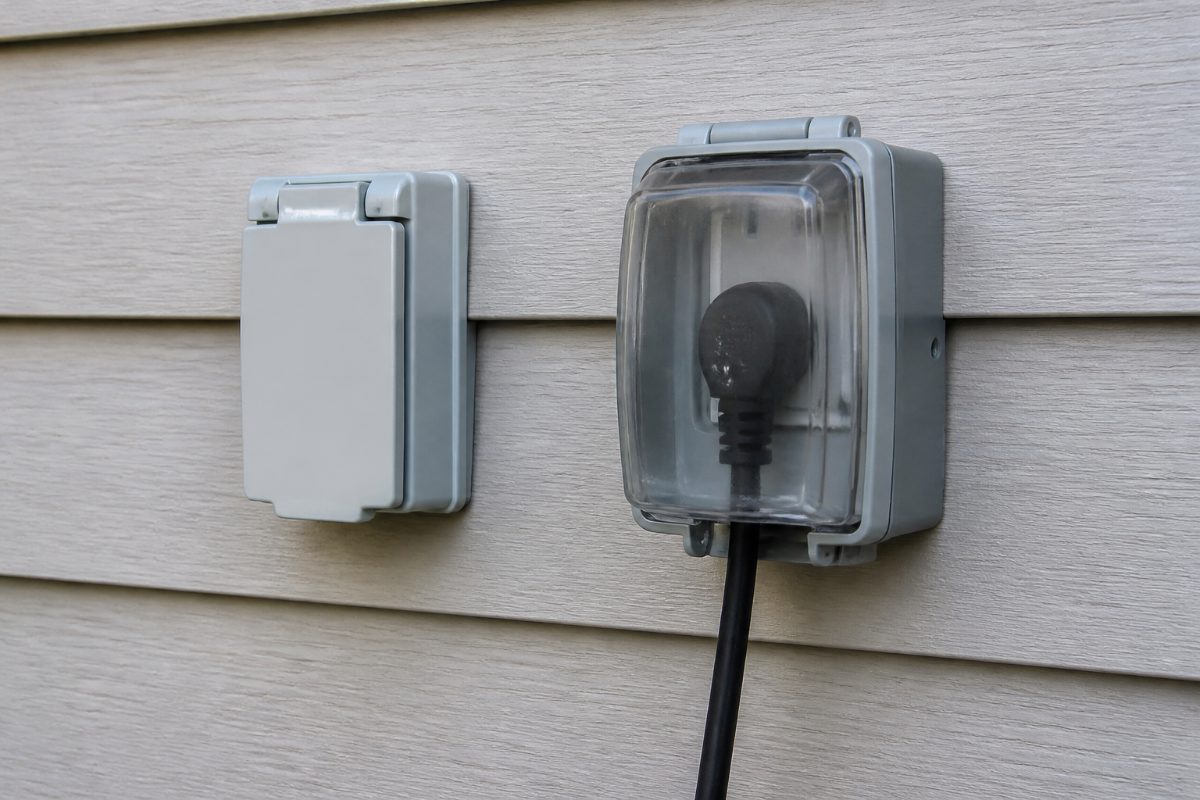
A standard outlet cover protects the receptacle when it is not being used, while an in-use cover or protective box is designed to enclose a connected plug and its cord exit. For Christmas lights, that distinction matters because the plug has to stay connected during the display.
Do not judge a cover only by how it looks when the receptacle is empty. Plug in the light cord while the power is off, then see whether the cover can close around the plug and cord as its instructions specify. If it cannot close, or the cord prevents a proper fit, treat that arrangement as unprotected and select a cover or box designed for connected equipment.
| Protection type | What it is intended to cover | What to consider for lights |
|---|---|---|
| Basic outlet cover | An unused receptacle | It may not enclose a plug that remains connected. |
| In-use weatherproof cover | A receptacle with a plug connected | Check that the cover closes around the plug and cord without forcing them. |
| Protective connection box | One or more plug connections, depending on its design | Check that the connected cords fit and the box closes as intended. |
| Socket cover or seal | An empty light socket or a particular light connection | It is not a substitute for protecting the outlet plug connection. |
The Christmas Light Emporium describes socket covers for empty C7 and C9 sockets separately from weatherproof plug gaskets and other connection-protection hardware. That distinction is useful: a cap for an unused bulb socket addresses a different opening than a cover around the plug at the wall.
How can you tell whether your existing outlet cover is suitable?
An existing cover is suitable for a Christmas-light connection only if it can protect the connected plug and cord in the way its instructions specify. A cover that works with the receptacle empty may leave the plug exposed once the lights are plugged in.
Inspect the setup with the lights unplugged. Look at the cover’s shape and closing mechanism, then compare those features with the plug and cord you plan to use. The goal is a secure fit that does not leave the connection open to the weather or force the cover against the cable.
- Identify what the cover is designed to protect. Read its label or instructions for whether it is intended for a connected plug or only for an unused outlet.
- Check the plug and cord together. A bulky plug or cord angle may prevent a cover from closing fully.
- Check the closure. Close the cover as directed and look for an obvious gap or a cord caught between parts that should meet.
- Choose another suitable protector if it does not fit. Use a compatible in-use cover or protective box rather than relying on a cover that cannot close around the connection.
Do not assume that adding a loose plastic sheet or improvised wrapping creates reliable protection. Linkind recommends purpose-made weatherproof covers and connection protectors; DEWENWILS recommends covers or protective boxes for outdoor connections. Use a product intended for the kind of connection you are protecting.
How do you protect the full Christmas-light connection?
Protect each point where electricity passes through an exposed plug connection, including the outlet connection and any joint between light strings or extension cords. Linkind recommends connection protectors as well as outlet covers, while the Christmas Light Emporium lists moisture-protection products for plug connections and empty light sockets.
A cover around the wall outlet does not automatically protect a separate cord-to-cord joint farther along the display. Trace the cord from the outlet to the lights and note each connection point that sits outdoors. Then match the protection to that point: an outlet cover for the receptacle connection, and an appropriate connection protector for an exposed joint.
Keep the connections arranged so the protector can close and the cord does not pull the plug loose. Do not force several plugs into a box that is too small or close a cover against a cable in a way its instructions do not allow. If a connection cannot be enclosed as intended, change the layout or use a correctly sized protector.
Weather protection starts before the lights go up. Linkind advises checking the local forecast and planning electrical work for a dry day. Dry conditions make it easier to inspect plugs and place covers before the connections are exposed to wet weather.
How should you install and test lights before the display is complete?
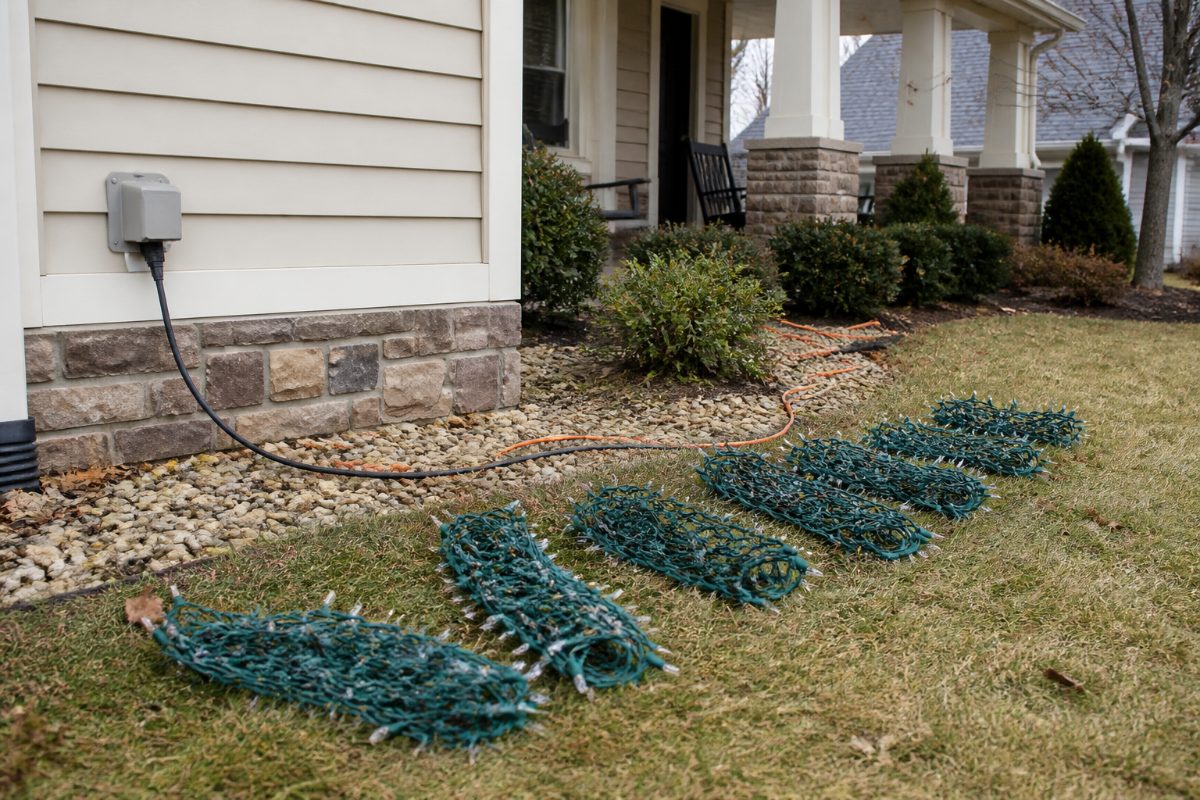
Install outdoor Christmas lights on a dry day, protect the connections as you go, and test one section at a time. Linkind recommends testing each section before completing the full installation, which makes it easier to find a problem while the setup is still manageable.
- Plan the route. Decide where the lights will go and identify the outlet, cord path, and every connection that will be outdoors.
- Inspect each item before connecting it. Look over the light strings and extension cords for visible wear or damage. Set aside anything that appears damaged instead of installing it.
- Make one connection at a time. Plug in the first section, arrange the cord without tension, and enclose the connection with the appropriate protector.
- Test that section. Confirm that it operates before adding another section. If it does not, investigate that section rather than finishing the whole display first.
- Repeat the process. Add and test each section in sequence, keeping each exposed connection protected.
Testing in stages helps narrow down where a problem begins. If the display is built all at once, a fault can be harder to trace because there are more strings and connections to inspect. This is a troubleshooting advantage, not a reason to ignore damaged equipment or continue using a connection that does not fit its protector.
How do you check light strings and extension cords?
Before installation, inspect every light string and extension cord for visible damage, and do not put damaged items into an outdoor setup. A cover can help shield a sound connection from moisture, but it does not repair a worn cord, damaged plug, or broken light string.
Look along the cord rather than checking only the plug ends. Pay attention to places where the cable bends, joins another cord, or may be pressed under an object. Also check that the plug fits the connection normally and that the protector can close without putting pressure on the cord.
At the start of the season, gather the lights and cords before climbing a ladder or placing decorations. Inspecting them on the ground gives you a chance to separate questionable items from usable ones and avoid installing a cord only to discover a problem after it is routed through the display.
VOLT Lighting’s guidance on weatherproofing Christmas lights includes placement and exposed outlets among the considerations. The practical takeaway is to plan for the environment where each connection will sit, rather than treating the lights as protected simply because the bulb string is intended for outdoor use.
How should you route cords to reduce trip hazards?
Route extension cords away from walkways and paths where people are likely to step. Vantecable’s cord-placement guidance specifically addresses hiding outdoor cords along yard edges and reducing Christmas-light trip hazards, so the safest route is one that keeps the cable out of ordinary foot traffic.
Trace the planned route from the outlet to the display before securing the lights. If the shortest line crosses a sidewalk, driveway path, or entrance, plan a route around the edge instead. A longer route is not automatically better, though: use a cord intended for the outdoor setup and follow its instructions rather than stretching a cord taut or putting it where it can be pulled.
Keep the cord path visible enough to inspect and avoid placing it where a door, gate, or other moving part can press on it. Do not bury a plug joint under leaves, snow, or decorations as a substitute for a connection protector. A hidden connection is harder to inspect and does not provide the purpose-made moisture protection recommended by Linkind and DEWENWILS.

How many light strings can you connect to one outlet?
There is no reliable number of Christmas-light strings that applies to every outlet and product. Linkind’s guide says to add up the wattage of the lights before making connections, but the materials available here do not establish a universal string count or a safe load for a particular home circuit.
Use the wattage information on the light products and follow the manufacturers’ connection limits. LED strings generally use less power than traditional incandescent strings, as Linkind notes, but that does not mean every LED set can be connected without checking its instructions. The actual load and allowed number of connected sections depend on the products and circuit involved.
For a practical check, list the lights you plan to use, record their wattage where it is provided, and compare the combined load with the instructions for the lights and outlet setup. If you cannot determine the permitted load from the product information, do not guess based on how many plugs physically fit. A connection protector prevents moisture exposure; it does not increase the electrical capacity of an outlet or circuit.
Which protection should you choose for your setup?
Choose protection based on where the connection is and whether the plug stays connected, not on the decoration’s appearance. A plugged-in outlet connection calls for a cover or box designed to enclose it, while an empty C7 or C9 socket calls for a socket cover made for that socket type.
| Your setup | What to prioritize | Common mistake to avoid |
|---|---|---|
| Lights plug directly into an outdoor receptacle | A cover that closes around the connected plug and cord | Assuming the empty-outlet cover still protects the connection when open or obstructed |
| An extension cord runs from the outlet to the display | Protecting the wall connection and any exposed cord joints | Covering only the wall outlet and overlooking the cord-to-cord connection |
| Several connections sit near one another | A protective box that fits the connections as directed | Overfilling a small box or forcing its lid shut |
| Light strings have unused bulb sockets | Socket covers or seals made for the string’s socket type | Confusing an empty-socket cap with a plug-connection protector |
A Reddit user discussing outdoor holiday lighting described using a weatherproof box for a power strip and timers and reported that it stayed dry through several storms. That is one person’s experience, not a performance guarantee for every box or installation. It does illustrate why the size and closure of a protective enclosure matter when several connected items need shelter.
What should you do if a plug or connection gets wet?
If a plug connection is wet or its protector has not closed properly, do not keep operating the display as if the cover had done its job. Stop and address the setup before using it again; a weatherproof cover is intended to reduce moisture exposure, not to make an already wet or damaged connection safe to use.
Keep the area clear while you assess what happened. Do not handle wet electrical connections, and do not try to solve the problem by wrapping the plug with an improvised covering. Once the setup can be approached safely, inspect the cover, plug, cord, and connection for visible damage, and replace or correct any item that no longer fits or works as intended.
If an outlet, cord, or light string shows damage, or you cannot determine whether a connection is safe to use, leave it disconnected and use the product instructions to decide what to replace. The key distinction is between preventing water from reaching a connection and attempting to use equipment after it has been exposed to water.
Frequently Asked Questions
Can I use a regular outlet cover for Christmas lights?
Only if the cover is designed to protect the receptacle while a plug is connected and can close around your plug and cord as instructed. A cover intended only for an unused outlet may leave the connected plug exposed.
Do I need a cover if the Christmas lights are labeled for outdoor use?
Outdoor-rated lights do not automatically protect the outlet or every plug joint along the cord. Protect exposed connections separately with a suitable weatherproof cover or connection protector, and follow the instructions for each product.
Can I cover an outdoor plug with plastic wrap?
Do not treat plastic wrap or another improvised covering as a substitute for a purpose-made weatherproof cover or connection protector. Use protection intended for the type of plug or connection you need to enclose.
Does a weatherproof box let me connect more lights?
No. A weatherproof box protects a connection from exposure; it does not change the outlet’s or circuit’s electrical capacity. Add the lights’ wattage and follow the light manufacturers’ connection limits rather than estimating by plug count.
Should I cover empty bulb sockets too?
If a string has unused sockets, socket covers made for the socket type can protect those openings. The Christmas Light Emporium lists covers for empty C7 and C9 sockets; those are different from covers for wall outlets and plug connections.
Quick checklist before switching on the display
Walk the route once before you plug in the completed display. Confirm that the outlet cover closes around the connected plug, every exposed joint has suitable protection, the cords are undamaged and out of walkways, and the light strings are connected within their product instructions.
- Use an in-use cover or protective box for exposed plugged-in connections.
- Protect cord joints separately from the wall outlet.
- Inspect cords and lights before installation; do not use visibly damaged items.
- Install on a dry day and test one section at a time.
- Keep cords away from paths and check the product wattage and connection limits.
Start by identifying every outdoor connection, then match each one with a cover that can close around its actual plug and cord. That simple walk-through catches the most common mismatch: a cover that protects an empty receptacle but not the connection needed to run the lights.
References
- How Do You Plug Outdoor Christmas Lights? Safety Guide
- How to Protect Outdoor Outlets and Extension Cords in Winter
- How to Weatherproof Christmas Lights | VOLT® Lighting
- Along Yard Edges: Hide Extension Cords Safely
- Cord Protection - Shop For Christmas Lights & Decor Today! | The Christmas Light Emporium
Information in this post was checked as of October 2026. Policies and prices may change, so please verify important details with official sources.


Comments
Post a Comment