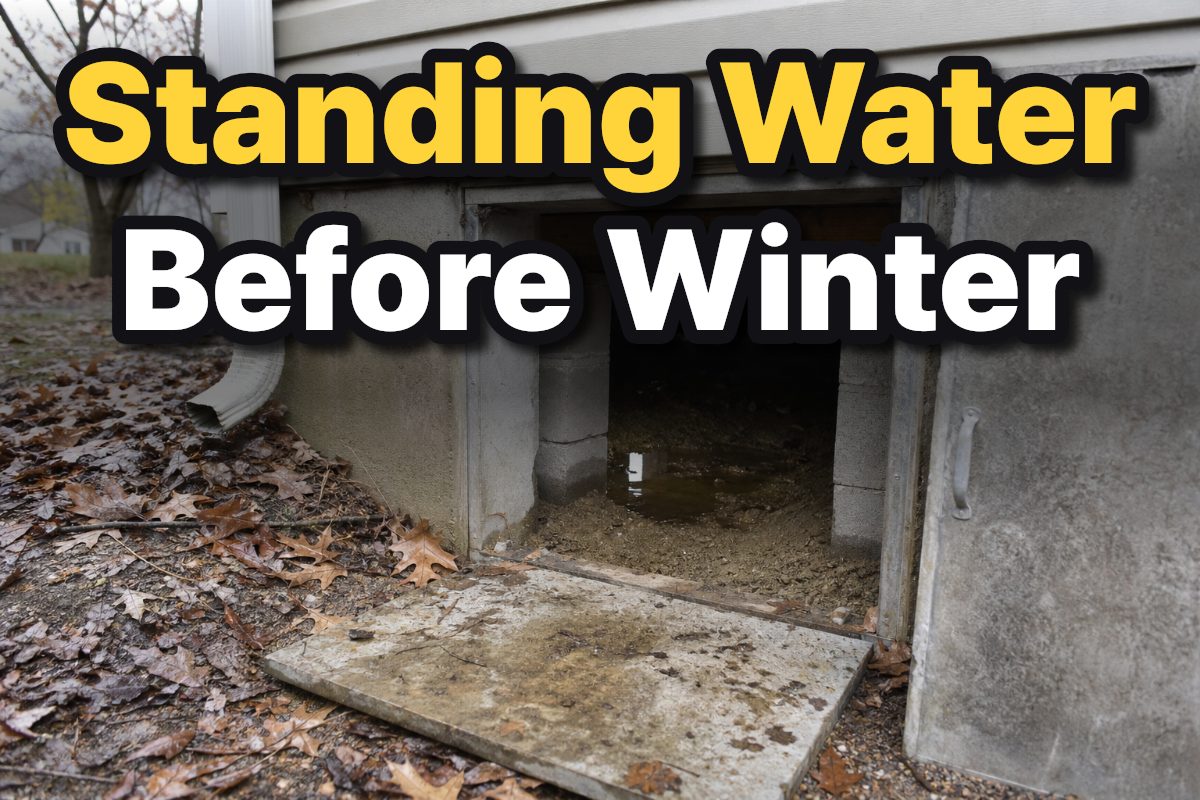
Standing Water in a Crawl Space Before Winter: What to Do
Key Takeaways
- Standing water in a crawl space needs prompt attention: remove the water only after confirming the area is electrically safe.
- Drying a puddle is not enough; trace and correct the source, such as a plumbing leak, poor surface drainage, or groundwater.
- Wet soil can freeze and expand, increasing the risk of frost heave and uneven foundation movement in cold weather.
- Do not cover or encapsulate a wet crawl space before addressing drainage and standing water.
Table of Contents
- Why standing water needs attention before freezing weather
- What to do first if you find water in a crawl space
- How to tell whether water is coming from outside or a leak
- Prevent runoff and groundwater from returning
- When a vapor barrier or encapsulation makes sense
- What can happen if wet soil freezes?
- Common mistakes that make a wet crawl space harder to fix
- Frequently Asked Questions
- Key points before winter
If you find standing water in a crawl space before winter, treat it as an active water problem—not a routine winterization task. First, keep out if water may be touching electrical wiring or equipment; then arrange safe water removal and identify where the water is coming from. A dehumidifier, vapor barrier, or sealed vents cannot solve a pool of water by itself.
Why standing water needs attention before freezing weather
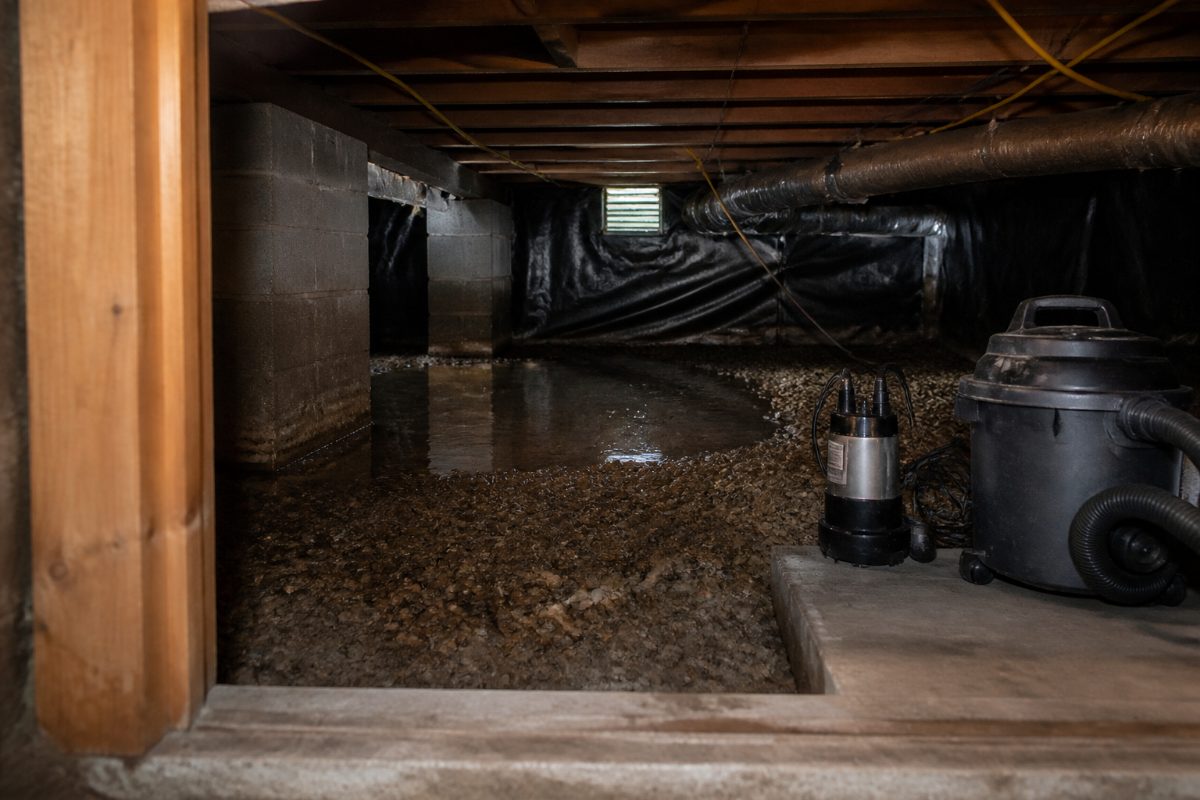
Standing water is liquid water collected in a low area of the crawl space, rather than moisture vapor in the air. The distinction matters: a dehumidifier can manage damp air, but it cannot pump out a puddle or stop water from entering.
Palm Build describes standing water as an urgent problem because moisture can support mold growth and damage materials before the water disappears on its own. Green Attic LLC reports that mold may begin to activate within 24 to 48 hours of moisture exposure, while wet wood can progress toward visible decay over a longer period. Those are reasons to act promptly, not a guarantee that every crawl space follows the same timeline.
| What you find | What it suggests | First response |
|---|---|---|
| A puddle or pooled water | Bulk water is present; humidity control alone will not remove it. | Check for electrical danger from outside the space, then arrange safe extraction. |
| Damp soil without a visible pool | Moisture may be entering through the ground, drainage, or a leak. | Look for a recurring pattern and inspect likely sources. |
| Wet framing, staining, or a musty odor | Materials may have been exposed to moisture for some time. | Document the affected areas and include them in the drying and repair plan. |
Winter adds a separate concern. DESKA explains that frost heave occurs when water in frost-susceptible soil freezes and expands, potentially lifting parts of a foundation unevenly. A wet crawl space does not prove frost heave will happen, but water beneath or beside a home is a reason to resolve the moisture source before freezing conditions arrive.
What to do first if you find water in a crawl space
Use a safety-first sequence: keep people out of a potentially energized area, remove bulk water only when it is safe to do so, and then find the source. Palm Build recommends treating water that contacts electrical components as energized until a professional has confirmed the power is off.
- Stop before entering. Look from a safe location for water near outlets, wiring, electrical equipment, or an appliance. Do not walk through water to reach a breaker or switch.
- Get electrical safety confirmed. If water is touching or could be touching electrical components, stay out and have a qualified professional confirm that the area is safe before anyone enters.
- Remove pooled water. Once safe access is established, a sump pump or wet/dry vacuum can remove bulk water. Choose equipment and a discharge route suited to the amount of water and the site conditions.
- Record what you see. Note where water collects, how deep it is, whether framing or insulation is wet, and whether the area changes after rain or plumbing use. Photos taken from a safe position can help compare conditions later.
- Trace the source. Check for plumbing or HVAC leaks, water entering from outdoors, and groundwater collecting at a low point. Drying without source correction often leaves the same problem ready to return.
Do not treat “the water is gone” as proof that the crawl space is dry. Wet wood, insulation, soil, and other materials can continue to hold moisture after a puddle has been removed. The removal step deals with bulk water; drying and repairs address what remains.
How to tell whether water is coming from outside or a leak
Start by connecting the location and timing of the water to likely sources. A leak may be associated with plumbing or HVAC equipment, while exterior entry and groundwater often show a relationship to rain, runoff, or wet soil around the foundation.
| Clue | Possible source to investigate | Practical check |
|---|---|---|
| Water appears near a pipe, drain, or HVAC component | Internal plumbing or equipment leak | Look for fresh drips, wet connections, or a trail leading away from the equipment. |
| Water appears or increases after rain | Runoff, gutter discharge, or exterior water entry | Inspect the ground around that side of the home and where downspouts release water. |
| Water collects at the lowest part of the crawl space | Groundwater or water moving toward a low point | Mark the collection area and check whether it returns after removal. |
| Water returns without an obvious rain-related pattern | A continuing leak or recurring groundwater entry | Recheck plumbing and equipment, then use the timing and location to guide further inspection. |
ENERGY STAR and EPA guidance cited in the source research emphasizes distinguishing exterior water entry from internal plumbing or HVAC leaks. That distinction determines the repair: a sump pump may remove groundwater but will not repair a leaking pipe, and repairing a pipe will not redirect roof runoff away from the foundation.
Keep a simple log with the date, weather, water location, and whether the amount changed after a plumbing fixture or HVAC system ran. This does not diagnose the cause on its own, but it turns a vague recurring problem into useful evidence and can help avoid paying for a fix aimed at the wrong source.
Prevent runoff and groundwater from returning
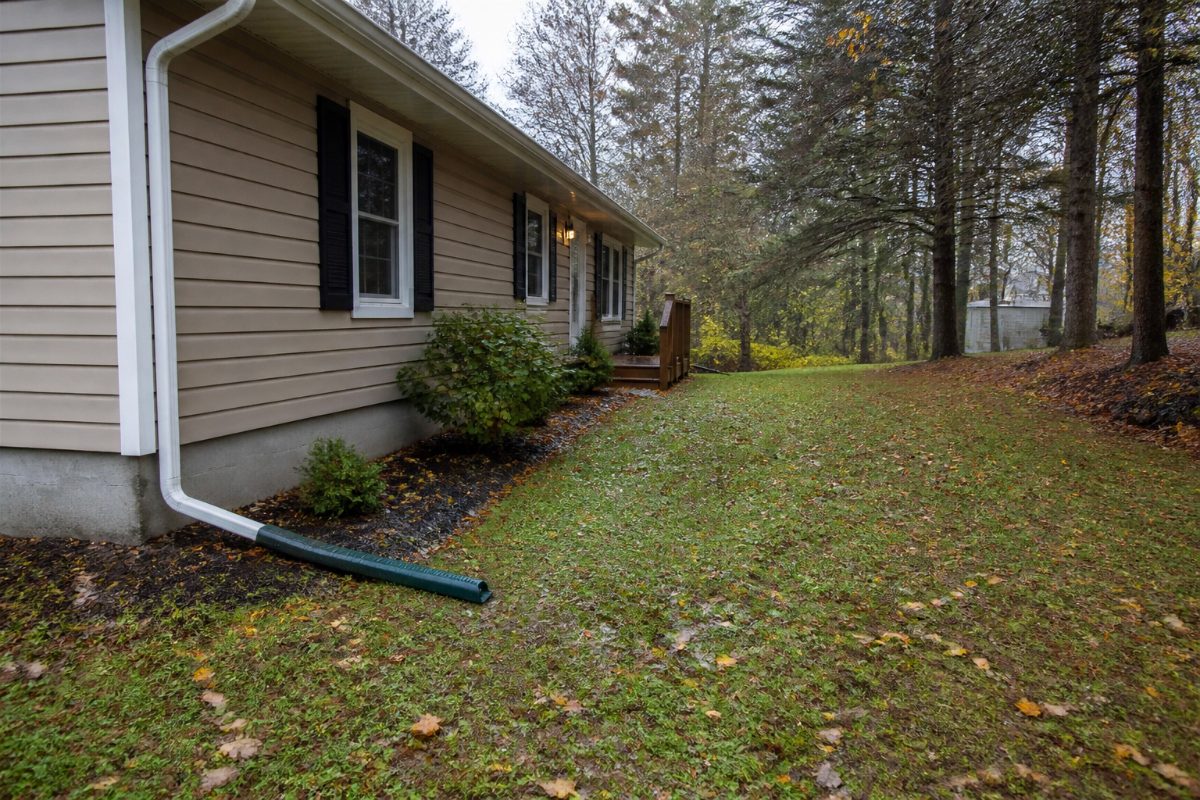
Long-term water management usually involves both reducing water that reaches the foundation and providing a way to remove water that still collects. Check gutters and downspouts first: Trinity Home Inspections notes that downspouts should discharge water away from the foundation so the nearby soil does not become saturated.
Walk the exterior after a rain and look for low spots, soil that directs water toward the house, clogged gutters, or downspouts releasing water beside the foundation. Correcting the route of surface water can reduce the amount reaching the crawl space, but it will not fix a plumbing leak or every groundwater condition.
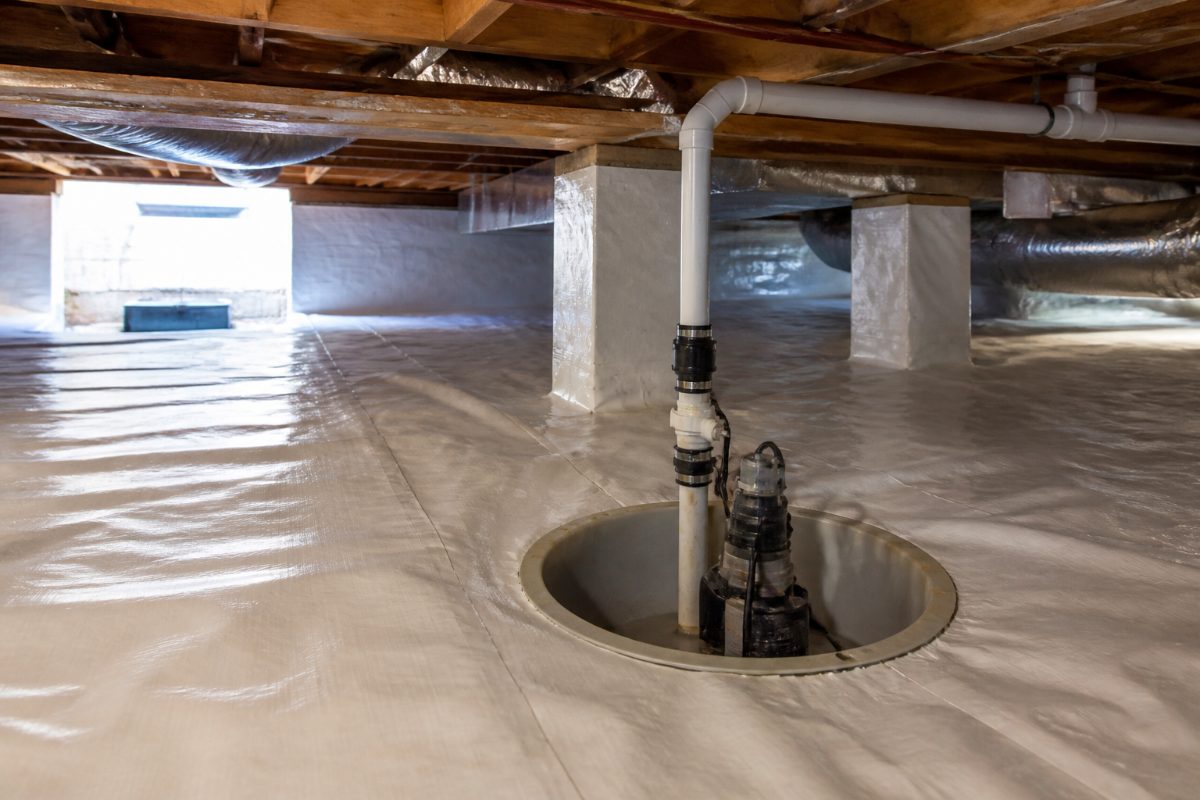
For recurring groundwater, a sump pump may be part of the solution. Everdry Grand Rapids describes placing a sump at the lowest point of the crawl space so collected water can be removed. The pump’s job is to remove water after it reaches the collection point; it does not, by itself, stop water from entering the home.
For that reason, do not assume that installing a pump completes the drainage plan. Crawl Space Ninja describes a broader approach that can include exterior grading, an interior sump system, and a vapor barrier. Which elements make sense depends on the actual water source and the crawl space layout.
When a vapor barrier or encapsulation makes sense
A vapor barrier is a material layer intended to limit moisture moving from soil into the crawl-space air. Crawl Space Ninja describes heavy-duty polyethylene, commonly in 6-mil or 10-mil thicknesses, as a material used for that purpose. A vapor barrier is not a substitute for removing standing water or repairing drainage.
Do not lay plastic over a puddle or seal the space while water remains unresolved. Crawl Space Ninja warns that covering or encapsulating a wet space without drainage can trap moisture and create conditions that favor mold and wood damage. The useful order is to resolve bulk water, address its source, allow affected materials to dry, and then decide whether a barrier or broader encapsulation is appropriate.
Encapsulation is a larger project than placing a sheet of plastic over the soil. It changes how the crawl space is separated from the ground and outside air, so the drainage plan must be considered at the same time. If you already have a vapor barrier, inspect whether water is sitting on top of it, coming in at its edges, or collecting beneath a section; the location can help distinguish a barrier issue from a water-entry issue.
- New homeowner: Take photos, note where water is located, and avoid entering until electrical safety is clear.
- DIY-capable homeowner: Once safe, remove accessible bulk water and inspect gutters, downspout discharge, visible plumbing, and the exterior slope.
- Recurring-water problem: Prioritize identifying the source and planning drainage; repeatedly vacuuming the same puddle treats the symptom only.
- Considering encapsulation: Wait until standing water and the drainage problem have been addressed, rather than using a barrier to hide them.
What can happen if wet soil freezes?
Frost heave is the upward movement that can occur when moisture in frost-susceptible soil freezes and expands. DESKA describes ice lenses—layers of ice that form in soil—as part of this process. The risk is associated with soil and temperature conditions, so a puddle in a crawl space alone does not establish that a foundation will move.
Uneven movement is a concern because one part of a foundation can lift differently from another. DESKA lists foundation cracks, sticking doors or windows, and sloped or bouncy floors among possible signs associated with frost heave. If these symptoms appear along with recurring water, record where and when they occur rather than assuming the water is the sole cause.
Do not count on winter weather to make the moisture problem disappear. Water may freeze, melt, or move through soil as conditions change; none of those outcomes is the same as correcting the route by which water reaches the crawl space. Addressing the source before freezing weather reduces the chance that a seasonal change will complicate an existing drainage problem.
Common mistakes that make a wet crawl space harder to fix
Running a dehumidifier over a puddle: A dehumidifier manages water vapor in air, not bulk water. Remove the pool and correct the source before relying on humidity control for lingering dampness.
Sealing first: Closing vents, laying plastic over water, or encapsulating before drainage is corrected can hide the problem rather than solve it. The water still needs a route out, and wet materials still need to dry.
Assuming the sump pump prevents entry: A sump pump removes water collected at its basin. It does not automatically correct gutter discharge, exterior grading, or a leaking pipe, so investigate and address those sources too.
Waiting for a puddle to evaporate: Green Attic LLC’s reported mold and wood-decay timelines show why waiting is a poor water-management plan. Even if the visible pool shrinks, affected materials may remain damp and the entry point may still be active.
Entering to investigate electrical hazards: Do not step into water that may contact wiring or electrical equipment. Have the power status and safe access confirmed before attempting removal.
Frequently Asked Questions
Can a dehumidifier remove standing water from a crawl space?
No. A dehumidifier reduces moisture vapor in the air; it does not pump out a pool of water. Remove bulk water safely and find its source before using humidity control to help manage damp air.
Will crawl-space water evaporate before winter?
Do not rely on evaporation as the repair. Mold activity and wood damage can begin while materials are still wet, and winter can change how water freezes and moves without correcting the entry source.
Should I install a vapor barrier over standing water?
No. First remove the water and address drainage or the leak that caused it. A barrier or encapsulation installed over an unresolved water problem can trap moisture rather than manage it.
Is a sump pump enough to fix a wet crawl space?
Not necessarily. A sump pump removes water that reaches its collection point, but exterior runoff, downspout discharge, and plumbing leaks may need separate corrections.
What is frost heave, and what signs should I watch for?
Frost heave is the lifting of soil as moisture freezes and expands. DESKA identifies cracks, sticking doors or windows, and sloped or bouncy floors as possible signs of uneven foundation movement; these symptoms should be assessed in context rather than attributed to one cause automatically.
Key points before winter
- Stay out of a flooded crawl space if water may contact electrical components; have safe access confirmed first.
- Remove bulk water with suitable equipment only after the area is safe.
- Trace the source by checking for plumbing or HVAC leaks, runoff, downspout discharge, and recurring groundwater.
- Correct drainage before installing a vapor barrier or encapsulating the space.
- Recheck the crawl space and exterior after rain or water removal to see whether the problem returns.
Prices, project scope, and local requirements can change. Treat any contractor estimate as specific to the home, and confirm current product and local guidance before starting a major drainage or encapsulation project.
References
- Standing Water in a Crawl Space: Wet Rot Timeline and Fixes
- Signs of Frost Heave and How it Affects the Basement | News and Events for Basement Systems, Inc.
- How Does Frost Heave Affect Your Home’s Foundation?
- Standing Water in Crawl Space? Do This First | Palm Build
- The Crawl Space Standards Every Homeowner Should Understand in 2026 – Crawl Space Ninja Store
Information in this post was checked as of October 2026. Policies and prices may change, so please verify important details with official sources.


Comments
Post a Comment