Should You Cover an Outdoor AC Unit for Winter?
Key Takeaways
- Most cooling-only outdoor central AC units do not need a full winter cover because they are designed to remain outdoors.
- Never put a solid storage cover over a heat pump that operates during winter; it needs open airflow.
- If falling leaves or debris are a specific problem, consider limited protection over the top rather than wrapping the entire unit.
- For a window AC, check the manufacturer’s instructions to decide whether to remove it or protect it in place.
Table of Contents
- Should you cover an outdoor AC unit for winter?
- Why a full AC cover can create problems
- When limited protection may make sense
- Heat pumps need a different winter plan
- What to do with a window air conditioner
- How to prepare a cooling-only outdoor AC for winter
- Advice for first-time homeowners and experienced owners
- Frequently Asked Questions
- Key points to remember
Should you cover an outdoor AC unit for winter? Usually, no—not with a full enclosure. Most outdoor central air conditioners are built to withstand outdoor conditions, while a heat pump must stay open to airflow when it runs for heat. The right choice depends on the equipment type and whether a particular hazard, such as falling debris, affects its location.
Should you cover an outdoor AC unit for winter?
For a typical cooling-only central AC unit, a full winter cover is usually unnecessary. Lennox says modern outdoor air conditioners are designed to tolerate outdoor weather, and its guidance does not recommend covering one unless there is a compelling reason. Taskrabbit also notes that a full cover can sometimes cause problems rather than protect the equipment.
A cover may seem like an easy way to block rain, snow, or dirt, but enclosing the unit changes how moisture and air move around it. The useful question is not simply whether winter is coming; it is whether your specific unit faces a debris problem that a limited, manufacturer-permitted cover can address.
| Equipment | Winter approach | Reason |
|---|---|---|
| Cooling-only central AC | Usually leave uncovered; use limited protection only for a specific debris concern. | Modern outdoor units are designed for exposure, and a full cover can create moisture or airflow concerns. |
| Heat pump | Keep the outdoor unit open and unobstructed. | The unit operates in heating season and needs airflow. |
| Window AC | Follow the manufacturer’s instructions; removal or in-place protection may be options. | Its installation and winter exposure differ from a central outdoor unit. |
That distinction matters because the outdoor equipment can look similar even when its winter job is different. Before buying a cover, identify whether the system is cooling-only or a heat pump, then check the equipment instructions.
Why a full AC cover can create problems
A full cover can trap moisture around the unit and may restrict airflow. Lennox cautions against completely covering an air conditioner, especially with a non-breathable material; Jackson Services likewise identifies trapped moisture, pests, and restricted airflow as risks of wrapping a unit. These are reasons to avoid turning a weather-resistant cabinet into a sealed enclosure.
A cover can also obscure the equipment. If leaves, snow, or other debris accumulate around a hidden unit, it may be harder to notice and clear them. A cover is not a substitute for keeping the area around the cabinet reasonably clear or checking it during the season.
Common mistakes to avoid
- Wrapping every side: A full tarp or close-fitting enclosure can hold moisture and limit airflow.
- Assuming all outdoor units are cooling-only: A heat pump may look like an AC condenser but still need to operate in winter.
- Buying a cover before checking the manual: Equipment and manufacturer recommendations differ.
- Leaving a cover on a unit that needs to run: A storage cover is not appropriate for an operating heat pump.
These cautions do not mean that every cover causes damage. They mean that covering the whole cabinet without a specific need can add a new risk without solving a problem your unit actually has.
When limited protection may make sense
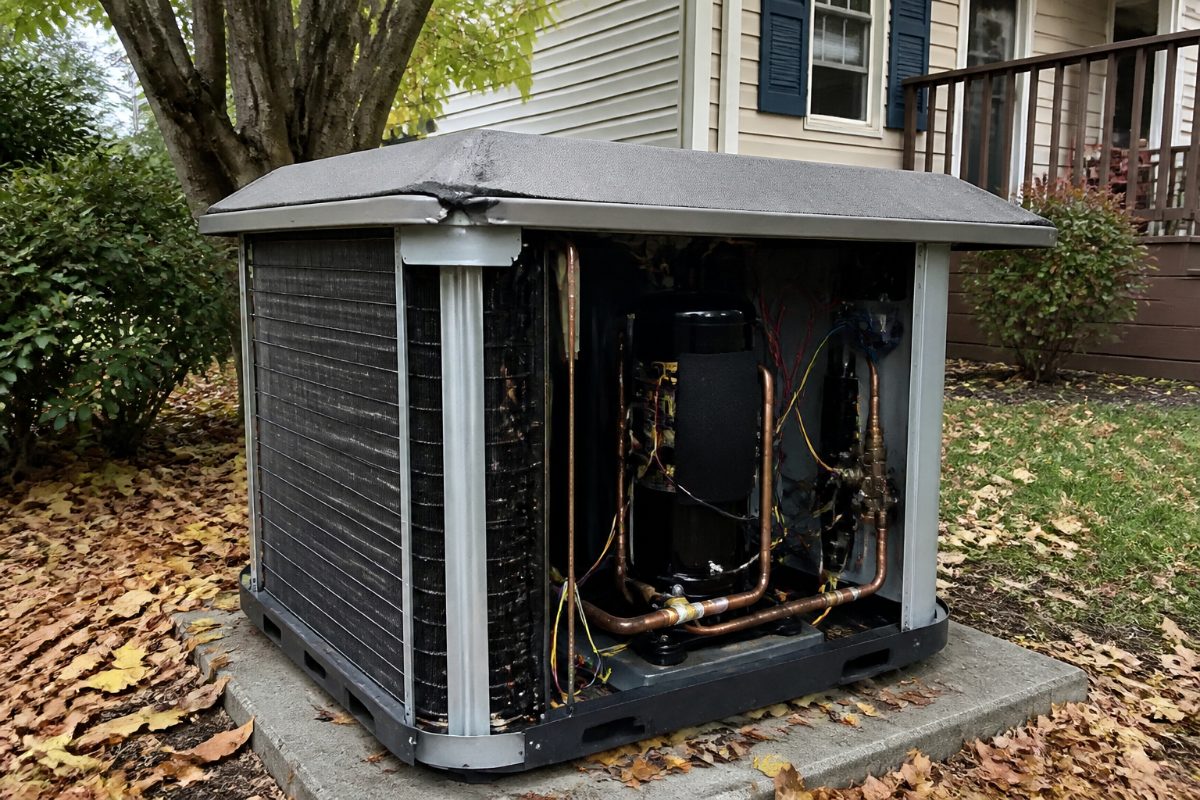
Protection can be worth considering when a cooling-only outdoor unit sits beneath a tree or in another location where falling leaves and debris are a recurring issue. Lennox describes protection as potentially useful in particular circumstances, while Farmers’ Almanac recommends identifying the equipment and reading its instructions before choosing a cover.
If the concern is debris entering from above, a top-only cover is a more limited option than wrapping the sides. Aire Serv recommends covering only the top when choosing to cover an air conditioner, and Jackson Services also describes a breathable top-only cover as an alternative to enclosing the unit. Check your own manufacturer’s directions before using one.
- Name the hazard. Decide whether the concern is leaves, other falling debris, or something else. Do not cover the unit just because it is cold.
- Identify the equipment. Confirm whether the outdoor unit is a cooling-only AC or a heat pump. A heat pump that runs in winter must remain uncovered.
- Check the manual. Look for the manufacturer’s instructions about seasonal covers and the exact equipment model.
- Choose the least restrictive option. If the instructions allow protection and debris is the problem, a top-only cover may address it without enclosing the sides.
- Keep the area accessible. Make it possible to see and clear debris around the unit rather than hiding the cabinet beneath a wrap.
Do not assume that a product described as breathable or weatherproof is automatically right for your equipment. Those labels do not replace the manufacturer’s instructions about fit, placement, or whether a cover is appropriate.
Heat pumps need a different winter plan
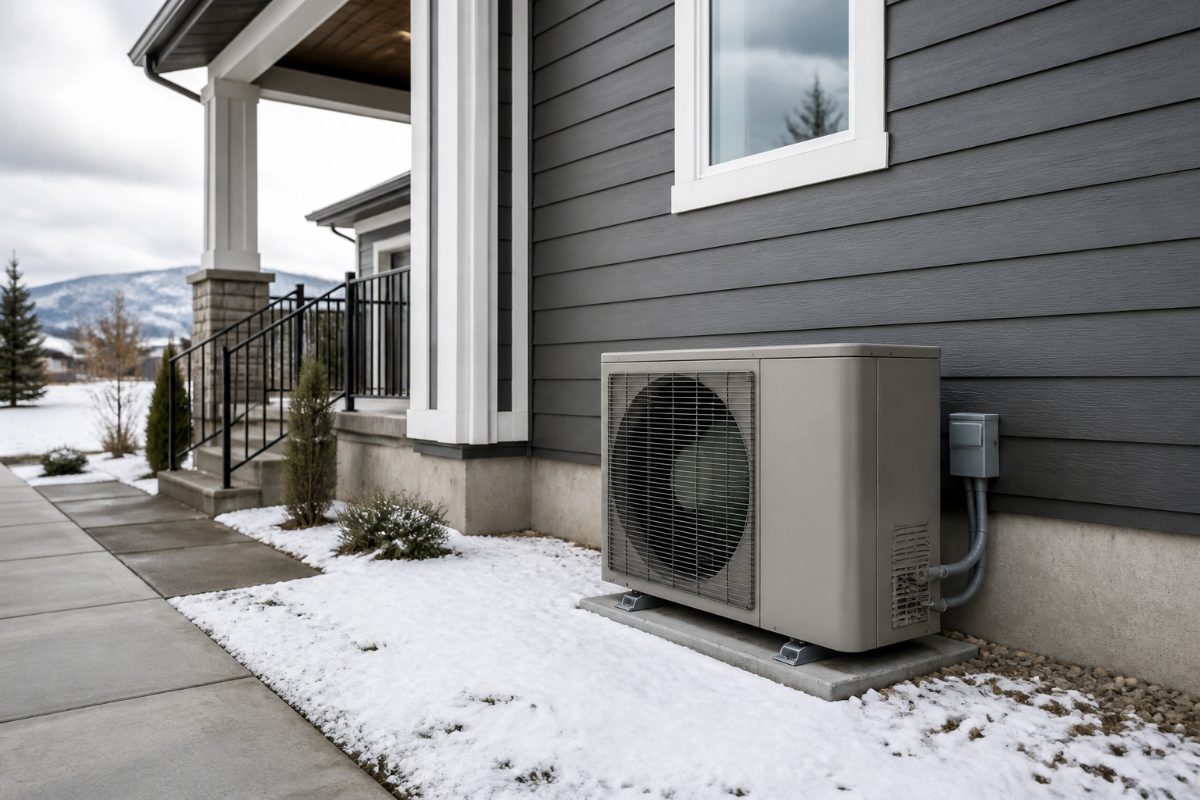
A heat pump’s outdoor unit must remain open to airflow because the system uses it during heating season. Farmers’ Almanac distinguishes heat pumps from cooling-only central AC units, and Trane’s winter preparation guidance warns against placing a solid cover over a heat pump. A full cover can interfere with operation precisely when the system needs to run.
If your home uses a heat pump for heating and cooling, leave its outdoor cabinet uncovered and avoid placing a storage cover over it. Keep snow and other obstructions from blocking the unit. Trane advises contacting an HVAC professional if excessive ice buildup occurs together with unusual noise; ordinary winter appearance alone is not the specific situation described in that guidance.
Do not confuse an operating heat pump with a cooling-only AC that sits idle while a separate heating system warms the home. If you are unsure which system you have, check the model information or owner’s manual before covering anything. The equipment name and instructions are a better guide than the unit’s appearance.
What to do with a window air conditioner
A window AC is not the same as a central outdoor condenser. Farmers’ Almanac says window units may be stored or protected according to the manufacturer’s directions, while Lifehacker discusses moisture and mold concerns when a window unit is left in place under a cover. These sources support checking the unit’s instructions rather than applying one universal rule.
Use this decision path:
- If the instructions recommend seasonal removal: Follow the equipment guidance and plan for safe handling and storage.
- If the unit remains installed: Use only a protection method permitted by its manufacturer. Do not assume an exterior cover resolves every source of cold air or moisture.
- If the instructions are unclear: Find the model number and the matching owner’s manual before choosing a cover or storage method.
Removal and in-place protection solve different problems. A removable unit can be stored away from the window, while an installed unit remains exposed at the opening. The manufacturer’s directions help you choose the method intended for that model rather than borrowing advice for a central AC cabinet.
How to prepare a cooling-only outdoor AC for winter
For a cooling-only central AC unit, preparation can be straightforward: inspect the area, remove loose debris that you can safely reach without opening the equipment, and decide whether a specific overhead debris hazard justifies permitted top-only protection. Lennox recommends regular cleaning and inspection, and also points to regular professional HVAC maintenance as part of caring for the system.
Use this checklist before the unit is left idle:
- Confirm that the outdoor unit is cooling-only rather than a heat pump.
- Look for nearby branches or a recurring source of leaves and debris.
- Check the owner’s manual for guidance on covers for your model.
- If a cover is appropriate, avoid enclosing the sides unless the manufacturer specifically directs otherwise.
- Keep the area around the unit visible and clear enough to inspect.
- Continue routine cleaning and maintenance instead of treating a cover as the main form of protection.
These steps focus on the unit’s actual surroundings and care needs. They also avoid adding a cover where there is no clear hazard to manage. If you already have a cover on a cooling-only unit, compare its use with the manual and remove or adjust it if it conflicts with the manufacturer’s directions.
Advice for first-time homeowners and experienced owners
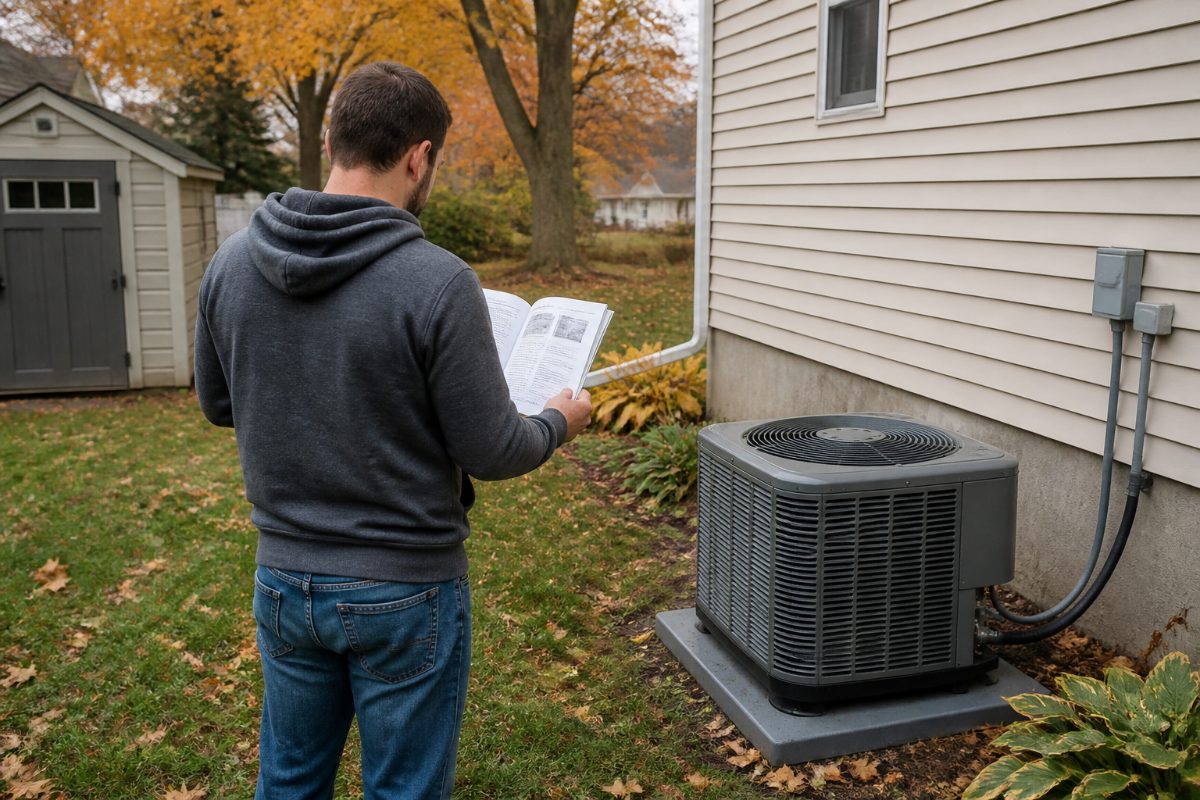
If you are new to the home, start by identifying the system rather than shopping for a cover. A heat pump and a cooling-only central AC can look alike outdoors, but their winter requirements differ: one needs airflow while heating, while the other may sit idle. The model label and owner’s manual can settle that question.
If you have maintained the system for years, focus on what has changed around it. A new tree canopy, landscaping, or repeated leaf buildup may create a specific debris concern that did not exist before. In that case, compare limited protection with the equipment instructions instead of automatically repeating last year’s approach.
| Your situation | Practical next step |
|---|---|
| You do not know the system type. | Find the model number and confirm whether the equipment is a heat pump or cooling-only AC. |
| You have a heat pump. | Leave the unit open to airflow and do not put a solid storage cover over it. |
| Your cooling-only unit is beneath trees. | Check the manufacturer’s cover guidance; consider limited top protection only if allowed. |
| You have a window unit. | Use the instructions for that model to decide between removal and in-place protection. |
| You already own a full cover. | Check whether it is permitted for your equipment and whether it encloses the sides or traps moisture. |
Avoid making the decision based only on what a neighbor’s equipment looks like. Similar cabinets can serve different system types, and a cover suitable for one installation may be wrong for another.
Frequently Asked Questions
Should I cover my central AC unit if it snows?
Usually, a cooling-only central AC does not need a full winter cover; Lennox says modern outdoor units are designed to withstand outdoor weather. If falling debris is a particular concern, check the manufacturer’s instructions before considering limited top protection.
Can I cover a heat pump in winter?
Do not put a solid storage cover over a heat pump that operates during winter. Trane’s guidance says it needs to remain able to operate, and Farmers’ Almanac distinguishes its care from that of a cooling-only AC.
Is a top-only cover safer than a full cover?
A top-only cover is a more limited way to shield a cooling-only unit from falling debris, and Aire Serv and Jackson Services describe this approach. It still should be used only when the equipment instructions allow it and there is a specific reason for protection.
Should I remove my window AC for winter?
There is no single choice for every window unit. Farmers’ Almanac recommends following the manufacturer’s directions, which may call for removal or protection in place; check the manual for your model before deciding.
What if my heat pump has heavy ice and makes unusual noise?
Trane’s winter preparation guidance recommends contacting an HVAC professional when excessive ice buildup occurs along with unusual noise. Do not cover the unit as a remedy, because the heat pump needs airflow to operate.
Key points to remember
Most cooling-only outdoor AC units do not need a full cover for winter. Keep heat pumps uncovered so they can run, and treat window units according to their own manufacturer instructions. For a cooling-only unit with a specific falling-debris problem, check the manual and choose limited protection rather than automatically wrapping the cabinet.
Equipment instructions and cover recommendations can differ by model. Before buying or installing a cover, verify the system type and check the current owner’s manual.
References
- Should You Cover Your AC Unit in the Winter? - Taskrabbit
- When Should You Cover Your Air Conditioner for Winter—If at All? - Farmers' Almanac - Plan Your Day. Grow Your
- Should You Cover Your AC in Winter? Georgia & Alabama Guide
- Should I Cover MY AC Unit in Winter? | Lennox.com
- Protect Your AC Unit In Winter: Tips & Covers | 2-10 Blog
- Should I Cover My Air Conditioner in the Winter?
- Why You Need to Remove Your Window AC Unit for Winter (and Not Just Cover It) | Lifehacker
Information in this post was checked as of October 2026. Policies and prices may change, so please verify important details with official sources.


Comments
Post a Comment