How to Winterize a Pressure Washer Before a Freeze
Key Takeaways
- Winterize before freezing weather by clearing detergent and water from the pressure washer, hoses, spray gun, and attachments.
- Briggs & Stratton’s gas-engine procedure runs clean water through the system on low pressure for 2 minutes, then drains the accessories and pump.
- Use pump saver or antifreeze only when your model’s instructions call for it, and follow the product directions.
- Gas and electric models do not share every step: a recoil-handle procedure applies only to equipment with that feature.
Table of Contents
- Why winterizing a pressure washer matters
- What to gather before you start
- How to winterize a pressure washer step by step
- Should you use antifreeze or pump saver?
- Gas vs. electric pressure washers: which steps change?
- How to store the washer after draining it
- Common winterizing mistakes and how to avoid them
- Frequently Asked Questions
- Quick winterizing checklist
To winterize a pressure washer before freezing weather, flush out detergent, remove water from the pump and accessories, and protect the pump if the manufacturer recommends a pump-safe product. The exact sequence depends on the model, so use its owner’s manual for chemical compatibility and steps that differ between gas and electric machines.
Why winterizing a pressure washer matters
Winterizing means preparing equipment for storage by clearing water and detergent from its fluid path and protecting components as directed by the manufacturer. Water left in a pump, hose, spray gun, or extension can freeze during cold storage, so draining the whole setup—not just the main unit—is part of the job.
Allparts Inc. recommends winterizing at the end of the season before the first freeze in areas with cold winters. That timing gives you a chance to work while the machine is still accessible instead of waiting until temperatures have already dropped.
A common oversight is draining the washer but leaving water in the high-pressure hose or spray gun. Esoteric Car Care specifically calls out hose draining as an important step; Briggs & Stratton also includes the hose, gun, and nozzle extension in its drainage procedure.
| Part to prepare | Why it belongs on the checklist |
|---|---|
| Pump and water path | Water and detergent need to be flushed or cleared according to the model’s winterizing instructions. |
| Garden and high-pressure hoses | Both can retain water after they are disconnected from the washer. |
| Spray gun and extension | Briggs & Stratton includes these accessories in its drainage steps. |
| Detergent line or tank | Greenworks and Hotsy describe flushing detergent and water from the system. |
What to gather before you start
Before working, identify the exact washer model and read its storage instructions. You will generally need a bucket of clean water for the flush if your model uses that method, a rag for wiping the hose, and any pump-protection product specifically permitted by the manufacturer.
Briggs & Stratton’s guidance uses a bucket of clean water and an injection tube for its procedure. Greenworks and Hotsy discuss pump saver or antifreeze as a way to protect the pump, while Wexford Insurance emphasizes following manufacturer recommendations. These are not interchangeable instructions for every washer: check what your model supports before introducing any product.
- Owner’s manual or model-specific winter storage instructions
- Clean water and a bucket if the manual calls for a flush through an injection tube
- A rag to wipe down the hose
- Manufacturer-approved pump saver or antifreeze, if required for your model
- A safe place to drain water without leaving hoses or accessories wet in a freezing location
Do not guess at the product type or how much to use. The cited manufacturer guidance does not establish one universal antifreeze formula or dose for all pressure washers, so the manual and the product label are the controlling instructions for those details.
How to winterize a pressure washer step by step
Use this order as a practical checklist: clear detergent and water, shut down the washer, release pressure, disconnect and drain accessories, then complete the model-specific pump protection and storage steps. Briggs & Stratton gives a 2-minute clean-water flush for its described gas-engine procedure; that timing is specific to its instructions, not a universal rule for every model.
- Flush detergent and water. If your washer has a detergent injection tube and its manual calls for this method, place the tube in a bucket of clean water and run the unit on the low-pressure setting. Briggs & Stratton specifies 2 minutes for its procedure. For other models, follow the owner’s manual for the correct flush method and duration.
- Stop the machine and water supply. Briggs & Stratton instructs users to turn off the engine and main water supply after flushing. Follow your equipment’s shutdown sequence rather than assuming every model operates identically.
- Release trapped pressure safely. Aim the spray gun in a safe direction and squeeze the trigger to release pressure, then engage the trigger lock, as Briggs & Stratton directs. Keep the nozzle pointed away from people, animals, and fragile surfaces while doing this.
- Let the unit cool, then disconnect hoses. The Briggs & Stratton procedure calls for cooling before removing attached high-pressure and garden hoses. Do not rush this step on a machine that is still hot.
- Drain the accessories. Empty water from the high-pressure hose, spray gun, and nozzle extension. Esoteric Car Care also emphasizes draining the hose, which is easy to overlook when attention is focused on the washer body.
- Protect the pump if required. Use pump saver or an approved antifreeze procedure only when the manufacturer recommends it. Greenworks and Hotsy describe pump protection, but the product and application details must match your machine’s directions.
- Finish with the model-specific pump-draining step. For the Briggs & Stratton procedure, pull the recoil handle about 6 times to empty the pump of liquids. This instruction is for a washer with a recoil handle; do not try to apply it to an electric model without that feature.
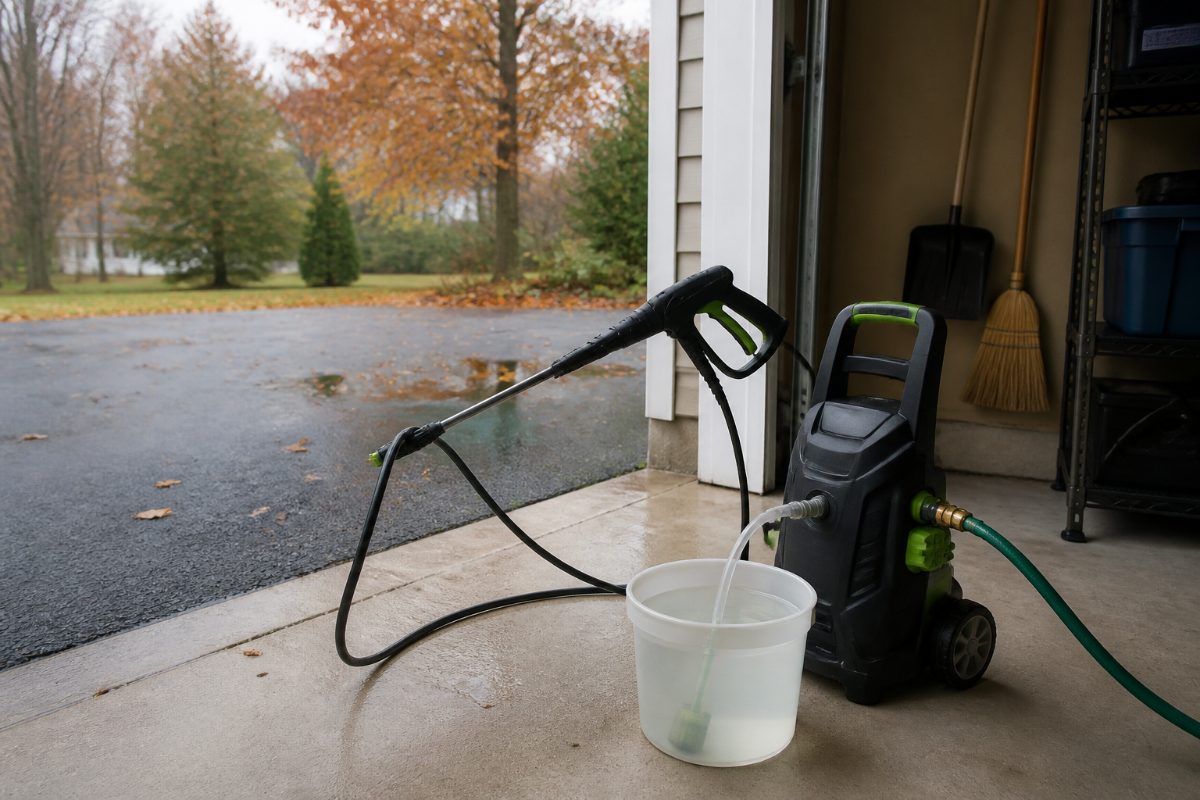
Briggs & Stratton also says to store accessories after draining and to wipe the hose with a rag. Keeping accessories together after they are dry makes it easier to check that the spray gun, extension, and hose have not been left connected or forgotten.
Should you use antifreeze or pump saver?
Sometimes—but not automatically. Briggs & Stratton says an antifreeze flush may be appropriate depending on climate and the pressure washer’s make. Greenworks and Hotsy include pump saver or antifreeze among their winterizing steps, while Wexford Insurance says pump protection should follow the manufacturer’s recommendations.
That variation is a reason not to treat a generic winterizing recipe as a universal standard. A product that is suitable for one pump or procedure may not be approved for another. Check the manual for the specific product type, connection point, and use instructions before adding anything to the water path.
| Your situation | Practical choice |
|---|---|
| The manual gives a pump-saver procedure | Use the named product category and follow the steps stated for your model. |
| The manual calls for an antifreeze flush | Confirm the product and process specified for your washer; climate and model can affect the recommendation. |
| The manual only describes draining | Do not add a chemical based on another brand’s directions; complete the listed drain and storage steps. |
| You cannot find the model instructions | Locate the model number on the unit and search the manufacturer’s official support materials before choosing a product. |
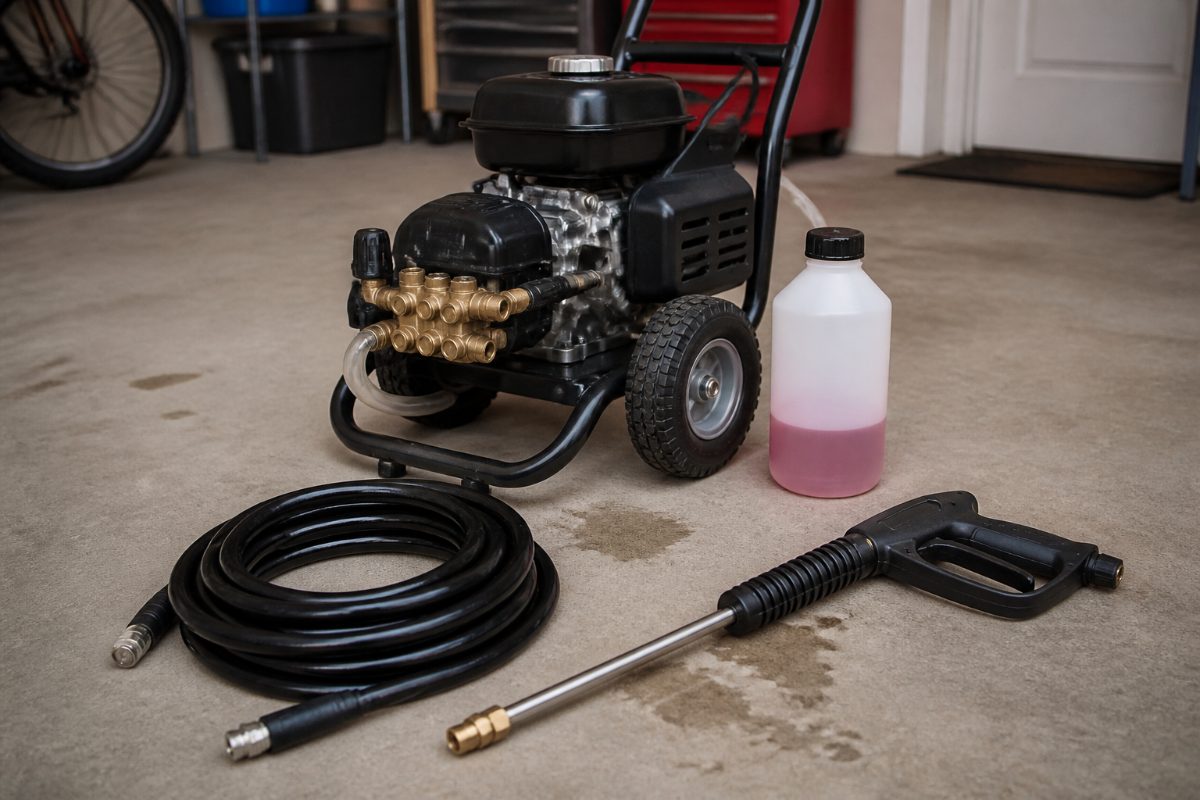
One misconception is that running clean water through the detergent system is always enough to protect the pump through winter. Flushing removes residue, but manufacturer guidance may separately call for pump protection or a particular pump-draining step. Treat flushing, draining, and pump protection as distinct tasks, and use only the ones specified for your machine.
Gas vs. electric pressure washers: which steps change?
The water-side tasks—flushing the system, draining hoses, and preparing the pump—apply to both kinds of equipment when their manuals prescribe them. The engine-specific directions do not automatically apply to electric units: Briggs & Stratton’s instructions mention turning off an engine and pulling a recoil handle, while Greenworks separates out a gas-washer treatment step.
| Washer type | What to account for | What not to assume |
|---|---|---|
| Gas model | Follow the manual’s engine shutdown and storage directions as well as the water-system steps. | Do not assume a procedure for one engine or brand applies to every gas washer. |
| Electric model | Follow its specified flush, drain, pump-protection, and storage sequence. | Do not use a recoil-handle step if the unit has no recoil handle. |
| Model with detergent injection | Flush the detergent path if the manufacturer’s process calls for it. | Do not assume every washer uses the same injection-tube setup or flush duration. |
For a first-time owner, the safest path is to identify the model and complete the manual’s winter storage checklist in order. If you winterize a machine every year, still recheck the current manual before changing products or procedures; a familiar routine may belong to a different model.

How to store the washer after draining it
Once the water-side steps are complete, store the washer and its accessories according to the manufacturer’s directions. Briggs & Stratton calls for wiping the hose with a rag and storing accessories after its draining steps. The main goal is to avoid putting away a wet accessory while assuming that the pump alone was the only part that needed attention.
- Check that the garden hose and high-pressure hose have been disconnected and drained.
- Drain the spray gun and nozzle extension, then wipe the hose with a rag.
- Keep the accessories together with the washer so they can be inspected before next use.
- Store the unit as directed in its manual; do not substitute an improvised chemical treatment for the listed procedure.
- Before using the washer again, reconnect it according to its operating instructions and check the parts you handled during storage.
The sources do not set one storage temperature, location, or cover type for every washer. Those details depend on the unit’s design, so use the model’s storage instructions rather than assuming that a shed, garage, or cover provides the same protection in every climate.
Common winterizing mistakes and how to avoid them
Most missed steps involve water in an accessory, a product chosen without checking compatibility, or a procedure copied from a different machine. A final walk-through helps catch those errors before the washer goes into seasonal storage.
- Draining only the pump: Check the hose, spray gun, and extension too. Briggs & Stratton names these accessories in its drain procedure, and Esoteric Car Care highlights the hose as an overlooked item.
- Skipping detergent cleanup: Greenworks and Hotsy include flushing detergent and water. Follow your manual’s flushing process rather than assuming that an empty detergent container means the line is clear.
- Using an unapproved antifreeze: The sources do not establish one formula for every washer. Use only the product and process accepted by the manufacturer.
- Applying gas-engine steps to an electric washer: A recoil handle is part of the Briggs & Stratton procedure but is not a step that can be performed on equipment without that feature.
- Waiting until after the first freeze: Allparts Inc. advises winterizing before the first freeze in cold-winter areas. Plan the task while conditions still allow you to flush and drain the equipment safely.
Frequently Asked Questions
When should I winterize my pressure washer?
Winterize it before freezing weather, and ideally before the first freeze in an area with cold winters. Allparts Inc. identifies the end of the season before the first freeze as the time to prepare the washer.
Do I need antifreeze in every pressure washer?
No single antifreeze procedure applies to every model. Briggs & Stratton says the need for an antifreeze flush can depend on climate and the washer make, while Greenworks and Hotsy describe pump protection steps; use the instructions for your specific unit.
Is draining the hose really necessary?
Yes, it belongs in the winterizing checklist. Esoteric Car Care calls hose draining important, and Briggs & Stratton includes the high-pressure hose, spray gun, and nozzle extension in its drain procedure.
Can I use the recoil-handle step on an electric washer?
Only if the washer has a recoil handle and its manual directs you to use it. Briggs & Stratton specifies pulling the recoil handle about 6 times for its procedure; that step does not transfer to an electric model that lacks the feature.
What if my pressure washer manual does not mention pump saver?
Do not assume another brand’s chemical procedure is suitable. Follow the storage steps listed for your model, and use manufacturer support materials to identify the correct instructions if the manual is unavailable.
Quick winterizing checklist
Before storing the washer, confirm that detergent and water have been flushed as directed, pressure has been released, the unit has cooled before hose removal, and the hose, spray gun, and extension have been drained. Complete any pump-saver, antifreeze, engine, or pump-draining steps only when they match the manufacturer’s instructions.
Winter storage directions and approved products vary by model. Check the owner’s manual or the manufacturer’s support page for your exact washer before adding a product or using a procedure that is not listed for it.
References
- Winterize & Store Your Pressure Washer
- How to Winterize Pressure Washer & Hose Reel
- How To Winterize A Pressure Washer In 7 Steps
- Winterizing Your Pressure Washing Rig: A Step-by- ...
- Winterizing Your Pressure Washer - Hotsy Online
- How to Winterize a Pressure Washer: Greenworks Guides
Information in this post was checked as of October 2026. Policies and prices may change, so please verify important details with official sources.


Comments
Post a Comment