How to Store a Lawn Mower for Winter: A Practical Checklist
Key Takeaways
- Clean the mower, inspect it for wear, and store it dry and protected before winter.
- For a gas mower, follow the owner’s manual for fuel and oil; Alabama Cooperative Extension recommends fuel stabilizer when a mower will sit unused for more than 30 days.
- Remove batteries from cordless mowers and keep them indoors in a cool, dry place away from freezing temperatures and metal surfaces.
- Disconnect the spark plug before working on a gas mower, and keep the machine off damp floors during storage.
Table of Contents
- How to store a lawn mower for winter: the basic sequence
- How should you prepare a gas lawn mower for winter?
- How do you store a battery-powered or electric mower?
- How do you clean and inspect a mower before storage?
- What should you do with the mower blade and moving parts?
- Where should you store a lawn mower during winter?
- Which winter-storage plan fits your situation?
- Common winter-storage mistakes to avoid
- Frequently Asked Questions
- Key points to remember
To store a lawn mower for winter, clean it, complete the maintenance specified in its manual, protect the engine or battery according to its power type, and put it in a dry, sheltered spot. The best fuel and oil steps depend on the mower, so use the manufacturer’s instructions rather than applying one storage method to every machine.
How to store a lawn mower for winter: the basic sequence
Winter storage is a chance to remove grass and moisture, catch worn parts, and prepare the mower for a long period without use. Mississippi State University Extension says thorough cleaning helps prevent rust and corrosion and can reveal damaged or worn parts that need attention.
- Choose the storage method for your mower. Identify whether it is gas-powered, battery-powered, corded electric, or a riding mower. The engine, battery, and service steps differ.
- Make it safe to inspect. For a gas mower, remove the spark plug before maintenance so the engine cannot start accidentally, as Lawn Chick advises. For a battery mower, remove the battery before cleaning or storage.
- Clean away grass and dirt. Remove buildup from accessible surfaces and the cutting area using the method allowed by the manual. Let the mower dry before putting it away.
- Inspect and maintain it. Check the blade, visible belts, wheels, controls, and other parts for wear or damage. Follow the manual for oil, fuel, and any service steps.
- Store the mower and its power source correctly. Keep the mower in a dry, protected place and store a removable battery separately indoors.
Do not treat “winterize the mower” as a single universal procedure. A battery mower does not need gasoline treatment, and a gas mower may have model-specific requirements for fuel, oil, and servicing.
How should you prepare a gas lawn mower for winter?
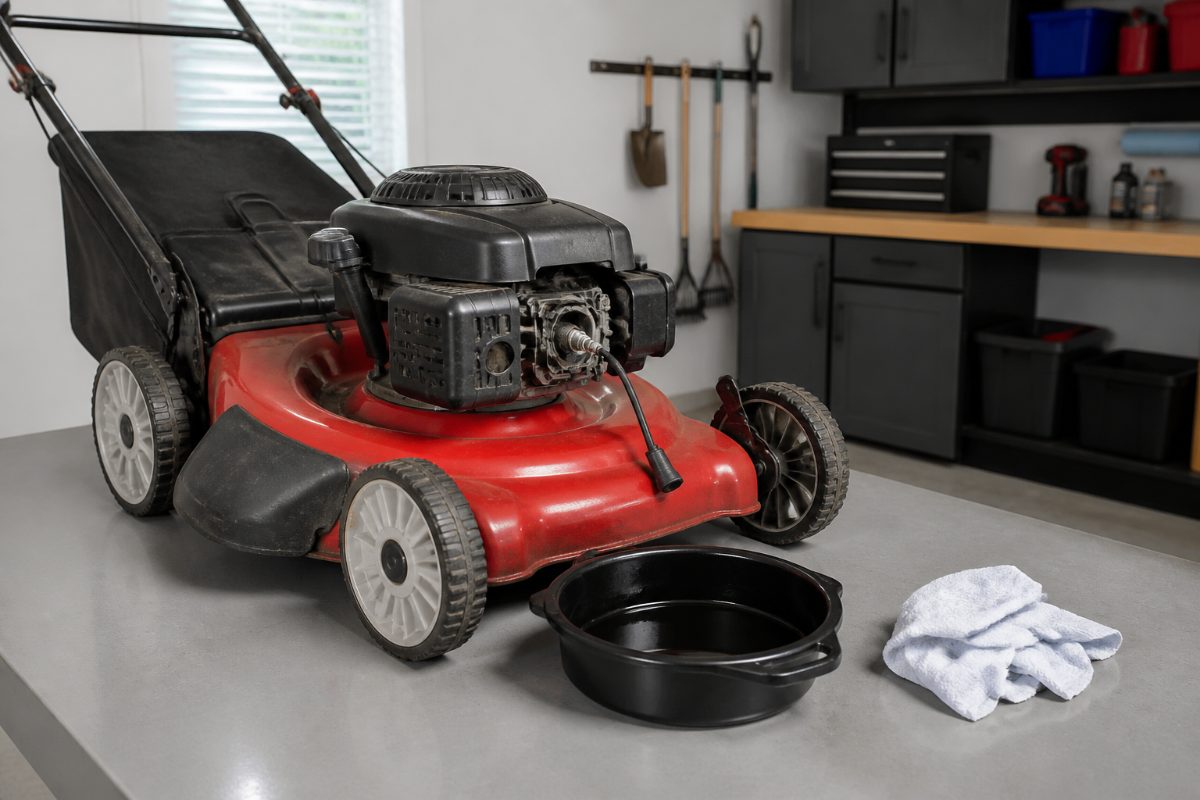
For a gas mower, prioritize the manufacturer’s fuel and oil instructions, then clean and inspect the machine before storage. Alabama Cooperative Extension System (ACES) says fuel stabilizer is needed when a mower goes more than 30 days without use and recommends it for off-season storage; it also directs users to follow the additive label for dosage and application.
Handle fuel according to the manual
Fuel that sits for a long time can contribute to carburetor clogging, according to ACES. Before adding a stabilizer, read the product label and use its specified amount and procedure; do not estimate the dose or combine products unless the instructions say to do so.
Do not assume every mower should be stored with the same amount of fuel or that every model uses the same procedure. If the owner’s manual gives a storage method that differs from a general recommendation, use the mower maker’s instructions. Keep fuel-related work away from flames, sparks, and other ignition sources, and follow the safety directions on the fuel and additive containers.
Check the oil and service schedule
Sod Solutions’ Sod University recommends changing the oil before storage to help protect the engine from corrosion and wear. Its guidance says to warm the engine slightly, drain the old oil, and replace it with fresh oil according to the mower’s manual. Oil type, capacity, and the correct service procedure are model-specific, so do not choose them by guesswork.
If you are new to mower maintenance, look up the model number and find the owner’s manual before opening a drain, adding oil, or changing a filter. If you already service the mower, use the winter shutdown to complete only the maintenance listed for that model and note any parts you need for spring.
How do you store a battery-powered or electric mower?
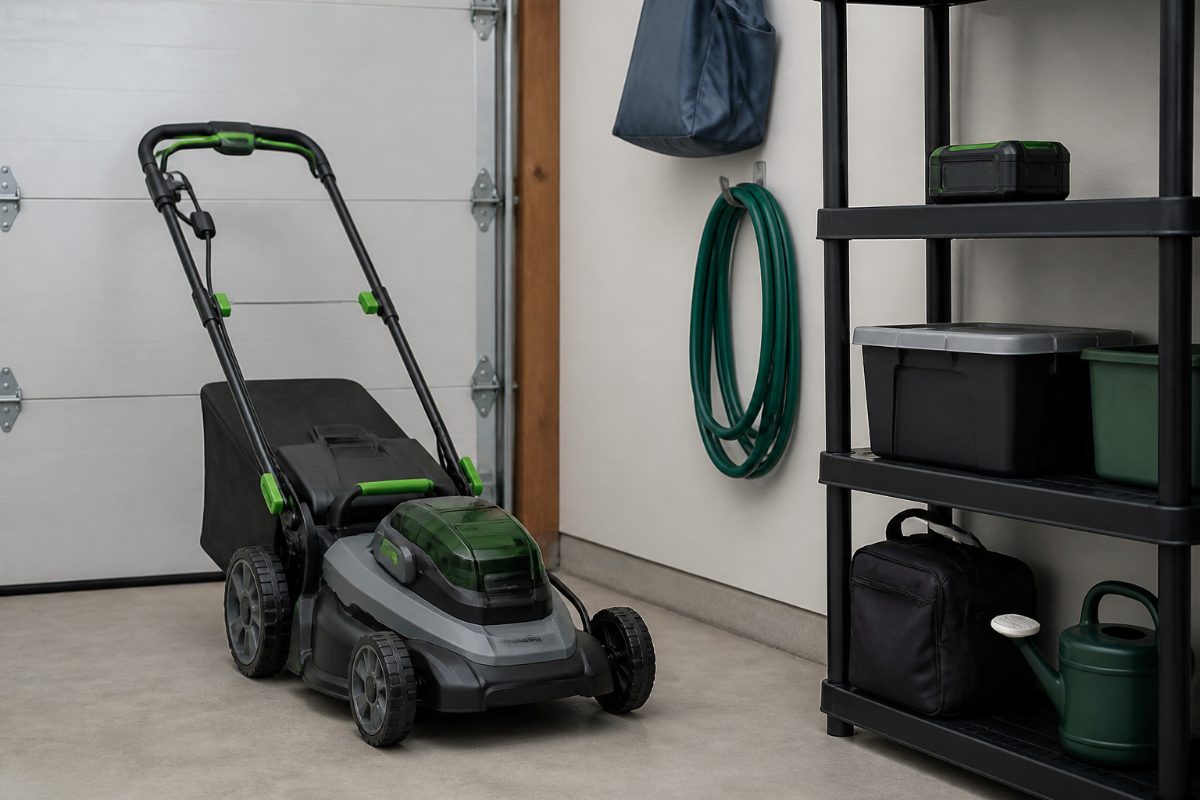
For a cordless mower, remove the battery and store it separately indoors in a cool, dry place. Sod University advises avoiding freezing temperatures and metal surfaces, and recommends protecting batteries from humidity in warmer regions.
A removed battery is easier to protect from cold and moisture than one left attached to equipment in an unheated shed. Keep it away from damp areas, and use the battery maker’s charging and storage instructions rather than guessing at a charge level or charging schedule.
For a corded electric mower, there is no removable traction battery to winterize, but the mower still needs cleaning, inspection, and dry storage. Unplug it before cleaning or checking the cutting area, and keep its cord arranged so it is not crushed, sharply bent, or left where moisture can collect.
| Mower type | Winter storage priority | What not to assume |
|---|---|---|
| Gas-powered | Follow the manual for fuel, oil, and engine service. | Do not assume all models use the same fuel-storage method. |
| Battery-powered | Remove the battery and store it indoors in a cool, dry place. | Do not leave the battery in freezing or humid storage conditions. |
| Corded electric | Unplug, clean, inspect, and store the mower and cord dry. | Do not handle the cutting area while the mower is connected to power. |
How do you clean and inspect a mower before storage?
Remove grass clippings, dirt, and debris before the mower sits unused. Mississippi State University Extension identifies thorough cleaning as a way to reduce rust and corrosion and to make worn or damaged parts easier to spot.
Disconnect the power source before cleaning the cutting area: remove the spark plug from a gas mower or remove the battery from a cordless mower. Lawn Chick specifically advises taking out the spark plug before working on a mower to reduce the chance of accidental starting. Wear safety glasses, hearing protection, and sturdy work boots when operating lawn equipment, as West Virginia University Extension recommends.
Use the cleaning method described in the owner’s manual. Avoid directing water into electrical parts, engine openings, or other areas the manufacturer says to keep dry. Once the mower is clean, let accessible surfaces dry before covering or storing it; trapped moisture can undermine the goal of preventing corrosion.
As you clean, check the blade and visible parts for rust, damage, or wear. Look over wheels, handles, controls, and any visible belts or cables without reaching into a hazardous area. If something appears bent, cracked, loose, or badly worn, note it for repair rather than treating winter storage as a substitute for fixing it.
What should you do with the mower blade and moving parts?
Inspect the blade while the mower is disconnected from its power source, and keep hands clear of cutting edges. Lawn Chick’s winter-storage guidance emphasizes protecting the blade from rust and dulling; Sod University recommends lubricating joints, cables, and pivot points to help prevent rust and keep moving parts operating smoothly.
Lubricate only the points and with the product specified by the mower’s manual. Applying lubricant indiscriminately can put it where it does not belong, including near a belt or cutting surface. If the manual calls for blade removal or sharpening and you are not equipped to do that safely, leave the blade in place and arrange the service before mowing resumes.
For a first-time owner, a useful approach is to photograph or write down any visible problem before putting the mower away. An experienced owner can use the same inspection to make a spring parts list. Either way, identify the issue now rather than discovering it when the mower is needed.
Where should you store a lawn mower during winter?
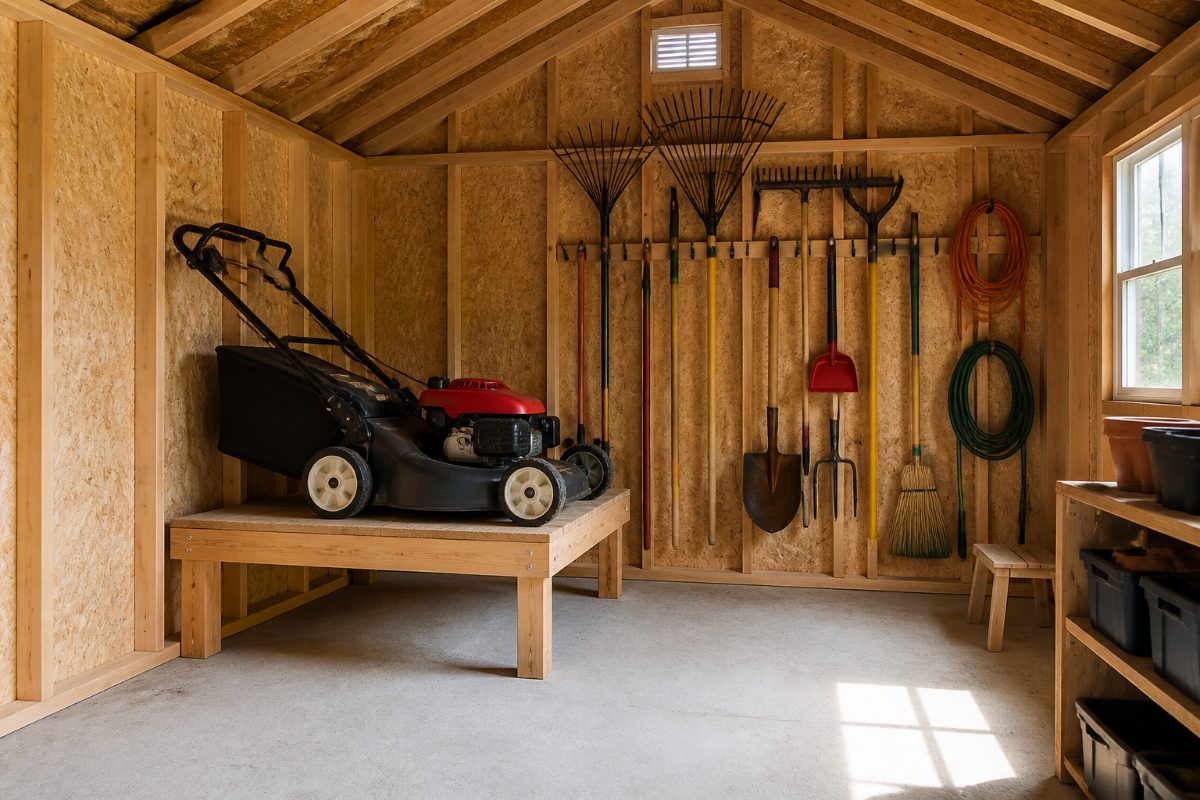
Choose a dry, protected storage area away from extreme temperatures, and keep the mower off the ground where practical. Sod University recommends protected, dry storage and raising equipment off the ground to reduce moisture damage.
A garage, shed, or other sheltered space can work if it stays dry and provides room to keep the mower stable. Avoid leaving it where rain, snowmelt, or damp floors can reach it. Do not store it beside fertilizers or chemicals near heat sources; Sod University specifically warns against storing fertilizers and chemicals near heat.
Keep the mower’s manual, service notes, and any parts set aside for spring together or leave a clear reminder with the equipment. Nebraska Extension in Lancaster County recommends marking or attaching a note when parts are stored elsewhere so they are not forgotten. A simple note can record the maintenance completed, a part to order, or the location of a removed component.
Which winter-storage plan fits your situation?
The right plan depends on the mower’s power source, the manual’s instructions, and whether you have found wear that needs service. Use this comparison to decide what to do first rather than applying every maintenance step to every machine.
| Your situation | Best next step | Why it helps |
|---|---|---|
| You are storing a gas mower for the first time. | Find the model manual, then follow its fuel and oil directions before cleaning and storing. | Fuel and oil procedures can differ by model; ACES recommends fuel stabilizer for storage periods over 30 days. |
| You already maintain a gas mower. | Complete the manual’s scheduled service, inspect wear points, and record spring repairs. | Cleaning can expose damaged or worn parts before the next mowing season. |
| You own a cordless mower. | Remove the battery and store it indoors in a cool, dry place, away from freezing temperatures and metal surfaces. | Separating the battery protects it from unsuitable storage conditions. |
| Your garage or shed tends to be damp. | Choose the driest protected spot available and keep the mower off the floor if possible. | Reducing contact with moisture helps limit rust and corrosion. |
| You find a damaged blade or another worn part. | Record the problem and arrange the correct repair or replacement before using the mower again. | Storage will not correct damage, and a written reminder prevents the repair from being overlooked. |
Common winter-storage mistakes to avoid
Many storage problems come from skipping a small preparation step or assuming a generic tip applies to every mower. Avoid these common missteps:
- Leaving untreated fuel without checking the manual. ACES warns that fuel sitting for a long time can clog a carburetor and recommends stabilizer for a mower unused more than 30 days. Follow the product label and mower instructions.
- Leaving a removable battery installed. Sod University advises removing batteries and storing them indoors in cool, dry conditions.
- Putting a dirty, damp mower away. Grass and moisture can conceal wear and contribute to corrosion; clean the machine and let it dry first.
- Working under the deck with the mower ready to start. Remove the spark plug from a gas mower or disconnect its battery before maintenance.
- Guessing at oil, fuel, or lubricant details. The manual and product labels provide the model-specific directions that a general checklist cannot.
- Forgetting spring repairs. Write down damaged or worn parts and keep the note with the mower or parts. Nebraska Extension recommends attaching a reminder when items are stored separately.
Frequently Asked Questions
Should I use fuel stabilizer when storing a gas lawn mower?
ACES recommends adding fuel stabilizer when a mower will sit unused for more than 30 days, including during off-season storage. Follow the stabilizer label for the correct dosage and application, and check the mower manual for its storage procedure.
Should I change the oil before winter storage?
Sod University recommends changing the oil before storage to help protect the engine from corrosion and wear. Use the oil and process specified in the mower’s manual, since the correct requirements depend on the model.
Can I leave my cordless mower battery in an unheated garage?
Sod University advises removing batteries and storing them indoors in a cool, dry place, away from freezing temperatures and metal surfaces. Follow the battery maker’s instructions for any charging or storage details not covered by that general guidance.
Do I need to remove the spark plug before cleaning a gas mower?
Lawn Chick advises removing the spark plug before working on a mower to help prevent accidental starting. Follow the owner’s manual and disconnect the mower’s power source before cleaning or inspecting the cutting area.
What is the most important step before storing a mower?
There is no single step that replaces the others: clean and dry the mower, follow its manual for fuel and oil, and store it in a protected place. For cordless models, remove and store the battery separately; for gas models, make maintenance safe by disconnecting the spark plug before working.
Key points to remember
Clean the mower, inspect it for wear, and store it in a dry, protected spot off damp ground when possible. Follow the owner’s manual for fuel, oil, and model-specific maintenance; use fuel stabilizer as directed for gas mowers that will sit unused. Remove cordless batteries and store them indoors in cool, dry conditions. Because storage procedures vary by mower, check the manual before applying a fuel or service method. Manufacturer instructions and product labels can change, so use the current directions for your specific equipment.
References
- Lawn Tool Storage Tips | Sod Solutions · Sod University
- Lawn Mower Safety | Extension | West Virginia University
- Lawn Mower Winter Storage [Start First Pull in Spring]
- The 10 Steps of Lawn Mower Maintenance - Alabama Cooperative Extension System
- Winterize Landscape Equipment | Nebraska Extension in Lancaster County | Nebraska
- Winter storage of lawn equipment (11-29-10) | Mississippi State University Extension Service
Information in this post was checked as of October 2026. Policies and prices may change, so please verify important details with official sources.


Comments
Post a Comment