How to Shut Off a Whole-House Humidifier for Summer

Key Takeaways
- For a typical summer shutdown, switch the humidistat off, close the humidifier’s water supply, and close its duct bypass damper if the unit has one.
- Find the humidifier’s own water valve and damper; do not mistake them for your home’s main water shutoff or a general HVAC control.
- Close a bypass damper during air-conditioning season so cooled air does not take the humidifier’s bypass route instead of moving through the intended duct path.
- Use the unit’s manual for model-specific controls, and do not force a stiff or corroded valve.
- Use a humidity indicator to understand indoor moisture; the EPA’s cited humidity guidance is tied to outdoor winter temperatures, not a universal summer setting.
Table of Contents
- Why shut off a whole-house humidifier for summer?
- Identify the humidifier controls before you begin
- How to shut off the humidifier step by step
- What to do with a bypass damper during air-conditioning season
- What if the water valve is stiff, rusty, or hard to reach?
- Summer humidity: what the EPA guidance does and does not say
- Choose the right approach for your home and experience level
- Common summer-shutdown mistakes to avoid
- How to prepare for turning the humidifier back on
- Frequently Asked Questions
- Quick summer shutdown checklist
To shut off a whole-house humidifier for summer, turn its humidistat to OFF, close the water supply serving the unit, and close the duct damper if your model has one. The exact controls depend on whether your humidifier has a bypass damper, so identify the equipment before turning anything; you do not need to shut down the furnace or air conditioner to switch off the humidifier.
Why shut off a whole-house humidifier for summer?
A whole-house humidifier adds moisture to air distributed through the home, so it usually does not need to keep adding moisture during the cooling season. The summer shutdown recommended by Rheem Pro Partners includes turning off the humidifier, shutting off its water supply, and closing its duct damper when present.
For a bypass humidifier, the damper matters because it controls an air path through the humidifier’s duct connection. I am Home describes closing that bypass route for summer operation; leaving it open while cooling can divert cooled air through the bypass rather than toward the home’s supply vents. That is a reason to set the damper correctly—not a reason to make assumptions about damage or to alter unrelated HVAC components.
Moisture management is also a home-maintenance issue. The U.S. Environmental Protection Agency (EPA) advises using a humidity indicator to measure indoor relative humidity and says humidifiers are not recommended in buildings without proper vapor barriers because moisture buildup can cause damage. That guidance supports avoiding unnecessary humidification, but it does not establish one summer setting for every house.
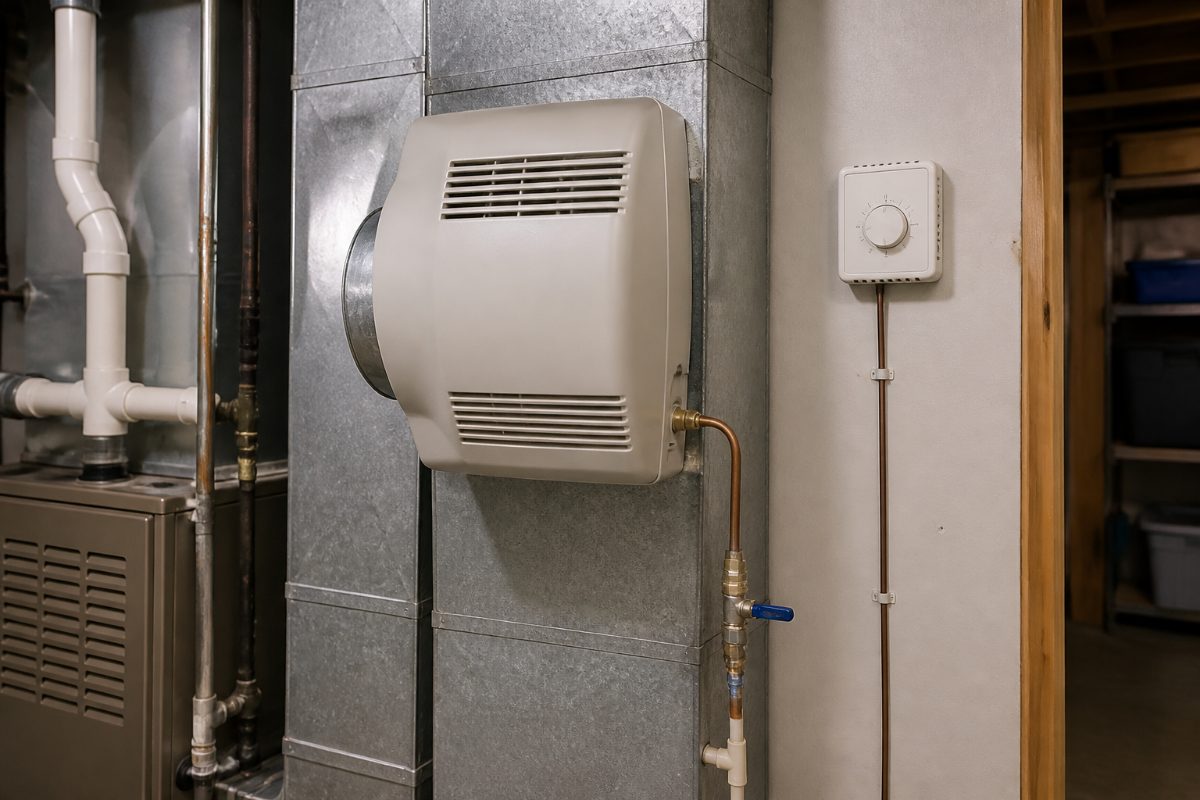
Identify the humidifier controls before you begin
A humidistat is the control that calls for humidification, while the water valve supplies water to the humidifier. A bypass damper, when installed, opens or closes the duct connection that routes air through or around the humidifier. These controls do different jobs, so turning only one off may leave another part of the system in its operating position.
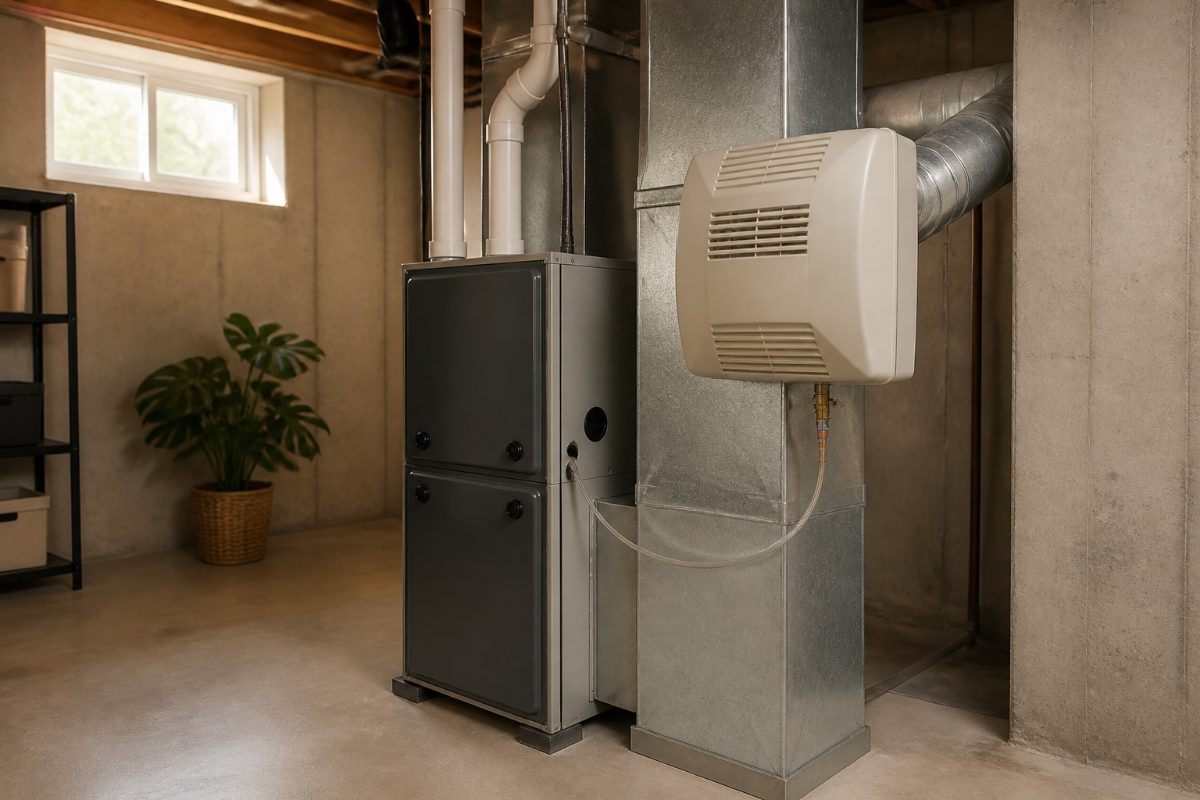
Look at the humidifier mounted near the furnace or air handler, then trace its small water supply line and inspect the connected ductwork. A humidifier may have a humidistat on the duct or a separate control, and some duct installations have no seasonal damper. Do not assume that a knob labeled for summer and winter is the water valve; read the markings and the unit instructions.
| Control | What it does | Summer action |
|---|---|---|
| Humidistat | Controls when the humidifier is asked to add moisture. | Set it to OFF, or use the model’s documented off position. |
| Water supply valve | Stops water from feeding the humidifier. | Close the humidifier’s own valve if it is accessible and operates normally. |
| Bypass damper | Controls the air connection through a bypass-style humidifier. | Close it for summer if the unit has one and its instructions call for that position. |
The labels and layout are more reliable than guessing from appearance. If you cannot identify a control, use the model’s manual rather than turning a nearby valve or damper simply because it looks similar.
How to shut off the humidifier step by step
Rheem Pro Partners’ summer-maintenance instructions call for switching off the humidifier, shutting off its water supply, and closing the duct damper if present. Michael Bonsby HVAC also lists the humidistat and water supply as shutdown steps. Use this order to make each change deliberately.
- Set the humidistat to OFF. If the control has no OFF marking, follow the manufacturer’s directions for disabling humidification. Do not change the thermostat or the air conditioner’s settings as a substitute.
- Locate the humidifier’s water valve. Trace the line to the humidifier so you are not turning off water to another appliance. If the valve is clearly identified and moves normally, close it according to its markings or instructions. Michael Bonsby HVAC describes turning a conventional valve clockwise, but follow the valve’s own guidance and do not force it.
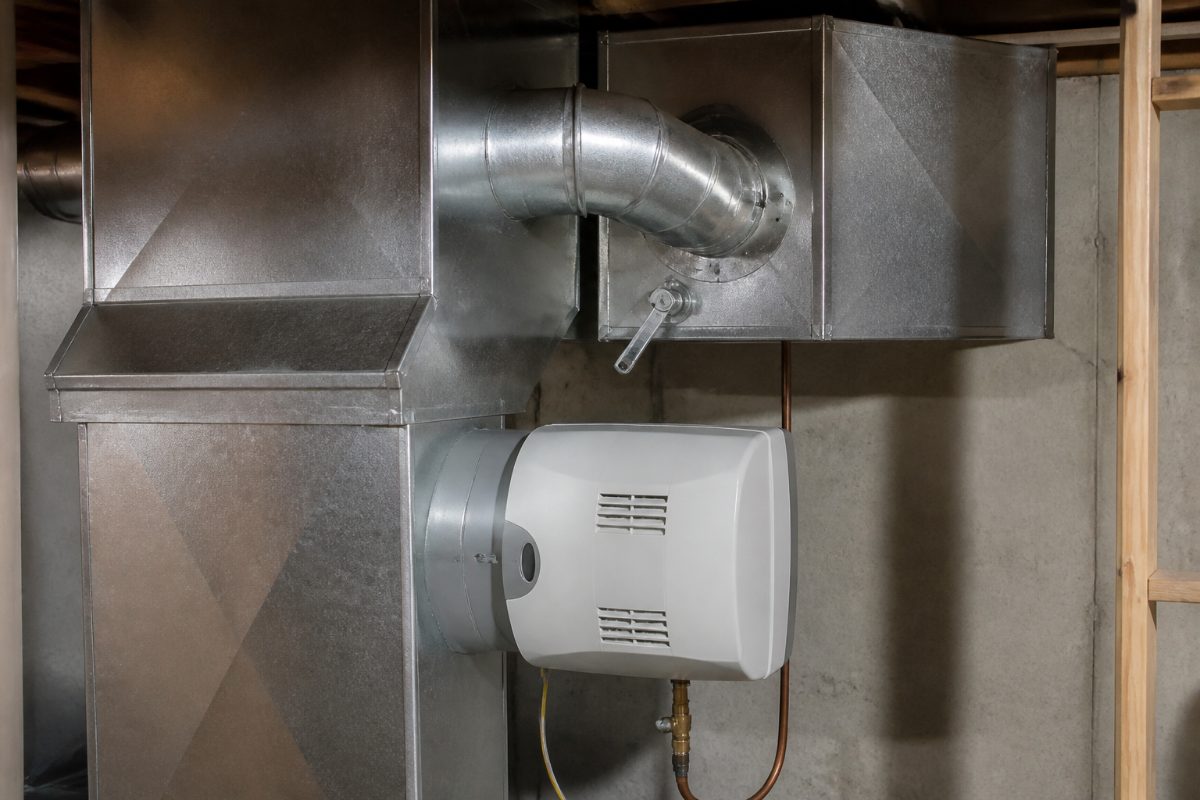
- Close the bypass damper, if fitted. Use the summer position or the position stated in the humidifier manual. Not every whole-house humidifier has a bypass damper, and a damper’s position should not be guessed from an unfamiliar lever.
- Confirm the controls are in their summer positions. Check the humidistat display or setting, the water valve, and the damper. If a control is unlabeled or does not move normally, stop at that control and consult the model instructions.
A shutdown does not require opening the humidifier cabinet or removing internal parts. Leave cleaning, draining, and water-panel service for the procedures described in the product manual; the summer shutdown instructions cited here do not specify a universal draining or disassembly step.
What to do with a bypass damper during air-conditioning season
If your humidifier has a bypass duct and a seasonal damper, close that damper for summer when the manufacturer’s instructions identify that as the summer position. I am Home explains that an open bypass can route cooled air back through the furnace-side duct connection instead of sending it through the normal supply path.
Find the damper on the duct connection associated with the humidifier, not on a different HVAC branch. Some dampers use a lever or knob with seasonal markings; others may be a plate covering a duct opening. Rheem Pro Partners says to close the duct damper when the system has one, while HAMCO advises consulting the manual if the damper is unclear.
- Marked summer/winter control: Move it to the manufacturer’s summer position.
- Unmarked lever or plate: Identify the damper in the manual before changing it.
- No bypass damper: Skip this step. Do not close an unrelated duct opening.
Do not treat “close the bypass” as an instruction to block the main supply or return duct. The target is only the humidifier’s bypass connection, if your system has one. If you cannot distinguish that connection from the main ductwork, leave the damper alone until you can identify it.
What if the water valve is stiff, rusty, or hard to reach?
Do not force a valve that resists turning, appears corroded, or is difficult to identify. HAMCO specifically advises caution with an older rusty valve and suggests leaving it alone rather than operating it. Forcing a questionable valve can turn a simple seasonal task into a plumbing problem.
If the valve is inaccessible or its purpose is uncertain, switch the humidistat off and close the damper only if you can identify it confidently. Then use the equipment manual to identify the correct water shutoff and the manufacturer’s procedure. Avoid using the home’s main shutoff as a workaround when the goal is only to stop water to the humidifier.
Once the valve is identified, check its condition before touching it: look for visible corrosion, leakage, and clear labeling. A valve that already leaks or appears damaged is not a good candidate for a do-it-yourself turn. This is one of the few points where getting qualified help is safer than applying extra force.
Summer humidity: what the EPA guidance does and does not say
The EPA recommends measuring indoor relative humidity with a humidity indicator. Its cited maximum-humidity table pairs indoor humidity limits with outdoor temperatures from 20°F down to -20°F, so it is winter-oriented guidance—not a summer target that can be copied directly into a humidistat setting.
That distinction prevents a common mistake: treating a number from a cold-weather humidity chart as a year-round setting. The table is tied to outdoor temperature because moisture behavior in a building changes with conditions; it should not be presented as a universal summer percentage. If you are deciding whether the home needs added moisture, first measure indoor humidity rather than relying on a dial position alone.
The EPA also cautions against humidifiers in buildings without proper vapor barriers because moisture buildup can damage the building. If you are unsure whether your home has an adequate vapor barrier, the EPA recommends consulting a building contractor. For routine summer shutdown, however, the practical steps remain the same: disable the humidifier and shut off its water supply.
Choose the right approach for your home and experience level
For a first-time homeowner, the safest approach is to identify each control before moving it and follow the manual for the exact model. A more experienced DIYer can complete the same shutdown efficiently, but should still avoid applying a familiar procedure to a different-looking valve or damper without verifying its function.
| Your situation | Practical approach | Why it fits |
|---|---|---|
| First seasonal shutdown | Photograph the controls, read the labels, and locate the manual before changing settings. | A record makes it easier to identify the summer positions and restore the winter setup later. |
| Clearly marked controls | Turn the humidistat off, close the humidifier water valve, and set the damper to summer. | The labels make the intended positions easier to verify. |
| Unmarked or unfamiliar damper | Do not guess; identify it in the manual first. | Closing the wrong duct control could affect a different air path. |
| Corroded or stuck water valve | Do not force it; leave it in place and arrange appropriate repair help. | Extra force can damage a valve that is already in poor condition. |
| Humidifier with no bypass damper | Turn off the humidistat and water supply; skip the damper step. | The seasonal damper instruction applies only when one is installed. |
Keeping a simple note of what you changed can help when the heating season returns. Record which control was turned off, where the humidifier valve is, and whether the unit has a summer/winter damper. This is especially useful when a control is mounted on ductwork and is not obvious from the room thermostat.
Common summer-shutdown mistakes to avoid
The most common error is switching the humidistat off but leaving both the water supply and a bypass damper in their winter positions. Rheem Pro Partners lists all three actions where applicable, so treat the shutdown as a short checklist rather than a single switch.
- Turning off the thermostat instead: The thermostat controls heating or cooling, not the humidifier’s water supply. Use the humidifier’s own control.
- Closing the wrong valve: Trace the water line to the humidifier and identify its valve before turning it.
- Assuming every unit has a damper: Close a bypass damper only if your unit has one and you can identify it.
- Forcing an old valve: If it is rusty, stiff, or leaking, stop rather than applying more force.
- Using winter humidity guidance as a summer setting: The EPA table cited here is paired with cold outdoor temperatures, not summer conditions.
- Opening the cabinet to perform unneeded work: The basic summer shutdown does not require removing parts or inventing a draining procedure.
How to prepare for turning the humidifier back on
When you return to heating-season operation, reverse the seasonal settings only after confirming the humidifier’s model-specific startup instructions. If you closed a bypass damper, the manufacturer’s winter position will identify when to reopen it; if you shut off the water supply, the humidifier will need its water feed restored before it can operate.
Before changing settings, check that the water valve and duct damper are accessible and that the labels still make sense. If the unit requires cleaning or water-panel service, follow its own maintenance instructions rather than assuming every model is serviced the same way. The humidifier manufacturer’s manual is the right reference for model-specific startup, cleaning, and component replacement.
For instructions on the next seasonal task, see How to Clean a Whole-House Humidifier Before Winter and How to Start Up and Maintain a Whole-House Humidifier. Those topics cover cleaning and startup; the shutdown checklist here is limited to the humidistat, water supply, and applicable duct damper.
Frequently Asked Questions
Do I need to turn off the water to a whole-house humidifier in summer?
Rheem Pro Partners includes shutting off the humidifier’s water supply in its summer-maintenance steps, and Michael Bonsby HVAC also lists the water shutoff as part of shutdown. Use the humidifier’s own valve, and do not force it if it is rusty or stuck.
Should the bypass damper be open or closed in summer?
Close the bypass damper for summer when your humidifier has one and its instructions identify that as the summer position. I am Home describes the bypass route as a path that can divert cooled air, while Rheem Pro Partners advises closing the duct damper when present.
Does every whole-house humidifier have a summer damper?
No. The summer damper step applies only to systems with a damper, such as a bypass connection. If your unit does not have one, do not close a different duct control to imitate the step.
Can I set the humidistat to zero instead of OFF?
Use the control’s documented OFF position or the setting specified by the manufacturer. HAMCO describes setting a dial to OFF or zero when available, but the exact control markings depend on the unit.
Quick summer shutdown checklist
Turn the humidistat off, close the humidifier’s water supply if its valve is clearly identified and operates normally, and close the bypass damper if the unit has one. Keep the main HVAC ducts unobstructed, do not force a questionable valve, and use the product manual for controls that are unmarked or model-specific.
Rheem Pro Partners, Michael Bonsby HVAC, HAMCO, and the EPA provide the maintenance and moisture guidance referenced here. Product layouts differ, so use the humidifier manual for any procedure beyond these basic seasonal control changes.
References
- Maintaining Your Whole House Humidifier During the Summer
- How to Switch Your Furnace Humidifier to Summer Mode | I am Home
- How To Turn Off Your Humidifier | Get HVAC Ready For Spring
- What are the main ways to control moisture in your home? | US EPA
- Don't Forget to Turn Your Humidifier Off for the Summer!
Information in this post was checked as of October 2026. Policies and prices may change, so please verify important details with official sources.


Comments
Post a Comment