How to Safely Run a Portable Generator During a Winter Outage
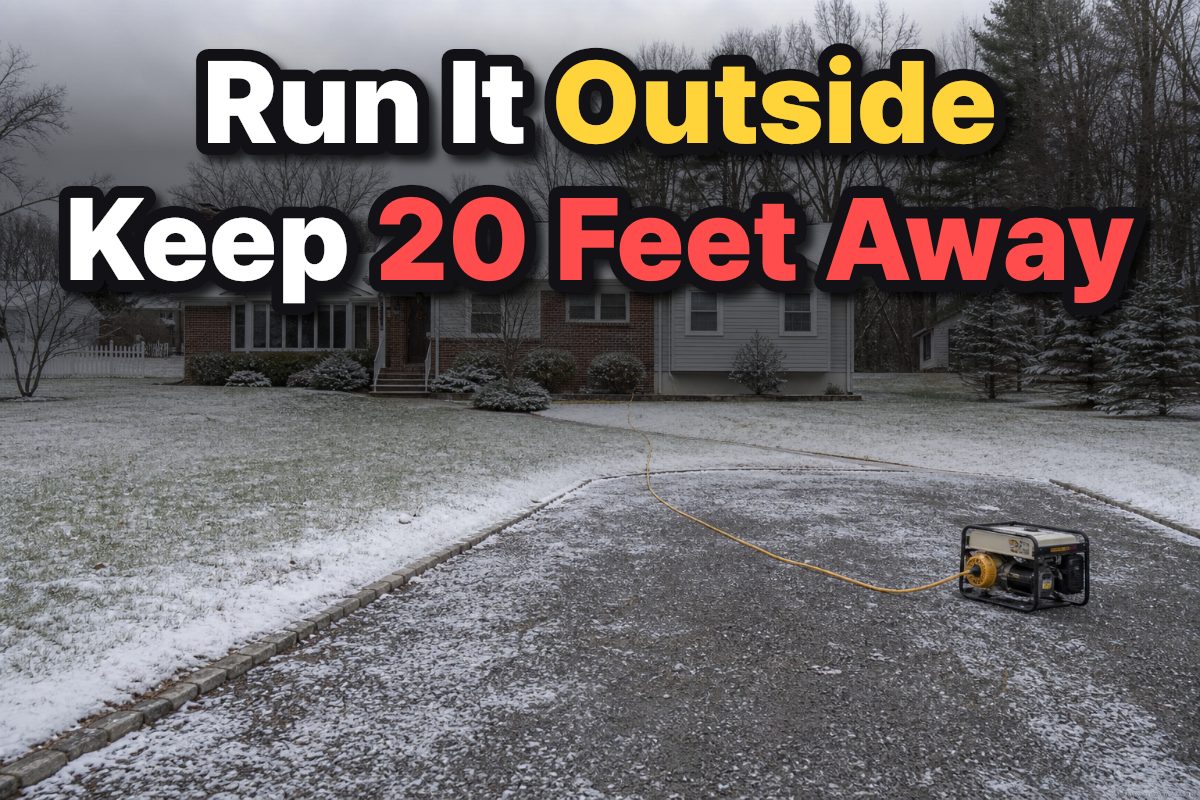
Key Takeaways
- Run a portable generator outdoors at least 20 feet from windows, doors, vents, and attached garages.
- Keep exhaust clear of snow and never operate the generator in a garage or other enclosed or partly enclosed space.
- Use working carbon monoxide alarms, heavy-duty extension cords, and a dry setup.
- Let the engine cool before refueling, and follow the generator manufacturer’s instructions.
Table of Contents
- Why is generator safety different during a winter outage?
- Where should you place a portable generator?
- How do you keep snow and weather from creating new risks?
- What should you check before starting the generator?
- How should you run and refuel the generator?
- Which setup makes sense for your household?
- What are the most common winter generator mistakes?
- Frequently Asked Questions
- Key points to remember
A portable generator can power essential appliances during a winter outage, but its exhaust, electricity, and fuel create hazards that need careful handling. The safest setup is outdoors at least 20 feet from windows, doors, vents, and attached garages, with the exhaust unobstructed and the generator kept dry.
Why is generator safety different during a winter outage?
A portable generator produces carbon monoxide (CO), a colorless, odorless gas that can be deadly. Ready.gov warns that the generator and its fuel belong outdoors, while the Washington State Department of Health says not to operate a portable generator in a home, garage, carport, basement, crawl space, or other enclosed or partly enclosed area.
Cold weather can make it tempting to move the generator closer to the house or into a sheltered space. That trades convenience for a serious exhaust hazard: an open garage door or a partly covered space does not make indoor or semi-enclosed operation safe.
- Do: Keep the generator outside in an open-air location.
- Do not: Run it in a garage, even with the door open, or in a basement, carport, or crawl space.
- Before an outage: Install working carbon monoxide detectors on every level of the home, as Ready.gov advises.
Where should you place a portable generator?
Set the generator at least 20 feet from windows, doors, vents, and attached garages. Ready.gov and Oncor both give this 20-foot placement guidance; Oncor specifically identifies windows, doors, and vents.
Choose an outdoor location where exhaust can disperse rather than collect near the house. Do not rely on a short extension cord to justify placing the generator beside a window or door; plan for heavy-duty cords long enough to reach the appliances from a safer outdoor location.
| Location | Use it? | Reason |
|---|---|---|
| Open outdoor area at least 20 feet from openings and attached garage | Yes, if the generator is dry and its exhaust is unobstructed | Allows exhaust to disperse away from the home |
| Inside a garage, carport, basement, or crawl space | No | These are enclosed or partly enclosed areas |
| Beside a window, door, or vent | No | Exhaust could enter the home |
How do you keep snow and weather from creating new risks?
Keep snow from obstructing the generator’s exhaust, and keep the machine dry. Ready.gov warns that touching a wet generator or a device connected to one can cause electrical shock; it also says to protect the generator from rain or flooding.
Before starting, look around the generator and its exhaust outlet for drifting or packed snow. If you use an outdoor overhang or canopy for weather protection, keep the generator in open air: the Washington State Department of Health’s warning against enclosed and partly enclosed operation still applies. Do not wrap or box in the unit to keep it warm.
- Choose an open outdoor spot that meets the 20-foot clearance.
- Check that snow is not blocking the exhaust path.
- Keep the generator and connected equipment dry, and do not place them where water can collect or flood.
- Recheck the area if snow or wind changes the conditions around the machine.
What should you check before starting the generator?
Read the manufacturer’s instructions before operating the generator. Ready.gov specifically advises following them carefully, and Cornell Cooperative Extension Tompkins County says a portable generator should be properly grounded using the grounding tap provided on the generator’s control box.
Prepare the connection plan before the power goes out. Dallas Morning News recommends buying heavy-duty extension cords of the proper length because generators need to remain outside. Ready.gov also says to connect generators to appliances with heavy-duty extension cords.
- Check the manual for the generator’s starting and operating instructions.
- Identify the essential appliances you plan to power and check the generator’s instructions for its capacity and connections.
- Use heavy-duty extension cords that reach from the outdoor location to the appliances without moving the generator closer to the house.
- Set up the grounding connection as directed by the manual; use the generator’s grounding tap where the instructions call for it.
- Inspect the setup for wet equipment or cords before use.
Do not improvise a connection by plugging the generator into a household wall outlet. If you want generator power on household circuits, arrange a purpose-built connection installed for that use rather than relying on a plug or wiring workaround.
How should you run and refuel the generator?
Operate the generator outdoors with its exhaust clear, its body protected from water, and its connected appliances attached through heavy-duty extension cords. Ready.gov says to let the generator cool before refueling because fuel spilled on hot engine parts can ignite.
During a long outage, make checking the setup part of your routine. Look for snow around the exhaust, changes in the weather protection, and cords or equipment that have become wet. If a cord or generator is wet, do not touch it; Ready.gov identifies contact with wet generator equipment as an electrical-shock hazard.
- Keep the unit in the open outdoor location and maintain the 20-foot separation.
- Keep the exhaust outlet clear of snow and other obstruction.
- Use heavy-duty cords to connect appliances, and keep electrical equipment dry.
- When refueling is needed, turn the generator off and let it cool before adding fuel.
- Use the manufacturer’s operating and refueling instructions for the specific model.
A common mistake is to refuel immediately after shutting the engine down. The engine can still be hot, so wait for it to cool before adding fuel; spilled fuel on hot parts can ignite.
Which setup makes sense for your household?
The right preparation depends on whether you are planning ahead or responding to an outage. In either case, the non-negotiables are outdoor operation, the 20-foot placement, an unobstructed exhaust, and dry electrical equipment.
| Your situation | Practical next step | Why it helps |
|---|---|---|
| You are preparing before winter | Choose an outdoor location and obtain heavy-duty cords long enough to reach your planned appliances. | It avoids moving the generator closer to the home when power fails. |
| You are using a generator for the first time | Read the manual and test your planned setup before an outage. | You can learn the model’s starting and connection instructions without doing it under outage pressure. |
| You already own a generator | Check the grounding instructions, cord condition, and planned outdoor location. | These checks address the grounding, electrical, and placement hazards identified in safety guidance. |
| You want to power household circuits | Do not plug into a wall outlet or improvise wiring; arrange a connection designed for generator use. | A household circuit connection is different from plugging an appliance directly into the generator. |
What are the most common winter generator mistakes?
The most consequential mistakes are bringing the generator indoors, placing it too close to the house, letting snow obstruct the exhaust, and handling wet equipment. Each can be avoided by making placement and weather checks part of the operating routine.
- Putting it in the garage for shelter: The Washington State Department of Health includes garages and carports among places where a portable generator must not be used.
- Measuring from the house but ignoring openings: Keep at least 20 feet from windows, doors, vents, and attached garages, not merely away from the nearest wall.
- Covering it too tightly: Weather protection must not turn an outdoor setup into an enclosed or partly enclosed one.
- Using a light or too-short cord: Plan for heavy-duty extension cords of the proper length, as Dallas Morning News and Ready.gov advise.
- Refueling while hot: Let the generator cool first because spilled fuel can ignite on hot engine parts.
Frequently Asked Questions
Can I run a portable generator in my garage if the door is open?
No. The Washington State Department of Health says not to use a portable generator in a garage or other enclosed or partly enclosed area. An open garage door does not change that guidance.
How far should a portable generator be from the house?
Place it at least 20 feet from windows, doors, vents, and attached garages, following Ready.gov and Oncor guidance. Use extension cords long enough to keep the generator in that outdoor location.
Can I cover a generator during snow or rain?
Keep the generator dry and protected from rain or flooding, but do not enclose it or block its exhaust. Check the manufacturer’s instructions for the model and keep snow clear of the exhaust outlet.
Can I refuel a generator while it is running or still hot?
No. Turn it off and let it cool before refueling. Ready.gov warns that fuel spilled on hot engine parts can ignite.
Key points to remember
Run the generator outside, at least 20 feet from windows, doors, vents, and attached garages. Keep snow away from the exhaust, protect the unit and connected equipment from water, use heavy-duty extension cords, and let the engine cool before refueling. For setup, grounding, and operation, follow the instructions for your specific generator; check current guidance before an outage because operating instructions and conditions can change.
References
- Safe Operation of Emergency Generators
- D-FW winter storm: How to buy a generator and operate it safely
- Stay Safe Using Portable Generators
- Generator Use During a Power Outage | Washington State Department of Health
- Power Outages | Ready.gov
- Safety Tips for Using Portable Generators in Winter | World Insurance
Information in this post was checked as of September 2026. Policies and prices may change, so please verify important details with official sources.


Comments
Post a Comment