How to Maintain Driveways and Walkways in Winter
Key Takeaways
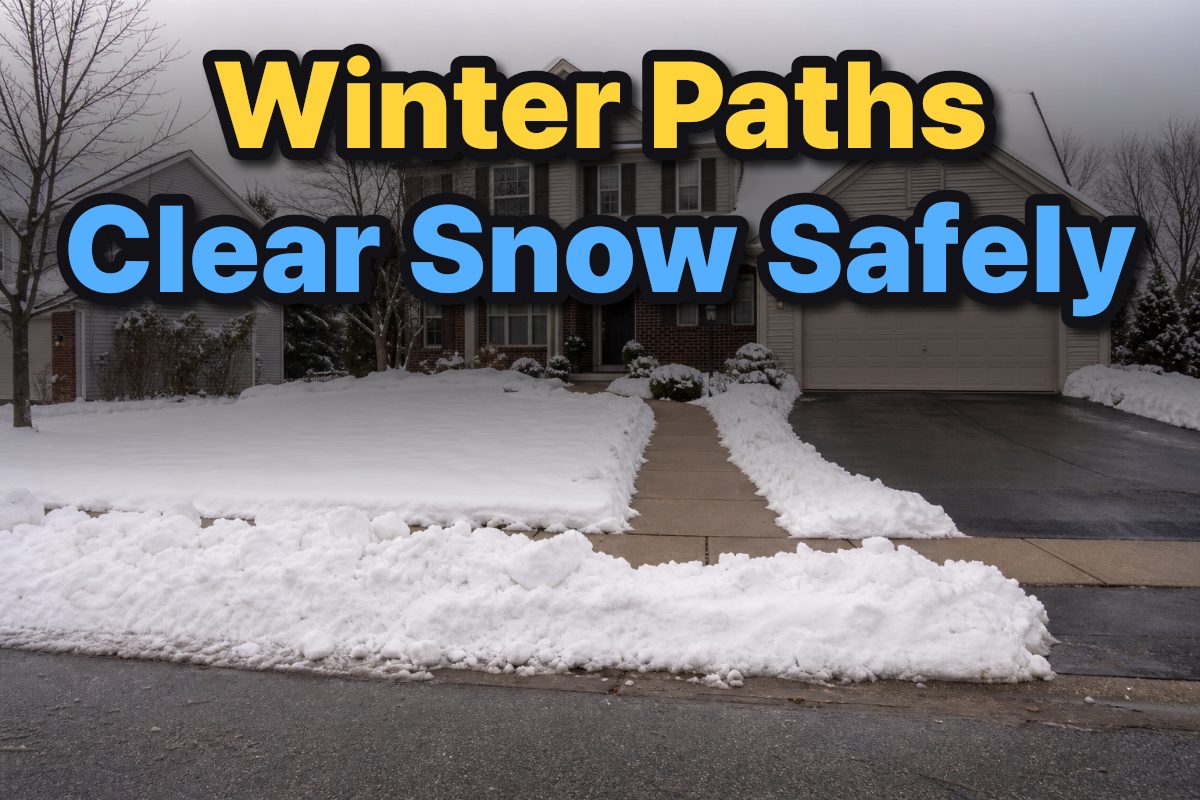
- Clear snow from driveways and walkways in manageable passes, and move it onto your property rather than into the street.
- Use deicer selectively: melting snow and ice can carry deicing chemicals off pavement and into storm drains and waterways.
- Inspect pavement, drainage paths, and walking routes before winter so you can spot hazards and plan where snow will go.
- Local rules can assign sidewalk clearing responsibilities differently, so learn the requirement for your address before the first storm.
Table of Contents
- What should you inspect before winter?
- How do you make a winter snow-removal plan?
- How should you clear snow from a driveway and walkway?
- When should you use deicer, and how much?
- How can you limit salt and chemical runoff?
- How should you protect pavement, plants, and nearby areas?
- What should beginners and experienced homeowners prioritize?
- Common winter maintenance mistakes to avoid
- Frequently Asked Questions
- Winter driveway and walkway checklist
Winter driveway and walkway maintenance works best as a routine: inspect the surfaces, clear snow before it becomes difficult to move, and use deicer only where it is needed. That approach helps keep paths usable while limiting unnecessary chemical runoff and avoiding preventable problems such as pushing snow into the street.
What should you inspect before winter?
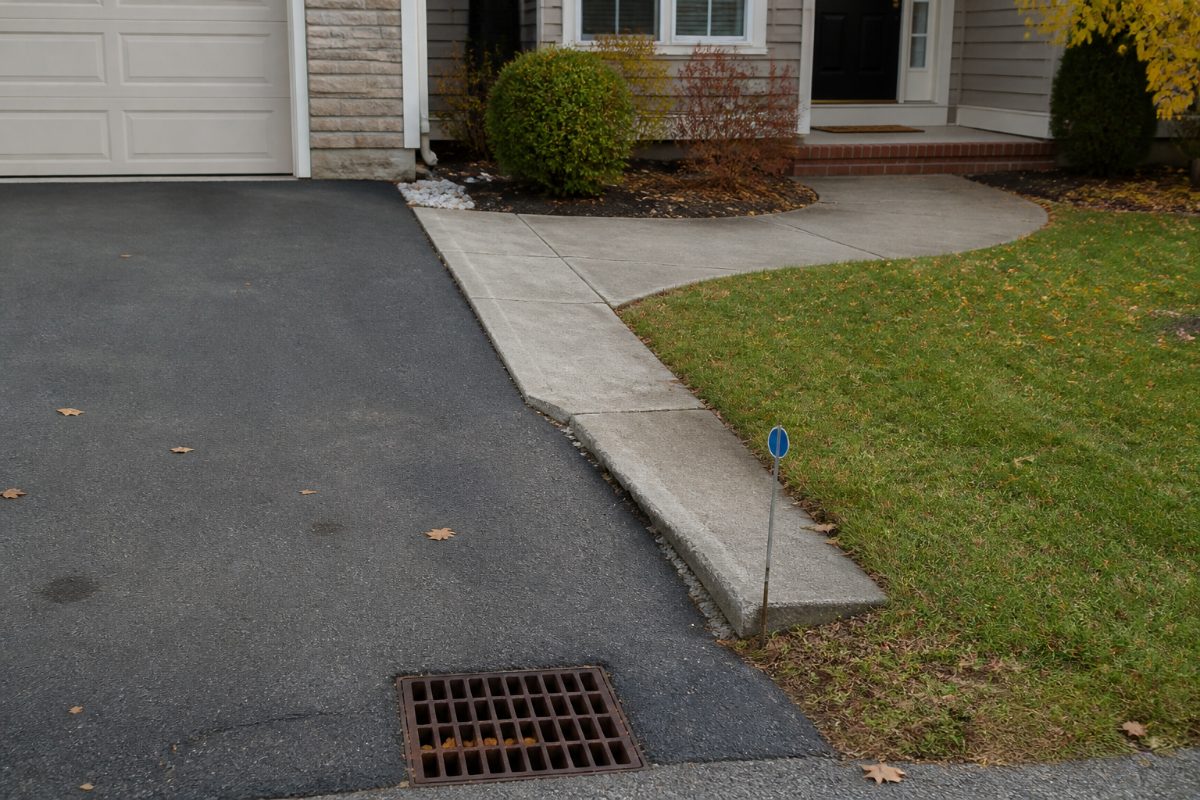
Walk the driveway and each route people use to reach the house before snow arrives. Look for raised or broken pavement, loose edging, low spots, drains, steps, and places where water collects; mark hazards that will be difficult to see under snow. A clear pre-season inspection gives you a map for both clearing and treating the surfaces.
Pay particular attention to how water leaves paved areas. Montgomery County’s RainScapes pavement manual recommends observing runoff from hard surfaces during rain and looking for ways to manage it. Apply that same observation to winter planning: notice which direction meltwater travels, whether it reaches a drain, and whether it crosses a frequently used path.
- Mark trip hazards: Use a visible marker near uneven pavement or a hidden edge, positioned where it will not obstruct the route.
- Identify the walking line: Choose the shortest practical path from the driveway or sidewalk to the entrance, rather than clearing a wide area you do not use.
- Locate runoff routes: Note drains, low spots, and places where melting snow could flow across the path and refreeze.
- Choose a snow-storage area: Plan where snow can be placed without blocking the sidewalk, a drain, an entrance, or sightlines from the driveway.
Do not treat every crack as an urgent repair project. The useful distinction is whether a defect changes the walking surface, collects water, or makes snow removal difficult. If a damaged area is substantial, arrange a suitable repair before winter rather than relying on ice melt to compensate for a pavement problem.
How do you make a winter snow-removal plan?
A good plan names the routes to clear, the order to clear them, and the place where snow will be stored. The Federal Highway Administration’s guide to pedestrian facility maintenance discusses the role of formal winter maintenance plans and clearly assigned responsibilities; the same planning principle is useful at home, even when one household member handles the work.
Start with the route people need most: the entrance, the path connecting it to the driveway, and any sidewalk that must remain passable. Keep a shovel and any chosen traction or deicing supplies where they can be reached without crossing an uncleared surface. If several people share the work, agree in advance on who handles each section so no short but essential connector is missed.
- List the routes: Separate the driveway, public sidewalk, front walk, steps, and side or rear access paths.
- Set the clearing order: Clear the route needed to leave or enter the home first, then complete less-used paths.
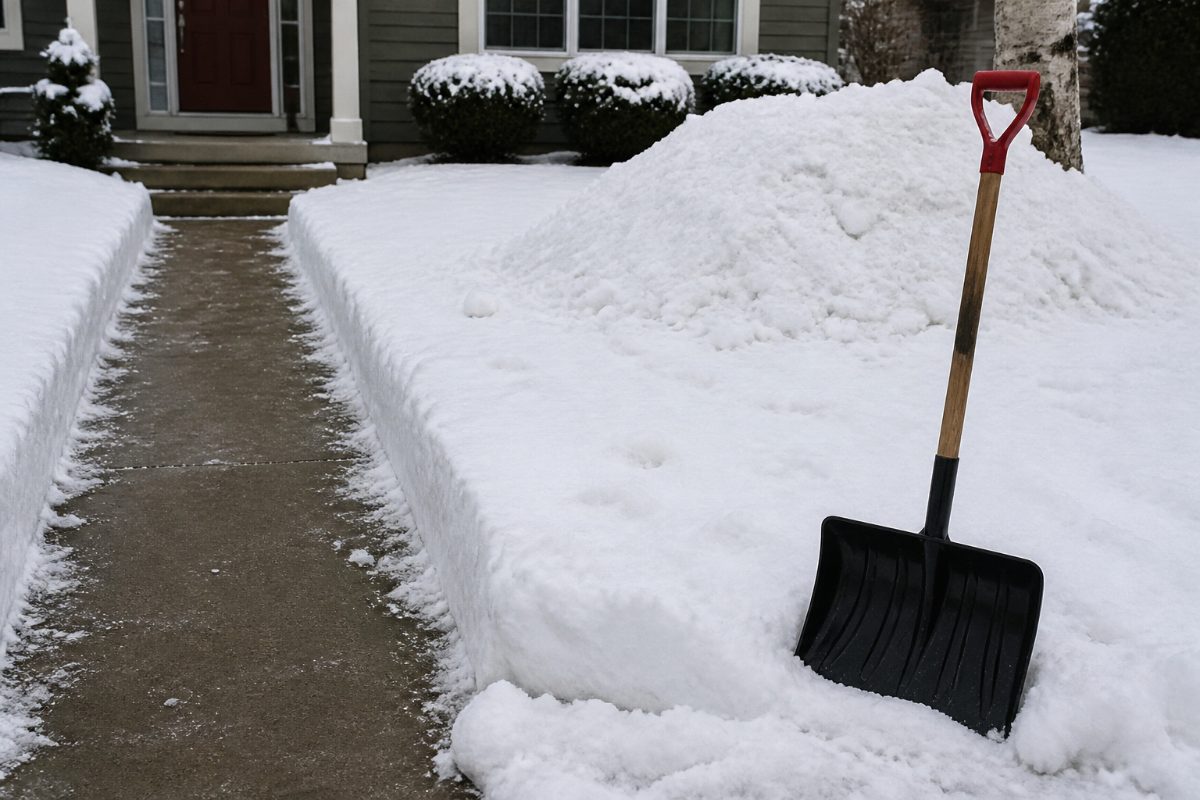
- Choose safe snow-storage locations: Keep snow on your property and away from drains and walking surfaces.
- Plan for changing conditions: After clearing, check for water flowing across the route and address slick spots that remain.
Local responsibility is not uniform. The FHWA guide notes that winter sidewalk maintenance can involve municipal rules, agency responsibilities, and maintenance agreements. Look up the requirements that apply to your address; do not assume the town or a neighbor will clear the sidewalk adjoining your property.
How should you clear snow from a driveway and walkway?
Clear a usable route first, then widen it as needed. Work in passes rather than trying to move the entire width of a driveway at once, and avoid letting foot traffic pack fresh snow into a hard layer. The sooner you remove snow after it falls, the less chance it has to be compacted by repeated walking or vehicle movement.
For a walkway, begin at the entrance and clear a continuous path to the public sidewalk or driveway. For a driveway, work toward a snow-storage area on your property. Solon, Ohio’s official snow-removal guidance says not to push driveway snow into or across the street, including when a contractor clears the driveway. That keeps plowed snow from obstructing the roadway and avoids sending it into someone else’s travel path.
- Open the essential route: Clear a continuous path to the door before widening the cleared area.
- Move snow to the planned storage spot: Keep it off public travel lanes, drains, and the cleared path.
- Remove packed patches: Pay attention to areas where shoes or tires have compressed snow against the surface.
- Inspect after clearing: Look for remaining slick areas and meltwater crossing the route.
If a snow-removal contractor handles the driveway, give clear instructions about where snow should go. Solon’s guidance specifically cautions against pushing it into or across the street, so a contractor’s work should follow the same property-side plan. For sidewalks, identify which sections are yours to maintain under local rules before assigning the work.
When should you use deicer, and how much?
Use deicer as a targeted treatment for persistent ice or a slick area, not as a substitute for removing loose snow. Clear what you can mechanically first, then follow the product label for the surface and conditions. Avoid scattering product over an entire driveway simply because one small section is icy.
Penn State Extension explains that melting snow and ice carry deicing chemicals and other pollutants across land into storm drains and streams. The chemicals applied across an area can accumulate in waterways, so using less unnecessary material is part of maintaining the property responsibly. This does not mean leaving a known slick patch untreated; it means matching treatment to the specific problem.
| Situation | Practical response | Why it helps |
|---|---|---|
| Loose, newly fallen snow | Remove the snow before applying a product. | Deicer is intended to address ice, not to replace snow clearing. |
| A small icy patch | Treat only that patch according to the product label. | Targeting avoids spreading material where it is not needed. |
| Water repeatedly refreezes in one location | Trace the water source and redirect or manage the runoff where practical. | Reducing the source of the water can address the recurring condition, not just the ice. |
| Unclear product compatibility | Read the label and confirm it is suitable for the pavement and nearby surfaces. | Products and surfaces differ; the label supplies the use instructions. |
There is no single deicer that should be treated as a universal answer for every home. Wagner College’s campus snow-removal page, for example, describes using calcium chloride pellets on its walkways and sidewalks. That is an example of one site’s treatment choice, not a blanket recommendation for residential concrete, stone, plants, or other surfaces.
How can you limit salt and chemical runoff?
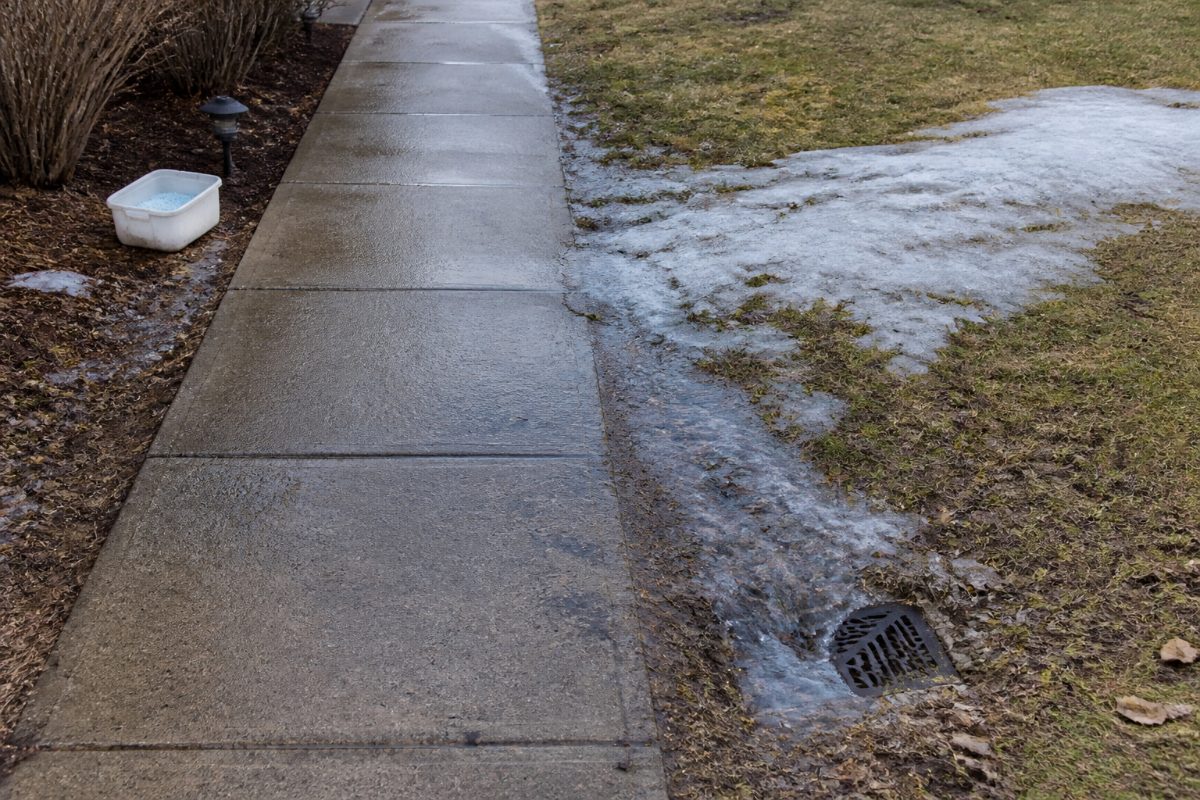
Keep deicer away from places where meltwater can carry it directly toward a storm drain, stream, or planted area. Penn State Extension describes how snowmelt and rain transport deicing chemicals across the land and into storm drains and waterways. A small area of pavement is part of a larger drainage system once water begins to move.
Before treating a route, look at the slope and the path the meltwater will follow. If water runs from the driveway across a walkway, the underlying drainage pattern may be contributing to the recurring ice. Remove snow from the travel surface, avoid placing snow directly over a drain, and use only the amount of product directed by the label.
- Do not apply deicer automatically to every paved surface after each snowfall.
- Keep snow piles clear of drains and out of locations where melting water flows back across the walking route.
- Use the label’s directions rather than estimating by handfuls or treating more product as a faster fix.
- Observe the surface after a thaw or rain; repeated runoff across the same path points to a drainage issue worth addressing.
Montgomery County’s RainScapes manual suggests observing where runoff flows from paved surfaces and considering whether some hard surfaces can be reduced or replaced. That is a larger property-design decision, not a quick winter repair, but it can help homeowners who repeatedly struggle with runoff around oversized or little-used paved areas.
How should you protect pavement, plants, and nearby areas?
Use a product only as its label permits, and avoid treating pavement as if every material reacts the same way. The available sources describe different approaches at different sites rather than a single deicing choice for all surfaces. If you are unsure whether a product is suitable for a particular surface, choose a mechanical clearing method first and read the packaging before applying anything.
Keep snow piles from burying plant beds or blocking the base of shrubs where practical. The University of Arizona Cooperative Extension describes driveways and walkways as elements that can be part of a home’s defensible space. It recommends keeping the immediate 0–5-foot zone next to the foundation free of dry grass, stacked firewood, and highly flammable plants, and using noncombustible hardscape or low-growing, irrigated plants in that zone. This is a wildfire-preparedness consideration, not a snow-removal rule, but winter yard work is a useful time to notice what is stored beside the house.
When snow is removed from the driveway, avoid stacking it against doors, steps, or the route needed to reach outdoor equipment. Keep the cleared path continuous and leave room to see pavement edges and obstacles. A tidy storage area makes later clearing easier and reduces the chance that a new snowfall will bury the same route again.
What should beginners and experienced homeowners prioritize?
If this is your first winter maintaining the property, focus on a safe, continuous route and a clear plan for snow storage. Learn the sidewalk requirements for your address, identify the places where meltwater crosses pavement, and keep a basic clearing tool accessible. A simple plan is easier to follow during a storm than trying to make decisions while standing on an uncleared path.
If you already clear the property each winter, look for repeated trouble spots rather than simply using more deicer. A recurring ice patch often has a predictable water path; observe it after rain or melting and consider how the surface and snow piles affect that flow. Penn State Extension’s runoff guidance and Montgomery County’s recommendation to observe water movement from paved areas both support addressing where the water travels, not just the ice left behind.
| Your situation | Priority | Next action |
|---|---|---|
| New homeowner | Know what must be cleared and where snow can go. | Check local sidewalk responsibilities and mark the main walking route. |
| Small walkway, limited storage space | Keep one continuous path open without blocking drains or entrances. | Choose a property-side storage spot before the first snowfall. |
| Recurring slick patch | Find the source and direction of meltwater. | Observe runoff after rain or a thaw, then manage snow and treatment at that location. |
| Contractor clears the driveway | Make snow placement expectations explicit. | Specify that snow should stay on the property rather than being pushed into or across the street. |
Common winter maintenance mistakes to avoid
Several avoidable habits make winter paths harder to manage: pushing snow into the street, spreading deicer over surfaces that do not need it, and ignoring the runoff route that creates recurring ice. Each one treats the visible snow or ice as the only problem, rather than considering where the snow goes and what happens when it melts.
- Putting driveway snow in the street: Solon, Ohio, explicitly advises against pushing snow into or across the street. Plan a storage location on your property instead.
- Using deicer before clearing snow: Remove loose snow first, then target the remaining icy area according to the product label.
- Applying more product to a recurring ice patch: Look for water flowing across the pavement. Penn State Extension explains that runoff can carry deicing chemicals into waterways.
- Assuming sidewalk rules are the same everywhere: The FHWA guide describes municipal requirements and responsibilities as part of winter pedestrian maintenance planning. Find the rule for your location.
- Clearing only the broad surface: Keep the connecting route to the entrance continuous, including steps and the transition to the public sidewalk where applicable.
A practical check after each clearing is simple: Is the main route continuous? Is snow stored on the property rather than in the street? Is there a visible patch of ice or water crossing the path? Those questions catch many common problems before the next round of snow hides them.
Frequently Asked Questions
Should I push driveway snow into the street?
No. Solon, Ohio’s official guidance says driveway snow should not be pushed into or across the street, including when a contractor clears it. Choose a storage location on your property instead.
Should I put deicer down before shoveling?
Clear loose snow first, then use deicer only where ice remains and follow the product label. Penn State Extension explains that meltwater can carry deicing chemicals into storm drains and streams, so unnecessary application adds material to runoff.
Who is responsible for clearing the sidewalk outside my home?
Responsibility depends on the rules and arrangements that apply locally. The FHWA guide discusses municipal requirements and assigned winter-maintenance responsibilities, so look up the rule for your address rather than assuming the property owner or municipality always handles it.
Why does the same walkway spot keep icing over?
Water may be flowing across that section and refreezing. Observe runoff after rain or a thaw, identify where it comes from, and keep snow piles from directing additional meltwater across the path.
Winter driveway and walkway checklist
Winter maintenance is easier when snow removal, deicing, and drainage are treated as connected tasks. Clear the routes people use, store snow on your property, and target treatment to the areas that actually remain icy.
- Inspect pavement and mark uneven or hard-to-see areas before snowfall.
- Learn local sidewalk-clearing responsibilities and plan who will handle each route.
- Clear a continuous path and keep driveway snow out of the street.
- Use deicer selectively and follow its label.
- Watch where meltwater flows and address recurring runoff across walking surfaces.
References
- Smart winter yardwork: Create a wildfire defensible space around your home | UA Cooperative Extension
- FHWA Guide for Maintaining Pedestrian Facilities Research ...
- Snow and Ice Removal Guidelines | Solon, OH - Official Website
- RainScapes: Pavement Removal Project Manual - Department of Environmental Protection - Montgomery County, MD
- Watershed-friendly Deicing
Information in this post was checked as of October 2026. Policies and prices may change, so please verify important details with official sources.


Comments
Post a Comment