How to Keep Pipes from Freezing in an Unheated Garage
Key Takeaways
- Protect garage pipes by sealing drafts first, then insulating the pipe and adding approved heat cable where exposure warrants it.
- Foam sleeves slow heat loss but do not create heat, so insulation alone may not protect a pipe through a prolonged freeze.
- If a garage utility sink will not be used, shut off its dedicated supply and drain the line where the plumbing setup allows.
- Use only heat tape or cable approved for the pipe material, follow its instructions, and never overlap it unless the manufacturer explicitly permits that.
Table of Contents
- Why pipes freeze in an unheated garage
- How to keep pipes from freezing in an unheated garage
- When foam insulation is enough—and when it is not
- How to use heat tape or cable safely
- What to do with a garage utility sink or water heater
- Should you leave a faucet dripping?
- If a garage pipe freezes: safe first steps
- Advice for first-time and experienced homeowners
- Common mistakes to avoid
- Frequently Asked Questions
- Key points to remember
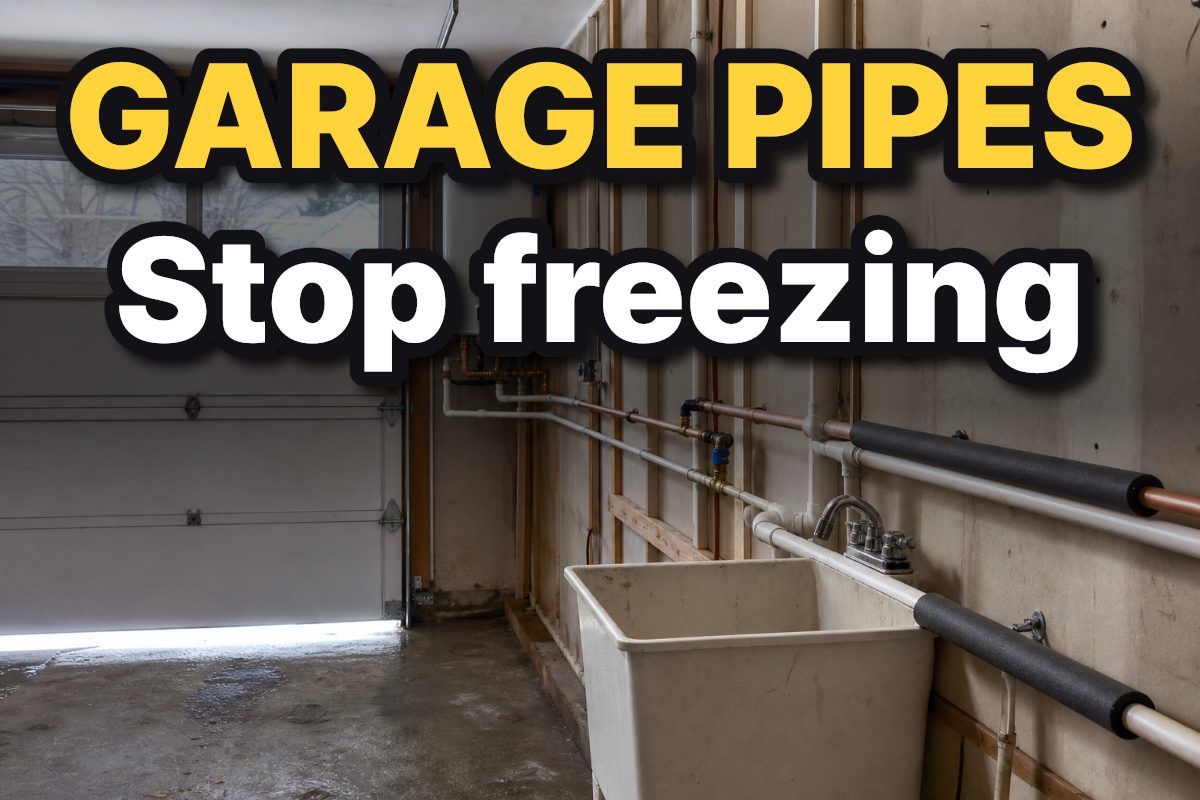
To keep pipes from freezing in an unheated garage, reduce cold drafts, insulate exposed plumbing, and use listed heat cable only where passive protection is not enough. The most vulnerable spots are often pipes against an exterior wall, near a garage door, or serving a utility sink; a water line can freeze even when the rest of the garage feels less cold.
Why pipes freeze in an unheated garage
Water expands as it freezes, and the resulting pressure can split copper or plastic pipe. The American Red Cross explains that damage may occur away from the ice blockage: pressure can build in trapped water between an ice plug and a closed faucet.
A garage is a different risk environment from a heated room because the plumbing may be exposed to outside air and drafts. Blessings Plumbing identifies pipes in unheated garage spaces, against poorly insulated exterior walls, and near garage doors as vulnerable locations. Cold air leaking through a small gap can create a localized cold spot, so the thermometer reading in the center of the garage may not describe the temperature beside a pipe.
- Check first: water lines to a utility sink, pipes along exterior walls, and exposed runs near the overhead door.
- Look for: gaps where pipes pass through walls, air leaks around vents, and worn door weatherstripping.
- Include: the supply connections near a water heater located in the garage, if those pipes are exposed to the cold.
How to keep pipes from freezing in an unheated garage
Use a layered approach: stop drafts, slow heat loss from the pipe, and add targeted heat when the pipe remains exposed to severe cold. The order matters because heating a pipe while cold air continues to blow across it can waste energy and leave a vulnerable section unprotected.
- Trace the full pipe run. Identify the supply line from where it enters the garage to the sink, appliance, or other fixture. Note elbows, valves, and short exposed sections; those are easy to miss when fitting insulation.
- Seal air leaks. Use caulk for suitable small stationary gaps and weatherstripping at the garage door. For other gaps, choose a sealing material appropriate to the opening and nearby surfaces. Sealing reduces cold-air movement that can create concentrated cold spots.
- Insulate the pipe. Fit foam pipe sleeves or rubber insulation around exposed sections and close the seams as directed by the product instructions. Insulation slows heat transfer; it does not generate heat or guarantee freeze protection indefinitely.
- Add listed heat cable if needed. For lines that remain highly exposed, choose heat tape or cable approved for the pipe material and install it exactly as its instructions specify. The U.S. Consumer Product Safety Commission warns consumers to inspect heat tapes and cables as part of winter preparation.
- Recheck the weak points. Confirm that the insulation is continuous, the cable is installed as directed, and the nearby air leak is addressed. A small unprotected gap can become the first point to freeze.
For longer cold spells, pipe insulation alone may not be sufficient: it slows heat loss but does not supply warmth. That distinction helps you decide whether a pipe sleeve is a sensible first layer or whether a particular exposed run needs approved, targeted heat as well.
When foam insulation is enough—and when it is not
Foam pipe insulation is useful when the goal is to slow heat loss from a pipe, but it cannot keep adding warmth as the garage gets colder. Water Damage Repair Tech notes that during a multi-day deep freeze, an insulated pipe can eventually reach freezing temperatures.
| Garage situation | Practical response | Why |
|---|---|---|
| Pipe is exposed but away from strong drafts | Seal nearby leaks and cover the full accessible pipe with insulation. | Insulation slows heat transfer; sealing limits cold air moving over the pipe. |
| Pipe is beside a garage door or exterior wall | Address the draft and insulate; assess whether listed heat cable is also needed. | Cold air can create a colder spot at the pipe than elsewhere in the garage. |
| Severe or prolonged cold is expected | Do not treat foam as a stand-alone guarantee; consider correctly installed heat cable for the exposed run. | Insulation delays heat loss but does not produce heat. |
| Garage utility sink will be unused | Shut off its dedicated valve and drain the line if the plumbing arrangement allows. | Removing water from an unused line reduces the water left in that exposed section. |
Choose based on the pipe’s exposure, not only on whether the garage has insulation in its walls. A short section close to a draft may need more attention than a longer run in a sheltered location.
How to use heat tape or cable safely
Heat tape is an electric heating product installed along or around a pipe to provide targeted warmth. The CPSC has specifically advised homeowners to inspect heat tapes and cables during winter preparation; installation details and allowed pipe types depend on the product.
- Use a product that is listed for the intended use and compatible with the pipe material.
- Read the manufacturer’s instructions before measuring or wrapping the pipe. Some products must not be shortened, crossed, or overlapped.
- Do not overlap heat tape unless the manufacturer explicitly allows it. The CPSC cautions that improper heat-tape use can create a fire hazard.
- Do not cover heat tape with insulation unless the product instructions permit it, and use only the specified insulation type.
- Inspect the cable and its connection for visible damage before use. Follow the product’s electrical and installation instructions rather than improvising a repair.
Targeted heating is generally a more direct way to protect a vulnerable pipe than trying to heat the entire garage. A portable space heater may raise the room temperature, but 2-10 Blog notes that it is less efficient for this purpose and can pose a fire hazard if left without monitoring. Do not rely on an unattended portable heater as the garage’s freeze-protection plan.
What to do with a garage utility sink or water heater
A garage utility sink is often supplied by pipes that run through an unconditioned space. The Garage Guide recommends insulating the supply lines and, if the sink will not be used in winter, shutting off the dedicated valve and draining the lines completely.
- Find the shutoff valve that serves the sink, if the plumbing has a dedicated one.
- Close the valve before the coldest weather arrives.
- Open the sink faucet to release water remaining downstream of the valve.
- Check that the exposed supply line and nearby fittings are not holding water in a low spot or section that the drain-down did not empty.
If the garage contains a water heater, inspect the exposed water pipes around it as part of the same walk-through. Focus on uninsulated pipe sections and nearby drafts; do not assume that having a water heater in the space warms every connected line. For a sink that must stay available, keep its supply pipes insulated and address the draft rather than closing off water you need.
Should you leave a faucet dripping?
Dripping a faucet is not the first protection to choose for an unheated garage. Guidance on dripping can differ by locality, while insulation, air sealing, and appropriate heat cable directly address the exposed pipe and its heat loss.
Start with those physical protections and follow local water-provider guidance if a severe cold event leads you to consider a drip. A drip uses water and is not a substitute for correcting a draft or protecting a highly exposed pipe. Avoid turning a general rule of thumb into a year-round habit, especially where water conservation is a concern.
If a garage pipe freezes: safe first steps
If water flow slows or stops during cold weather, treat the pipe as potentially frozen and locate the affected section. The White House Utility District and the State of Michigan recommend gentle thawing methods such as a hair dryer on low heat or towels warmed with hot water.
- Open the affected faucet so water can flow as the ice melts.
- Apply gentle heat with a hair dryer on low, or wrap the pipe with towels and pour hot water over the towels.
- Work along the accessible pipe rather than concentrating intense heat at one point.
- Never use an open flame or torch. The recommended gentle methods avoid the hazards of direct flame around household plumbing.
If a pipe has split or water is leaking, shut off the relevant water supply if you can do so safely and limit water damage. Once the pipe is accessible, repair the leak before relying on the line again.
Advice for first-time and experienced homeowners
If this is your first winter with the garage, make a simple map of the exposed plumbing before temperatures drop. Mark the sink shutoff, note where the line enters the garage, and photograph the route so you can check that each section is covered after installing insulation.
If you have already protected the garage, inspect the details that commonly change: weatherstripping can wear, stored items can press against pipe insulation, and heat cable may show damage. Recheck the pipe route after moving storage or doing garage work, since a new gap or uncovered fitting can change which section is most exposed.
- For an unused sink: prioritize shutoff and draining, then check that exposed pipes are not left with trapped water.
- For a sink used through winter: keep its supply route insulated, seal nearby drafts, and consider listed heat cable if the line remains exposed.
- For pipes beside the garage door: address door-edge drafts as well as the pipe itself; treating only the insulation may leave the cold-air source untouched.
Common mistakes to avoid
The biggest misconception is that a foam sleeve makes a pipe freeze-proof. It slows heat loss, but during prolonged cold the pipe can still reach freezing temperatures. Another common error is treating the garage as one uniform space: drafts near a door or wall can make a small area much colder than the rest.
- Do not assume a space heater is the simplest fix. It heats the room rather than the pipe directly and needs attention because of fire risk.
- Do not overlap heat tape by default. Follow the product instructions; the CPSC warns against unsafe heat-tape use.
- Do not insulate over a cable without checking its instructions. Covering it with an unapproved material can create a hazard.
- Do not focus only on the faucet. Trace the supply pipe back to its entry point and protect exposed fittings along the entire route.
Frequently Asked Questions
Is foam insulation enough to stop pipes from freezing?
Not in every situation. Foam slows heat loss but does not add heat, so a pipe can still freeze during a prolonged deep freeze. Draft sealing and, where necessary, compatible heat cable provide additional layers of protection.
Can I leave a space heater on in my garage?
A space heater can raise the surrounding air temperature, but it is less targeted than insulating or heating the pipe itself. 2-10 Blog also identifies an unattended space heater as a fire concern, so do not make one your unattended freeze-prevention method.
What should I do with a garage utility sink in winter?
Insulate its supply lines and seal drafts near the route. If you will not use the sink, shut off its dedicated valve and drain the line where the plumbing setup allows.
Can I wrap heat tape around any pipe?
No. Use a product approved for the pipe material and follow its installation instructions. In particular, do not shorten, overlap, or cover it unless the manufacturer explicitly permits that configuration.
Key points to remember
Start by finding the exposed garage plumbing, especially lines near exterior walls, garage doors, utility sinks, and water-heater connections. Seal drafts, insulate the pipe, and use compatible listed heat cable only as its instructions allow; for an unused utility sink, shut off and drain the line. Product instructions and local cold-weather guidance can change, so check them before installing heating cable or changing how you use water.
References
- Preventing & Thawing Frozen Pipes | American Red Cross
- A Guide to Preventing Frozen Pipes
- How to Prevent Frozen Pipes in Garages and Attics
- How to Prep Your Garage for Winter | 2-10 Blog
- Inspect Heat Tapes, Cables As You Winterize Your Home | CPSC.gov
Information in this post was checked as of October 2026. Policies and prices may change, so please verify important details with official sources.


Comments
Post a Comment