How to Clean an Oven Before Thanksgiving Without Damage
Key Takeaways
- Start with a completely cool, empty oven and check the owner’s manual before choosing a cleaner or cleaning method.
- For a cautious routine clean, use a small amount of dishwashing liquid and water, then wipe the oven thoroughly with a clean, damp cloth.
- Do not use commercial oven cleaner on a self-cleaning oven; Illinois Extension warns it can damage the oven’s surface.
- Clean ahead of Thanksgiving and leave time to rinse and dry the interior before cooking.
Table of Contents
- How to clean an oven before Thanksgiving safely
- Which oven-cleaning method is right for your oven?
- How to remove baked-on food without scraping the finish
- How to clean oven racks and the door
- Should you use oven cleaner or the self-cleaning setting?
- When to clean before Thanksgiving
- Common oven-cleaning mistakes that can cause trouble
- Which approach fits your oven and your time?
- Frequently Asked Questions
- Key points to remember
To clean an oven before Thanksgiving without damaging it, let it cool, remove cookware and loose crumbs, and begin with a mild dishwashing-liquid solution. Check the owner’s manual before using a commercial cleaner or a self-cleaning feature, because the right method depends on the oven’s surface and instructions.
How to clean an oven before Thanksgiving safely
An oven is safest to clean when it is cool and empty. Illinois Extension advises making sure the oven is cool, removing pots and pans, and following the manufacturer’s cleaning instructions. That gives you room to wipe the cavity without working around hot surfaces or leaving cookware in the way.
Start by checking the manual or the manufacturer’s care information for your oven model. Look for specific directions about the interior finish, racks, door, approved cleaners, and self-cleaning function. If you cannot identify the interior surface, do not guess that a strong cleaner or abrasive tool is suitable; start with a damp cloth and mild dish soap instead.
- Turn the oven off and wait until the interior is cool.
- Remove pots, pans, thermometers, and other loose items.
- Take out the racks if the manual allows it, and set them aside for separate cleaning.
- Wipe crumbs and loose debris into the trash with a damp cloth.
- Use a small amount of dishwashing liquid mixed with water on a cloth, rather than pouring liquid into the oven.
- Wipe the area with a clean, damp cloth to remove the cleaning mixture, then dry it.
Wirecutter’s oven-cleaning guidance uses a water-and-dishwashing-liquid mixture, recommends wiping away loose crumbs first, and warns against letting liquid pool on the oven floor. It also calls for a final wipe with a clean, damp cloth so cleaning residue is not left as a film. The low-liquid approach makes it easier to control where the solution goes.
Which oven-cleaning method is right for your oven?
The least complicated starting point is a dishwashing-liquid solution and a cloth. A commercial oven cleaner may be an option only when the product directions and your oven manufacturer’s instructions allow it; Illinois Extension notes that cleaners made for a cold oven are more potent than cleaners made for a hot oven.
Use the comparison below to choose a starting method, not as a substitute for your model’s care instructions. If the manual rules out a method, follow the manual even if the method appears in a general cleaning guide.
| Method | Best starting point | What to check |
|---|---|---|
| Dishwashing liquid and water | Loose grime and routine cleaning | Apply lightly with a cloth and wipe the solution away with a clean, damp cloth. |
| Commercial oven cleaner | Stubborn buildup when the oven maker permits it | Check both the cleaner’s directions and the oven manual; do not use it on a self-cleaning oven. |
| Self-cleaning feature | Only when the oven’s own instructions direct you to use it | Follow the model-specific instructions rather than adding oven cleaner. |
Illinois Extension specifically warns not to use oven cleaner on a self-cleaning oven because it may damage the surface. It also says to pay close attention to the cleaner’s recommendations. “Oven cleaner” is not a one-size-fits-all choice: the cleaner label and oven instructions need to agree.
How to remove baked-on food without scraping the finish
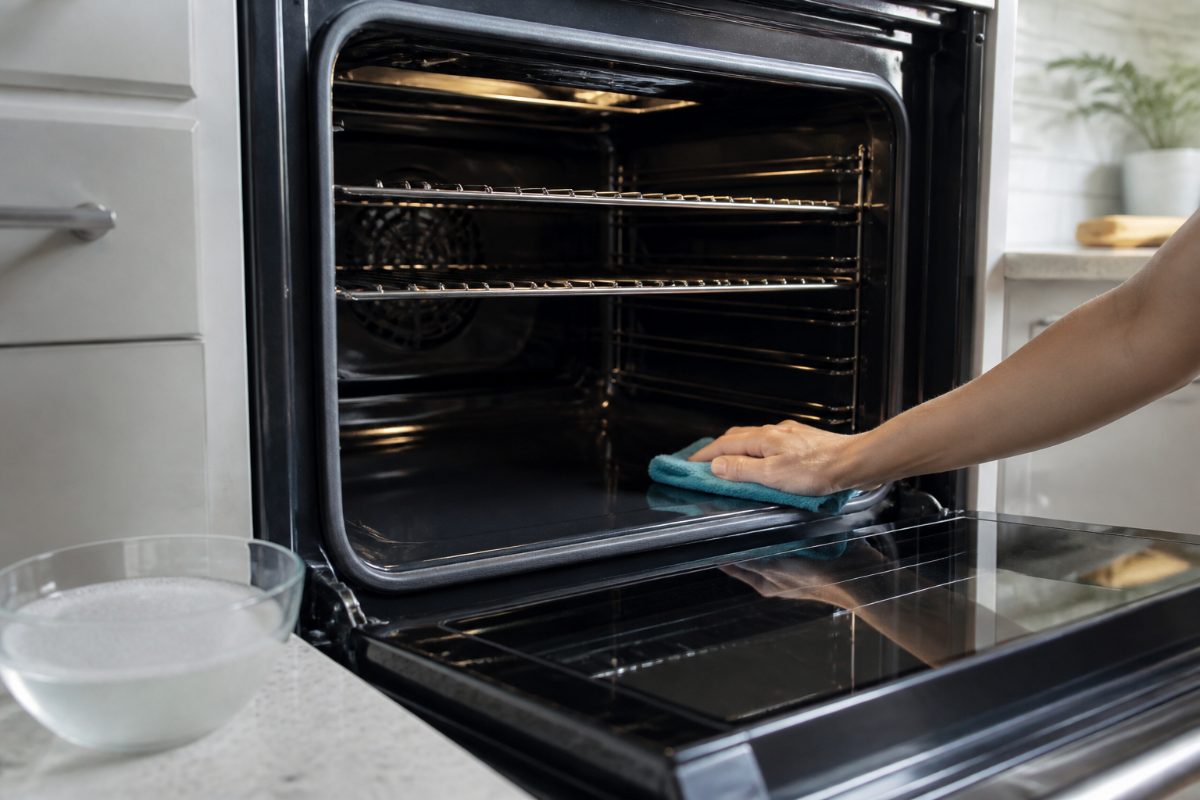
For crusted spots, give a mild cleaning solution time to loosen the residue before applying more force. Wirecutter recommends lightly dampening clumpy or crusty areas with a dishwashing-liquid mixture and letting it sit for 40 minutes; for particularly stubborn patches, it describes placing a rag or paper towel dampened with that mixture over the spot.
Use this as a controlled first attempt: dampen the residue, wait, then wipe and reassess. If a patch remains, repeat the gentle treatment rather than immediately using a sharp scraper or an unapproved abrasive. The reason to pause and soften the spill first is practical: a cloth can lift loosened food with less pressure than scrubbing a dry, hardened patch.
- Remove loose crumbs with a damp cloth.
- Apply a small amount of dishwashing-liquid solution to the crusted area; avoid leaving a puddle.
- Let it sit for about 40 minutes, following Wirecutter’s routine-cleaning guidance.
- Wipe the spot with a damp cloth and rinse the cloth under running water as needed.
- Check the oven manual before using any additional product or tool on a stain that remains.
Wirecutter mentions a mild application of Bar Keepers Friend for some remaining stains on the door or walls, with the instruction not to let it sit. That recommendation does not establish that the product is suitable for every oven surface. Treat any named product as model-dependent: check the oven manufacturer’s instructions and the product label before using it, and skip it if compatibility is unclear.
How to clean oven racks and the door
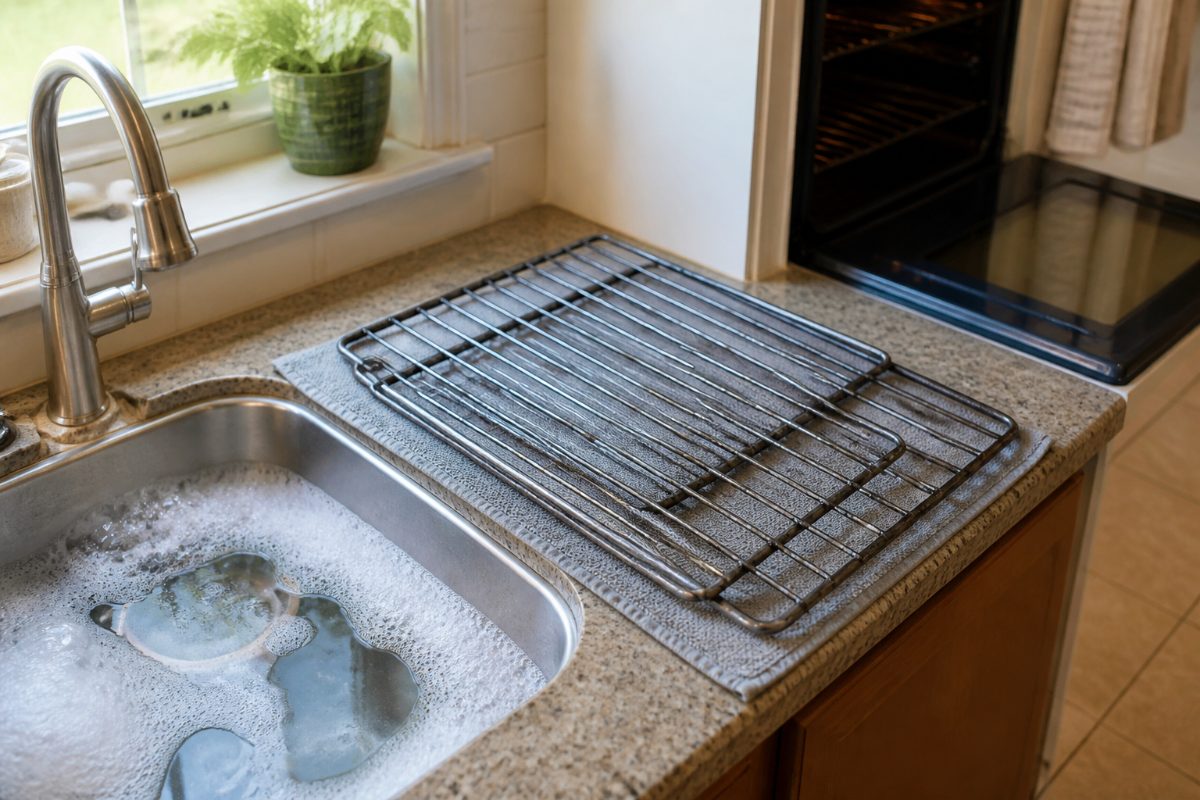
Clean removable racks separately so you can reach the oven walls and floor without pushing grime around the cavity. Illinois Extension’s cleaning guidance says to remove racks and wash them in warm, soapy water as part of its described ammonia method; Wirecutter also includes racks in its dishwashing-liquid cleaning process.
For a routine clean, place the racks where you can wash them with warm water and dish soap, then wipe them with a cloth or sponge that will not conflict with the rack manufacturer’s care instructions. Rinse away soap and dry the racks before putting them back. If the manual says not to soak or use a particular product on the racks, follow that instruction instead.
Clean the door with the same cautious sequence: wipe away loose crumbs, apply a modest amount of dishwashing-liquid solution to a cloth, and work on one area at a time. Wirecutter advises wiping the door and walls with the mixture and removing the remaining mixture with a clean, damp rag. Keep the cleaning liquid controlled rather than allowing it to collect along edges or the oven floor.
Do not assume the door glass, painted trim, and oven cavity share the same care requirements. Consult the model instructions before using a specialty cleaner on glass or a stubborn mark. A product that is appropriate for one surface may not be appropriate for another, so spot-cleaning is not a substitute for checking compatibility.
Should you use oven cleaner or the self-cleaning setting?
Do not use commercial oven cleaner on a self-cleaning oven. Illinois Extension explicitly warns that the product may damage the oven’s surface, making the model’s cleaning instructions the deciding reference for both chemical cleaners and built-in cleaning features.
Before doing anything beyond a mild hand clean, identify whether your oven has a self-cleaning feature and read the directions for that exact model. Do not assume that a self-cleaning oven needs a chemical cleaner, or that a product labeled for ovens is automatically safe for every oven. The product label matters, but it does not override the appliance manufacturer’s restrictions.
For a non-self-cleaning oven with heavy buildup, Wirecutter describes a more intensive process: after applying its dishwashing-liquid mixture and removing soaked rags, it says to heat the oven at 250°F for two hours, then let it cool until the interior is comfortable to touch. This is a specific method from Wirecutter, not a universal appliance instruction. Use it only if the oven manufacturer’s instructions allow it; otherwise, use the model’s approved method.
That distinction prevents a common mistake: treating a cleaning tip as a universal rule. A method that is described for a particular type of oven or condition should not be transferred automatically to a different model, surface, or cleaning system.
When to clean before Thanksgiving
Clean the oven before the day you plan to cook, rather than leaving the task until the turkey or other holiday food is ready to go in. A separate cleaning window gives you time to remove residue, rinse the interior, dry it, and check the oven instructions without rushing through those steps.
Use this simple schedule as a task order, not a required number of days:
| Stage | What to do | Why it helps |
|---|---|---|
| Plan | Find the oven manual and identify the approved cleaning method. | You can avoid choosing a cleaner that conflicts with the appliance’s instructions. |
| Clean | Work on a cool, empty oven; clean racks separately and loosen residue with a mild solution. | Removing loose debris first reduces the need to scrub hardened crumbs into the surface. |
| Finish | Wipe the cavity with a clean, damp cloth and dry it before returning racks. | Wirecutter recommends removing leftover cleaning mixture so it does not leave a film. |
| Before cooking | Check that the interior is clean and dry and that no cleaning items remain inside. | A final visual check catches forgotten cloths, pans, or residue before the oven is used. |
If Thanksgiving is close and the oven is only lightly soiled, a focused wipe of crumbs and obvious splashes may be more sensible than trying a new, aggressive product at the last minute. If there is heavy buildup, use a method approved for your model and allow enough time to complete the rinse-and-dry step before cooking.
Common oven-cleaning mistakes that can cause trouble
The most avoidable errors are using the wrong cleaner, cleaning while the oven is hot, and leaving cleaning solution behind. Illinois Extension says to clean a cool oven, remove cookware, follow the manufacturer’s instructions, and avoid oven cleaner on self-cleaning ovens. Wirecutter’s method also stresses wiping the cavity completely and removing the final cleaning mixture.
- Using a strong cleaner before checking the oven type: Check the manual first. In particular, Illinois Extension says not to apply oven cleaner to a self-cleaning oven.
- Assuming hotter means better: Follow the cleaner’s directions. Illinois Extension distinguishes between cleaners made for cold ovens and those made for hot ovens, noting that cold-oven formulas are more potent.
- Pouring or spraying too much liquid: Wirecutter advises against allowing the cleaning mixture to pool in the oven. Apply it to a cloth or use a controlled amount on the area.
- Scrubbing dry, hard residue immediately: Dampen it with the mild solution and give it time to loosen before wiping.
- Stopping after the visible grime is gone: Wipe the interior again with a clean, damp cloth, then dry it so cleaning mixture is not left behind.
- Mixing methods without checking instructions: Do not layer a commercial cleaner over another cleaning approach. Choose one method that the oven maker permits and follow its directions.
Which approach fits your oven and your time?
If you are cleaning this oven for the first time, begin with the manual and a mild dishwashing-liquid solution. A conservative first pass shows whether ordinary grime comes away without introducing a stronger product or an unfamiliar tool.
If you clean the oven regularly, focus on crumbs, fresh splashes, and the areas you can reach with a damp cloth. Wirecutter’s guidance supports wiping loose debris first and using a light application of the dishwashing-liquid mixture; that reduces the temptation to flood the oven or scrub every surface aggressively.
If there is baked-on residue, allow the damp cleaning mixture time to work and repeat the wipe before escalating. If you are considering a commercial cleaner or a more intensive heat-based approach, verify that the oven manual allows it. For a self-cleaning oven, do not use oven cleaner.
If Thanksgiving is imminent, prioritize a safe, complete clean over a dramatic makeover. Remove loose debris, clean the worst accessible spots with an approved method, and make sure the interior is wiped and dry. Save any method that requires a long wait or a separate heating step for a time when you can follow the instructions without rushing.
Frequently Asked Questions
Can I use oven cleaner on a self-cleaning oven?
No. Illinois Extension says not to use oven cleaners on self-cleaning ovens because they may damage the oven’s surface. Check the manual for the cleaning method approved for your model.
What is a gentle way to clean an oven before Thanksgiving?
Start with a cool, empty oven and a small amount of dishwashing liquid mixed with water. Wipe crumbs first, let the solution sit on crusted spots, then remove it with a clean, damp cloth and dry the interior.
How long should dishwashing-liquid solution sit on baked-on food?
Wirecutter’s guidance suggests letting its water-and-dishwashing-liquid mixture sit for 40 minutes on dirty areas. Check your oven instructions before adding a different cleaner or tool.
Should I clean oven racks inside the oven?
Removing racks makes the oven cavity easier to reach, and both Illinois Extension and Wirecutter describe cleaning racks separately. Wash them with warm, soapy water when their care instructions allow it, rinse, and dry before reinstalling.
How do I know whether a cleaner is safe for my oven?
Compare the cleaner’s directions with the owner’s manual for your exact oven model and surface. If the instructions do not clearly permit the product, use a mild dishwashing-liquid solution instead of guessing.
Key points to remember
A safe Thanksgiving oven clean starts with a cool, empty appliance and the manufacturer’s instructions. Use dishwashing liquid and water as a cautious first step, apply only enough solution to loosen grime, and wipe the cavity with a clean, damp cloth before drying. Never use commercial oven cleaner on a self-cleaning oven, and do not use an intensive cleaning method unless the instructions for your model allow it.
Oven-cleaner directions and appliance care instructions can differ by product and model. Before using a commercial product, a self-cleaning feature, or a heat-based cleaning method, check the current instructions for your oven and the cleaner.
References
- Cleaning and Sanitizing | Food Safety | Illinois Extension | Illinois
- How to Clean an Oven | Reviews by Wirecutter
Information in this post was checked as of October 2026. Policies and prices may change, so please verify important details with official sources.


Comments
Post a Comment