How to Clean a Fireplace Before Fall’s First Fire
Key Takeaways
- For a wood-burning fireplace, remove cold ash and loose debris, then check the firebox, screen, damper, and visible chimney components before lighting a fire.
- Wait at least 24 hours after the last fire before cleaning so ashes and embers have time to cool completely.
- Cleaning the firebox does not clear creosote or obstructions from the full chimney; arrange a professional inspection when buildup or damage is present.
- Gas fireplaces need a different routine: turn off the gas supply before cleaning, do not move ceramic logs, and use an ammonia-free cleaner on the glass.
Table of Contents
- How to clean a fireplace before fall’s first fire
- Let the fireplace cool, then remove ash and loose debris
- Clean the firebox, hearth, and glass without damaging surfaces
- Check the screen, damper, firebox, and chimney
- Know when the chimney needs professional cleaning
- Use a different cleaning routine for gas fireplaces
- Choose the right checklist for your situation
- Common fall fireplace-cleaning mistakes
- Frequently Asked Questions
- Key takeaways
To clean a fireplace before using it for the first time this fall, start with a completely cool firebox, remove leftover ash and debris, and inspect the fireplace and chimney for visible damage or blockage. A clean hearth is only part of the preparation: soot and creosote inside the flue, damaged liners, or a blocked chimney can’t be dealt with by wiping the firebox alone.
How to clean a fireplace before fall’s first fire
A fall fireplace cleanup has two jobs: remove the material left in the firebox and identify problems that need attention before the next fire. For a wood-burning fireplace, the basic sequence is to let everything cool, clear the firebox, clean reachable surfaces, and inspect the opening and visible chimney components.
Chimney Sweeps in Hudson Valley recommends removing accumulated soot, creosote, and debris such as twigs, leaves, and bird nests before the first burn season. Farm and Dairy also recommends checking for obstructions, cracks, creosote buildup, and a damaged fireplace screen. Those checks help you distinguish ordinary surface dust from a problem that cleaning the hearth cannot solve.
- Wait until the fireplace and ashes are fully cool. O-Cedar advises waiting at least 24 hours after the last fire.
- Remove large debris and ash from the firebox, keeping the ash in a metal container.
- Clean loose soot from the firebox and glass with a method appropriate for the fireplace material.
- Inspect the fireplace opening, screen, damper, and visible chimney areas for damage or blockage.
- Arrange chimney cleaning or repair if you find creosote buildup, an obstruction, or damage that needs more than routine surface cleaning.
Use this as a preparation checklist, not as a substitute for chimney work. A homeowner can remove cold firebox ash and note visible concerns, but a fireplace opening does not show the full length or condition of the flue.
Let the fireplace cool, then remove ash and loose debris
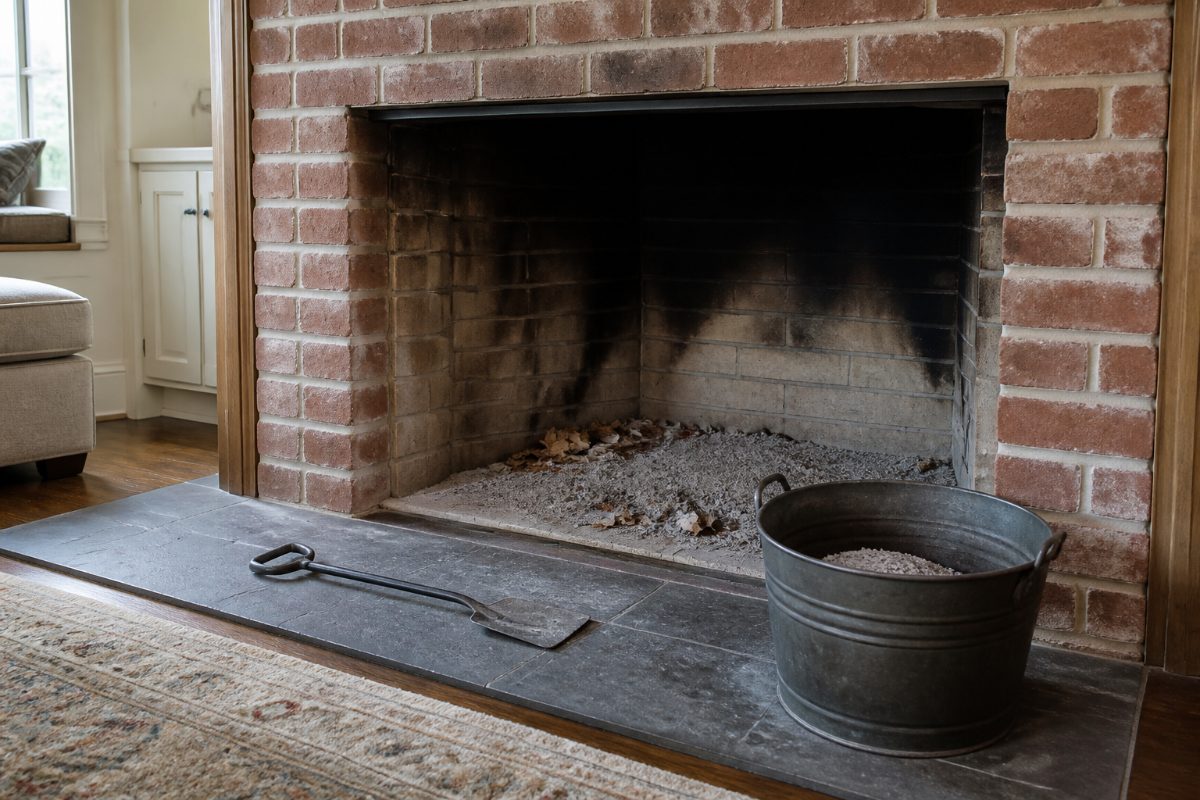
Do not begin by vacuuming or brushing a recently used fireplace. O-Cedar’s cleaning guidance says to wait at least 24 hours after the last fire so ashes and embers have time to cool completely. If there is any doubt that material is cold, leave it alone longer rather than treating the waiting period as permission to handle warm ash.
Once the firebox is cool, take out larger pieces of debris first. For a wood-burning fireplace, look for leftover wood fragments, leaves, twigs, or other material that may have entered the opening. Chimney Sweeps in Hudson Valley specifically lists twigs, leaves, and bird nests among the debris to remove before the season begins.
Put ash and larger debris in a metal container rather than scattering it across the hearth. Oakhurst’s fireplace care guide recommends storing ash outdoors for at least a week before disposal because embers can reignite. Keep the container away from the fireplace’s cleaning area and do not assume ash is safe to discard simply because the fire went out the day before.
For fine ash and soot, Oakhurst describes using a vacuum with a HEPA filter after the larger debris has been removed. Use that approach only when the ash is completely cold; an ordinary household vacuum is not a substitute for a fireplace-appropriate cleanup method. Avoid stirring up a cloud of ash while clearing corners, since doing so spreads the residue onto the hearth and surrounding room.
Clean the firebox, hearth, and glass without damaging surfaces
After clearing loose ash, brush loose soot from the firebox walls and remove remaining residue from the hearth. Oakhurst recommends a stiff brush for brick or stone firebox walls. Work from the upper parts of the firebox downward so loosened material falls where it can be collected, rather than brushing cleaned areas again.
Materials matter. Brick, stone, metal, and glass do not all respond to the same cleaner, so avoid applying a strong household product to an unknown surface. For a stone surround, test a cleaning method on a discreet spot first and stop if it changes the surface; the goal is to remove loose grime, not to alter the stone’s finish.
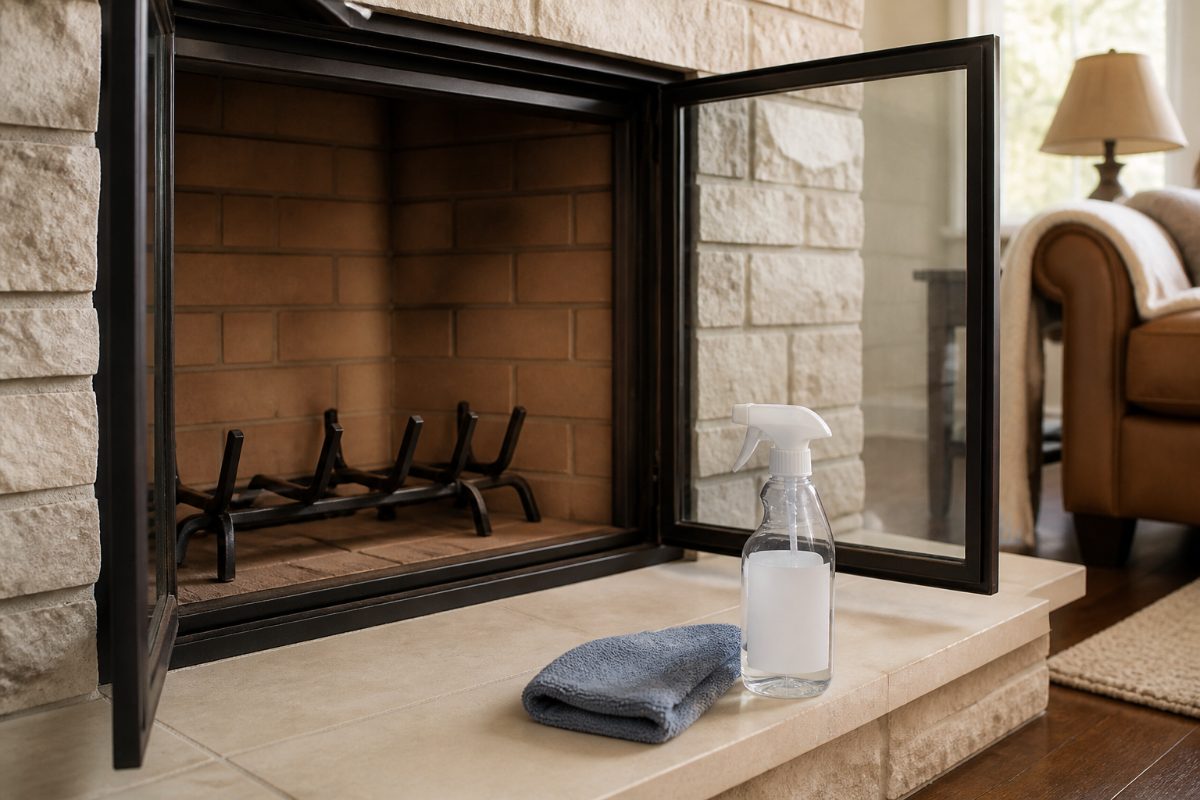
For fireplace glass, Oakhurst recommends a specialized fireplace glass cleaner or an ammonia-free glass cleaner. The guide warns that ammonia can damage the glass coating. Apply the cleaner according to its label and use a soft cloth rather than a rough abrasive pad that could scratch the surface.
Some fireplace glass-cleaning guides describe using a paste made with ash and damp newspaper, but a commercial fireplace glass cleaner is the more straightforward option when you do not know how the glass is coated. Do not use ash from the fireplace as a general-purpose abrasive on the hearth or surround: it can leave residue in areas you have already cleaned.
Check the screen, damper, firebox, and chimney
Cleaning is also a chance to inspect what you can see. Farm and Dairy recommends checking the firebox for obstructions, cracks, and creosote buildup, and checking that the fireplace screen has no holes. In an open fireplace without a screen, look for nests or other obstructions before use.
Check the damper before the first fire. American Home Shield says the damper should be fully open before starting a fire. If you are unsure how to identify or operate yours, use the separate How to Check If a Fireplace Damper Is Open guide on this site; do not light a fire until you know the damper is open.
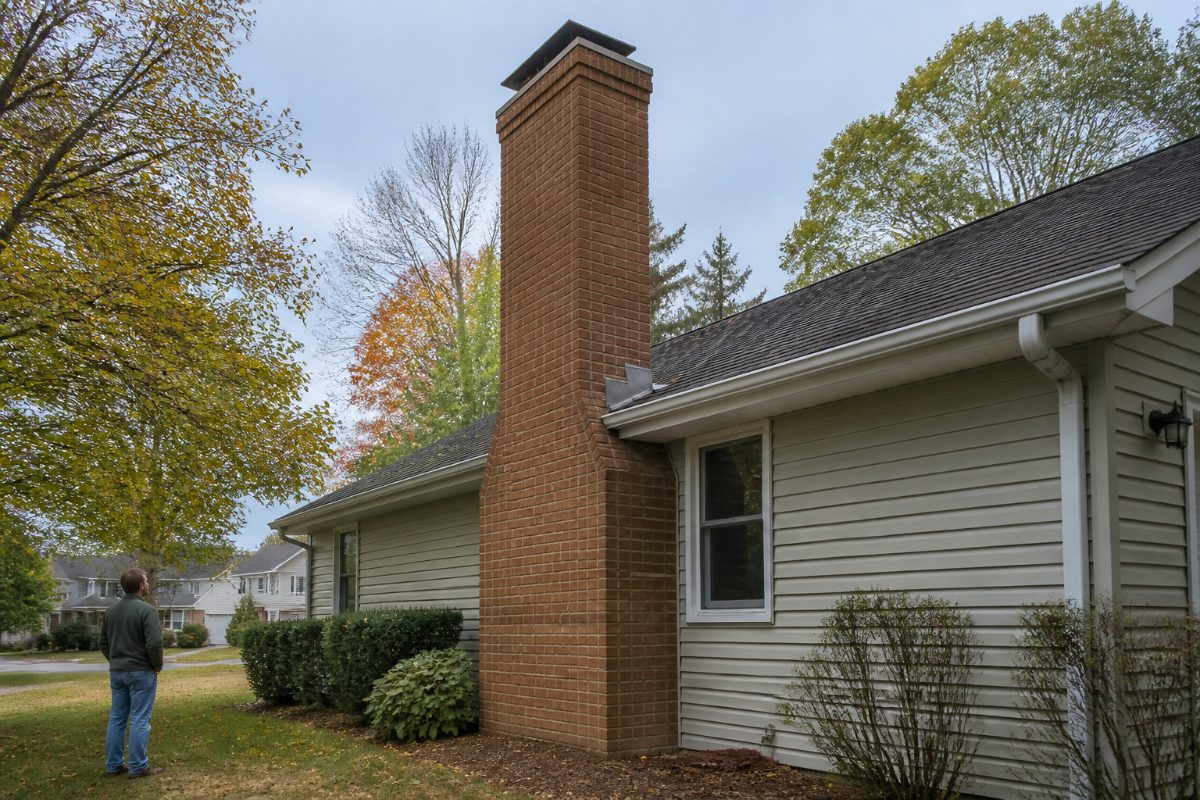
Inspect the visible exterior of the chimney from a safe vantage point. Farm and Dairy lists loose or damaged bricks, cracked flue liners, damaged or displaced flashing at the roofline, cracks or leaks at the chimney top, and creosote buildup as signs to look for. The same source notes that metal chimneys may show corrosion or rust on inner liners, buckled sections, separated seams, or a collapsing inner lining.
Do not climb onto a roof or dismantle a chimney to investigate a concern. The useful homeowner check is to record what is visible from a safe location and arrange the right follow-up when a component appears damaged. A clean firebox cannot correct a cracked liner, loose masonry, a blocked flue, or a failed chimney seam.
Know when the chimney needs professional cleaning
Firebox cleaning and chimney cleaning are different tasks. Removing ash from the hearth does not remove deposits throughout the flue, and a brush used only inside the firebox cannot confirm that the chimney is clear from top to bottom. Chimney Sweeps in Hudson Valley advises cleaning the chimney to remove built-up soot, creosote, and debris before the first burn season.
Valley Chimney’s checklist gives two specific creosote reference points: a deposit about 1/8 inch thick is a reason to schedule fireplace cleaning soon, while creosote that can be scratched away at 1/4 inch is a reason not to use the fireplace again. Treat these as indicators for a cleaning decision, not as a reason to scrape deposits yourself or to assume a thinner-looking deposit means the entire chimney is clear.
Brown Chimney describes at least one annual cleaning for wood-burning fireplaces and stoves as its baseline recommendation, with heavier users planning for more frequent service. The actual condition of a chimney also depends on use and what is burned, so the amount of visible residue in the firebox alone is not a reliable way to set a cleaning schedule.
Set up chimney service before the first planned fire if you have not had the chimney cleaned or inspected, if you see creosote, or if you find an obstruction or signs of damage. Late summer through early fall is a practical time to plan ahead, according to Brown Chimney; waiting until the day you want to use the fireplace leaves little room to address a problem first.
Use a different cleaning routine for gas fireplaces
A gas fireplace is not cleaned like a wood-burning firebox. Oakhurst’s gas-fireplace guidance says to turn off the gas supply at the valve and wait five minutes before starting cleaning. Follow the appliance manufacturer’s instructions for the gas shutoff and cleaning steps, since components and access points differ between models.
Clean ceramic logs gently with a brush attachment, and do not move or rearrange them. Oakhurst explains that the logs need a specific placement for proper combustion. If they have shifted, do not guess at their original positions or use the fireplace with an improvised arrangement; consult the appliance instructions for the correct layout.
Check burner ports for dust or spider webs, since blockages can affect flame patterns. Clean the glass front with an ammonia-free glass cleaner because ammonia can damage the coating, according to Oakhurst. American Home Shield also advises cleaning and checking ceramic logs as part of fireplace maintenance.
Brown Chimney recommends yearly inspections for gas fireplaces, even when cleaning is less frequent. That distinction is useful: a gas fireplace may not leave the same ash and creosote in the firebox as a wood-burning fireplace, but its components still need an inspection before the heating season.
Choose the right checklist for your situation
The right amount of fall maintenance depends first on the fireplace type and then on what you find. Use the table to choose a starting point; a visible defect or heavy deposit takes priority over a routine wipe-down.
| Your situation | Start with | Do not overlook |
|---|---|---|
| First-time wood fireplace user | Identify the fireplace type, wait for a fully cold firebox, and clear ash and debris. | Check the screen, damper, visible firebox, and chimney condition before the first fire. |
| Regular wood-fireplace user | Remove leftover ash and loose soot, then inspect for creosote and damage. | Brown Chimney’s baseline is at least annual cleaning for wood-burning fireplaces and stoves. |
| Wood fireplace with visible creosote | Assess the deposit visually without scraping into the flue. | Valley Chimney says about 1/8 inch merits scheduling cleaning soon; a scratchable 1/4-inch deposit means do not use the fireplace. |
| Gas fireplace owner | Turn off the gas supply at the valve and wait five minutes before cleaning. | Do not rearrange ceramic logs; clean glass with ammonia-free cleaner and check burner ports. |
| Fireplace with cracks, blockage, or damaged parts | Pause the first fire and document what you can see. | Surface cleaning will not repair a liner, masonry, flashing, or metal chimney defect. |
For a first-time owner, the safest useful approach is a visual inspection and a modest firebox cleanup, followed by chimney service if its condition or cleaning history is unknown. For someone who uses a wood fireplace every season, add the annual chimney-cleaning plan to the fall checklist instead of relying only on how tidy the hearth looks.
If you have a gas fireplace, skip the ash-removal steps meant for wood fires and follow the appliance’s instructions for the logs, burner, and glass. If the fireplace has not been used in years, visible damage or an uncertain component layout is a reason to postpone use until the condition is assessed.
Common fall fireplace-cleaning mistakes
Cleaning before ashes are cold: A fire that looks extinguished can still leave hot embers. O-Cedar’s minimum wait is 24 hours after the last fire; if the firebox is not completely cool, wait longer.
Thinking a clean firebox means a clean chimney: Ash removal does not clear creosote or debris from the full flue. Check the chimney and arrange cleaning when deposits or obstructions are present.
Ignoring the screen or damper: Farm and Dairy recommends checking the screen for holes, while American Home Shield says the damper should be fully open before a fire. Include both in the pre-use check rather than focusing only on the hearth.
Using the wood-fire routine on a gas fireplace: Gas logs should not be shifted during cleaning, and gas supply should be turned off before the cleaning steps described by Oakhurst. Do not vacuum ash or scrub parts that are meant to stay in a fixed position.
Using ammonia on fireplace glass: Oakhurst warns that ammonia can damage the glass coating. Choose a fireplace glass cleaner or an ammonia-free glass cleaner instead.
Frequently Asked Questions
How long should I wait before cleaning fireplace ashes?
Wait at least 24 hours after the last fire, as O-Cedar recommends, and confirm the ashes and embers are completely cool before handling them. If they are not fully cool, wait longer.
Can I clean the chimney by cleaning the firebox?
No. Cleaning the firebox removes residue and debris in the area you can reach, but it does not clean or inspect the full flue. Creosote, nests, or other obstructions inside the chimney need appropriate chimney cleaning.
How much creosote means I should stop using the fireplace?
Valley Chimney says to schedule cleaning soon when creosote is about 1/8 inch thick. If you can scratch away at a deposit of 1/4 inch, its checklist says not to use the fireplace again until cleaning is addressed.
Can I use regular glass cleaner on a fireplace door?
Use an ammonia-free glass cleaner or a cleaner made for fireplace glass. Oakhurst warns that ammonia can damage the glass coating, so check the product label before applying it.
Key takeaways
Before fall’s first wood fire, let the fireplace cool, remove ash and loose debris, clean reachable surfaces, and inspect the screen, damper, firebox, and visible chimney components. A clean hearth is not proof that the chimney is clear: creosote, obstructions, cracks, or damaged parts call for chimney cleaning or repair before use.
For gas fireplaces, turn off the gas supply before cleaning, leave ceramic logs in their specified positions, and use ammonia-free glass cleaner. Cleaning and inspection practices differ by appliance, so check the manufacturer’s instructions for model-specific steps and arrange chimney service before lighting a fire when the condition is uncertain.
References
- Prepping for the First Fire of The Year - Chimney Sweeps in Hudson Valley
- How to prepare your wood burner for winter - Farm and Dairy
- Tips for Cleaning Your Fireplace | O-Cedar®
- End-of-Season Fireplace Care: Your Spring Shutdown Guide | Oakhurst, NJ
- How to Keep Up with Chimney & Fireplace Maintenance | AHS
- Your 2023 Fireplace Spring Cleaning Checklist
- How Often Should You Clean Your Chimney? | Brown Chimney
Information in this post was checked as of October 2026. Policies and prices may change, so please verify important details with official sources.


Comments
Post a Comment