How to Choose Garage Door Weatherstripping for Winter
Key Takeaways
- Choose a seal for the location of the gap: the floor, the sides, or the top of the garage door.
- Match a replacement bottom seal to the door’s existing retainer or track and the gap it must close; a product name alone does not confirm fit.
- For winter, compare the product’s stated temperature and moisture suitability, material, and attachment method before buying.
- Inspect the full perimeter first: a new seal cannot correct a door that sits unevenly or a gap caused by a larger alignment problem.
Table of Contents
- Which part of a garage door needs weatherstripping?
- How to choose a bottom seal that fits
- Bulb-style, T-style, and other seal profiles: what should you compare?
- Rubber or vinyl: how should you compare materials?
- When does a floor-mounted threshold make sense?
- How to diagnose the leak before buying a seal
- What to do before installing replacement weatherstripping
- Which option fits your situation?
- Common buying mistakes to avoid
- Frequently Asked Questions
- Before you buy
Garage door weatherstripping is the flexible or mounted sealing material used to reduce gaps around a closed door. For winter, choose it by location, fit, and the product’s stated suitability for cold temperatures and moisture—not just by the words “winter” or “universal” on the package.
Which part of a garage door needs weatherstripping?
Start by identifying where outside air or water is getting through. A bottom seal meets the floor, side seals run along the vertical edges, and a top seal closes the gap across the upper frame; these parts address different openings and are not interchangeable.
DuraServ describes a flexible rubber or vinyl strip for the bottom of a garage door, side and top seals along the frame, and a threshold mounted on the floor as a way to reinforce the bottom seal. That distinction helps narrow the shopping list before you compare products.
| Where you see the gap | Part to investigate | What to inspect |
|---|---|---|
| Along the floor under the closed door | Bottom seal; possibly a floor-mounted threshold | Whether the seal meets the floor across the full width and whether the floor is uneven |
| Along either vertical edge | Side weatherstripping | Whether the gap continues from top to bottom or appears only in one area |
| Across the top edge | Top weatherstripping | Whether the door closes evenly against the upper frame |
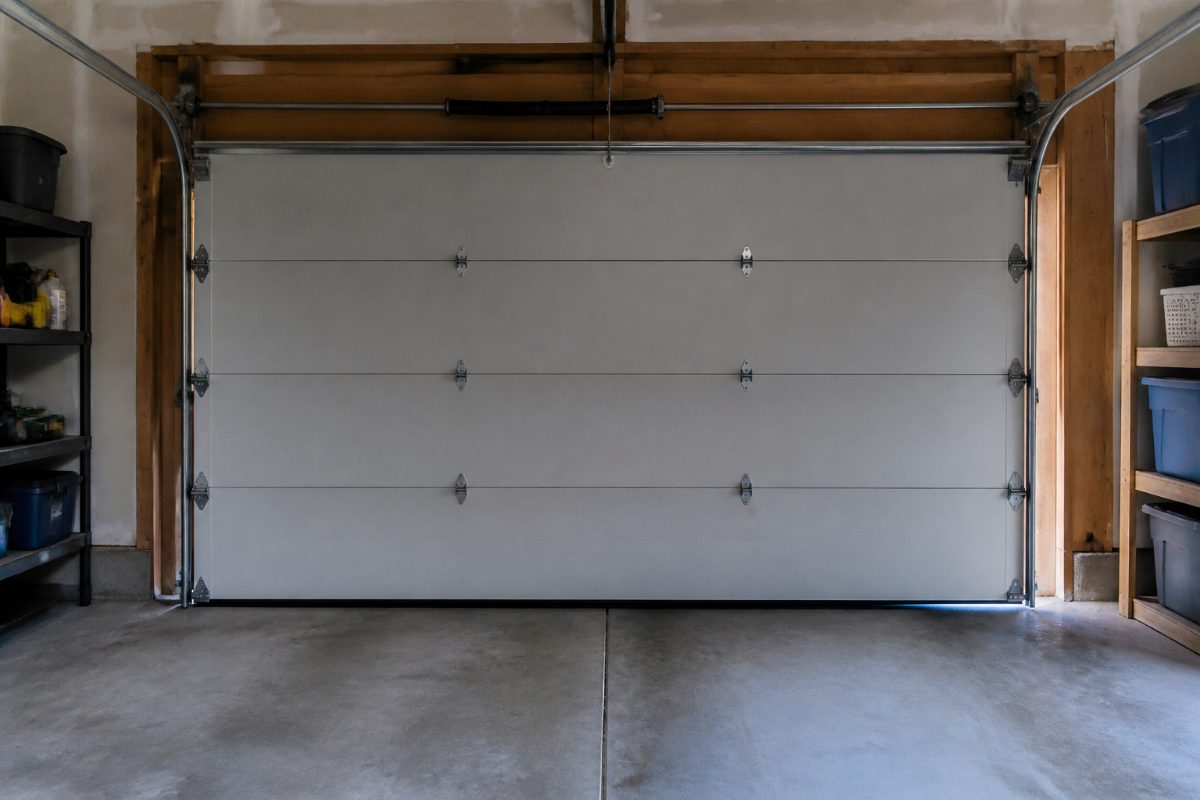
Look at the door while it is fully closed, then inspect the perimeter from inside the garage. A gap at one edge points to a different sealing location than daylight or a draft under the bottom. If the door appears crooked or the gap changes noticeably as you move along the edge, do not assume a thicker seal is the answer; the door’s position may need attention before a replacement can seal evenly.
How to choose a bottom seal that fits
For a bottom seal, check both the opening at the floor and the way the existing seal attaches to the door. A replacement has to make contact with the floor when the door is closed and fit the door’s retainer—the channel or holder that keeps the seal in place.
Before shopping, inspect the existing strip and its attachment. If it slides into a retainer, note the shape of the seal’s edge that fits into it; if it is fastened another way, note that attachment method. Take a clear photo and, if you can remove the old seal without forcing or damaging parts, bring a sample or its measurements when comparing products. Product names and profile labels are not enough to establish that two seals use the same retainer.
- Close the door and locate the gap. Look across the full floor line rather than measuring only the most obvious opening.
- Inspect the retainer. Identify whether the current seal slides into a channel or attaches with another mounting method.
- Compare the profile and dimensions. Use the old seal, retainer, and the product’s fit information. Confirm the listed door or track compatibility before purchasing.
- Check the coverage. Compare the product length with the width you need to seal and note whether the product is sold as a strip or as a kit.
There is no single bottom-seal size or attachment profile that can be assumed to fit every garage door. If the old strip is missing, use the door’s retainer and the manufacturer’s fit information to identify the replacement rather than choosing a size by visual guesswork.
Bulb-style, T-style, and other seal profiles: what should you compare?
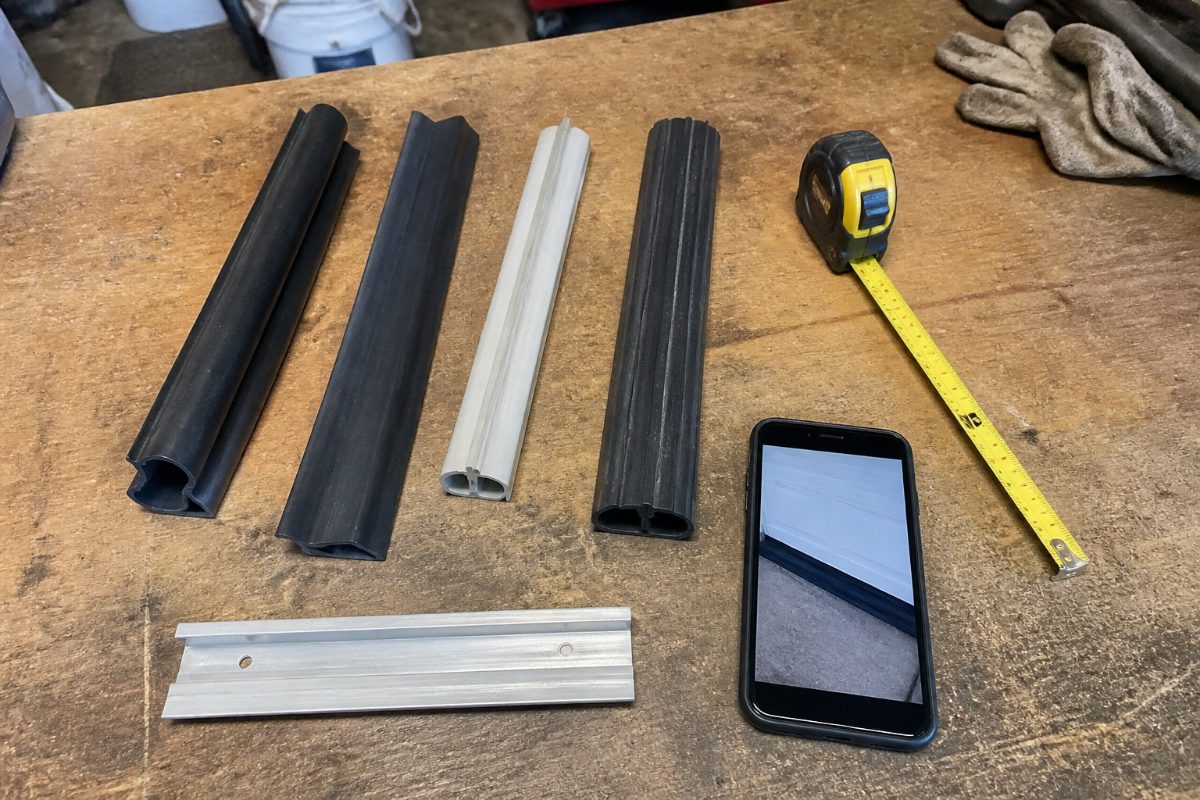
Bulb-style and T-style are profile names you may encounter when comparing bottom seals, but the name by itself does not tell you whether a product fits your door. Match the shape that engages the retainer, the door’s attachment method, and the product’s stated compatibility.
A useful comparison is physical rather than promotional: place the old seal beside the product diagram or sample and compare the part that slides into or attaches to the retainer. Then check whether the installed sealing portion can meet the floor without preventing the door from closing. A profile that looks similar from the side may still have a different attachment edge.
| Shopping detail | What to compare | Why it matters |
|---|---|---|
| Profile name | Bulb, T-style, or another listed shape | The name is a starting point, not proof of retainer compatibility. |
| Attachment edge | Shape and width of the part that engages the retainer | This is the interface that holds the seal on the door. |
| Seal dimensions | Product diagram, listed dimensions, and old seal | A mismatch can leave the floor gap open or make installation unsuitable. |
| Door fit information | Manufacturer’s compatibility details | It helps resolve differences that a profile label cannot show. |
Do not treat one profile as automatically better for winter than another unless the product information supports that claim for your door and conditions. The decision is first about a compatible fit; temperature and moisture suitability are separate product checks.
Rubber or vinyl: how should you compare materials?
DuraServ identifies flexible rubber and vinyl as bottom-seal materials, but its guidance does not establish that one material is always better in cold weather. Compare the specific product’s stated temperature and moisture suitability rather than assuming performance from the material name alone.
For a winter purchase, read the package or manufacturer’s product information for intended use and any stated cold-weather or moisture rating. DuraServ recommends choosing weatherstripping rated for extreme temperatures and moisture exposure. If the product gives no useful guidance for the conditions where you plan to use it, compare another option with clearer fit and use information.
- Material: Confirm whether the seal is rubber, vinyl, or another listed material.
- Operating conditions: Look for the product’s stated temperature and moisture suitability.
- Attachment: Verify that the material and mounting design are intended for your door’s retainer or frame.
- Placement: Make sure the product is intended for a bottom, side, top, or floor-mounted application.
A material label does not replace a fit check. Even a product marketed for winter cannot close a gap properly if it is designed for a different part of the door or cannot attach to the existing hardware.
When does a floor-mounted threshold make sense?
A threshold is mounted directly on the garage floor and can reinforce the seal at the bottom of the door. Consider one when the bottom seal alone does not address the floor-line opening, but first check that the door closes evenly and that the threshold product is intended for your door and installation surface.
A threshold is not a substitute for choosing the right bottom seal or correcting an uneven door. Missouri Extension’s general guidance for weatherstripping a door says to install the threshold first and choose one that allows about a 1/2-inch gap. That guidance concerns door installation generally; it should not be treated as a universal garage-door threshold specification. Follow the garage-door product’s own fit instructions for the actual door and floor.
Before adding a threshold, consider how the door’s bottom seal will meet it and whether the threshold would create a new obstruction. Check the instructions for the threshold and door, and assess the full closed-door path. The purpose is to close the floor gap, not to make the door bind or leave a larger opening elsewhere.
How to diagnose the leak before buying a seal
Use a simple top-to-bottom inspection: check the upper edge, both sides, and then the floor line. SafeHome.org advises installing weatherstripping on doors and windows that are actually used and replacing weatherstripping as it degrades over time; for a garage door, that makes an inspection of the existing seal a practical first step.
- Close the door fully. Inspect the perimeter from inside the garage in good light.
- Find the first visible opening. Note whether it is under the door, along a side, or across the top.
- Look for deterioration or loose attachment. A seal that is cracked, flattened, detached, or no longer in contact with the surface may need replacement.
- Check whether the opening is consistent. A gap that appears only in one section can point to uneven contact rather than a seal that is uniformly too small.
- Choose the part for that location. Compare the replacement’s placement, attachment, and product fit information before buying.
If wind or water enters at more than one point, inspect each part instead of buying a larger bottom seal to cover every problem. A bottom strip can address the floor line; it cannot close a separate opening at the top or side.
What to do before installing replacement weatherstripping
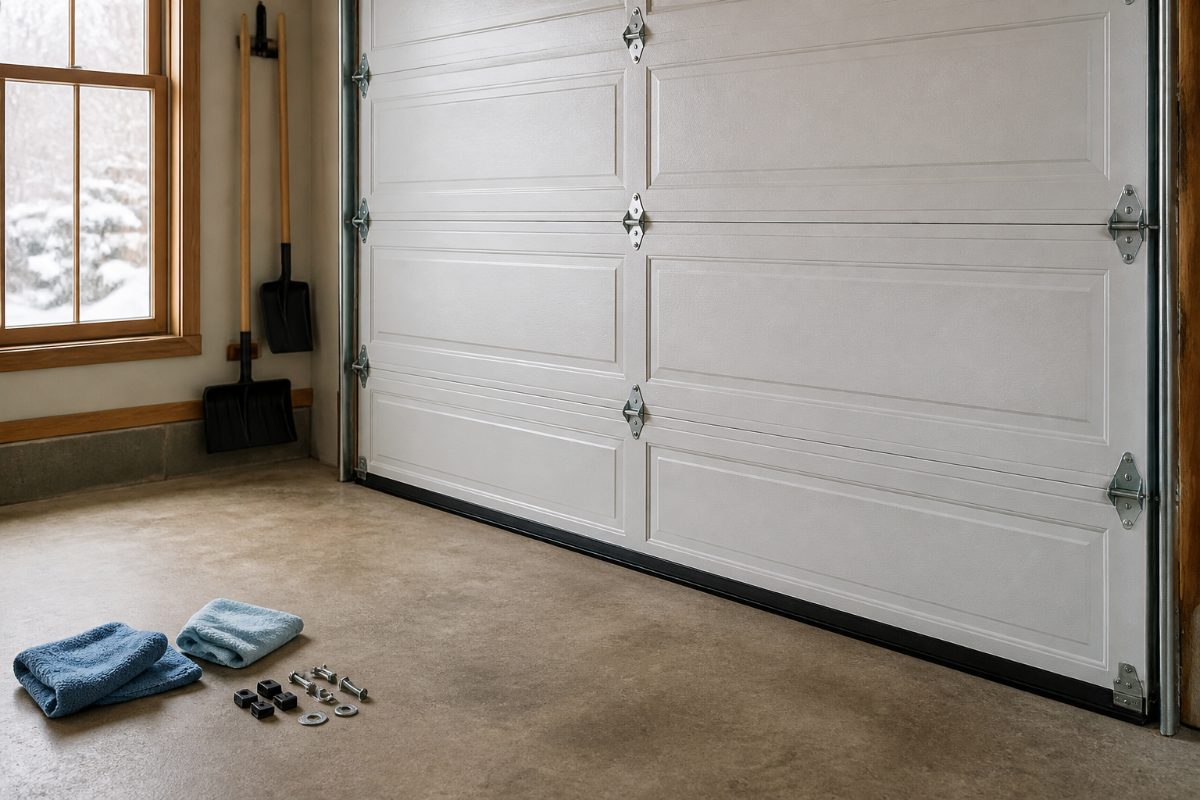
Prepare the mounting area and confirm the product fit before attaching a new seal. DuraServ recommends cleaning and drying the area before applying adhesive or installing mounting hardware, because dirt and moisture interfere with a suitable installation surface.
Lay out the old part and the replacement before removing anything that is still helping seal the door. Compare their attachment edges and dimensions, then read the manufacturer’s installation directions. If the replacement uses adhesive, the surface should be clean and dry; if it uses hardware, make sure the specified mounting method matches the door.
After installation, close the door and inspect the seal across its full length. Look for sections that fail to make contact, pull loose, or prevent the door from closing normally. If the door’s operation changes or the seal interferes with movement, stop and reassess the fit rather than forcing the door through resistance.
Weatherstripping addresses air and water gaps, not every source of winter discomfort. Cookson Doors notes that insulated rolling doors involve insulation and perimeter sealing as separate considerations. If the perimeter seals are in place but the garage still feels cold, inspect the overall door and insulation rather than expecting a weatherstrip to provide insulation by itself.
Which option fits your situation?
The right first purchase depends on the gap you found and whether the existing seal can be matched. A homeowner replacing a visibly worn strip can start with its retainer and product fit; someone with an unexplained draft should diagnose the whole perimeter before choosing parts.
| Your situation | First move | Avoid |
|---|---|---|
| The bottom seal is worn and its retainer is intact | Match the old profile and attachment, then compare the product’s conditions and compatibility. | Buying by the word “universal” without checking the retainer. |
| You see a gap only at one side or the top | Look for weatherstripping designed for that edge. | Trying to solve a side or top gap with a thicker bottom strip. |
| The floor line is uneven | Check how the closed door meets the floor and compare threshold options intended for the installation. | Assuming a single flat seal can close a changing gap. |
| The seal is intact but the garage remains cold | Inspect the door’s overall condition and insulation as separate issues. | Expecting weatherstripping alone to insulate the entire door. |
| You cannot identify the retainer | Photograph the channel and consult the door or seal manufacturer’s compatibility details. | Forcing a visually similar strip into the track. |
For a first-time replacement, prioritize identifying the location and attachment before comparing material claims. If you have replaced a seal before, focus on what changed: a worn strip, a loose retainer, a new floor gap, or a product that no longer suits the conditions. That distinction prevents repeat purchases that address the wrong part of the opening.
Common buying mistakes to avoid
The most common selection errors come from treating the garage door as one continuous sealing surface. The bottom, top, and sides need parts intended for their respective locations, and the floor-mounted threshold is a separate option rather than another name for the bottom strip.
- Choosing by profile name alone: Compare the attachment edge and manufacturer’s fit details.
- Assuming rubber or vinyl guarantees cold-weather performance: Check the product’s stated temperature and moisture suitability.
- Replacing only the most visible section: Inspect all four perimeter edges so a second opening does not go unnoticed.
- Installing over a dirty or wet surface: Clean and dry the area before adhesive or mounting hardware, as DuraServ advises.
- Expecting a seal to fix a misaligned door: If contact varies along an edge, investigate the door’s position rather than simply increasing seal thickness.
Once the correct part is identified, use the product’s instructions for installation and fit. For a door that closes unevenly, binds, or has a damaged retainer, replacing weatherstripping alone may not resolve the cause of the gap.
Frequently Asked Questions
Are bulb-style and T-style garage door seals interchangeable?
Not necessarily. The profile name does not confirm that the seal will fit your door’s retainer, so compare the attachment edge and the manufacturer’s compatibility information.
Is rubber or vinyl better for a garage door in winter?
The available product guidance identifies both flexible rubber and vinyl bottom seals but does not establish one as universally better. Compare each product’s stated temperature and moisture suitability, along with its fit and attachment method.
Should I use a threshold instead of a bottom seal?
A threshold is mounted on the floor and can reinforce the bottom seal; it is not automatically a replacement for a compatible door-mounted seal. Check how the closed door meets the floor and follow the threshold’s product instructions.
How do I know which size of bottom seal to buy?
Compare the existing seal, its retainer, and the replacement’s listed dimensions and fit information. If the old seal is missing, identify the retainer and use the door or product manufacturer’s compatibility details rather than guessing from the door width alone.
Will new weatherstripping make the garage warm?
Weatherstripping helps address gaps around the door, but it is not the same as door insulation. If the perimeter is sealed and the garage remains cold, inspect the door’s insulation and overall condition as separate factors.
Before you buy
Close the garage door, inspect the top, sides, and floor line, and write down which opening needs attention. Photograph the existing seal and retainer, compare the replacement’s profile and attachment, and choose a product whose stated temperature and moisture suitability matches the winter conditions it will face.
References
- Insulating and Weatherizing Your Home
- Guide to Winter Home Safety | SafeHome.org
- Insulated Roll Up Garage Doors | Custom Cookson Doors
- How to Weatherproof Your Garage Door for Winter | DuraServ
- 3 Ways To Have A Warm Garage This Winter | Quality Overhead Door
Information in this post was checked as of October 2026. Policies and prices may change, so please verify important details with official sources.


Comments
Post a Comment