Furnace Won’t Turn On After Summer: What to Check
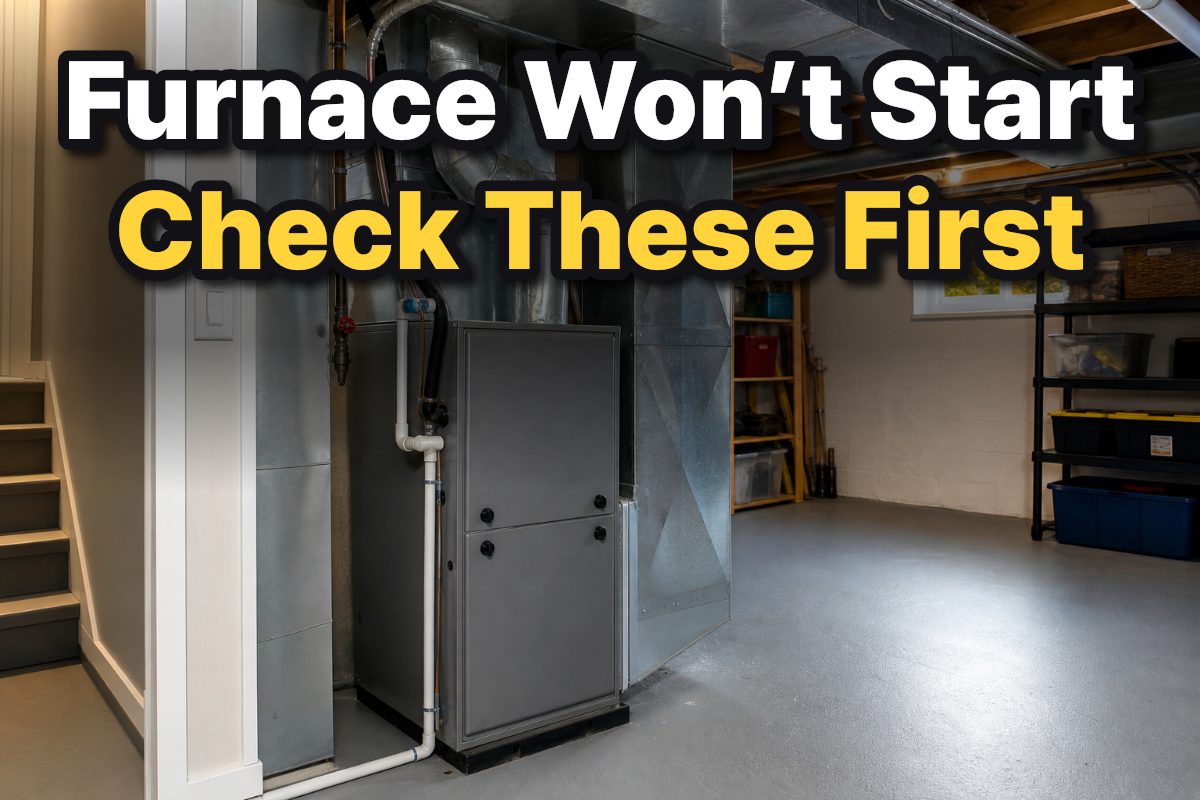
Key Takeaways
- Start with thermostat settings, power switches, and the electrical panel before opening or adjusting furnace components.
- Replace a visibly dirty filter with the correct type and size, then make sure return-air grilles and supply registers are not blocked.
- Stop troubleshooting if you smell gas, see damaged wiring, or hear unusual mechanical sounds; do not bypass safety switches.
- ENERGY STAR recommends annual pre-season heating checkups in fall, so a furnace that still will not start after basic checks is a good reason to arrange service.
Table of Contents
- Furnace won’t turn on after summer: start with these checks
- Is the thermostat actually calling for heat?
- Check the furnace switch and electrical panel
- Inspect the filter and clear airflow blockages
- What does the furnace do when you request heat?
- When should you stop DIY troubleshooting?
- When is a service call the better choice?
- How to prepare for the next heating season
- Frequently Asked Questions
- Quick recap: safe checks before calling
If your furnace won’t turn on after sitting all summer, first check whether it is being told to heat and whether it has power. Then inspect the filter and visible airflow openings; if those simple checks do not restore operation, avoid opening internal compartments and arrange a professional diagnosis.
Furnace won’t turn on after summer: start with these checks
A furnace that was idle through warm weather can have a simple thermostat or power issue, but the symptom alone does not identify the failed part. Work from the outside in: confirm the heat setting, verify the furnace has power, and inspect only the user-accessible filter and vents.
Use this order to avoid changing several things at once. If the furnace begins operating after one step, you will know which basic condition was responsible; if it remains silent, you have useful observations to share with a technician.
- Set the thermostat to call for heat and make sure its display is active.
- Check the furnace’s visible power switch and the relevant breaker in the electrical panel.
- Look at the filter and clear obvious blockage from return grilles and supply registers.
- Try one normal heating call, then note what the furnace does: nothing, a brief start, or a shutdown.
Do not repeatedly flip a breaker that trips again, or keep restarting equipment that starts and stops. A repeat problem is a reason to stop and investigate safely rather than force another cycle.
Is the thermostat actually calling for heat?
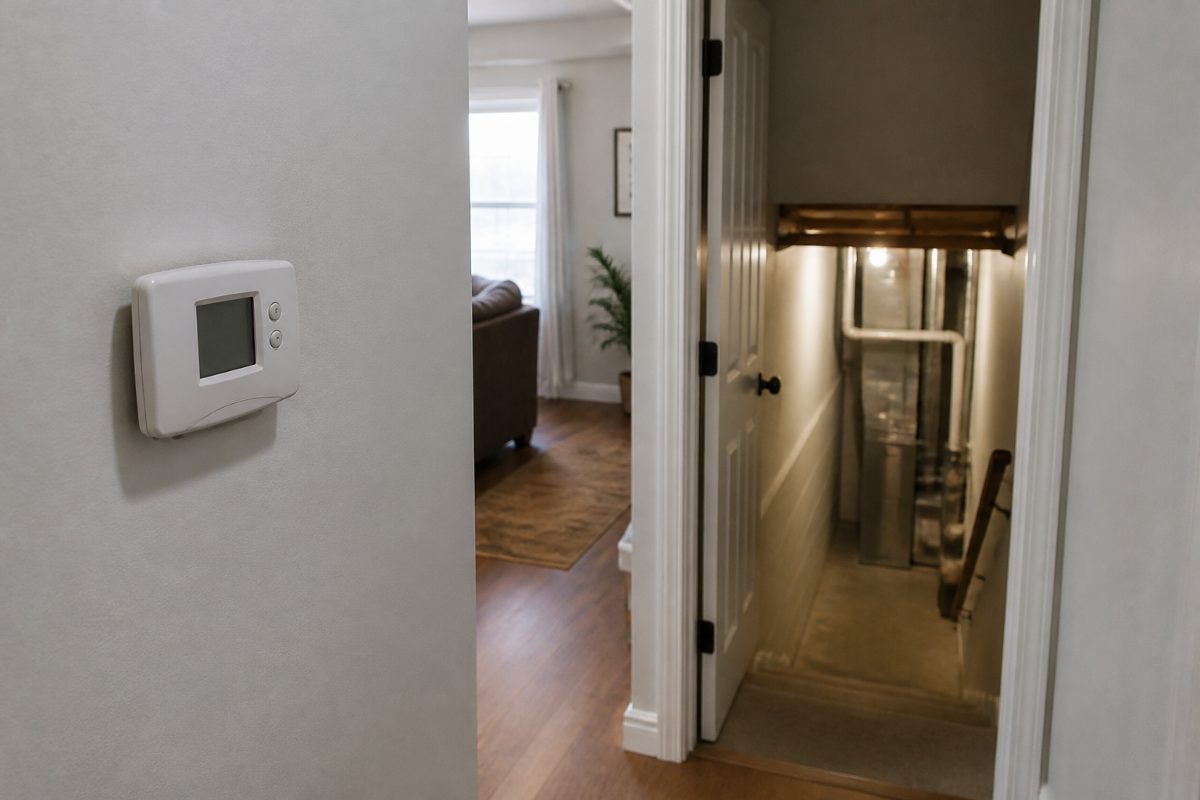
Check that the thermostat is set to heating rather than cooling or an inactive mode, and raise the set temperature above the temperature shown in the room. The furnace needs a call for heat before it can respond, so a setting that does not request heat can look exactly like a dead furnace.
Read the thermostat display before changing anything. If it is blank, check its batteries if the model uses them, or consult the thermostat manual for the display and power source. A blank screen does not prove that the furnace itself has failed; the thermostat may not be powered.
For a programmable or smart thermostat, check the active schedule and any hold or away setting. A schedule can return the setpoint to a lower value after summer, while a temporary hold may keep a setting you did not intend. Use the controls and labels on your specific model rather than guessing at an unfamiliar menu.
- Display on, but no heat request: Set the mode to heat and raise the target temperature.
- Display blank: Check the thermostat’s power source and manual; do not assume the furnace is the cause.
- Heat request appears, furnace stays silent: Move to the visible power checks.
Make one change at a time and give the thermostat a moment to register the new setting. Avoid resetting a smart thermostat to factory defaults as a first step, since that can erase schedules or settings without addressing a furnace power problem.
Check the furnace switch and electrical panel
Many furnaces have a nearby service switch that resembles a regular wall switch. Confirm that it is on, then look at the electrical panel for a breaker that appears tripped. A furnace can have power interrupted even when the thermostat seems to be asking for heat.
If a breaker is visibly in the tripped position, you can follow the panel’s normal reset procedure once, provided there is no sign of damage, heat, or a burning smell. If it trips again, leave it off and arrange service. Repeated resets do not fix the underlying electrical problem and can add risk.
Do not remove electrical covers or reach into the furnace cabinet to look for wiring problems. A homeowner check should stay limited to switches and breakers meant to be operated by the household. If a switch is damaged, a breaker will not stay set, or you see scorched material, stop there.
| What you observe | Reasonable next step |
|---|---|
| Furnace switch is off | Turn it on once and make a normal thermostat heat call. |
| Breaker appears tripped | Use the panel’s normal reset procedure once if there are no warning signs. |
| Breaker trips again, or there is visible damage | Leave the equipment off and arrange professional service. |
Inspect the filter and clear airflow blockages
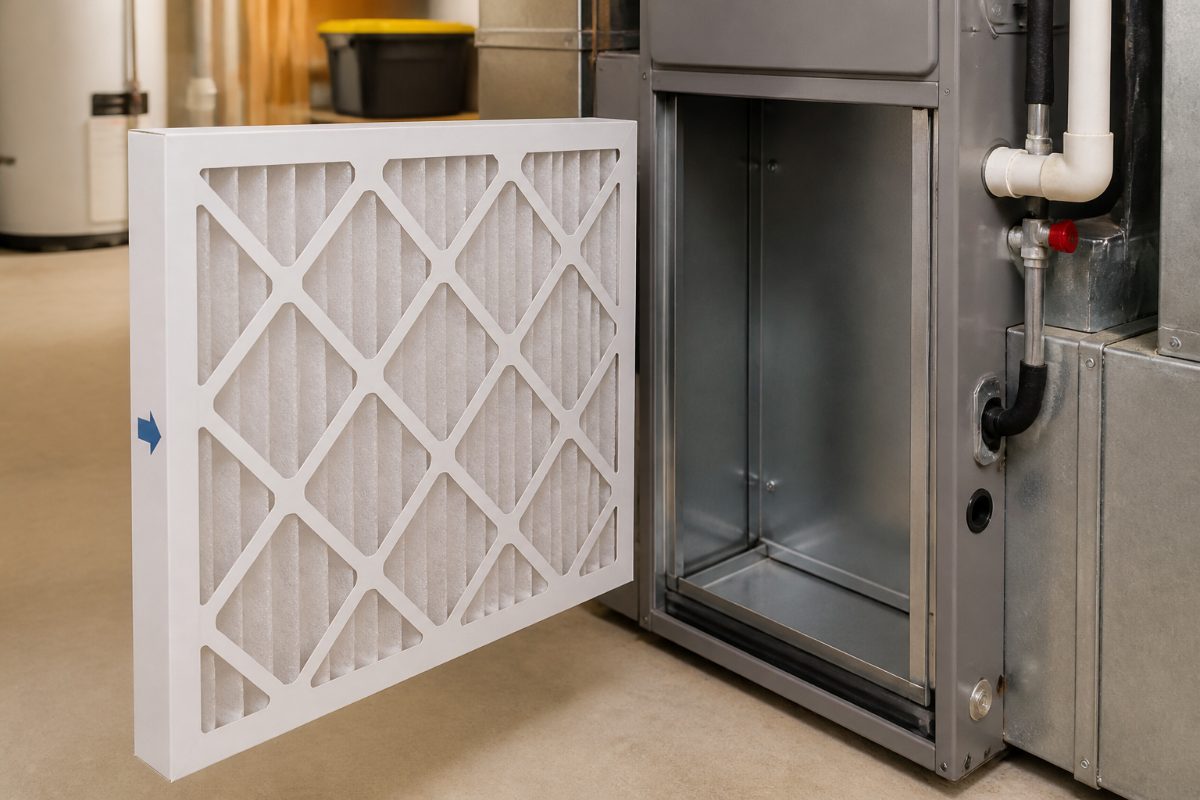
A dirty or incorrectly installed filter can restrict airflow, so check the filter before assuming a major component has failed. If it is visibly loaded with dust, replace it with a filter that matches the furnace’s specified size and type; do not force a filter that does not fit.
Follow the airflow arrow printed on the filter frame when installing it. The arrow should point in the direction indicated by the furnace’s return-air path, not toward the room by default. If the arrow or filter location is unclear, use the furnace label or owner’s manual rather than relying on a guess.
Also look at the large return-air grilles and the supply registers around the home. Move furniture, rugs, or stored items that are visibly covering them. Clearing these openings does not repair an internal fault, but it removes an easy-to-correct airflow obstruction and gives the furnace a fair test.
Do not run the furnace without a filter just to see whether it starts. A filter is part of the system’s normal operation, and running without one can allow dust to enter areas that should stay cleaner. If a fresh, correctly fitted filter changes nothing, move on rather than replacing multiple parts by guesswork.
What does the furnace do when you request heat?
Pay attention to the startup pattern, not just whether warm air reaches a room. A completely silent furnace, a unit that starts briefly and stops, and a furnace that runs but blows cool air point to different stages of the heating process, but none of those observations alone confirms a specific failed part.
From a safe distance, note whether you hear a normal startup sound, whether the blower begins, and whether the thermostat continues to show a heat call. Do not remove a cover to watch internal components or touch anything inside the cabinet. A short written description is more useful than a series of resets.
- No sound or movement: Recheck the thermostat call and visible power supply. If both appear correct, the next checks are inside the system and belong with a technician.
- Starts, then stops: Record the order of sounds and any display message. Repeated cycling is not a reason to keep restarting it.
- Runs but air feels cool: Confirm the thermostat is still calling for heat and the air has had time to circulate. If it stays cool, stop treating it as a simple power issue.
Some furnaces have a user-visible status light or display, but the meaning of a flash pattern or code depends on the model. Record what you see and use the model’s documentation; do not interpret a pattern from a different furnace as if it were universal.
When should you stop DIY troubleshooting?
Stop and leave the furnace off if you smell gas, see smoke or scorching, notice damaged wiring, or hear a loud or unfamiliar mechanical noise. Do not try to find a leak, relight equipment using instructions for another model, or keep cycling the furnace to see whether the problem clears.
If you suspect a gas leak, leave the area and contact the gas utility or emergency services from a safe location. Do not operate switches or use a flame to investigate. If a carbon monoxide alarm sounds, follow the alarm manufacturer’s instructions and leave the home as directed; do not assume the furnace is safe because it later starts.
Never bypass a door interlock or other safety device, and do not reach into a burner or electrical compartment. These steps can expose you to hazards and defeat protections that are part of the equipment. The safe homeowner boundary is the thermostat, accessible switch, electrical panel, filter, and visible room grilles.
A repeated breaker trip, a shutdown after startup, or a furnace that remains unresponsive after the basic checks is also a practical stop point. Write down the thermostat setting, the checks you performed, what the furnace did, and any code shown; that gives the service professional a clearer starting point.
When is a service call the better choice?
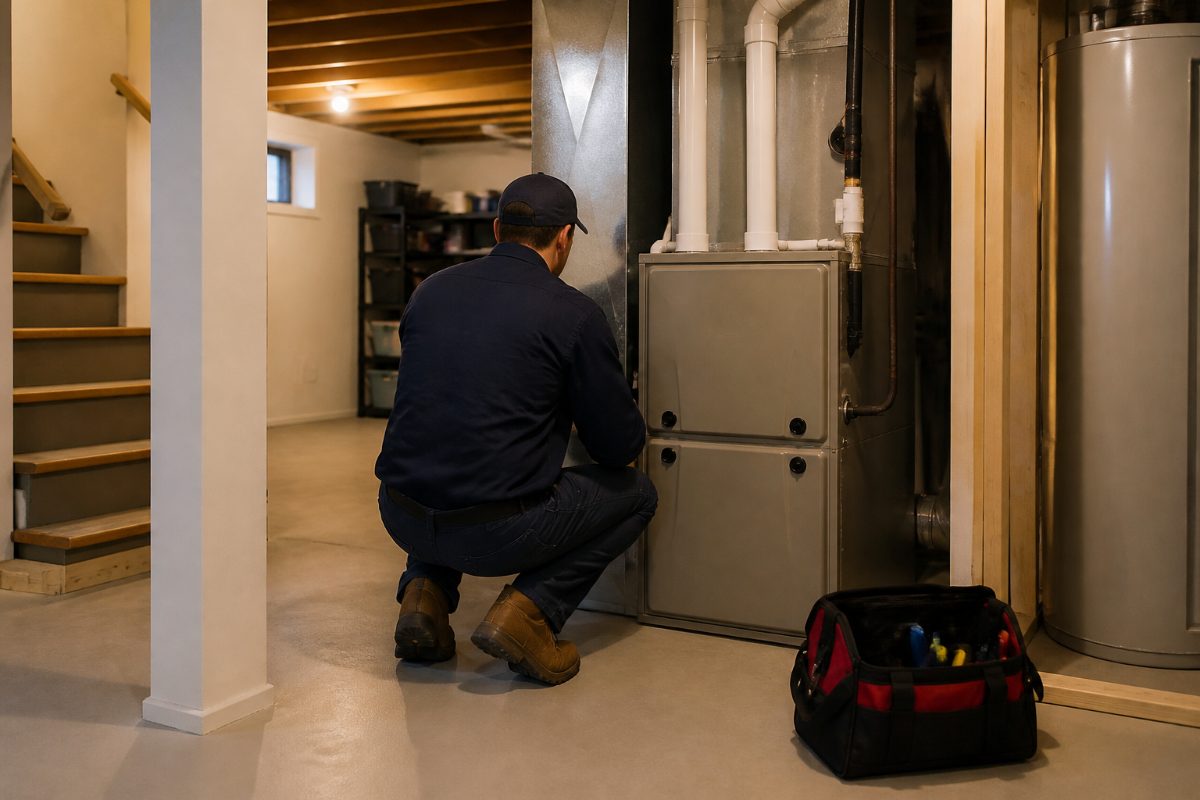
Arrange service when the furnace has power and a heat request but still does not operate, when it starts and stops repeatedly, or when the breaker will not stay set. Those symptoms require diagnosis beyond visual homeowner checks, and replacing parts without identifying the cause can waste money or create a safety problem.
ENERGY STAR recommends annual pre-season checkups by a contractor and says the heating system is best checked in fall. It also notes that contractors get busy as summer and winter arrive, so scheduling before heating season begins can make maintenance easier to plan.
When you request service, describe the sequence rather than naming a part you suspect. For example: “The thermostat is set to heat, the display is on, the furnace switch is on, and the unit stays silent,” or “It begins to run, then shuts down.” Mention any filter change, breaker reset, display message, or unusual sound.
| Your situation | Best next move |
|---|---|
| You have not checked basic controls yet | Work through the thermostat, visible switch, breaker, and filter in order. |
| Basic checks are complete, but the furnace is silent | Stop opening panels and arrange a diagnosis. |
| The furnace runs briefly, trips a breaker, or shows a code | Record the behavior and code, then arrange service instead of repeated resets. |
| You want to avoid a first-cold-day breakdown | Plan a fall pre-season checkup, following ENERGY STAR’s maintenance guidance. |
How to prepare for the next heating season
Use the end of summer or start of fall to check the household basics before the first sustained heating demand. ENERGY STAR’s guidance is to have heating equipment checked annually before the season; the point is to discover a maintenance issue before the furnace is needed every day.
Keep a simple record with the furnace model information, filter size listed on the existing filter or equipment documentation, service notes, and any error messages. This avoids guessing later and helps distinguish a new symptom from a setting or maintenance task that has already been addressed.
Before turning heat on for the season, clear stored items away from the furnace’s accessible controls and keep return-air grilles and supply registers unobstructed. If a filter needs replacement, use the specified size and installation direction. Do not use this seasonal check as a reason to open sealed or electrical compartments.
For first-time homeowners, the best routine is a short visual check and a scheduled annual service visit. If you already maintain the system, add a note about how it behaves at the first heating call; a change in startup pattern is more useful than replacing parts on a calendar without evidence.
Frequently Asked Questions
Why won’t my furnace turn on after being off all summer?
The thermostat may not be calling for heat, or power may be interrupted at the furnace switch or electrical panel. Check those visible items first; if they are correct and the furnace remains silent, the cause requires diagnosis rather than guesswork.
Can a dirty furnace filter keep the heat from working?
A dirty filter can restrict airflow, so inspect it and replace it if needed with the specified size and type. A filter change is a basic maintenance step, but it does not prove that a no-start problem has been fixed.
Should I keep resetting the furnace if it starts and then stops?
No. Note the sequence and any visible status message, then stop repeated restart attempts. A furnace that repeatedly shuts down needs diagnosis, and a model’s status codes should be interpreted using its own documentation.
Is a fall furnace tune-up necessary if the system worked last winter?
ENERGY STAR recommends an annual pre-season heating checkup by a contractor and identifies fall as the best time to check the heating system. A furnace’s good performance last season does not replace routine maintenance before the next heating season.
What should I tell the HVAC technician?
Share the thermostat setting, whether its display is active, whether the furnace switch and breaker appeared on, the filter condition, and the furnace’s startup behavior. Include any code or unusual sound and mention whether a breaker tripped, rather than guessing at a failed component.
Quick recap: safe checks before calling
- Confirm the thermostat is set to heat and is requesting heat.
- Check the visible furnace switch and electrical panel; do not repeatedly reset a breaker.
- Inspect the filter, install the correct replacement if needed, and clear blocked grilles.
- Observe and record the startup behavior without opening internal compartments.
- Stop for gas odor, smoke, damaged wiring, repeated shutdowns, or a breaker that trips again; arrange professional service.
- Plan annual pre-season heating maintenance in fall, as ENERGY STAR recommends.
References
Information in this post was checked as of October 2026. Policies and prices may change, so please verify important details with official sources.


Comments
Post a Comment