Furnace Filter Airflow Arrow: Which Way Should It Point?
Key Takeaways
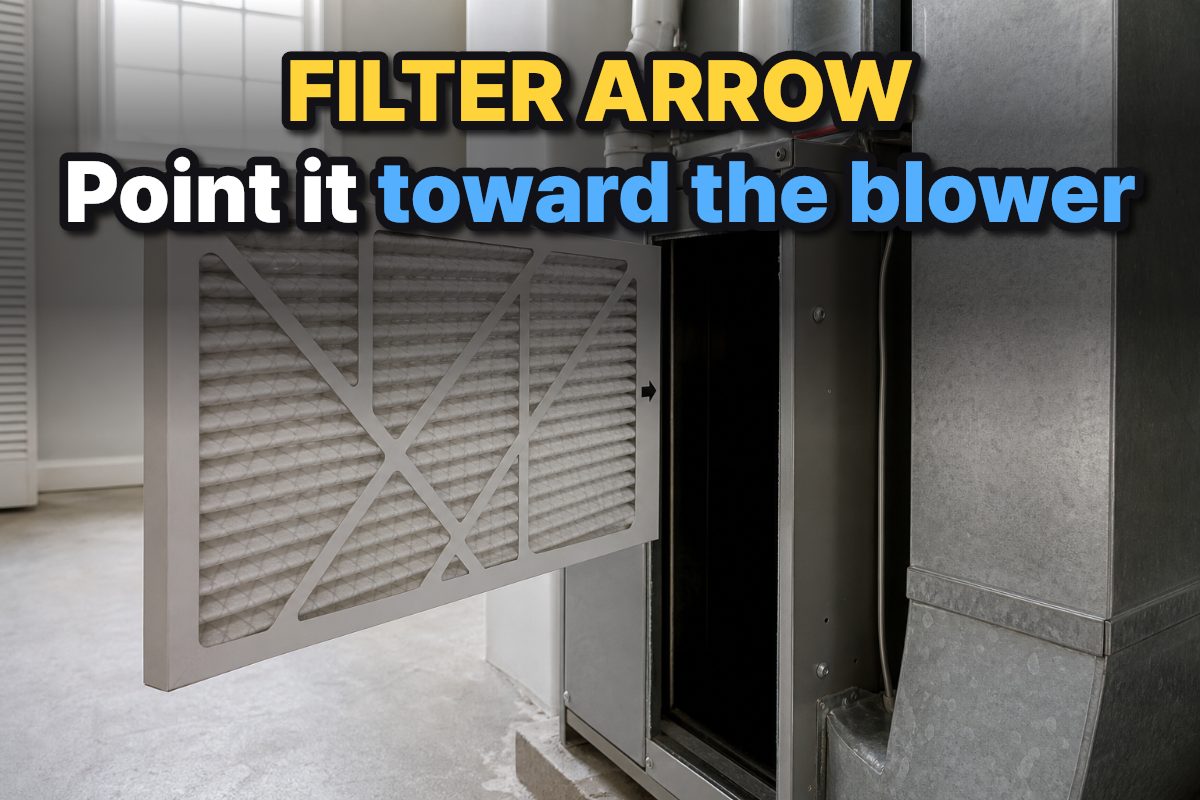
- Point the furnace filter’s airflow arrow toward the furnace blower or air handler, in the direction air travels after passing through the filter.
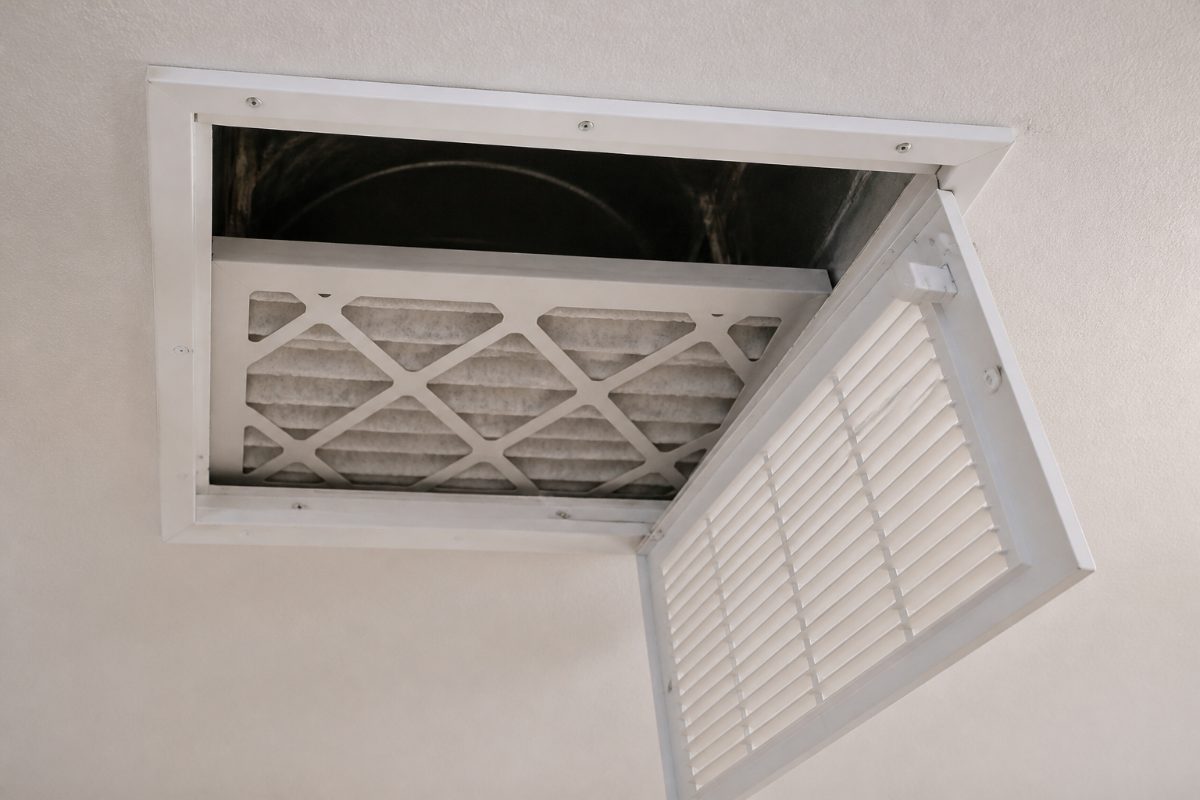
- At a wall or ceiling return grille, the arrow points away from the room and into the duct; at an equipment-side slot, it points into the unit.
- If there is no arrow, compare the old filter and consult the filter instructions and HVAC equipment manual rather than guessing.
- Turn off the HVAC system before replacing the filter, then confirm the replacement is seated in the compartment with the arrow following airflow.
Table of Contents
- What does the furnace filter airflow arrow mean?
- How do you find the airflow direction at the filter slot?
- How should you replace a furnace filter without reversing it?
- What if the furnace filter has no arrow—or has confusing markings?
- How can you check the filter after installing it?
- What happens if you install a furnace filter backward?
- Which direction should you choose in different furnace setups?
- Frequently Asked Questions
- Your next step
A furnace filter airflow arrow should point toward the furnace blower or air handler—the same direction the air moves through the filter. At a return grille, that usually means the arrow points away from the room and into the duct; at a slot beside the equipment, it points into the unit.
What does the furnace filter airflow arrow mean?
The arrow marks airflow direction: it points from the filter’s incoming-air side toward the side where air leaves the filter. In a typical furnace setup, air comes from the return side, passes through the filter, and continues toward the blower or air handler. Follow that path, not the direction that looks “up” in the opening.
Trane explains that a filter arrow should face the direction air is flowing—toward the furnace and away from the return duct. The filter can be installed in a return-air grille or near the indoor unit, so the arrow’s physical direction may change with the location. The airflow rule stays the same.
| Filter location | Arrow direction | What to use as your reference |
|---|---|---|
| Wall or ceiling return grille | Away from the room and into the duct | The duct leading toward the HVAC equipment |
| Slot beside a furnace or air handler | Toward the unit’s blower or air handler | The equipment, not the floor or ceiling |
A common mix-up is treating the arrow as an “up” marker. A furnace filter arrow is not a universal instruction to point upward; it follows airflow. If a filter has a separate “UP” marking, read that as a separate orientation instruction and use the filter and equipment directions to resolve any conflict.
How do you find the airflow direction at the filter slot?
Start by identifying which side of the opening is the return-air side and which side leads to the furnace blower or air handler. The arrow should point from the return toward the equipment, whether the filter slides into a duct opening or sits at a grille. If the route is not obvious, use the filter’s previous orientation or the equipment documentation as your next reference.
AllFilters describes the usual installation as an arrow pointed toward the blower or air handler and away from the return-air side. Trane gives the same orientation for filters installed in a return-air duct, including filters accessed through a wall or ceiling grille. The slot’s position changes; the airflow path does not.
- Locate the filter. Look at the return grille or the filter compartment near the furnace or air handler. Trane notes that the indoor unit may be in a basement, crawlspace, attic, or utility closet.
- Trace the route. Determine which side connects to the return duct and which side leads toward the equipment’s blower.
- Point the arrow downstream. “Downstream” means farther along the air’s route after it passes through the filter—toward the equipment in the typical arrangement.
- Pause if the layout is unclear. Compare the removed filter’s direction and consult the HVAC equipment manual before installing the replacement.
If the filter is in a ceiling grille, do not assume the arrow points up simply because the opening is overhead. The arrow may point into the duct above the grille, away from the room. At a wall grille, it likewise points away from the room and into the duct when that is the direction air travels toward the unit.
For a filter beside the furnace, use the equipment as the landmark: the arrow points toward the blower or air handler. The exact physical direction could be horizontal, vertical, or another orientation depending on the slot. “Toward the blower” is more reliable than memorizing a direction such as left, right, up, or down.
How should you replace a furnace filter without reversing it?
Turn off the HVAC system, note the old filter’s orientation, remove it, and slide in a correctly sized replacement with its arrow pointing toward the blower or air handler. This sequence preserves a clear reference before the old filter is out and helps prevent confusion when the filter opening is hard to see.
AllFilters recommends turning off the HVAC system before locating the filter compartment and replacing the filter. Equipment layouts differ, so use the unit’s manual if the access panel or removal method is not clear. Do not force a filter into an opening that does not match its size or orientation.
- Switch off the system. Use the system control to turn HVAC operation off before opening the filter compartment.
- Open the access point. Find the return grille or the removable cover at the filter slot. If the opening is unfamiliar, follow the equipment manual’s access instructions.
- Record the old filter’s direction. Before pulling it out, note which way its arrow points and how it sits in the slot. A quick written note can help if the arrow is difficult to see once the filter is removed.
- Remove the old filter carefully. Keep its orientation in mind, then compare its dimensions and how it fitted with the replacement.
- Read the new filter’s markings. Find the airflow arrow on the frame. Point it toward the blower or air handler, not toward the return grille or room.
- Seat the replacement. Slide it into the compartment in the same position as the old filter, with the arrow following the airflow path. Close the grille or access cover.
- Recheck the markings. Before restarting the system, confirm that the arrow still points toward the equipment.
Filter size and direction solve different problems. The arrow establishes how the filter faces in the airflow path; the dimensions determine whether it fits the opening. A replacement that fits poorly can leave gaps around the filter, while a correctly sized filter can still be installed backward. Check both before closing the compartment.
What if the furnace filter has no arrow—or has confusing markings?
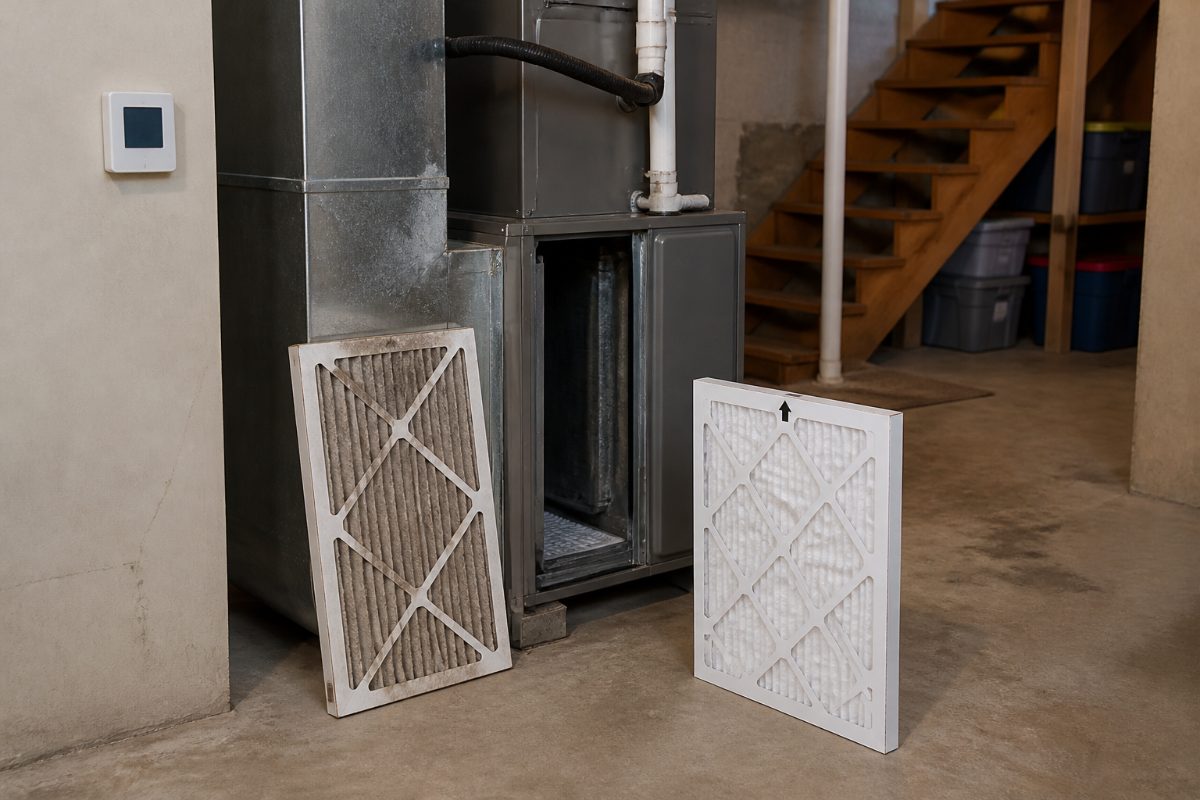
When a furnace filter has no airflow arrow, do not infer direction from appearance alone. First compare the replacement with the old filter’s position, then read the new filter’s instructions and the HVAC equipment manual. If the filter has a reinforced or supported side, follow the manufacturer’s orientation guidance rather than assuming that the sturdier side always faces a particular way.
Trane notes that not every furnace or AC filter has a printed arrow. AllFilters advises checking the product instructions and equipment documentation when the marking is missing, and says the manufacturer should identify the correct orientation when the filter design has a supported or reinforced downstream side. The filter’s construction can help only when its instructions explain how to use it.
| What you see | Next step | Avoid this assumption |
|---|---|---|
| No arrow on the new filter | Compare the old filter’s orientation and read the filter and equipment instructions. | That every filter is reversible or has a particular side facing the blower. |
| A reinforced or supported side | Use the manufacturer’s direction for that filter design. | That the reinforced side always faces the same way across all filters. |
| More than one marking | Read each marking as written and use the equipment layout to establish airflow. | That an “UP” label and an airflow arrow mean the same thing. |
| The old filter’s direction is uncertain | Trace the return-to-equipment path and consult the equipment manual. | That the previous installation was necessarily correct. |
Some filters use an “UP” label to show which edge faces upward, while an “AIR FLOW” arrow identifies the direction air moves. Those marking examples are explained for cabin air filters, not as a universal furnace-filter standard, so do not transfer a vehicle-filter rule to a home HVAC filter. For a furnace filter, rely on the markings and instructions supplied for that specific product.
If the equipment layout and filter instructions still do not establish a clear direction, stop before installing it. Guessing can leave the filter facing opposite the intended airflow direction; the equipment documentation and the filter manufacturer’s instructions are the useful references for resolving that uncertainty.
How can you check the filter after installing it?
After installation, confirm that the arrow points toward the equipment, the filter is seated in its slot, and the access point is closed. If airflow direction remains uncertain, a thin tissue strip held near the slot while the system fan is on can show which way air is being drawn; the arrow should point with that movement toward the blower.
Remember the Filter describes using a thin strip of tissue near the slot with the system set to “fan on”: the tissue is pulled toward the blower, showing the airflow direction. Use that observation only to trace direction; it does not replace the arrow and product instructions. Keep the test brief and do not insert anything into the equipment.
Once the system is running, make a simple visual check rather than dismantling the unit. Confirm that the filter remains in place and that its frame and media are not visibly damaged. Filterbuy notes that a damaged filter can create a bypass path in its guidance about filter construction, which is why damage is a reason to replace the filter rather than rely on a compromised frame or media.
Stop and revisit the installation if the filter will not sit in its intended position, the access cover will not close as designed, or the arrow’s direction conflicts with the airflow path you observed. Check the filter dimensions and the equipment instructions before trying another orientation. Do not treat a change in sound or airflow as proof that a specific arrow direction is correct.
What happens if you install a furnace filter backward?
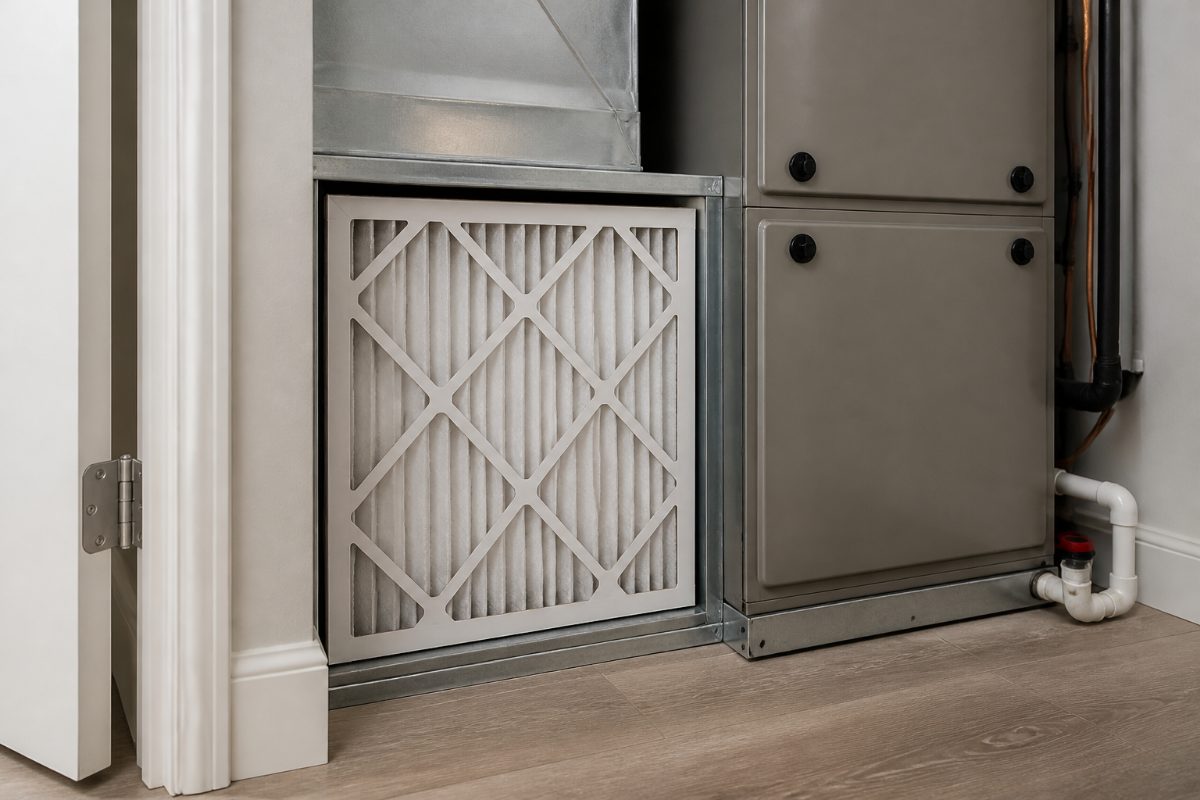
A backward furnace filter has its airflow arrow facing against the system’s intended direction, so the filter is not installed as its markings specify. Correct the orientation by turning off the HVAC system, removing the filter, and reinstalling it with the arrow toward the blower or air handler; do not assume that a filter is correctly oriented just because it fits the slot.
The arrow’s purpose is to identify the direction air should pass through that filter. AllFilters and Trane both direct the arrow toward the blower or equipment and away from the return side. Those instructions establish the correct orientation, but they do not provide a universal measurement of what a reversed filter will do to airflow or equipment performance.
That distinction matters when diagnosing a household problem. A filter pointing the wrong way is a clear installation error to correct, but it does not by itself identify the cause of every heating or airflow concern. Verify the filter’s direction and fit first; if the system still has a problem, use the equipment manual to determine the next troubleshooting step.
Which direction should you choose in different furnace setups?
Use the filter’s location to find the path from the return-air side to the equipment, then point the arrow along that path. A grille-mounted filter usually points into the duct away from the room, while a filter installed at the furnace or air handler points toward the blower. The furnace’s orientation does not change the airflow rule.
| Setup | How to decide | Direction to expect |
|---|---|---|
| Filter behind a wall return grille | Trace the duct from the grille toward the HVAC unit. | Into the duct, away from the room. |
| Filter behind a ceiling return grille | Follow the duct from the grille toward the unit rather than using “up” as the rule. | Into the duct, toward the equipment. |
| Filter in a slot beside the furnace | Identify the side leading to the blower or air handler. | Toward the blower or air handler. |
| Unfamiliar or unclear layout | Use the old filter’s position, the equipment manual, and the filter’s instructions. | Do not guess from the room’s orientation. |
For someone replacing a filter for the first time, take a moment to record the old filter’s direction before removing it and trace the duct path. For someone who already changes filters, the useful habit is to verify the replacement’s arrow instead of relying on memory; different slots in a home may not have the same physical orientation.
A final common mistake is copying a direction from a different filter location. If one filter is in a wall return and another is at the equipment, their arrows may point in different physical directions while both correctly follow airflow. Judge each filter by its own return-to-blower path.
Frequently Asked Questions
Should a furnace filter arrow point toward the furnace?
In a typical return-air arrangement, yes: point the arrow toward the furnace blower or air handler. The arrow follows airflow through the filter, away from the return-air side and toward the equipment.
Does the furnace filter arrow point up or down?
There is no single up-or-down direction for every installation. At a wall or ceiling return grille, the arrow points away from the room and into the duct; use the airflow path rather than the room’s orientation.
Can I install a furnace filter backward if it fits?
A filter can fit while still facing against its airflow arrow. Turn off the HVAC system and reinstall it with the arrow toward the blower or air handler.
What should I do if my new furnace filter has no arrow?
Compare the new filter with the old filter’s orientation, then read the product instructions and HVAC equipment manual. If the filter design includes a supported or reinforced side, follow the manufacturer’s directions instead of guessing.
Can a tissue test show which way air is moving?
A thin tissue strip held near the filter slot while the system is set to “fan on” can show which way air is being drawn. Remember the Filter describes the tissue being pulled toward the blower; point the filter arrow in that same direction.
Your next step
Before the next filter change, write down the filter location and the direction its arrow should face: toward the blower or air handler. At installation, switch off the system, compare the old and new filter positions, verify the replacement’s arrow and fit, then close the access point. If the direction is still unclear, use the equipment manual and filter instructions rather than relying on “up” or a guess.
References
- How to Install a Furnace Filter: Direction & Steps | AllFilters
- Which Way Does a Furnace Filter Go? Arrow Guide
- How to Build a Corsi-Rosenthal Box for Wildfire Smoke
- HVAC System Filters - HVAC Basics - Trane®
Information in this post was checked as of October 2026. Policies and prices may change, so please verify important details with official sources.


Comments
Post a Comment