Can You Leave a Space Heater On Overnight in a Bedroom?
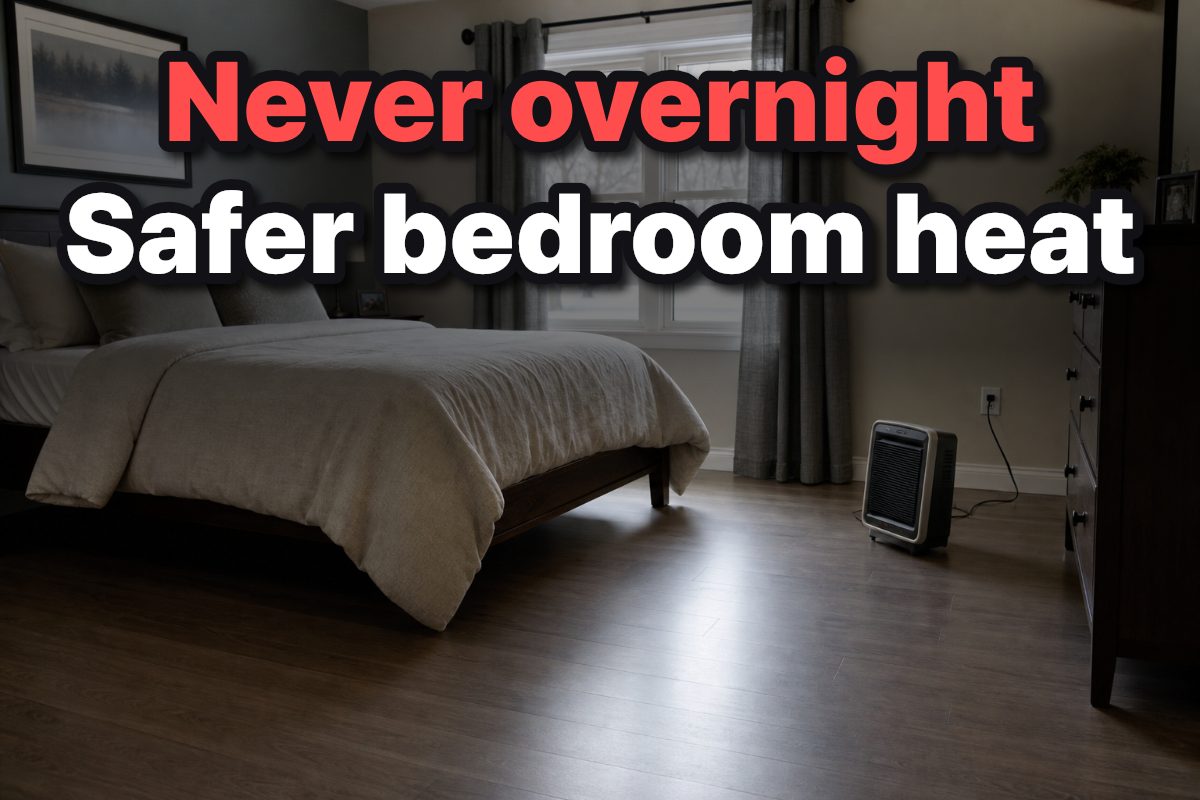
Table of Contents
- Can you leave a space heater on overnight in a bedroom?
- How to audit a bedroom heater setup before using it
- Why the outlet and cord matter as much as the heater
- Which safety features should you look for?
- Ceramic heater or oil-filled radiator: does either make overnight use safe?
- What can you use instead while sleeping?
- Common mistakes that make a bedroom setup riskier
- A practical bedroom heater checklist
- Frequently Asked Questions
- Key points to remember
Key Takeaways
- No—do not leave a portable space heater running while you sleep or when it is unattended.
- Keep a heater at least 3 feet from bedding, curtains, furniture, clothing, and other items that can burn.
- Plug an electric heater directly into a wall outlet, place it on a solid, flat, nonflammable surface, and keep its cord uncovered.
- Tip-over and overheat shutoffs are useful safeguards, but they do not make overnight operation safe.
Can you leave a space heater on overnight in a bedroom? No. The U.S. Consumer Product Safety Commission (CPSC) and the National Fire Protection Association (NFPA) advise against running a portable heater while sleeping or when it is unattended. A safer plan is to warm the room while you are awake, switch the heater off before bed, and use a lower-risk way to stay warm overnight.
Can you leave a space heater on overnight in a bedroom?
No. CPSC and NFPA guidance says not to leave a portable space heater running while you sleep, even if the room feels cold or the unit has automatic shutoff features. The concern is not limited to direct contact with the heater: a blocked air intake, nearby bedding, or an electrical problem can create a fire hazard while no one is awake to respond.
This advice applies to ceramic, fan-forced, and oil-filled portable heaters. Some product marketing may describe a heater as suitable for overnight comfort, but that does not override the safety agencies’ direction. For a bedroom, treat “use while awake and present” as the operating rule; use the heater to warm the room before bedtime, then turn it off.
How to audit a bedroom heater setup before using it
A quick room audit checks the heater, its surroundings, and its power connection—not just whether the unit appears to be working. CPSC, NFPA, and GEICO safety guidance calls for at least 3 feet of clearance from combustible items.
| What to inspect | Safer setup | What to change |
|---|---|---|
| Clearance | At least 3 feet between the heater and bedding, curtains, furniture, clothing, or paper | Move the heater or remove nearby items; include blankets that could shift during the night |
| Floor and stability | A solid, flat, nonflammable surface, such as tile or hardwood | Move the heater off rugs, carpet, bedding, or an unstable surface |
| Airflow | Air intake and outlet are unobstructed | Remove anything covering or crowding the heater |
| Power connection | Electric heater plugged directly into a wall outlet | Remove extension cords and power strips |
| Cord path | Cord visible and not pinched or covered | Reroute it; never run a heater cord under a rug or carpet |
The 3-foot buffer is a practical minimum, not a reason to place the heater close to a bed and assume the arrangement is safe. Keep the entire heater clear, including the space where a curtain, clothing, or loose bedding might move. If the room cannot accommodate that clearance, do not use that heater in that location.
Why the outlet and cord matter as much as the heater
Plug an electric space heater directly into a wall outlet. CPSC, NFPA, and the Electrical Safety Foundation International (ESFI) warn against using an extension cord or power strip with a portable heater because a high electrical load can overheat the connection.
A typical 1,500-watt heater draws about 12.5 amps, according to the figures in the safety guidance summarized by CPSC and related safety materials. That is 80% or more of the capacity of a standard 15-amp household circuit. The heater’s demand leaves limited capacity for other devices on that circuit, so avoid sharing the outlet circuit with other high-load appliances when possible.
Also inspect the cord route. Do not tuck it beneath carpet or a rug: covering the cord can trap heat and damage its insulation. Keep the plug and cord away from bedding and places where they can be pinched, pulled, or walked on. If a plug, outlet, or cord looks damaged, stop using the heater rather than trying to solve the problem with an adapter or a power strip.
Which safety features should you look for?
When buying a portable heater, look for tip-over protection, overheat protection, and a certification mark from a recognized testing laboratory such as UL, ETL, or CSA. NFPA and GEICO identify these as features to check, but they are safeguards for use—not permission to leave a heater running overnight.
- Tip-over protection: The heater shuts off if it is knocked over.
- Overheat protection: The heater shuts off if its internal temperature exceeds safe limits.
- Testing-lab certification: A UL, ETL, or CSA mark indicates that the product has been evaluated by a recognized laboratory.
- Clear controls and instructions: Read the product’s operating and placement directions before using it, especially if the heater has more than one mode.
Automatic shutoff is a backup, not a guarantee. A fire could begin from an electrical fault in the cord or wall connection before a tip-over sensor activates. Never treat a safety feature as a substitute for supervision, proper clearance, or switching the heater off before sleep.
Ceramic heater or oil-filled radiator: does either make overnight use safe?
No portable heater type should be left on while you sleep. Ceramic and fan heaters warm air quickly by moving it over a hot element, while oil-filled radiators heat a thermal fluid and release warmth more gradually. Their different heating methods may affect comfort and noise, but they do not change the recommendation to turn the unit off before bed.
| Heater type | How it heats | Bedroom consideration |
|---|---|---|
| Ceramic or fan-forced | A fan moves air across a heated element | Warms air quickly; keep the airflow clear and the unit away from combustible items |
| Oil-filled radiator | Heats internal fluid that releases warmth | Takes longer to warm up and operates quietly, but still must be switched off before sleep |
An oil-filled radiator can still start a fire if it is placed against combustible materials or has an electrical failure. The assumption that its surface or heating style makes it safe to leave unattended is a common mistake. Select a heater for the way you use it while awake, not for overnight operation.
What can you use instead while sleeping?
For overnight warmth, switch the portable heater off before you go to sleep and choose bedding or room-heating options that do not require an unattended portable heater. An electric blanket typically uses about 50–200 watts, compared with about 1,500 watts for a typical space heater, according to the figures in the safety information summarized for this topic. Follow the blanket manufacturer’s directions and do not use it if the cord or product is damaged.
- If you are going to bed soon: Use the heater while you are awake and in the room, then switch it off before getting into bed.
- If you are already using an electric blanket: Check its label and instructions, and keep its cord and controls in good condition.
- If one bedroom is consistently colder: Look for a building or HVAC cause, such as restricted airflow or a cold spot, instead of relying on a heater all night. The guide to finding and fixing cold spots in a home can help you start that check.
- If you are choosing a new heater: Prioritize required clearances, direct wall-outlet use, stability, and safety features; do not choose one on the assumption that a timer makes overnight use safe.
A timer can be useful for warming a room before you enter it, but it does not monitor physical hazards. A smart plug also cannot detect that the heater has been knocked over or blocked. Unless a plug is specifically rated for the heater’s electrical load, it can add another point of risk; in any case, a smart plug does not make sleeping with a running heater safe.
Common mistakes that make a bedroom setup riskier
Several seemingly sensible shortcuts do not address the main hazards. Check this list before each use, especially when moving the heater or changing the room layout.
- Relying on auto-shutoff: Shutoff features can fail and may not prevent a fire caused by a cord or outlet fault.
- Putting the heater on carpet: Use a firm, flat, nonflammable surface instead.
- Using a power strip for convenience: Plug the heater directly into a wall outlet.
- Hiding the cord under a rug: Keep the cord uncovered so heat does not become trapped around it.
- Measuring clearance only once: Check again after moving furniture, adding laundry, or changing bedding. Keep combustible items at least 3 feet away.
- Assuming a quiet heater is safe unattended: Low noise does not change the fire risk or the agencies’ recommendation.
Heating equipment is a significant home-fire concern. NFPA’s guidance, as summarized in its winter safety information, says 46% of home heating fires occur from December through February. That seasonal concentration makes a repeatable setup check especially useful during the coldest months.
A practical bedroom heater checklist
Use this short sequence whenever you operate a portable heater. It helps catch changes in the room that can happen after the heater was last used.
- Place the heater on a solid, flat, nonflammable surface.
- Measure or estimate a full 3-foot clearance from bedding, curtains, furniture, clothes, and paper.
- Check that the intake and outlet are open and the cord is not under a rug or trapped beneath furniture.
- Plug an electric heater directly into a wall outlet, not an extension cord or power strip.
- Confirm that tip-over and overheat protection are present and follow the product instructions.
- Stay in the room and awake while the heater runs; turn it off before sleeping or leaving.
If a product seems unsafe or you need to report a dangerous consumer product, CPSC lists its hotline as 800-638-2772. For changing product notices or current operating guidance, check CPSC’s official information before using a heater.
Frequently Asked Questions
Is an oil-filled radiator safer than a ceramic heater for overnight use?
No. An oil-filled radiator heats differently and can provide quieter, more gradual warmth, but CPSC and NFPA still advise against leaving any portable heater on while sleeping. Keep it clear of combustible materials and switch it off before bed.
Can I leave a space heater on if it has an automatic shutoff?
No. Tip-over and overheat shutoffs are useful backup features, not a guarantee that a heater can run unattended. They may not prevent hazards caused by a damaged cord, outlet fault, or nearby combustible material.
Can I use a smart plug or timer with a space heater?
A timer may warm a room before you enter, but it does not detect a blocked heater or a tip-over. A smart plug must be rated for the heater’s electrical load, and using one does not make overnight operation safe.
Why shouldn’t I plug a space heater into a power strip?
A typical 1,500-watt heater draws about 12.5 amps, which can put a heavy load on a power strip and contribute to overheating. Plug an electric space heater directly into a wall outlet instead.
How far should a space heater be from a bed?
Keep it at least 3 feet from the bed and all other combustible items, including bedding, curtains, clothing, and furniture. If you cannot maintain that clearance, choose another way to warm the room.
Key points to remember
Do not leave a portable space heater running overnight in a bedroom. Use it only while awake and present, keep at least 3 feet of clearance, plug an electric model directly into a wall outlet, and keep the cord uncovered. Safety features can reduce certain risks, but they do not replace supervision or make sleep-time use safe. CPSC guidance and product notices can change, so check current official information when buying or using a heater.
References
- Space Heater Safety: How to Use a Space Heater Safely at Home | GEICO
- There’s a Chill in the Air – Stay Warm Safely – Be Cautious When Using Generators, Furnaces and Space Heaters
- esfi.org
- Keep Warm and Safe This Winter: Tips for Using Generators, Furnaces and Space Heaters | CPSC.gov
- Is It Safe to Sleep with a Space Heater on? Safety Risks & Alternatives (2026) - Amerisleep
- Can I Leave a Space Heater On All Night?
Information in this post was checked as of October 2026. Policies and prices may change, so please verify important details with official sources.


Comments
Post a Comment