Best Gutter Cleaning Tools for a Two-Story House

Key Takeaways
- For a two-story house, start by comparing ground-operated extension poles and purpose-built no-ladder kits; neither is a universal fit for every gutter.
- Use a gutter scoop or drain-clearing tool for packed debris, then a hose nozzle to move loosened material toward the downspout outlet.
- West Virginia University Extension recommends heavy gloves and describes working toward the drain outlet while spraying water away from your body.
- Choose a tool only after considering reach, debris type, gutter access, and whether you can control the tool safely from the ground.
Table of Contents
- Which gutter cleaning tools work for a two-story house?
- How to choose between an extension pole and a no-ladder kit
- What tools do you need for leaves, sludge, and a clogged outlet?
- How to clean gutters from the ground in a controlled sequence
- When should a two-story gutter cleaning job be left to a professional?
- Common tool-buying and cleaning mistakes to avoid
- Which option fits your situation?
- Frequently Asked Questions
- Key takeaways
The best gutter cleaning tools for a two-story house depend on what is in the gutter and whether you can reach it from the ground with a controllable tool. For many homeowners, the practical shortlist is an extension pole with a cleaning attachment, a purpose-built no-ladder kit, or a scoop and hose setup used from a safely accessible position.
Height alone does not tell you which tool will work: gutter profile, roof overhang, corners, and wet or compacted debris all affect access. The aim is to clear leaves and other obstructions without turning a routine maintenance job into an unsafe reach from a ladder or a window.
Which gutter cleaning tools work for a two-story house?
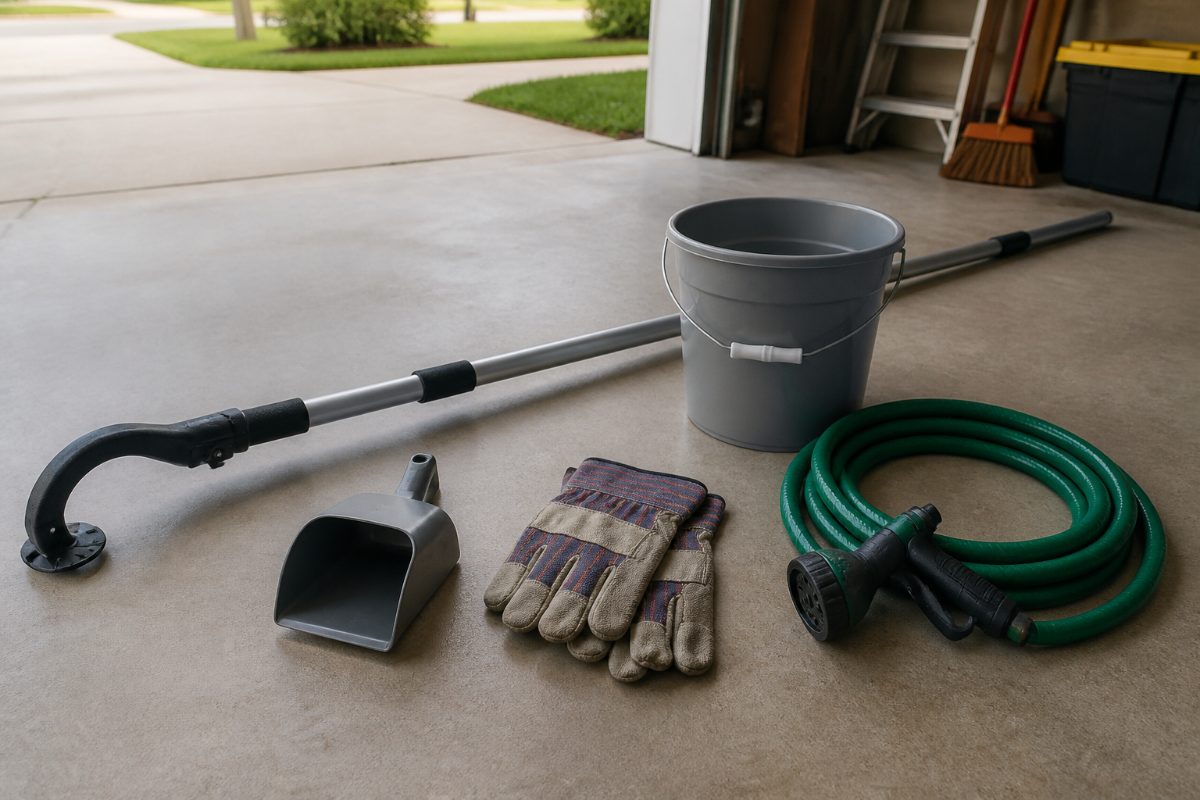
The main choices are extension poles with cleaning attachments, no-ladder kits, and hand tools used where the gutter is safely reachable. This Old House’s 2026 guide discusses scoops and extension poles, while Amazon’s gutter-tool listings include poles with rotating nozzles and spray tips.
These categories solve different parts of the job. A scoop or clearing attachment removes material; a hose-fed tip rinses loose debris; and a long pole extends your reach. A tool that can reach a gutter is not automatically easy to aim, so control matters as much as length.
| Tool type | Best fit | Trade-off to consider |
|---|---|---|
| Extension pole with a cleaning head | Reaching debris from the ground when the head can be guided into the gutter | Long reach can make the tool harder to position precisely around corners and roof edges |
| Rotating nozzle or spray-tip pole | Loosening lighter debris or rinsing after material has been removed | Water may move debris without lifting out dense or packed material |
| No-ladder gutter cleaning kit | Homeowners seeking a system designed to remove debris without using a ladder | Check the kit’s actual reach and attachment arrangement against your house before buying |
| Gutter scoop or drain-clearing tool | Removing leaves and debris where the gutter can be accessed safely | It is a hand tool, so it does not solve a high-reach problem on its own |
| Hose with a pistol-grip nozzle | Rinsing loose residue toward the outlet after solid debris is cleared | Water alone may not remove material that is tightly packed |
Use the table as a first filter, not as a promise that one tool will clear every section. If the highest gutter cannot be reached and controlled from the ground, a longer pole is not necessarily the right answer; the safer choice may be to stop and arrange a service rather than improvise a precarious position.
How to choose between an extension pole and a no-ladder kit
An extension pole is a general reach tool that can carry a cleaning head, nozzle, or other attachment. A no-ladder kit is marketed for the more specific task of clearing gutters from the ground; the Gutter Clutter Buster kit for two-story homes describes debris removal without using a ladder.
That description does not establish that every kit fits every house. Before purchasing, compare the attachment method, the tool’s stated reach, and the way its head is directed with the shape and position of your own gutters. If the listing does not make a feature clear, do not assume it will work at an awkward corner or behind an overhang.
- Identify the problem areas. Note which gutter runs are high, which have corners, and where downspouts connect. This makes it easier to judge whether a straight pole can approach the debris.
- Decide whether you need to lift or rinse. A scoop-style head is aimed at removing solid material; a nozzle sends water into the channel. A rinse tool is not a substitute for a debris-removal attachment when leaves are packed together.
- Check how the head is controlled. Look for a clear description of the attachment and how it is aimed. A pole that reaches the eave but cannot be positioned at the gutter opening may not solve the job.
- Test your handling at a safe, low position. Before raising a long tool overhead, confirm that you can hold and direct it without losing balance or making an uncontrolled movement.
- Set a stop point. If a section remains out of reach or you cannot see whether the tool is clearing it, do not keep extending or forcing the attachment.
A ground-operated kit can reduce the need to climb for the sections it can reach, but that does not mean the entire job is automatically safe or that every gutter can be cleaned from the ground. Tool control, visibility, and access still determine whether the approach is sensible.

What tools do you need for leaves, sludge, and a clogged outlet?
For loose leaves and larger pieces, a scoop or suitable clearing tool is often more direct than trying to flush everything with water. West Virginia University Extension lists a gardening shovel or drain-clearing tool among gutter-cleaning supplies and recommends heavy gloves to protect hands from debris and sharp metal objects.
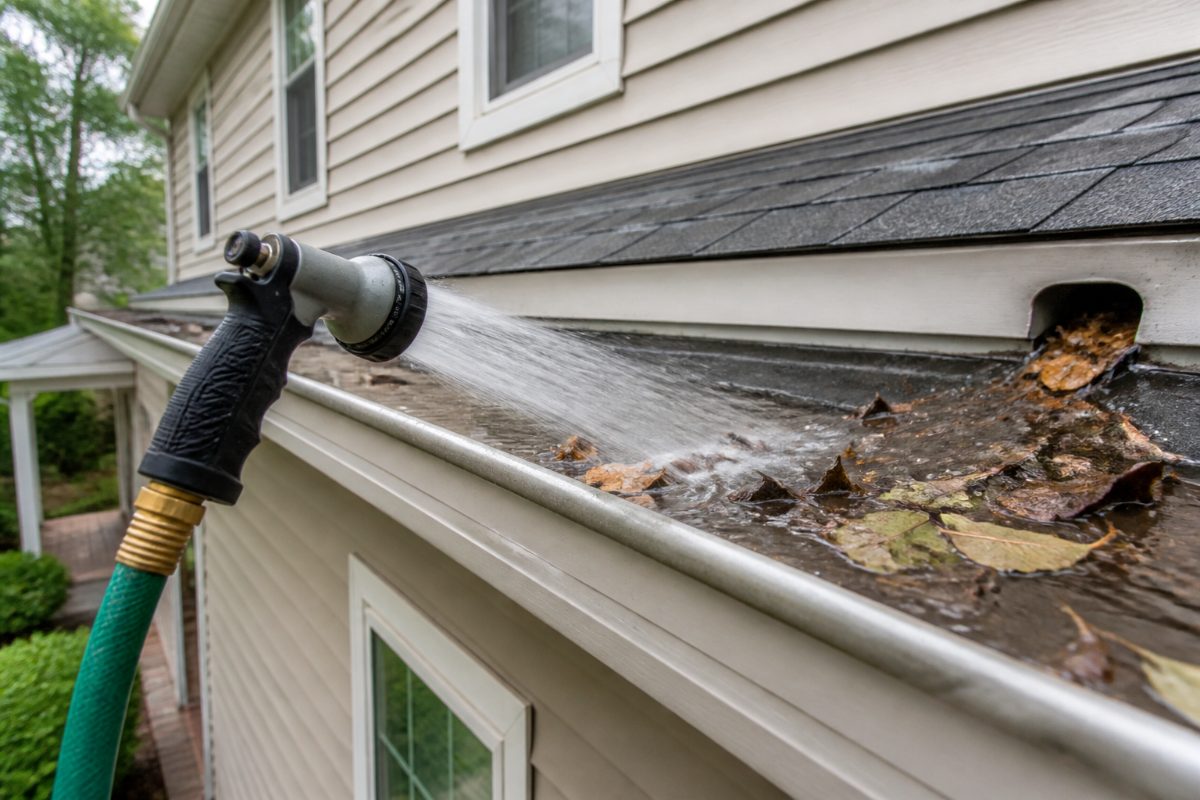
For the rinse step, the same extension guidance describes using a hose with a pistol-grip nozzle. It says to work toward the drain outlet and direct the spray away from your body. The order matters: first loosen or remove the solids, then use water to move what remains toward the outlet.
- Loose leaves: A scoop or pole-mounted cleaning head can remove material without relying on water to carry it.
- Sticks or mixed debris: Lift out material with a clearing tool rather than forcing it toward the outlet as one mass.
- Remaining loose residue: Rinse with a hose nozzle, moving toward the drain outlet and directing water away from yourself.
- Debris at the outlet: Use a drain-clearing tool only if you can access the area safely and can avoid pushing material farther into the downspout.
Do not treat a strong stream as proof that the gutter is clear. If water backs up or debris remains visible, stop the rinse and remove the obstruction you can safely reach. Continually adding water can leave the actual blockage in place while making it harder to see what is happening.
How to clean gutters from the ground in a controlled sequence
A ground-based cleaning is most useful when you can see the gutter, control the attachment, and direct debris toward a known outlet. Amazon’s listings show rotating nozzles and spray tips as options for pole-based cleaning, but those attachments serve a different role from a scoop that lifts out solid debris.
- Inspect from the ground first. Identify visible leaf buildup, the downspout outlet, and any section that is hidden by the roofline. Decide in advance which areas the pole can reach without leaning or stretching.
- Put on heavy gloves before handling debris. WVU Extension calls for heavy gloves because leaves can conceal sharp metal or screws. Gloves do not make a damaged gutter safe to handle carelessly; they are a layer of protection while working with debris.
- Remove solid material before rinsing. Use a scoop or cleaning head to lift or draw out leaves and larger pieces. Work in a direction that brings debris toward the outlet rather than scattering it into another section.
- Rinse remaining loose material. Use a hose with a pistol-grip nozzle. WVU Extension’s guidance is to work toward the drain outlet and spray away from your body.
- Watch the outlet while rinsing. Check whether water and loose debris are moving through the intended path. If the outlet does not clear, stop rather than forcing more material through it.
- Reassess sections you cannot see. A pole can extend reach, but it cannot confirm what is happening behind an obstruction. If you cannot judge whether the section is clear, do not count it as finished based only on water flow elsewhere.
This sequence separates the two jobs—removing solids and moving loose residue—so each tool has a clear purpose. It also limits a common mistake: using water first and allowing a mass of leaves to remain or collect at the outlet.
When should a two-story gutter cleaning job be left to a professional?
Choose a professional when the tool cannot reach a section in a controlled way, when a gutter is hidden from view, or when the only apparent way to continue is to lean from a ladder or another unstable position. A kit described as no-ladder is useful only for the areas its design can safely reach.
Set a practical boundary before starting: if you cannot keep your feet in a stable position, see where the cleaning head is going, or stop the tool from catching or swinging, do not continue that section. A partially cleaned gutter is preferable to forcing a reach that you cannot control.
Professional help is also a reasonable option if you are unsure whether debris is blocking the outlet or whether the gutter itself is damaged. The WVU Extension guidance highlights sharp metal objects and screws in gutter debris, so avoid reaching blindly into a channel or pulling at a part that appears bent or loose.
Common tool-buying and cleaning mistakes to avoid
The most frequent mismatch is buying for height alone. A long pole may reach the eave, but an attachment that cannot be aimed into the gutter may not clear a corner or a section beneath an overhang.
- Assuming a spray tip removes every clog: Amazon listings show rotating nozzles and spray tips, but a water attachment and a scoop do different work. Choose a solid-debris tool when leaves or sticks need to be lifted out.
- Buying before checking the attachment: A kit’s general “two-story” description does not tell you whether its head and connection match your house. Compare the product details with the gutter layout.
- Using water before removing bulky debris: WVU Extension describes clearing debris and then spraying remaining material toward the outlet. Follow that logic rather than washing a large mass down the channel.
- Reaching blindly with a hand: WVU Extension specifically warns that sharp metal objects, including screws or sharp gutter pieces, may be mixed into debris. Use heavy gloves and a tool rather than probing a hidden pile with bare hands.
- Ignoring the downspout outlet: The outlet is the direction the rinse is meant to travel. If material does not move through it, pause and address the obstruction instead of adding more water.
- Continuing when control is poor: Reach is not the same as safe control. If the pole twists, catches, or cannot be directed while you remain stable, stop and choose another approach.
A low-cost tool that cannot reach or be aimed where needed is not a bargain. Compare the tool’s purpose and handling requirements before comparing price; This Old House’s 2026 guide describes gutter-cleaning tools such as scoops and extension poles as DIY options, but the right category depends on the specific task.
Which option fits your situation?
Start with your access and debris, not a brand name. A homeowner dealing mainly with visible leaves from a stable ground position has different needs from someone facing packed debris in a high, hidden gutter run.
| Your situation | Starting option | Reason |
|---|---|---|
| You want to avoid climbing and can see the gutter from the ground | Compare a purpose-built no-ladder kit with an extension pole attachment | Both are intended to extend access; the attachment and control determine which is workable |
| You see loose leaves or larger debris | Scoop or debris-removal head, followed by a rinse if needed | Solid material is easier to remove directly than to push along with water |
| The gutter is mostly clear but has loose residue | Hose and pistol-grip nozzle | WVU Extension describes rinsing toward the outlet and spraying away from the body |
| You cannot see the blockage or safely control a pole | Stop and arrange professional cleaning | More reach does not solve poor visibility or unstable handling |
| You are comparing products for the first time | Read the attachment, reach, and use descriptions before buying | Tool categories solve different tasks, and a two-story label alone does not establish fit |
For a first-time homeowner, prioritize a clear, limited task: remove accessible solid debris, then rinse toward the outlet. If you already own an extension pole, check whether its head can be swapped for a gutter attachment before buying a complete kit. For a gutter with hard-to-see or hard-to-reach sections, do not let existing equipment persuade you to take a riskier position.
Frequently Asked Questions
Can I clean two-story gutters without a ladder?
Yes, some purpose-built kits are designed to remove debris without using a ladder, and extension poles can reach some gutter sections from the ground. A no-ladder design does not guarantee access to every corner or hidden section, so stop if you cannot control or see the cleaning head.
Is a gutter cleaning wand better than a scoop?
They do different jobs. A wand or spray-tip attachment uses water to loosen or move material, while a scoop or clearing head is intended to lift out solid debris. For leaves or sticks, removing the bulk first and rinsing afterward follows WVU Extension’s described approach.
What should I wear when cleaning a gutter?
WVU Extension recommends heavy gloves because debris can conceal sharp metal objects or screws. Keep the work within a position you can control, and do not reach into a hidden pile with bare hands.
Which direction should I rinse a gutter?
WVU Extension advises working toward the drain outlet and spraying water away from your body. Removing bulky debris before rinsing helps keep the outlet from becoming the place where loosened material collects.
How do I know when a tool is not suitable for my house?
If the attachment cannot reach the gutter opening, cannot be aimed around a corner, or leaves you unable to see whether debris is clearing, it is not a good match for that section. Do not compensate by leaning or stretching; choose a different tool or professional service.
Key takeaways
For a two-story house, match the tool to the job: use a scoop or clearing head for solid debris, an extension pole or no-ladder kit for ground-based reach, and a hose nozzle for rinsing residue toward the outlet. Wear heavy gloves, follow the gutter toward its drain outlet, and spray away from your body as WVU Extension advises. If reach, visibility, or control is inadequate, stop rather than forcing the tool into an unsafe position.
References
- Amazon.com : gutter cleaning tool for 2 story house
- 5 Best Gutter Cleaning Tools (2026 Guide)
- GUTTER CLUTTER BUSTER KIT FOR TWO STORY HOMES
- Gutter Safety | Extension | West Virginia University
Information in this post was checked as of October 2026. Policies and prices may change, so please verify important details with official sources.


Comments
Post a Comment