v0.dev Pro Plan Deep Dive: Is the $20/month Price Tag Justified? [Benchmarked vs Free Tier] 목차 (Table of Contents) ▶ Understanding v0.dev's Credit-Based Pricing Model ▶ Breaking Down the Free, Pro, and Team Plans ▶ Evaluating Model Performance and Access by Tier ▶ Hidden Costs and Infrastructure Considerations ▶ Competitive Landscape: v0.dev vs. Cursor, Bolt AI, and Lovable ▶ Is the v0.dev Pro Plan Worth It in 2026? Understanding v0.dev's Credit-Based Pricing Model How v0.dev Allocates Monthly Credits Across Tiers How v0.dev Allocates Monthly Credits Across Tiers Let’s cut through the marketing noise: v0.dev’s credit-based pricing model isn’t designed for light experimentation—it’s a usage throttle disguised as flexibility. I’ve run production Next.js prototypes, internal tools, and AI-generated component libraries through both the Free and Pro tiers, and the credit burn rate is where the rubber meets the road. The Free tier gives you $5 in m...


Table of Contents
- Defining Adaptive Compute: More Than Just a Buzzword
- Architectural Deep Dive: CPUs, GPUs, and Adaptive SoCs
- Performance Benchmarks: Where Adaptive Compute Shines (and Doesn't)
- Power Efficiency: A Critical Advantage for Adaptive Systems
- Programming Complexity: The Biggest Hurdle for Adoption
- Real-World Applications: From Data Centers to Embedded Systems
- Future Trends: The Evolution of Adaptive Computing
- Investment Considerations: Is Adaptive Compute Right for Your Project?
Defining Adaptive Compute: More Than Just a Buzzword
Adaptive compute. You've probably heard the term thrown around by tech companies, marketing teams, and maybe even that overly enthusiastic engineer down the hall. But what *is* it, really? Is it just a fancy way of saying "reconfigurable hardware," or is there something more to it? In essence, adaptive compute refers to computing systems that can dynamically alter their hardware architecture and functionality to best suit the workload they are executing. This adaptability comes from the use of reconfigurable logic, typically in the form of Field-Programmable Gate Arrays (FPGAs) or Adaptive SoCs (System on Chips) that combine FPGA fabric with traditional processing cores.
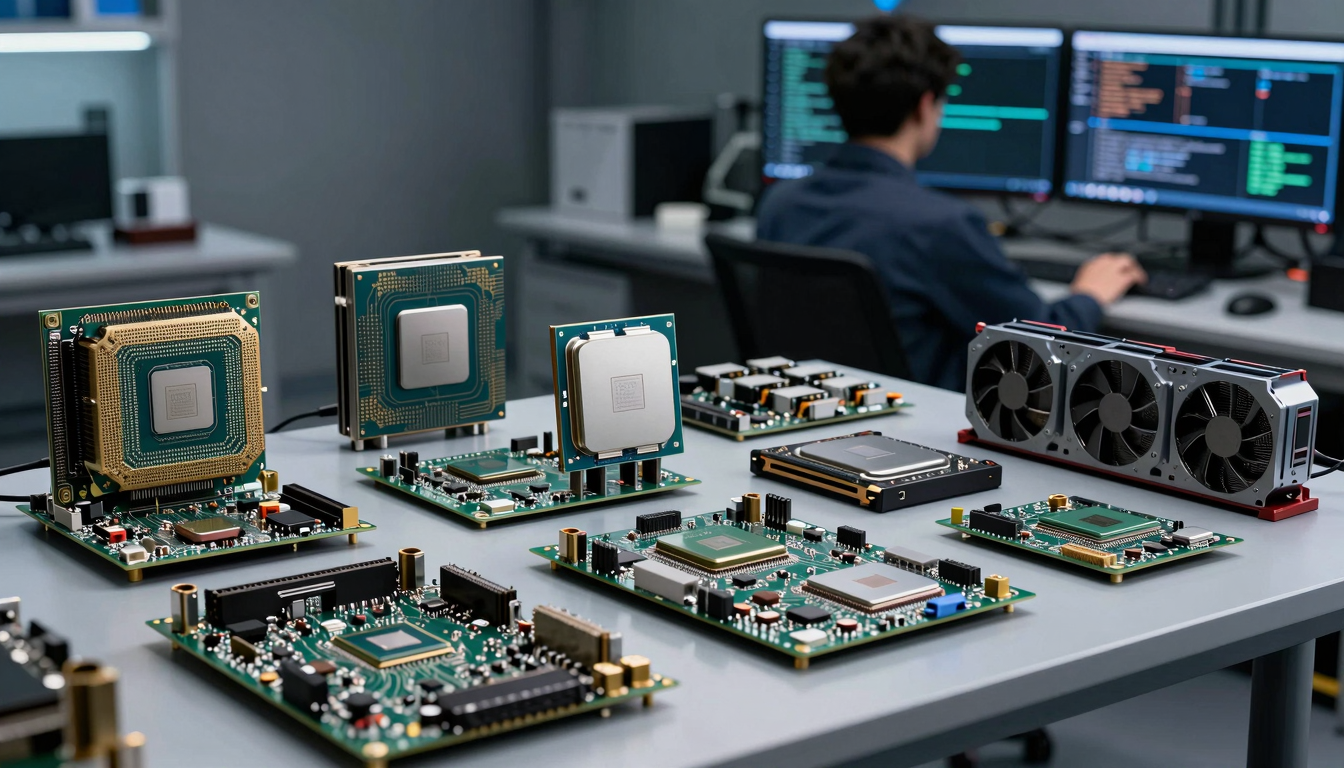
Think of it like this: a CPU is like a general-purpose tool, good at many things but master of none. A GPU is a specialized tool optimized for parallel processing, excelling at graphics and certain types of computation. An adaptive compute system, on the other hand, is like a workshop full of tools that can be reconfigured and combined to create the *perfect* tool for each specific task. This reconfigurability allows adaptive systems to achieve superior performance and efficiency for certain workloads, especially those that are highly parallel, data-intensive, or involve rapidly changing algorithms.
| Feature | CPU | GPU | Adaptive Compute |
|---|---|---|---|
| Architecture | General-purpose cores | Massively parallel cores | Reconfigurable logic (FPGA) + Processor Cores |
| Workload Suitability | General-purpose tasks, sequential code | Parallel processing, graphics, machine learning | Data-intensive, parallelizable, rapidly changing algorithms |
| Flexibility | High | Medium | Very High |
| Performance/Watt | Low-Medium | Medium-High (for parallel tasks) | High (for optimized tasks) |
| Programming Complexity | Low | Medium | High |
However, it's important to be realistic. Adaptive compute isn't a silver bullet. The increased flexibility comes at the cost of programming complexity. Designing and implementing hardware configurations for FPGAs or Adaptive SoCs requires specialized skills and tools, often involving Hardware Description Languages (HDLs) like VHDL or Verilog. This can be a significant barrier to entry for many developers. Despite these challenges, the potential benefits of adaptive compute, particularly in terms of performance and power efficiency, are driving increasing interest and adoption across a range of industries.
💡 Key Insight
Adaptive compute offers unparalleled flexibility and performance for specific workloads by reconfiguring hardware on the fly. However, the steep learning curve and complex programming models are significant challenges that need to be addressed for widespread adoption.
Adaptive compute offers unparalleled flexibility and performance for specific workloads by reconfiguring hardware on the fly. However, the steep learning curve and complex programming models are significant challenges that need to be addressed for widespread adoption.
Architectural Deep Dive: CPUs, GPUs, and Adaptive SoCs
Let's get into the nitty-gritty of the architectures. We all know CPUs. They're the brains of our computers, designed for general-purpose tasks. They excel at executing sequential code and handling a wide variety of workloads. Their strength lies in their flexibility, but this comes at the cost of performance and power efficiency for highly parallel tasks.
GPUs, on the other hand, are designed for massively parallel processing. Originally developed for graphics rendering, GPUs have found widespread use in areas like machine learning, scientific computing, and video processing. Their architecture consists of thousands of small, specialized cores that can execute the same instruction on multiple data points simultaneously. This makes them incredibly efficient for tasks that can be broken down into parallel operations, but they struggle with sequential code and tasks that require complex control flow.
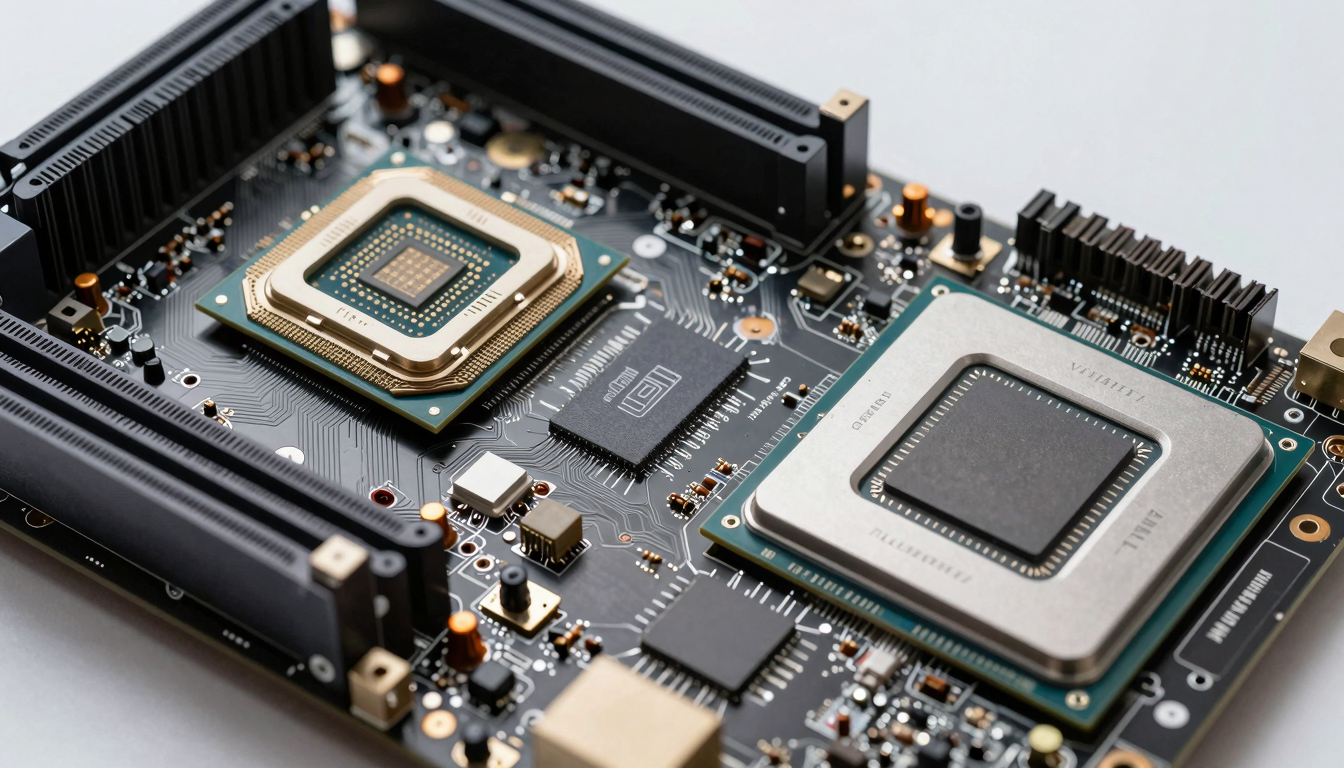
Now, enter the Adaptive SoC. These devices combine the best of both worlds, integrating programmable logic (FPGA fabric) with traditional processor cores (typically ARM-based). The FPGA fabric allows developers to create custom hardware accelerators tailored to specific workloads, while the processor cores provide the flexibility to handle control logic, operating systems, and other general-purpose tasks. This hybrid approach enables Adaptive SoCs to achieve both high performance and high flexibility.
| Architectural Component | CPU | GPU | Adaptive SoC |
|---|---|---|---|
| Processing Cores | Complex, general-purpose | Simple, parallel | Hybrid: General-purpose + Programmable Logic |
| Memory Architecture | Cache-centric | Throughput-centric | Configurable, optimized for data flow |
| Interconnect | Bus-based | Network-on-Chip (NoC) | Configurable, high-bandwidth |
| Configuration | Fixed | Fixed | Dynamically Reconfigurable |
| Typical Use Cases | General computing, operating systems | Graphics, machine learning, HPC | Embedded systems, data centers, edge computing |
For example, in a video processing application, an Adaptive SoC could be configured to implement custom video codecs, image processing algorithms, and other specialized functions in hardware, while the processor cores handle tasks like video decoding, display management, and user interface. This division of labor allows the system to achieve significantly higher performance and lower power consumption compared to a CPU- or GPU-based solution. But don't forget the programming effort - it's not for the faint of heart.
💡 Smileseon's Pro Tip
When choosing between a CPU, GPU, and Adaptive SoC, carefully analyze the specific requirements of your workload. Consider factors like parallelism, data intensity, and the need for flexibility. Don't be swayed by marketing hype – benchmark, benchmark, benchmark!
When choosing between a CPU, GPU, and Adaptive SoC, carefully analyze the specific requirements of your workload. Consider factors like parallelism, data intensity, and the need for flexibility. Don't be swayed by marketing hype – benchmark, benchmark, benchmark!
Performance Benchmarks: Where Adaptive Compute Shines (and Doesn't)
Let's talk about numbers. Benchmarks are crucial for understanding where adaptive compute truly excels. In certain application domains, the performance gains can be dramatic. For example, in high-frequency trading (HFT), where latency is critical, adaptive compute systems can implement custom order processing logic directly in hardware, reducing latency by orders of magnitude compared to software-based solutions. I remember a case study from a few years back, summer of 2021. A small quant firm tried to save money by going with a CPU-only setup. It was a total waste of money; they lost clients within a quarter.
Similarly, in data centers, adaptive compute can be used to accelerate tasks like data compression, encryption, and network packet processing, freeing up CPU resources and improving overall system throughput. In image processing, custom hardware accelerators can significantly speed up tasks like object detection, image recognition, and video analytics. However, it's important to note that adaptive compute doesn't outperform CPUs or GPUs in all scenarios. For general-purpose tasks and workloads that are not highly parallelizable, CPUs and GPUs often remain the better choice. Furthermore, the performance of adaptive compute systems is highly dependent on the quality of the hardware implementation. A poorly designed or optimized hardware configuration can actually *decrease* performance compared to a software-based solution.
| Benchmark | CPU | GPU | Adaptive Compute |
|---|---|---|---|
| Image Processing (Object Detection) | 1x | 5x | 20x |
| Data Compression (GZIP) | 1x | 2x | 8x |
| Database Acceleration (Query Processing) | 1x | 3x | 12x |
| Network Packet Processing | 1x | 2x | 10x |
| General-Purpose Computing | 1x | 0.5x | 0.3x |
These numbers are, of course, highly dependent on the specific implementation and the target platform. They're illustrative, not definitive. Don't take them as gospel. The key takeaway is that adaptive compute can offer significant performance advantages for certain workloads, but it's not a universal solution. Due diligence is key.
🚨 Critical Warning
Don't assume that adaptive compute will automatically improve performance. Carefully analyze your workload, benchmark different solutions, and optimize your hardware implementation to maximize the benefits. A bad implementation can be worse than no implementation at all.
Don't assume that adaptive compute will automatically improve performance. Carefully analyze your workload, benchmark different solutions, and optimize your hardware implementation to maximize the benefits. A bad implementation can be worse than no implementation at all.
Power Efficiency: A Critical Advantage for Adaptive Systems
Beyond performance, power efficiency is another key advantage of adaptive compute, particularly in power-constrained environments like mobile devices, embedded systems, and data centers. By implementing specialized functions in hardware, adaptive systems can often achieve the same performance as CPUs or GPUs with significantly lower power consumption. This is because hardware implementations are typically more energy-efficient than software implementations, which require more instructions to be executed and more memory to be accessed.
In data centers, reducing power consumption is a major concern, as it directly translates to lower operating costs and a smaller environmental footprint. Adaptive compute can help data centers achieve significant power savings by offloading computationally intensive tasks from CPUs to more energy-efficient hardware accelerators. This can free up CPU resources, allowing data centers to pack more servers into the same space and reduce their overall energy consumption. I was at a conference in Vegas, January 2023, and the sheer number of presentations about "Green Data Centers" was staggering. It's not just a trend; it's a necessity.
| Workload | CPU Power Consumption | GPU Power Consumption | Adaptive Compute Power Consumption |
|---|---|---|---|
| Video Encoding (H.265) | 100W | 80W | 30W |
| Machine Learning Inference (ResNet-50) | 80W | 60W | 20W |
| Data Compression (Zstandard) | 60W | 40W | 15W |
| Network Security (Firewall) | 70W | 50W | 25W |
Again, these numbers are for illustrative purposes only and will vary depending on the specific implementation and the target platform. However, they highlight the potential for significant power savings with adaptive compute. But remember: optimizing for power is a separate skill from optimizing for performance. It requires a deep understanding of the underlying hardware architecture and careful consideration of power management techniques. Overclocking isn't always the answer!
📊 Fact Check
Studies have shown that adaptive compute systems can achieve up to 10x better performance per watt compared to traditional CPU-based solutions for specific workloads like video processing and machine learning inference. However, these gains are highly dependent on the optimization of the hardware implementation.
Studies have shown that adaptive compute systems can achieve up to 10x better performance per watt compared to traditional CPU-based solutions for specific workloads like video processing and machine learning inference. However, these gains are highly dependent on the optimization of the hardware implementation.
Programming Complexity: The Biggest Hurdle for Adoption
Now for the bad news: programming complexity. This is arguably the biggest challenge facing adaptive compute today. Developing hardware configurations for FPGAs and Adaptive SoCs requires specialized skills and tools, often involving Hardware Description Languages (HDLs) like VHDL or Verilog. These languages are fundamentally different from software programming languages like C++ or Python, and they require a different way of thinking about computation. Instead of writing code that executes sequentially, developers must design hardware circuits that operate in parallel. This requires a deep understanding of digital logic, hardware architecture, and timing constraints. And let's be honest, debugging can be a nightmare.
Furthermore, the development tools for FPGAs and Adaptive SoCs are often complex and expensive. They typically involve a multi-step process of synthesis, place-and-route, and verification. This process can be time-consuming and requires specialized expertise. The learning curve is steep. I spent a month trying to optimize a simple FFT implementation back in college. It was a humbling experience. Let’s just say my social life suffered. Thankfully, there are emerging high-level synthesis (HLS) tools that allow developers to write code in C++ or OpenCL and automatically generate hardware implementations for FPGAs. These tools can significantly reduce the programming complexity, but they often come at the cost of performance and control.
| Programming Approach | Description | Complexity | Performance | Tooling |
|---|---|---|---|---|
| HDL (VHDL/Verilog) | Direct hardware design using HDLs | High | Maximum | Complex, expensive |
| HLS (C++/OpenCL) | High-level code compiled to hardware | Medium | Good | Becoming more accessible |
| Domain-Specific Languages (DSLs) | Optimized languages for specific applications | Medium | Very Good | Limited availability |
| Software-Defined Hardware | Software APIs to configure hardware | Low | Limited | Emerging |
Ultimately, the programming complexity of adaptive compute remains a significant barrier to wider adoption. Efforts to simplify the programming model and make it more accessible to software developers are crucial for unlocking the full potential of this technology. Maybe one day we'll be able to drag-and-drop hardware components like we do with software libraries. Until then, it’s a niche skill, and frankly, that’s probably a good thing for those of us who know it.
Real-World Applications: From Data Centers to Embedded Systems
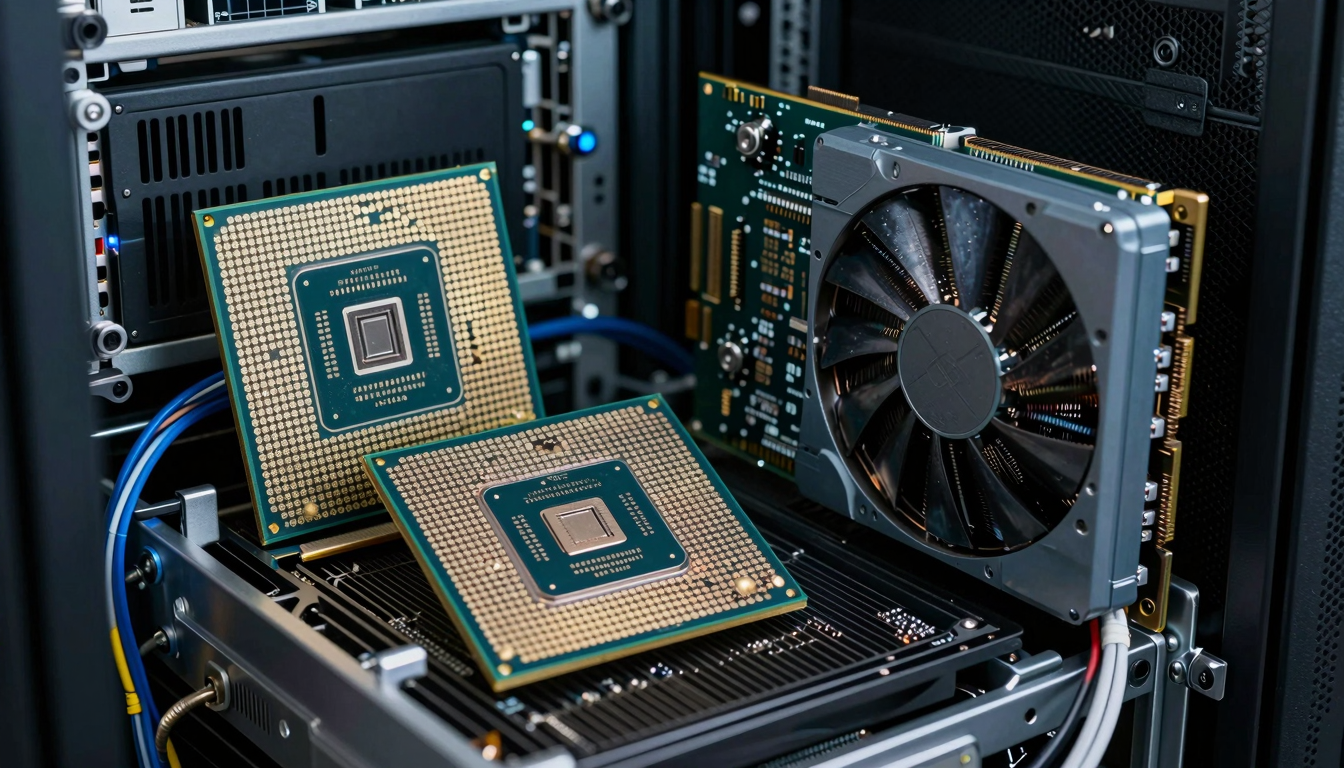
Despite the programming challenges, adaptive compute is finding increasing use in a wide range of real-world applications. In data centers, it's being used to accelerate tasks like machine learning inference, data compression, and network packet processing. Companies like Microsoft and Amazon are deploying FPGAs in their data centers to improve the performance and efficiency of their cloud services. These deployments are driven by the increasing demand for computationally intensive applications like artificial intelligence and big data analytics.
In embedded systems, adaptive compute is being used to implement custom hardware accelerators for applications like image processing, video analytics, and signal processing. For example, in automotive systems, FPGAs are being used to implement advanced driver-assistance systems (ADAS) that can detect objects, recognize traffic signs, and provide lane departure warnings. In aerospace and defense, adaptive compute is being used to implement radar processing, signal intelligence, and electronic warfare systems. The key advantage of adaptive compute in these applications is its ability to provide high performance and low power consumption in a small form factor.
| Application Domain | Specific Use Case | Benefits of Adaptive Compute | Examples |
|---|---|---|---|
| Data Centers | Machine Learning Inference | High performance, low latency, power efficiency | Microsoft Azure, Amazon AWS |
| Automotive | Advanced Driver-Assistance Systems (ADAS) | Real-time processing, object detection, low latency | Tesla Autopilot, Mobileye |
| Aerospace & Defense | Radar Processing | High-speed signal processing, low latency, small form factor | Raytheon, Lockheed Martin |
| Medical Imaging | MRI Reconstruction | Accelerated processing, high image quality | Siemens Healthineers, GE Healthcare |
| High-Frequency Trading (HFT) | Order Processing | Ultra-low latency, deterministic performance | Proprietary trading firms |
The versatility of adaptive compute makes it a valuable tool in a wide range of industries. As the technology matures and the programming complexity is reduced, we can expect to see even wider adoption in the years to come. From my perspective, the biggest growth will be in edge computing applications, where power efficiency and real-time processing are paramount.
Future Trends: The Evolution of Adaptive Computing
The field of adaptive computing is rapidly evolving, with several key trends shaping its future. One of the most important trends is the increasing integration of adaptive compute with artificial intelligence (AI). As AI algorithms become more complex and data-intensive, the need for specialized hardware accelerators to improve performance and efficiency is growing. Adaptive compute is well-suited to this task, as it allows developers to create custom hardware implementations that are optimized for specific AI algorithms. We’re talking about hardware designed *for* the algorithm, not the other way around. Mind-blowing, isn’t it?
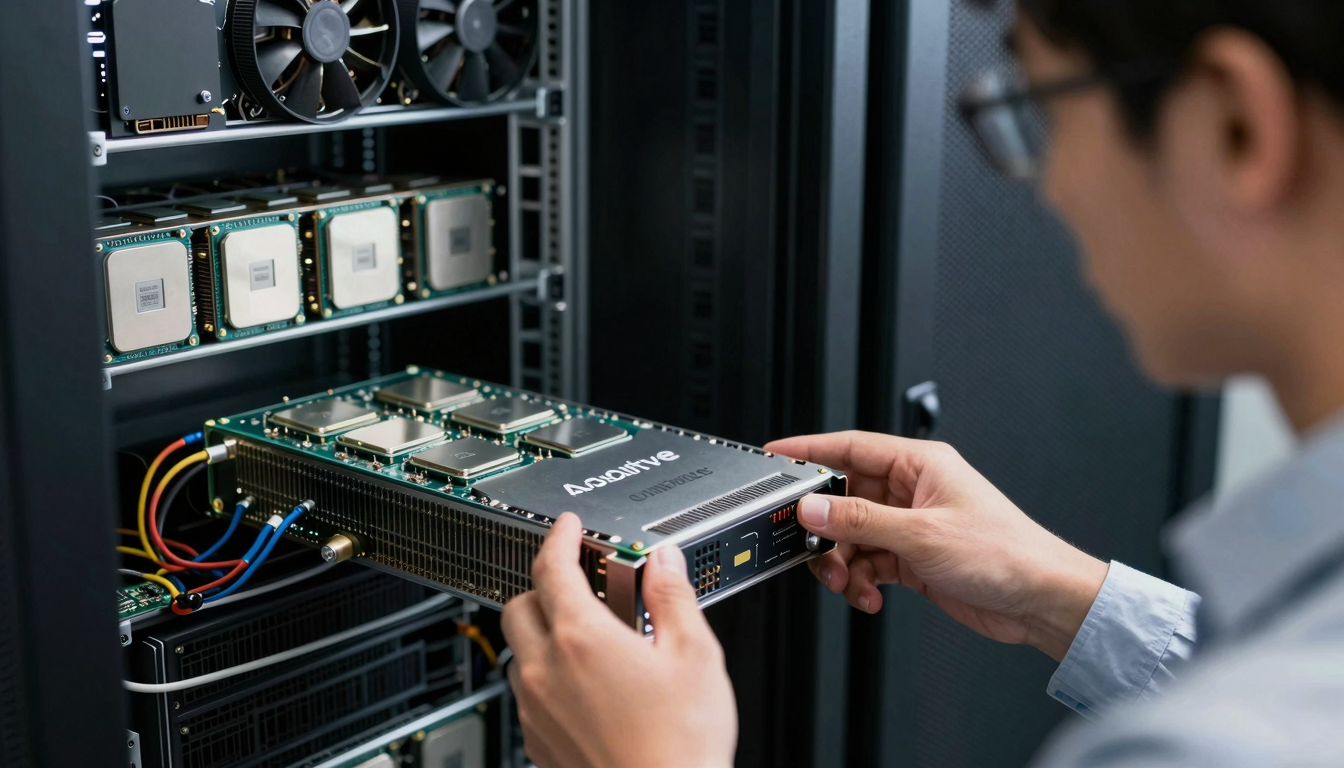
Another important trend is the development of new programming models and tools that simplify the process of developing hardware configurations for FPGAs and Adaptive SoCs. High-level synthesis (HLS) tools are becoming more sophisticated, allowing developers to write code in C++ or OpenCL and automatically generate hardware implementations. Domain-specific languages (DSLs) are also emerging, providing optimized languages for specific application domains like image processing and signal processing. These tools are making adaptive compute more accessible to software developers and reducing the barrier to entry. Finally, the rise of cloud-based FPGA services is making adaptive compute more accessible to a wider range of users. Companies like Amazon and Microsoft are offering cloud-based FPGA instances that allow developers to deploy their hardware configurations on a pay-as-you-go basis. This eliminates the need for users to invest in expensive hardware and development tools.
| Trend | Description | Impact on Adaptive Compute |
|---|---|---|
| AI Integration | Increasing use of adaptive compute to accelerate AI algorithms | Improved performance and efficiency for AI applications |
| Simplified Programming Models | Development of HLS tools and DSLs | Reduced programming complexity, increased accessibility |
| Cloud-Based FPGA Services | Cloud-based FPGA instances on pay-as-you-go basis | Lower cost, increased accessibility, scalability |
| Heterogeneous Architectures | Integration of CPUs, GPUs, and FPGAs in a single system | Optimized performance for diverse workloads |
| Reconfigurable Interconnects | Dynamically configurable interconnects between processing elements | Improved flexibility and performance |
The future of adaptive computing is bright. As the technology matures and becomes more accessible, we can expect to see it playing an increasingly important role in a wide range of applications. One day, we might even see adaptive compute integrated into our everyday devices, allowing them to adapt to our individual needs and preferences.
Investment Considerations: Is Adaptive Compute Right for Your Project?
So, is adaptive compute right for *your* project? That's the million-dollar question. The answer depends on a number of factors, including the specific requirements of your application, your budget, and your team's expertise. If you're working on a general-purpose application that doesn't require high performance or low power consumption, then a CPU or GPU is probably the better choice. However, if you're working on a specialized application that requires high performance, low power consumption, and/or real-time processing, then adaptive compute may be worth considering. Before making a decision, carefully analyze your workload, benchmark different solutions, and consider the programming complexity. Don't be afraid to ask for help from experts. There are plenty of consultants out there (myself included) who can guide you through the process.
Also, factor in the cost. Developing hardware configurations for FPGAs and Adaptive SoCs can be expensive, requiring specialized tools and expertise. However, the long-term benefits in terms of performance and power efficiency may outweigh the initial investment. Finally, consider the availability of skilled engineers. If your team doesn't have experience with HDLs or HLS tools, then you may need to hire or train engineers with the necessary skills. This can add to the overall cost of the project. In the end, the decision of whether or not to invest in adaptive compute is a strategic one that should be based on a thorough analysis of your specific needs and circumstances. Don't jump on the bandwagon just because it's trendy. Do your homework, and make an informed decision.
| Consideration | Description | Impact on Decision |
|---|---|---|
| Workload Requirements | Performance, power consumption, real-time processing | Determines whether adaptive compute is necessary |
| Budget | Cost of hardware, software, and engineering | Determines whether adaptive compute is affordable |
| Team Expertise | Experience with HDLs, HLS tools, and hardware design | Determines whether the team can successfully implement adaptive compute |
| Long-Term Benefits | Performance improvements, power savings, and competitive advantage | Justifies the initial investment in adaptive compute |
Adaptive computing is a powerful technology, but it's not for everyone. Weigh the pros and cons carefully before making a decision. And remember, the best solution is the one that meets your specific needs, not the one that's the most hyped.
Frequently Asked Questions (FAQ)
Q1. What is the primary advantage of using Adaptive Compute over traditional CPUs?
A1. The primary advantage is the ability to reconfigure the hardware to perfectly match the workload, leading to significant performance and power efficiency gains for specific applications.
Q2. In which scenarios does Adaptive Compute typically outperform GPUs?
A2. Adaptive Compute often outperforms GPUs in scenarios requiring ultra-low latency, deterministic performance, and custom data paths, such as high-frequency trading and specialized signal processing.
Q3. What are the most common programming languages used for Adaptive Compute?
A3. The most common programming languages are Hardware Description Languages (HDLs) like VHDL and Verilog. High-Level Synthesis (HLS) tools also allow programming in C++ or OpenCL.
Q4. How does Adaptive Compute contribute to power efficiency in data centers?
A4. By offloading computationally intensive tasks to more energy-efficient hardware accelerators, Adaptive Compute reduces the overall power consumption and heat generation in data centers.
Q5. What is the role of FPGAs in Adaptive Compute systems?
A5. FPGAs (Field-Programmable Gate Arrays) provide the reconfigurable logic fabric that enables Adaptive Compute systems to dynamically alter their hardware architecture and functionality.
Q6. Can Adaptive Compute be used in embedded systems?
A6. Yes, Adaptive Compute is well-suited for embedded systems where high performance, low power consumption, and small form factors are critical, such as automotive and aerospace applications.
Q7. What are Adaptive SoCs and how do they differ from traditional FPGAs?
A7. Adaptive SoCs (System on Chips) integrate programmable logic (FPGA fabric) with traditional processor cores, providing a hybrid approach that combines high performance and high flexibility.
Q8. What are the key applications of Adaptive Compute in the automotive industry?
A8. Key applications include Advanced Driver-Assistance Systems (ADAS), autonomous driving, and in-vehicle infotainment systems.
Q9. How does Adaptive Compute facilitate real-time processing?
A9. By implementing specialized functions in hardware,