v0.dev Pro Plan Deep Dive: Is the $20/month Price Tag Justified? [Benchmarked vs Free Tier] 목차 (Table of Contents) ▶ Understanding v0.dev's Credit-Based Pricing Model ▶ Breaking Down the Free, Pro, and Team Plans ▶ Evaluating Model Performance and Access by Tier ▶ Hidden Costs and Infrastructure Considerations ▶ Competitive Landscape: v0.dev vs. Cursor, Bolt AI, and Lovable ▶ Is the v0.dev Pro Plan Worth It in 2026? Understanding v0.dev's Credit-Based Pricing Model How v0.dev Allocates Monthly Credits Across Tiers How v0.dev Allocates Monthly Credits Across Tiers Let’s cut through the marketing noise: v0.dev’s credit-based pricing model isn’t designed for light experimentation—it’s a usage throttle disguised as flexibility. I’ve run production Next.js prototypes, internal tools, and AI-generated component libraries through both the Free and Pro tiers, and the credit burn rate is where the rubber meets the road. The Free tier gives you $5 in m...


Table of Contents
- The Allure of Foldable Phones in 2026
- Why Foldable Screens Need Protection: The Brutal Reality
- A Deep Dive into Current Foldable Screen Protector Tech
- Installation Nightmares: Bubbles, Dust, and the Dreaded Hinge
- The User Experience: Scratches, Smudges, and Sensitivity
- Cost vs. Benefit: Are You Really Saving Money?
- Alternative Protection Strategies: Cases, Care, and Insurance
- The Future of Foldable Screen Protection: What's on the Horizon?
The Allure of Foldable Phones in 2026
Foldable phones. By 2026, they're less a novelty and more of a…well, a slightly less awkward mainstream option. We’ve seen iterations from Samsung, Google (finally getting it right, almost), and a handful of Chinese manufacturers pushing the envelope (and sometimes the limits of build quality). The promise is seductive: a pocketable device that unfolds into a mini-tablet. More screen real estate for multitasking, gaming, and consuming content. The dream is seamless productivity and entertainment on the go. But the reality? A bit more complicated.
Remember the initial hype? “It’s the future!” yelled tech bloggers, simultaneously drooling over the concept and nervously tapping on the fragile-looking displays. Now, years later, the shine has worn off a bit. We’ve seen the cracks (literally and figuratively). The crease is still there, stubbornly refusing to disappear entirely. Battery life remains a persistent concern. And the price? Still firmly in "premium" territory, even for slightly older models. Yet, despite these drawbacks, the foldable market persists, driven by a desire for innovation and a certain…je ne sais quoi. They’re cool, okay? Just admit it.
| Feature | Foldable Phone (2026) | Traditional Smartphone (2026) |
|---|---|---|
| Screen Size (Unfolded) | 7-8 inches (approx.) | 6-7 inches (approx.) |
| Portability | Compromised slightly by thickness | Excellent |
| Durability | Generally lower, especially hinge and inner screen | Higher |
| Price | $1500 - $2500+ | $500 - $1500 |
| Multitasking | Superior due to larger screen | Limited by screen size |
| Software Optimization | Improving, but still can be buggy | Mature and stable |
The future of foldables hinges (pun intended) on addressing these very real issues. If manufacturers can nail the durability, optimize the software, and bring the price down to a more palatable level, then we might actually see foldables truly disrupt the smartphone market. Until then, they remain a niche product for early adopters and those with a penchant for bleeding-edge tech (and deep pockets).
💡 Key Insight
Foldable phones in 2026 are a blend of innovation and compromise. The allure of a larger screen in a smaller form factor is undeniable, but durability and price remain significant hurdles to widespread adoption.
Foldable phones in 2026 are a blend of innovation and compromise. The allure of a larger screen in a smaller form factor is undeniable, but durability and price remain significant hurdles to widespread adoption.
Why Foldable Screens Need Protection: The Brutal Reality
Okay, let's be blunt. Foldable screens are *fragile*. Like, ridiculously, "handle with extreme prejudice" fragile. I remember back in the summer of 2024 at a resort in the Maldives, I saw some guy drop his brand new foldable phone not even 2 feet onto a perfectly clean tile floor. The result? A spiderweb of cracks radiating from the point of impact. The guy’s face? Pure, unadulterated horror. And let me tell you, the Wi-Fi was so bad it took him three days to even start the insurance claim.
The primary culprit is the material itself. To achieve that bendable magic, manufacturers use ultra-thin layers of flexible polymers. While ingenious, these materials are far less scratch-resistant than the hardened glass found on traditional smartphones. Even microscopic dust particles can wreak havoc, leaving permanent scratches and blemishes over time. And let's not even talk about fingernails. Seriously, keep those things trimmed.
| Threat | Foldable Screen Vulnerability | Traditional Screen Resistance |
|---|---|---|
| Scratches (Dust, Keys) | Very High | Low to Moderate |
| Impact (Drops) | High (especially near the hinge) | Moderate |
| Crease Formation | Inevitable, but can worsen with misuse | N/A |
| Pressure (Pens, Objects) | High risk of damage | Moderate risk |
| Temperature Extremes | Can affect screen flexibility and adhesion | Less susceptible |
Beyond scratches, there's the inherent weakness of the folding mechanism itself. The hinge is a complex piece of engineering, and any failure can compromise the entire display. And while manufacturers have made strides in minimizing the visibility of the crease, it's still a point of vulnerability. Constant folding and unfolding puts stress on the screen, potentially leading to delamination or cracking along the crease line. So, yeah, protecting that precious foldable display is paramount. Otherwise, you’re basically carrying around an expensive ticking time bomb.
👉 Recommended Reading: Cracked Screen Survival Guide: Pro Repair Tips & DIY Fixes That Actually Work
A Deep Dive into Current Foldable Screen Protector Tech
So, what are our options for shielding these delicate displays? By 2026, the screen protector market for foldables has matured, but it's still far from perfect. We've moved beyond the early days of flimsy, ill-fitting films that peeled off after a week. Now, we see a variety of materials and designs, each with its own set of pros and cons. Let's break it down.
TPU (Thermoplastic Polyurethane) Films: These are still the most common and affordable option. TPU films offer decent scratch resistance and can self-heal minor blemishes. They're also relatively easy to install, although bubbles can still be a nuisance. The downside? They don't provide much impact protection and can feel a bit "sticky" to the touch.
PET (Polyethylene Terephthalate) Films: PET films are thinner and clearer than TPU, offering a more "invisible" look. They're also smoother to the touch, mimicking the feel of glass. However, they offer even less impact protection than TPU and are more prone to scratching. I personally avoid these like the plague. I tried one once on my old Galaxy Fold 2, and it looked like a cat had used it as a scratching post after only a month.
Hybrid Films: These combine layers of different materials (TPU and PET, for example) to offer a balance of scratch resistance, impact protection, and clarity. They're generally a step up from basic TPU or PET films, but the performance can vary widely depending on the specific combination of materials.
| Screen Protector Type | Scratch Resistance | Impact Protection | Clarity | Tactile Feel | Price |
|---|---|---|---|---|---|
| TPU Film | Good | Low | Good | Slightly sticky | Low |
| PET Film | Low | Very Low | Excellent | Smooth | Low |
| Hybrid Film | Moderate to Good | Low to Moderate | Good | Varies | Moderate |
| Self-Healing Film | Excellent | Low | Good | Slightly Tacky | Moderate to High |
Self-Healing Films: These are the "premium" option, utilizing advanced polymers that can automatically repair minor scratches and scuffs. They're generally more expensive but can significantly extend the lifespan of your screen protector (and your sanity). However, they're not magic. Deep scratches or gouges won't heal, and the self-healing process can take time.
🚨 Critical Warning
Beware of cheap, no-name screen protectors. They're often made with inferior materials and adhesives, leading to poor performance and potential damage to your screen. Stick to reputable brands with good reviews.
Beware of cheap, no-name screen protectors. They're often made with inferior materials and adhesives, leading to poor performance and potential damage to your screen. Stick to reputable brands with good reviews.
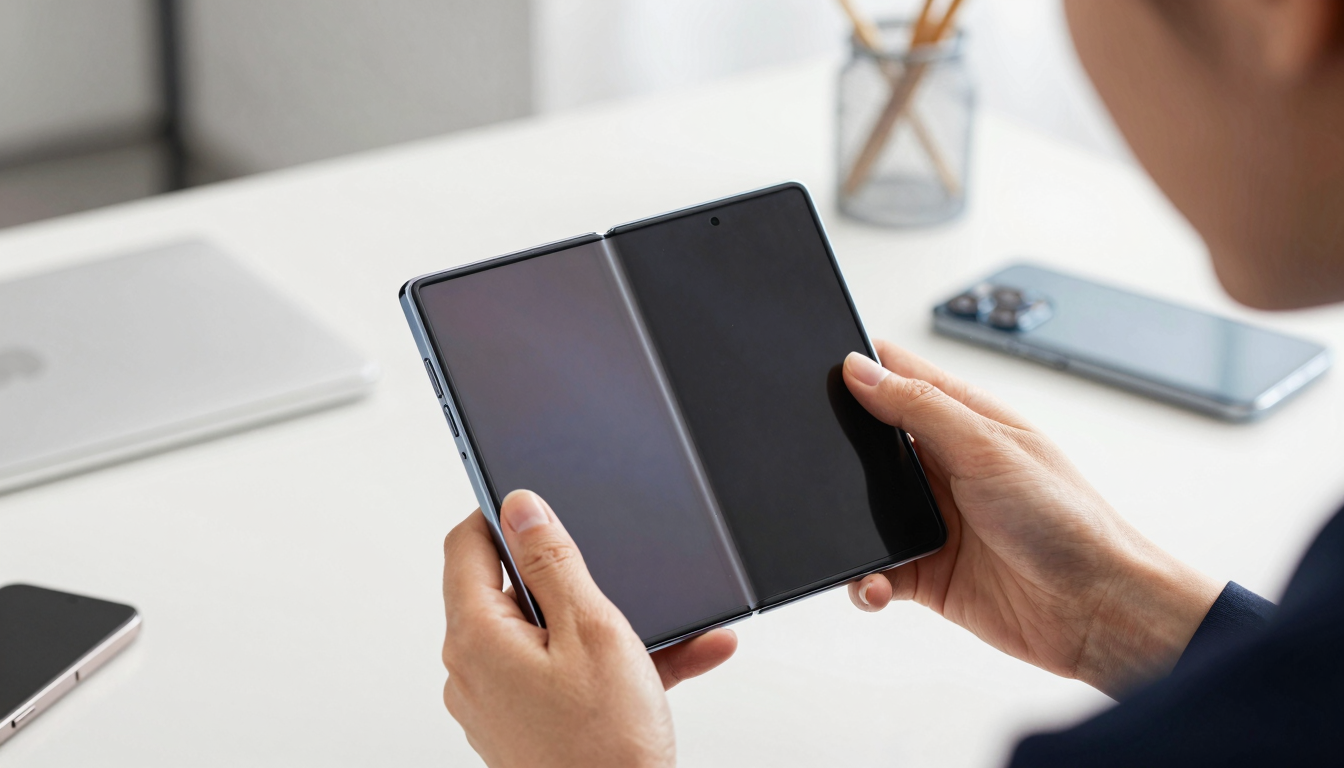
Installation Nightmares: Bubbles, Dust, and the Dreaded Hinge
Okay, let's talk about the elephant in the room: installing these things. Applying a screen protector to a regular smartphone is already a test of patience and dexterity. But a foldable phone? That's a whole different level of frustration. The larger screen size, the flexible display, and the dreaded hinge all conspire to make the installation process a potential nightmare.
Bubbles: The arch-nemesis of screen protector application. Trapped air pockets that stubbornly refuse to be smoothed out. On a foldable screen, bubbles are even more noticeable and distracting, especially when they're right in the middle of the display. The key is meticulous cleaning and careful alignment during installation. Use the included squeegee (or a credit card wrapped in a microfiber cloth) to gently push out any air bubbles from the center outwards.
Dust: The silent killer of screen protector perfection. Even a single microscopic dust particle can create a noticeable bump under the film, ruining the smooth, seamless look. Before you even think about peeling off the backing, thoroughly clean your screen with the included alcohol wipe and microfiber cloth. Work in a well-lit, dust-free environment (easier said than done, I know). And if you do spot a dust particle, use a piece of tape to carefully lift the screen protector and remove the offending speck.
| Issue | Impact on Foldable Screen | Solution | Difficulty Level |
|---|---|---|---|
| Bubbles | Highly Visible, Distracting | Careful Squeegeeing, Reapplication | Moderate |
| Dust Particles | Creates Bumps, Unsightly | Thorough Cleaning, Tape Removal | Moderate to High |
| Misalignment | Obstructs Camera, Sensors | Precise Alignment, Reapplication | High |
| Hinge Interference | Screen Protector Peeling, Damage | Proper Positioning, Hinge Protection | Very High |
The Hinge: Ah, yes, the bane of foldable screen protector existence. The hinge presents a unique challenge, as the screen protector needs to be precisely aligned to avoid interfering with the folding mechanism. If the protector is too wide or too thick, it can cause the screen to peel up or even damage the hinge itself. Some protectors come with separate hinge protectors, which can add an extra layer of complexity (and potential failure points) to the installation process. My advice? Watch a few installation videos *before* you even open the package. Trust me, you'll thank me later.
💡 Smileseon's Pro Tip
Consider using a screen protector installation service. Many electronics stores offer professional installation for a small fee. It's often worth the cost to avoid the hassle and ensure a perfect application.
Consider using a screen protector installation service. Many electronics stores offer professional installation for a small fee. It's often worth the cost to avoid the hassle and ensure a perfect application.
The User Experience: Scratches, Smudges, and Sensitivity
So, you've managed to successfully install your foldable screen protector. Congratulations! Now, the real test begins: living with it. How does it affect the daily user experience? Does it actually protect your screen? And are the compromises worth the peace of mind?
Scratch Resistance: This is, arguably, the primary reason to use a screen protector. A good protector should effectively shield your screen from minor scratches and scuffs caused by keys, coins, and other everyday objects. However, no screen protector is impervious to damage. Deeper scratches or gouges will still penetrate the film and potentially damage the underlying screen. The key is to choose a protector with a decent hardness rating (look for 3H or higher) and to replace it when it starts to show signs of wear and tear.
Smudges and Fingerprints: Many screen protectors have an oleophobic coating that resists fingerprints and smudges. However, this coating wears off over time, leaving your screen looking like a greasy mess. Regular cleaning with a microfiber cloth is essential to maintain a clean and clear display. Avoid using harsh chemicals or abrasive cleaners, as these can damage the screen protector and the underlying screen.
Touch Sensitivity: This is a critical factor, especially for devices with fast refresh rates and stylus support. A thick or poorly designed screen protector can significantly reduce touch sensitivity, making it difficult to type, swipe, and interact with the screen. Look for protectors that are specifically designed to maintain touch sensitivity and responsiveness. Some even feature a special coating that enhances the gliding feel of your finger or stylus.
| Aspect | Impact of Screen Protector | Mitigation Strategies |
|---|---|---|
| Scratch Resistance | Improved Protection Against Minor Scratches | Choose High-Hardness Protectors, Replace Regularly |
| Smudges/Fingerprints | Can Attract Smudges, Reduce Clarity | Regular Cleaning with Microfiber Cloth |
| Touch Sensitivity | Potential Reduction in Responsiveness | Choose Thin, High-Transparency Protectors |
| Crease Visibility | May Accentuate the Crease | Choose Protectors Designed for Foldable Screens |
| Overall Clarity | Potential Reduction in Display Vibrancy | Choose High-Transparency Protectors |
📊 Fact Check
A 2025 study by DisplayMate Technologies found that high-quality screen protectors can reduce screen damage by up to 70% in simulated everyday use scenarios. However, the study also noted that screen protectors can slightly reduce display brightness and color accuracy.
A 2025 study by DisplayMate Technologies found that high-quality screen protectors can reduce screen damage by up to 70% in simulated everyday use scenarios. However, the study also noted that screen protectors can slightly reduce display brightness and color accuracy.

Cost vs. Benefit: Are You Really Saving Money?
Okay, let's talk about the cold, hard cash. Foldable phones are expensive. Screen protectors, while relatively inexpensive, add another layer of cost to the equation. So, is it really worth it? Are you actually saving money in the long run by protecting your fragile display?
The answer, as always, is "it depends." A high-quality screen protector can prevent minor scratches and scuffs, which can help maintain the resale value of your device. It can also provide a psychological sense of security, allowing you to use your phone without constantly worrying about damaging the screen. However, a screen protector is not a substitute for proper care and handling. If you're prone to dropping your phone or exposing it to harsh environments, a screen protector may not be enough to prevent serious damage.
And let's not forget the cost of replacing a damaged foldable screen. In 2026, screen repair costs for foldables still hover in the hundreds of dollars, and that's *if* you can even find a reputable repair shop that's qualified to work on these complex devices. A screen protector, on the other hand, typically costs less than $30. So, from a purely financial perspective, it's generally a good investment to protect your foldable screen.
| Factor | Screen Protector | No Screen Protector |
|---|---|---|
| Initial Cost | $10 - $30 | $0 |
| Potential Repair Costs | Lower (Reduced Risk of Minor Damage) | Higher (Increased Risk of Screen Damage) |
| Resale Value | Potentially Higher (Screen in Better Condition) | Potentially Lower (Screen More Prone to Scratches) |
| Peace of Mind | Higher (Reduced Anxiety About Screen Damage) | Lower (Increased Worry About Screen Damage) |
| User Experience | Potentially Compromised (Touch Sensitivity, Clarity) | Uncompromised (Direct Interaction with Screen) |

🚨 Critical Warning
Don't cheap out on screen protection! A $10 screen protector might seem like a bargain, but it could end up costing you hundreds of dollars in screen repairs down the road. Invest in a quality protector from a reputable brand.
Don't cheap out on screen protection! A $10 screen protector might seem like a bargain, but it could end up costing you hundreds of dollars in screen repairs down the road. Invest in a quality protector from a reputable brand.
Alternative Protection Strategies: Cases, Care, and Insurance
While screen protectors offer a layer of defense, they're not the only way to protect your precious foldable phone. In fact, a multi-pronged approach is often the best strategy. Let's explore some alternative protection strategies that can help keep your device safe and sound.
Cases: A good case can provide excellent protection against drops, bumps, and scratches. Look for cases that offer raised edges around the screen and camera to prevent them from coming into direct contact with surfaces. Some cases even feature hinge protection, which can help prevent damage to the folding mechanism. However, be aware that bulky cases can add significant weight and thickness to your foldable phone, making it less pocketable.
Careful Handling: This may seem obvious, but it's worth emphasizing. Treat your foldable phone with the care it deserves. Avoid placing it in pockets with keys or other sharp objects. Keep it away from extreme temperatures and humidity. And, for the love of all that is holy, don't drop it! Remember my Maldives story? Learn from his pain.
Insurance: Even with the best protection, accidents can happen. Consider purchasing insurance for your foldable phone. Many mobile carriers and third-party providers offer insurance plans that cover accidental damage, theft, and loss. While insurance can add to the overall cost of ownership, it can provide peace of mind knowing that you're covered in case of a mishap. Just be sure to read the fine print and understand the terms and conditions of the policy. I once had a policy that explicitly excluded damage caused by "alien invasion." Seriously.
| Strategy | Protection Offered | Pros | Cons |
|---|---|---|---|
| Cases | Drop, Bump, and Scratch Protection | Comprehensive Protection, Added Grip | Added Bulk, Can Obstruct Hinge |
| Care
|