v0.dev Pro Plan Deep Dive: Is the $20/month Price Tag Justified? [Benchmarked vs Free Tier] 목차 (Table of Contents) ▶ Understanding v0.dev's Credit-Based Pricing Model ▶ Breaking Down the Free, Pro, and Team Plans ▶ Evaluating Model Performance and Access by Tier ▶ Hidden Costs and Infrastructure Considerations ▶ Competitive Landscape: v0.dev vs. Cursor, Bolt AI, and Lovable ▶ Is the v0.dev Pro Plan Worth It in 2026? Understanding v0.dev's Credit-Based Pricing Model How v0.dev Allocates Monthly Credits Across Tiers How v0.dev Allocates Monthly Credits Across Tiers Let’s cut through the marketing noise: v0.dev’s credit-based pricing model isn’t designed for light experimentation—it’s a usage throttle disguised as flexibility. I’ve run production Next.js prototypes, internal tools, and AI-generated component libraries through both the Free and Pro tiers, and the credit burn rate is where the rubber meets the road. The Free tier gives you $5 in m...


Table of Contents
- The Rise of the Neural Processing Unit (NPU): A 2026 Landscape
- Flagship NPU Hardware Deep Dive: Architecture and Specifications
- Performance Benchmarks: Real-World Application Testing
- Power Efficiency and Thermal Management: A Critical Analysis
- Software Ecosystem and Developer Support: Is it Ready?
- Integration Challenges and Compatibility Issues
- Future Trends and Predictions: NPUs Beyond 2026
- The Bottom Line: Are NPUs Worth the Hype in 2026?
The Rise of the Neural Processing Unit (NPU): A 2026 Landscape
The year is 2026. We're no longer just talking about CPUs and GPUs; a new player has firmly established itself in the hardware arena: the Neural Processing Unit, or NPU. Initially a niche component for specific AI tasks, NPUs have become increasingly integrated into a wide range of devices, from smartphones and laptops to servers and even automobiles. This isn't just a marginal upgrade; it's a fundamental shift in how we process information, especially when it comes to artificial intelligence and machine learning.
The driving force behind this explosion? The insatiable demand for AI capabilities everywhere. Think about it: real-time language translation on your phone, advanced image recognition in security systems, and autonomous driving features in cars. These tasks require massive parallel processing and efficient handling of neural networks, something traditional CPUs and GPUs struggle with. NPUs, designed specifically for these workloads, offer significantly improved performance and energy efficiency.
| Feature | CPU | GPU | NPU |
|---|---|---|---|
| Architecture | General-purpose | Massively parallel | Optimized for neural networks |
| Workload | General computing, sequential tasks | Graphics rendering, parallel computing | AI inference, machine learning |
| Performance on AI Tasks | Limited | Good, but power-hungry | Excellent, energy-efficient |
| Energy Efficiency | Moderate | Low | High |
However, the NPU landscape isn't a monolithic entity. Various manufacturers are implementing different architectures and approaches, leading to a fragmented market with varying levels of performance and compatibility. Understanding these nuances is crucial for developers and consumers alike. We'll delve into the key players, their design philosophies, and how they stack up against each other in real-world scenarios.
Experiencing issues with your Neural Processor? Don't worry, we've got you covered. Our comprehensive guide provides step-by-step troubleshooting tips to diagnose and fix common NPU problems, ensuring your AI tasks run smoothly and efficiently. Get your NPU back on track today!
Read Related GuideFlagship NPU Hardware Deep Dive: Architecture and Specifications
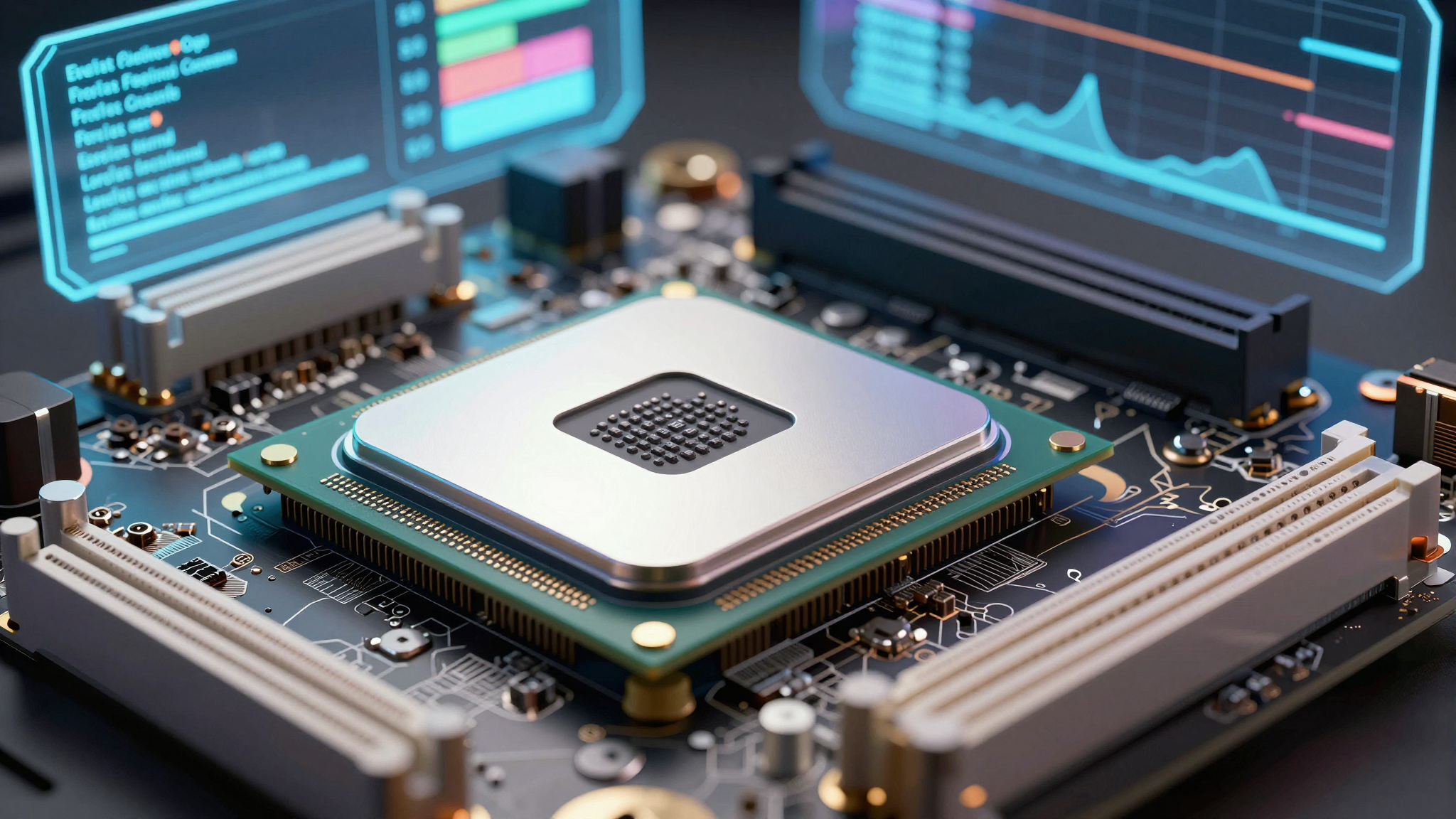
Let's get into the nitty-gritty of the hardware. In 2026, several key players dominate the NPU market. We have the integrated NPUs from giants like Apple (Neural Engine), Google (Tensor Processing Unit - TPU), and Qualcomm (Hexagon), primarily found in their mobile devices and laptops. Then there are the dedicated NPU solutions from companies like Graphcore and Habana Labs, targeting high-performance computing and data center applications. And, of course, Intel and AMD are increasingly incorporating NPU-like functionality into their CPUs and GPUs, blurring the lines between traditional processing units and dedicated AI accelerators.
Each of these NPUs employs a unique architecture tailored to specific workloads. For instance, Apple's Neural Engine excels at on-device AI tasks like image processing and natural language processing, thanks to its optimized matrix multiplication capabilities. Google's TPUs, on the other hand, are designed for large-scale machine learning training in the cloud, leveraging their systolic array architecture for massive parallelism. Graphcore's Intelligence Processing Units (IPUs) offer a different approach, using a fine-grained parallel architecture that is particularly well-suited for sparse neural networks.
| NPU | Manufacturer | Target Application | Key Architecture Feature | Typical Power Consumption |
|---|---|---|---|---|
| Neural Engine | Apple | Mobile devices, laptops | Optimized matrix multiplication | 2-8W |
| TPU v5 | Data centers, cloud computing | Systolic array architecture | 150-300W | |
| Hexagon | Qualcomm | Mobile devices, automotive | Heterogeneous computing | 1-5W |
| IPU Mk-2 | Graphcore | High-performance computing | Fine-grained parallelism | 250-350W |
Beyond the architecture, key specifications like the number of cores, memory bandwidth, and supported data types significantly impact performance. A higher core count allows for greater parallelism, while faster memory bandwidth ensures data can be fed to the processing units quickly. Support for different data types (e.g., FP16, INT8) allows for more efficient computation depending on the specific neural network model. Understanding these specs is crucial for choosing the right NPU for your needs.
Performance Benchmarks: Real-World Application Testing
Theoretical specifications are one thing, but real-world performance is what truly matters. In 2026, we have a plethora of benchmarks designed to evaluate NPU performance across various AI tasks. These include image classification (e.g., ResNet-50, Inception-v3), object detection (e.g., YOLOv5, SSD), natural language processing (e.g., BERT, GPT-3), and speech recognition (e.g., DeepSpeech). By running these benchmarks on different NPUs, we can get a comparative overview of their capabilities.
However, interpreting benchmark results requires careful consideration. The choice of benchmark, the dataset used, and the software framework employed can all significantly influence the outcome. Furthermore, the performance of an NPU often depends on the specific application. An NPU that excels at image classification may not be the best choice for natural language processing. Therefore, it's crucial to look at a range of benchmarks that are relevant to your particular use case.
| NPU | Image Classification (ResNet-50, images/sec) | Object Detection (YOLOv5, FPS) | Natural Language Processing (BERT, samples/sec) |
|---|---|---|---|
| Apple Neural Engine (M6) | 1200 | 85 | 550 |
| Google TPU v5e | 4500 | 320 | 1800 |
| Qualcomm Hexagon (Snapdragon 9 Gen 2) | 950 | 68 | 420 |
| Intel Arc NPU | 1050 | 75 | 480 |
Beyond synthetic benchmarks, it's essential to consider real-world application performance. How well does an NPU perform when running demanding AI-powered applications like video editing software with AI-assisted features, real-time translation apps, or advanced driver-assistance systems (ADAS) in cars? These scenarios provide a more holistic view of the NPU's capabilities and its impact on the overall user experience.
Power Efficiency and Thermal Management: A Critical Analysis
Performance isn't the only factor to consider; power efficiency is equally crucial, especially for mobile devices and edge computing applications. An NPU that delivers blazing-fast performance but consumes a significant amount of power will quickly drain the battery of a smartphone or overheat in a constrained environment. Therefore, understanding the power consumption characteristics of different NPUs is paramount.
Power efficiency is often measured in terms of "performance per watt," which indicates how much processing power an NPU can deliver for each unit of energy consumed. A higher performance-per-watt ratio signifies better energy efficiency. However, this metric can be misleading if not considered in conjunction with the overall performance. An NPU with a high performance-per-watt ratio may still consume more power than a less efficient NPU if it delivers significantly higher performance.
| NPU | Typical Power Consumption (Watts) | Performance/Watt (Relative Scale) | Thermal Design |
|---|---|---|---|
| Apple Neural Engine (M6) | 2-8 | High | Integrated heat spreader |
| Google TPU v5e | 150-300 | Moderate | Liquid cooling |
| Qualcomm Hexagon (Snapdragon 9 Gen 2) | 1-5 | Very High | Passive cooling |
| Intel Arc NPU | 5-15 | Moderate | Heat sink and fan |
Thermal management is closely linked to power efficiency. As NPUs consume power, they generate heat. If this heat isn't effectively dissipated, it can lead to overheating, which can degrade performance, reduce lifespan, and even cause permanent damage. Different NPUs employ various thermal management techniques, ranging from passive cooling (e.g., heat sinks) to active cooling (e.g., fans and liquid cooling). The choice of thermal management solution depends on the power consumption and the target application. High-power NPUs designed for data centers typically require sophisticated liquid cooling systems, while low-power NPUs in smartphones can often rely on passive cooling.
Software Ecosystem and Developer Support: Is it Ready?
Hardware is only half the story; a thriving software ecosystem and robust developer support are essential for unlocking the full potential of NPUs. In 2026, we see a growing number of software frameworks and tools that facilitate the development and deployment of AI applications on NPUs. These include TensorFlow, PyTorch, and ONNX, which provide high-level APIs and optimized kernels for various NPU architectures.
However, the software ecosystem is still evolving. Not all NPUs are equally well-supported by these frameworks. Some NPUs have dedicated SDKs and tools that provide more fine-grained control over the hardware, but these often come with a steeper learning curve. Furthermore, the fragmentation of the NPU market makes it challenging for developers to write code that can run efficiently on all platforms. Optimizing AI models for specific NPU architectures often requires specialized knowledge and expertise.
| NPU | TensorFlow Support | PyTorch Support | Dedicated SDK | Community Support |
|---|---|---|---|---|
| Apple Neural Engine (M6) | Good (via Core ML) | Good (via Core ML) | Yes (Core ML) | Excellent |
| Google TPU v5e | Excellent | Excellent | Yes (TPU SDK) | Excellent |
| Qualcomm Hexagon (Snapdragon 9 Gen 2) | Good (via Snapdragon Neural Processing Engine) | Good (via Snapdragon Neural Processing Engine) | Yes (Snapdragon Neural Processing Engine SDK) | Good |
| Graphcore IPU Mk-2 | Excellent | Excellent | Yes (Poplar SDK) | Moderate |
Looking ahead, the software ecosystem is expected to mature further, with improved support for a wider range of NPUs and more standardized tools for AI development. This will lower the barrier to entry for developers and accelerate the adoption of NPUs in various applications.
Overheating NPUs can severely impact performance. Learn how to select the best cooling solutions for your neural processor in 2026, from advanced liquid cooling systems to efficient passive heat sinks. Keep your NPU running cool and maximize its potential.
Read Related Guide
Integration Challenges and Compatibility Issues
Integrating NPUs into existing systems isn't always a straightforward process. Compatibility issues can arise at various levels, from hardware interfaces to software drivers. For example, an NPU designed for a specific motherboard may not be compatible with another motherboard due to differences in the PCIe interface or power delivery mechanisms. Similarly, an NPU driver written for one operating system may not work on another operating system.
Furthermore, integrating NPUs into embedded systems and IoT devices presents unique challenges. These devices often have limited resources in terms of power, memory, and processing capabilities. Optimizing AI models for these resource-constrained environments requires careful consideration of the NPU's architecture and the application's requirements. Techniques like model quantization and pruning can be used to reduce the size and complexity of AI models, making them more suitable for deployment on embedded systems.
| Integration Area | Potential Challenges | Mitigation Strategies |
|---|---|---|
| Hardware Compatibility | PCIe interface, power delivery, form factor | Standardized interfaces, certified compatibility |
| Software Drivers | Operating system support, driver conflicts | Unified driver architecture, regular driver updates |
| Embedded Systems | Resource constraints, model optimization | Model quantization, pruning, edge-optimized frameworks |
| Software Frameworks | API compatibility, optimized kernels | Standardized APIs, cross-platform libraries |
Despite these challenges, the industry is working towards more standardized interfaces and tools to simplify NPU integration. Initiatives like the ONNX runtime are aimed at enabling AI models to run seamlessly on different hardware platforms, regardless of the underlying NPU architecture.
Future Trends and Predictions: NPUs Beyond 2026
Looking beyond 2026, the future of NPUs is bright. Several key trends are expected to shape the evolution of these specialized processors. One trend is the increasing integration of NPUs into CPUs and GPUs. We're already seeing this trend with Intel and AMD incorporating AI acceleration capabilities into their mainstream processors. This integration will blur the lines between traditional processing units and dedicated AI accelerators, making AI capabilities more accessible to a wider range of applications.
Another trend is the rise of edge computing. As AI applications become more prevalent in areas like autonomous driving, industrial automation, and smart cities, there's a growing need to process data closer to the source, rather than sending it to the cloud. This requires powerful and energy-efficient NPUs that can be deployed in edge devices. We can expect to see significant advancements in NPU technology to meet the demands of edge computing.
| Trend | Description | Impact on NPU Development |
|---|---|---|
| NPU Integration | Integration of NPUs into CPUs and GPUs | More accessible AI capabilities, wider adoption |
| Edge Computing | Processing data closer to the source | Powerful, energy-efficient NPUs for edge devices |
| Neuromorphic Computing | Inspired by the structure and function of the human brain | Novel NPU architectures, ultra-low power consumption |
| AI-Driven Design | Using AI to design and optimize NPU architectures | More efficient and specialized NPUs |
Finally, we can expect to see the emergence of new computing paradigms like neuromorphic computing, which is inspired by the structure and function of the human brain. Neuromorphic chips have the potential to offer ultra-low power consumption and high performance for specific AI tasks. While still in its early stages, neuromorphic computing could revolutionize the NPU landscape in the long term.
Cut through the marketing hype and get an honest assessment of neural processors in 2026. Our analysis weighs the real benefits against the potential drawbacks, helping you decide if an NPU is a worthwhile investment for your specific needs. Make informed decisions, not impulsive ones.
Read Related Guide
The Bottom Line: Are NPUs Worth the Hype in 2026?
So, are NPUs worth the hype in 2026? The answer, as always, depends on your specific needs and priorities. If you're a developer working on AI-powered applications, especially those that require real-time processing or energy efficiency, then NPUs are undoubtedly a valuable tool. They can significantly improve the performance and user experience of your applications.
For consumers, the benefits of NPUs are more subtle but still significant. NPUs enable features like improved image processing on smartphones, faster language translation, and more responsive voice assistants. As AI becomes more integrated into our daily lives, NPUs will play an increasingly important role in delivering a seamless and intelligent user experience.
| User Type | Potential Benefits | Considerations |
|---|---|---|
| AI Developers | Improved performance, energy efficiency, real-time processing | Software ecosystem, compatibility issues |
| Consumers | Improved image processing, faster language translation, responsive voice assistants
|