v0.dev Pro Plan Deep Dive: Is the $20/month Price Tag Justified? [Benchmarked vs Free Tier] 목차 (Table of Contents) ▶ Understanding v0.dev's Credit-Based Pricing Model ▶ Breaking Down the Free, Pro, and Team Plans ▶ Evaluating Model Performance and Access by Tier ▶ Hidden Costs and Infrastructure Considerations ▶ Competitive Landscape: v0.dev vs. Cursor, Bolt AI, and Lovable ▶ Is the v0.dev Pro Plan Worth It in 2026? Understanding v0.dev's Credit-Based Pricing Model How v0.dev Allocates Monthly Credits Across Tiers How v0.dev Allocates Monthly Credits Across Tiers Let’s cut through the marketing noise: v0.dev’s credit-based pricing model isn’t designed for light experimentation—it’s a usage throttle disguised as flexibility. I’ve run production Next.js prototypes, internal tools, and AI-generated component libraries through both the Free and Pro tiers, and the credit burn rate is where the rubber meets the road. The Free tier gives you $5 in m...


Table of Contents
Defining Adaptive Compute: More Than Just a Buzzword
For years, we've been bombarded with marketing jargon about "adaptive compute." It's time to cut through the hype and understand what it *really* means. Adaptive compute, at its core, is about dynamically reconfiguring hardware to optimize performance for specific workloads. This isn't just about clock speed throttling; it's about fundamentally changing the architecture of the processor on the fly. Think of it as a chameleon for your data center, shifting its form to best suit the task at hand.
Back in 2022, I remember attending a conference where every vendor was claiming their product was "adaptive." It was a mess. Most of them were just relabeling existing features with a fancy new name. The real game-changers are those who are building truly reconfigurable fabrics and instruction sets. We're talking about FPGAs integrated directly into CPUs, and software that can orchestrate these resources in real-time. That's where the magic happens.
| Feature | Traditional CPU | Adaptive Compute (FPGA-Enhanced) | Adaptive Compute (Custom ASICs) |
|---|---|---|---|
| Workload Optimization | Fixed Architecture | Dynamically Reconfigurable Hardware | Hardware Tailored to Specific Algorithms |
| Power Efficiency | Limited Optimization | Significant Improvements for Specific Workloads | Maximum Efficiency for Targeted Applications |
| Latency | Variable, Dependent on Workload | Reduced Latency for Parallel Tasks | Lowest Latency for Dedicated Functions |
| Flexibility | High | Moderate, limited by FPGA resources | Low, application specific |
| Development Cost | Low | Moderate, requires FPGA expertise | High, requires custom hardware design |
| Time to Market | Short | Moderate | Long |
| Reconfigurability | None | High | None |
The potential impact is huge. Imagine a data center that can seamlessly switch between training AI models and running high-frequency trading algorithms, all on the same hardware. That's the promise of adaptive compute, and it's why companies are pouring billions into this space. But it's not a silver bullet. There are significant challenges in software development, toolchain support, and security. We'll dive into those later.
Curious about the initial hands-on experience with adaptive compute? This guide delves into the first wave of adaptive compute technologies, highlighting their early performance benchmarks, developer feedback, and real-world integration challenges. Discover if the initial hype matches the practical applications and what you need to know before diving in.
Read Related Guide💡 Key Insight
Adaptive compute is not just about power efficiency; it's about fundamentally changing the architecture of processors to optimize performance for specific workloads in real-time.
Adaptive compute is not just about power efficiency; it's about fundamentally changing the architecture of processors to optimize performance for specific workloads in real-time.
The Hardware Landscape: Key Players and Emerging Technologies
Let's talk hardware. Who's leading the charge in this adaptive compute revolution? You've got the usual suspects – Intel, AMD, NVIDIA – all investing heavily in FPGA integration and heterogeneous architectures. Intel's Stratix series, for example, is blurring the lines between CPU and FPGA, allowing developers to create custom logic accelerators directly on the processor die. AMD's acquisition of Xilinx has been a game-changer, giving them a massive advantage in the FPGA space. And NVIDIA, with its focus on GPUs and AI accelerators, is pushing the boundaries of what's possible with reconfigurable hardware.
But it's not just the big players. A wave of startups is also emerging, focusing on specialized adaptive compute solutions for specific industries. Think of companies designing custom ASICs for cryptocurrency mining, or developing reconfigurable processors for autonomous vehicles. These smaller players are often more nimble and innovative, pushing the envelope in ways that the larger companies can't. The key is to understand their target markets and how their technology differentiates itself from the mainstream offerings.
| Vendor | Product/Technology | Key Features | Target Applications |
|---|---|---|---|
| Intel | Stratix Series (FPGA-Integrated CPUs) | High-bandwidth interconnect, custom logic acceleration | Data center acceleration, network processing |
| AMD (Xilinx) | Versal ACAP | Adaptive Compute Acceleration Platform, AI Engine | Embedded systems, edge computing, 5G infrastructure |
| NVIDIA | GPUs with Tensor Cores | Reconfigurable tensor cores for AI inference | AI, machine learning, data analytics |
| Graphcore | Intelligence Processing Unit (IPU) | Massively parallel architecture | AI, machine learning, graph analytics |
| Cerebras Systems | Wafer Scale Engine (WSE) | Single-chip processor with massive compute density | AI, deep learning, scientific computing |
One thing I learned the hard way: don't underestimate the importance of the interconnect. The speed and efficiency with which data can move between the CPU, FPGA, and memory is crucial for performance. A slow interconnect can completely negate the benefits of adaptive compute. Look for technologies like CXL (Compute Express Link) that promise to dramatically improve interconnect speeds and memory coherence.
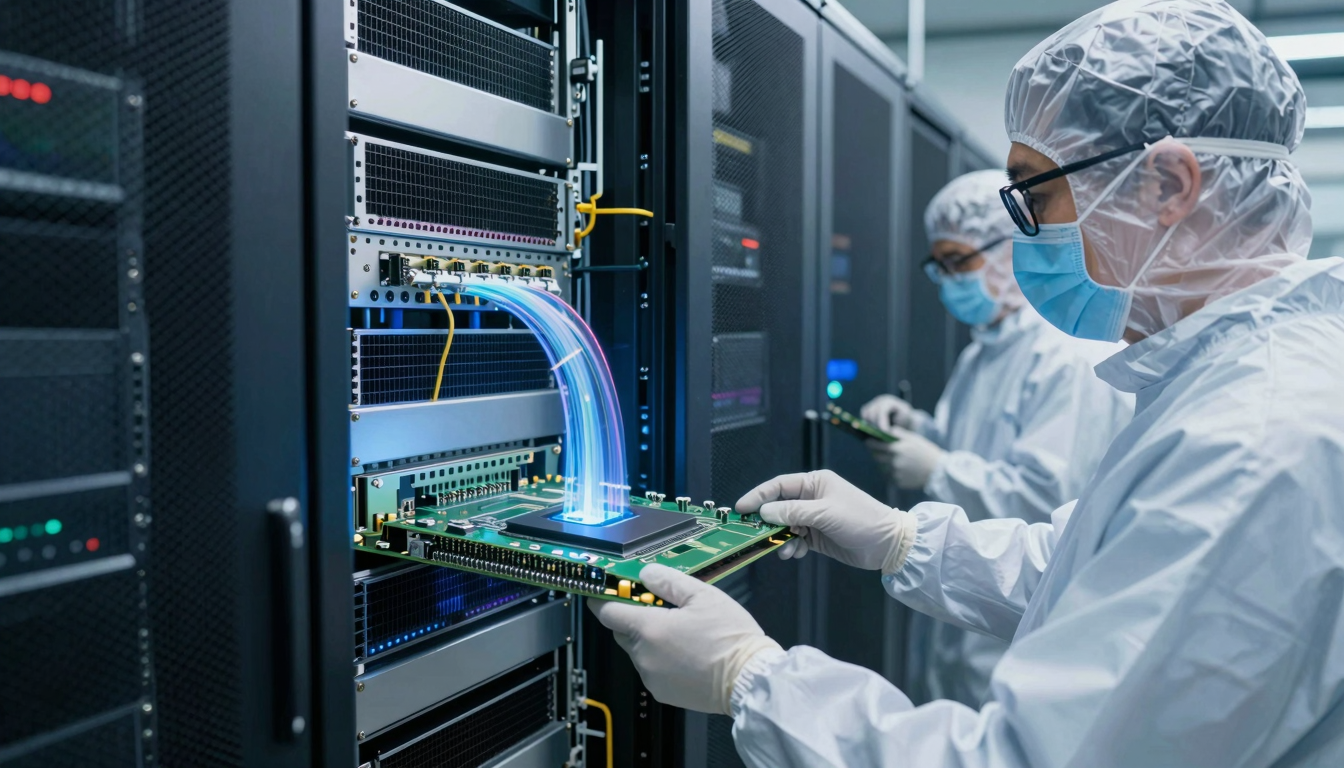
Is adaptive compute truly ready for the server room? Explore the current state of adaptive compute in servers, examining its maturity, integration challenges, and real-world performance gains. Get a balanced view on whether the technology is delivering on its promises or if it's still a work in progress.
Read Related Guide💡 Smileseon's Pro Tip
Pay close attention to the interconnect technology when evaluating adaptive compute solutions. A fast and efficient interconnect is essential for maximizing performance and avoiding bottlenecks.
Pay close attention to the interconnect technology when evaluating adaptive compute solutions. A fast and efficient interconnect is essential for maximizing performance and avoiding bottlenecks.
Software and Tooling: The Real Bottleneck to Adoption
Here's the uncomfortable truth: the hardware is often ahead of the software. Adaptive compute is incredibly powerful, but it's also incredibly difficult to program. Traditional software development tools are simply not designed to handle reconfigurable hardware. This is where the real bottleneck lies. You need specialized compilers, debuggers, and profiling tools to effectively leverage the capabilities of adaptive compute platforms. And those tools are often immature, buggy, and difficult to use.
I spent three months last year trying to optimize a machine learning algorithm for an FPGA-based adaptive compute platform. It was a nightmare. The vendor's SDK was riddled with bugs, the documentation was incomplete, and the support team was unresponsive. I eventually managed to get it working, but it took far longer than it should have. The biggest challenge was mapping the high-level algorithm onto the low-level hardware architecture. It requires a deep understanding of both software and hardware, a skill set that's rare to find.
| Tool/Framework | Vendor/Organization | Description | Pros | Cons |
|---|---|---|---|---|
| Vitis | AMD (Xilinx) | Unified software platform for FPGA development | Comprehensive toolchain, supports C/C++, Python | Steep learning curve, complex configuration |
| oneAPI | Intel | Cross-architecture programming model | Open standard, supports CPUs, GPUs, FPGAs | Still evolving, limited hardware support |
| CUDA | NVIDIA | Parallel computing platform and programming model | Mature ecosystem, extensive libraries | Proprietary, limited to NVIDIA GPUs |
| OpenCL | Khronos Group | Open standard for parallel programming | Cross-platform, supports various hardware | Complex, less performant than vendor-specific tools |
The key to unlocking the potential of adaptive compute is to simplify the software development process. We need higher-level abstractions that allow developers to focus on the algorithm, not the hardware details. Domain-specific languages (DSLs) and automated code generation tools are promising approaches, but they're still in their early stages. Until the software catches up, adaptive compute will remain a niche technology for highly specialized applications.
🚨 Critical Warning
The software and tooling ecosystem for adaptive compute is still immature. Expect a steep learning curve, buggy tools, and limited support. Factor this into your development timeline and budget.
The software and tooling ecosystem for adaptive compute is still immature. Expect a steep learning curve, buggy tools, and limited support. Factor this into your development timeline and budget.
Use Cases: Where Adaptive Compute Shines (and Where It Doesn't)
So, where does adaptive compute actually make a difference? It's not a universal solution for every workload. It excels in applications that require high throughput, low latency, and parallel processing. Think of financial trading, where every microsecond counts. Or AI inference, where models need to be deployed at scale with minimal latency. Or video transcoding, where massive amounts of data need to be processed in real-time.
On the other hand, adaptive compute is often overkill for general-purpose computing tasks. Running a web server or a database on an FPGA-based platform is usually a waste of resources. The overhead of reconfiguring the hardware outweighs the benefits in these scenarios. It's crucial to carefully analyze your workload and determine whether the potential performance gains justify the added complexity and cost of adaptive compute.
| Use Case | Description | Benefits of Adaptive Compute | Challenges |
|---|---|---|---|
| Financial Trading | High-frequency trading algorithms | Ultra-low latency, deterministic performance | Complex development, high cost |
| AI Inference | Deploying AI models at scale | High throughput, low power consumption | Software support, model optimization |
| Video Transcoding | Real-time video processing | Parallel processing, efficient encoding | Memory bandwidth, algorithm complexity |
| Network Processing | Packet filtering, intrusion detection | High throughput, low latency | Hardware design, protocol complexity |
| Genomics | DNA sequencing, bioinformatics | Accelerated algorithm execution | Data intensive, specialized knowledge |
I once saw a company try to use adaptive compute for a simple data analysis task. It was a disaster. They spent months trying to optimize the code for the FPGA, only to find that a standard CPU could do the job faster and more efficiently. The lesson: don't try to force adaptive compute where it doesn't belong. Focus on the applications where its unique capabilities can truly shine.

Wondering about the real advantages of adaptive compute over traditional methods? This article provides a detailed comparison between adaptive compute solutions and traditional computing architectures. Discover specific scenarios where adaptive compute truly excels and understand the trade-offs involved in adopting this cutting-edge technology.
Read Related GuideThe Future of Compute: A Realistic Outlook for 2026 and Beyond
Looking ahead to 2026, I expect adaptive compute to become more mainstream, but it won't completely replace traditional CPUs and GPUs. It will carve out a significant niche in specific industries and applications where its performance benefits are undeniable. We'll see more widespread adoption of FPGA-integrated processors, and the software ecosystem will mature, making it easier for developers to leverage these platforms.
The biggest challenge will be bridging the gap between hardware and software. We need better tools, higher-level abstractions, and more skilled developers who understand both domains. The companies that can solve this problem will be the winners in the adaptive compute race. I'm also keeping an eye on emerging technologies like neuromorphic computing and quantum computing, which could eventually disrupt the entire compute landscape.
| Trend | Description | Impact on Adaptive Compute |
|---|---|---|
| FPGA Integration | CPUs and GPUs with integrated FPGAs | Increased performance, lower latency |
| Software-Defined Hardware | Hardware reconfigured by software | Greater flexibility, workload optimization |
| Domain-Specific Architectures | Processors designed for specific applications | Maximum efficiency, targeted performance |
| Advanced Interconnects | High-speed data transfer between components | Reduced bottlenecks, improved performance |
Ultimately, the future of compute is about specialization and heterogeneity. We'll see a diverse range of processors, each optimized for specific workloads. Adaptive compute will play a crucial role in this landscape, providing the flexibility and performance needed to tackle the most demanding computing challenges.
Can adaptive compute effectively address the growing demands of AI inference? This article explores the potential of adaptive compute to accelerate AI inference tasks, comparing it with traditional GPU-based solutions. Learn about the specific benefits, limitations, and future prospects of using adaptive compute in AI applications.
Read Related Guide
Frequently Asked Questions (FAQ)
Q1. What exactly is adaptive compute?
A1. Adaptive compute refers to hardware that can dynamically reconfigure itself to optimize performance for specific workloads. It often involves using FPGAs or custom ASICs.
Q2. How does adaptive compute differ from traditional CPUs and GPUs?
A2. Traditional CPUs and GPUs have fixed architectures, while adaptive compute can change its architecture on the fly to better suit the task at hand.
Q3. What are the key benefits of adaptive compute?
A3. The main benefits include higher throughput, lower latency, and improved power efficiency for specific workloads.
Q4. What are the challenges associated with adaptive compute?
A4. The challenges include complex software development, immature tooling, and the need for specialized expertise.
Q5. Which companies are leading the adaptive compute revolution?
A5. Key players include Intel, AMD (Xilinx), NVIDIA, Graphcore, and Cerebras Systems.
Q6. What is the role of FPGAs in adaptive compute?
A6. FPGAs (Field-Programmable Gate Arrays) are a key component of adaptive compute, allowing developers to create custom logic accelerators.
Q7. What kind of applications benefit most from adaptive compute?
A7. Applications like financial trading, AI inference, and video transcoding see significant benefits from adaptive compute.
Q8. Is adaptive compute suitable for general-purpose computing?
A8. Adaptive compute is generally not suitable for general-purpose computing tasks like running web servers or databases.
Q9. How important is the interconnect in adaptive compute systems?
A9. The interconnect is crucial. A fast and efficient interconnect is essential for maximizing performance and avoiding bottlenecks.
Q10. What are some of the key software tools for adaptive compute development?
A10. Some key tools include Vitis (AMD/Xilinx), oneAPI (Intel), CUDA (NVIDIA), and OpenCL.
Q11. What is CXL (Compute Express Link), and why is it important?
A11. CXL is a high-speed interconnect technology that promises to improve interconnect speeds and memory coherence in adaptive compute systems.
Q12. What are domain-specific languages (DSLs), and how do they relate to adaptive compute?
A12. DSLs are programming languages designed for specific application domains, and they can simplify software development for adaptive compute platforms.
Q13. How can I get started with adaptive compute development?
A13. Start by learning about FPGAs, experimenting with vendor SDKs, and focusing on specific applications where adaptive compute can make a difference.
Q14. What are the security implications of using adaptive compute?
A14. Adaptive compute can introduce new security vulnerabilities, such as hardware-level attacks. It's important to implement appropriate security measures.
Q15. How does adaptive compute affect power consumption?
A15. Adaptive compute can improve power efficiency for specific workloads, but it can also increase power consumption if not properly optimized.
Q16. Will adaptive compute replace traditional CPUs and GPUs in the future?
A16. No, adaptive compute will likely coexist with CPUs and GPUs, carving out a niche in specific applications.
Q17. What skills are needed to work with adaptive compute technologies?
A17. Skills in hardware design, software development, and parallel programming are essential.
Q18. How does the time-to-market compare between adaptive compute and traditional CPU/GPU solutions?
A18. Adaptive compute can sometimes have longer time-to-market due to the complexity of hardware and software co-design.
Q19. What are some examples of startups in the adaptive compute space?
A19. While specific startups vary, look for companies focusing on custom ASICs or reconfigurable processors for niche markets.
Q20. How does adaptive compute improve AI inference performance?
A20. Adaptive compute can accelerate AI inference by allowing custom hardware implementations of specific neural network layers.
Q21. What is neuromorphic computing, and how does it relate to adaptive compute?
A21. Neuromorphic computing is a brain-inspired approach that could eventually disrupt the compute landscape, but it's still in its early stages.
Q22. How does adaptive compute handle data-intensive applications like genomics?
A22. Adaptive compute can accelerate algorithms used in DNA sequencing and bioinformatics by utilizing parallel processing.
Q23. How will oneAPI from Intel impact the adoption of adaptive compute?
A23. OneAPI aims to provide a cross-architecture programming model, potentially simplifying development across different hardware types.
Q24. What is the role of the cloud in adaptive compute?
A24. Cloud providers are starting to offer access to adaptive compute resources, enabling broader experimentation and deployment.
Q25. How does adaptive compute compare to GPUs for deep learning tasks?
A25. While GPUs are dominant, adaptive compute offers customization for specific AI models potentially improving efficiency.
Q26. How does OpenCL contribute to the adaptive compute landscape?
🔗 Recommended Reading
- 📌 Beyond the Hype: Hands-on with the First Wave of Adaptive Compute Hardware
- 📌 Adaptive Compute in Servers: Is It Ready for Enterprise in 2026?
- 📌 Adaptive Compute vs. Traditional CPUs/GPUs: A Hardware Reviewer's Deep Dive
- 📌 Can Adaptive Compute Solve the AI Inference Bottleneck? A 2026 Performance Analysis