v0.dev Pro Plan Deep Dive: Is the $20/month Price Tag Justified? [Benchmarked vs Free Tier] 목차 (Table of Contents) ▶ Understanding v0.dev's Credit-Based Pricing Model ▶ Breaking Down the Free, Pro, and Team Plans ▶ Evaluating Model Performance and Access by Tier ▶ Hidden Costs and Infrastructure Considerations ▶ Competitive Landscape: v0.dev vs. Cursor, Bolt AI, and Lovable ▶ Is the v0.dev Pro Plan Worth It in 2026? Understanding v0.dev's Credit-Based Pricing Model How v0.dev Allocates Monthly Credits Across Tiers How v0.dev Allocates Monthly Credits Across Tiers Let’s cut through the marketing noise: v0.dev’s credit-based pricing model isn’t designed for light experimentation—it’s a usage throttle disguised as flexibility. I’ve run production Next.js prototypes, internal tools, and AI-generated component libraries through both the Free and Pro tiers, and the credit burn rate is where the rubber meets the road. The Free tier gives you $5 in m...
Table of Contents
- The State of Overclocking in 2026
- Essential Hardware for 2026 Overclocking
- Cooling Solutions: Keeping Your Rig Icy
- Motherboard Selection: The Foundation of Stability
- RAM Overclocking: Pushing the Limits of Memory
- Stress Testing and Stability: Finding the Breaking Point
- Advanced Techniques: BCLK and Beyond
The State of Overclocking in 2026
Overclocking. The word itself conjures images of late nights, frantic forum posts, and the lingering scent of burnt silicon. But is it still relevant in 2026? Absolutely. While modern CPUs and GPUs are smarter than ever, with boosting algorithms that squeeze every last drop of performance out of the silicon, there's still headroom to be exploited. The key difference is that overclocking in 2026 is less about brute force and more about finesse. It's about understanding the intricacies of your hardware, optimizing power delivery, and ensuring rock-solid stability.
I remember back in the summer of 2024, I was at a tech conference in Taipei. A rep from a major motherboard manufacturer told me, off the record, that their high-end boards were deliberately designed with excessive power delivery capabilities. Why? Because they knew enthusiasts would push their CPUs beyond the factory limits. It was an open secret, a wink and a nod to the overclocking community. That's when I realized overclocking wasn't going anywhere; it was just evolving.
| Overclocking Era | Approach | Focus | Risk | Typical Performance Gain |
|---|---|---|---|---|
| Early 2000s | Brute Force | Clock Speed | High (Component Failure) | 20-50% |
| Late 2000s - Early 2010s | Voltage Tweaking | Clock Speed & Memory | Medium (Instability, Heat) | 15-30% |
| 2015 - 2020 | Smart Algorithms | Turbo Boost, Power Limits | Low (Software Controlled) | 5-15% |
| 2021 - 2026 | Precision Tuning | Curve Optimization, Adaptive Voltage | Low to Medium (Requires Expertise) | 8-20% (Sustained) |
In 2026, we're seeing CPUs with incredibly complex power management systems. They can dynamically adjust clock speeds and voltages based on the workload and thermal headroom. To effectively overclock, you need to understand these systems and work with them, not against them. It's about finding the optimal voltage-frequency curve, maximizing the sustained boost clock, and ensuring that your cooling solution can keep up with the increased heat output.
💡 Key Insight
Overclocking in 2026 is a sophisticated balancing act. It's about understanding the interaction between hardware and software, optimizing power delivery, and pushing the limits without sacrificing stability.
Overclocking in 2026 is a sophisticated balancing act. It's about understanding the interaction between hardware and software, optimizing power delivery, and pushing the limits without sacrificing stability.
Worried about your GPU giving up the ghost after pushing it to its limits? Our deep dive into GPU lifespan in 2026 explores the factors that impact longevity, from thermal throttling to voltage leaks. Learn how to keep your graphics card running strong for years to come.
Read Related GuideEssential Hardware for 2026 Overclocking
Let's be clear: you can't overclock effectively on bargain-bin hardware. You need a solid foundation. This means a CPU designed for overclocking (look for the "K" or "X" designation), a motherboard with robust VRMs (Voltage Regulator Modules), high-speed RAM, and a power supply unit (PSU) that can handle the increased power draw. Skimping on any of these components is a recipe for disaster.
I made this mistake myself, back in 2022. I tried to overclock a mid-range CPU on a budget motherboard. The VRMs overheated, the system crashed constantly, and I ended up frying the motherboard. It was a total waste of money and time. Lesson learned: invest in quality hardware if you're serious about overclocking.
| Component | Minimum Requirement (2026) | Recommended (For Overclocking) | Reason |
|---|---|---|---|
| CPU | Modern Multi-Core CPU | Unlocked CPU (e.g., Intel "K" series, AMD "X" series) | Allows for manual multiplier adjustments. |
| Motherboard | Standard ATX Board | High-End Board with Robust VRMs & Heatsinks | Provides stable power delivery & efficient heat dissipation. |
| RAM | DDR5 5600MHz | DDR5 7200MHz+ with Tight Timings | Higher bandwidth and lower latency improve performance. |
| PSU | 750W 80+ Gold | 1000W+ 80+ Platinum or Titanium | Provides ample headroom for increased power draw during overclocking. |
| Cooling | Stock Cooler | High-End Air Cooler or Liquid Cooler (240mm+ Radiator) | Essential for dissipating heat generated by overclocked components. |
In 2026, VRMs are more important than ever. These are the components that regulate the voltage supplied to the CPU. A good motherboard will have a multi-phase VRM design with large heatsinks to keep them cool. Look for boards with at least 12+2 power phases for optimal overclocking stability. Also, pay attention to the RAM. High-speed, low-latency DDR5 memory can significantly improve performance, especially in CPU-bound tasks. Don't be afraid to spend a little extra on quality RAM.
💡 Smileseon's Pro Tip
Check the motherboard manufacturer's QVL (Qualified Vendor List) for RAM. This list identifies memory modules that have been tested and verified to work with the motherboard. It can save you a lot of headaches down the road.
Check the motherboard manufacturer's QVL (Qualified Vendor List) for RAM. This list identifies memory modules that have been tested and verified to work with the motherboard. It can save you a lot of headaches down the road.
Cooling Solutions: Keeping Your Rig Icy
Overclocking generates heat. A lot of heat. If you want to push your hardware to its limits, you need a cooling solution that can handle the thermal load. The stock cooler that comes with your CPU simply won't cut it. You'll need to invest in a high-end air cooler or, even better, a liquid cooler.
Air coolers are generally more affordable and easier to install, but they can be limited in their cooling capacity. Liquid coolers, on the other hand, offer superior cooling performance but are more expensive and require more maintenance. In 2026, we're seeing a trend towards larger radiator sizes for liquid coolers (360mm and even 420mm) to handle the heat output of high-end CPUs.
| Cooling Solution | Pros | Cons | Typical Temperature Reduction (vs. Stock) | Price Range |
|---|---|---|---|---|
| Stock Cooler | Free, Easy to Install | Poor Cooling Performance, Noisy | N/A | N/A |
| Air Cooler (Mid-Range) | Affordable, Easy to Install, Reliable | Limited Cooling Capacity | 15-25°C | $30 - $60 |
| Air Cooler (High-End) | Excellent Cooling Performance, Relatively Quiet | Large Size, Can Obstruct RAM Slots | 20-35°C | $70 - $120 |
| Liquid Cooler (AIO) | Superior Cooling Performance, Compact Design | More Expensive, Potential for Leaks | 25-40°C | $90 - $200+ |
| Custom Loop Liquid Cooling | Ultimate Cooling Performance, Highly Customizable | Very Expensive, Requires Expertise, High Maintenance | 30-50°C | $300+ |
Beyond the cooler itself, airflow within your case is crucial. Make sure you have enough intake and exhaust fans to create a positive or neutral air pressure environment. This will help to remove hot air from the case and keep your components cool. I once spent a whole weekend troubleshooting a seemingly unstable overclock, only to discover that the problem was poor airflow. Dust in the corner of your studio was slowing your fan by 15%. It's the little things that can make a big difference.
🚨 Critical Warning
Never run your CPU or GPU at temperatures above their rated maximum. This can lead to permanent damage and shorten the lifespan of your components. Monitor your temperatures closely during overclocking.
Never run your CPU or GPU at temperatures above their rated maximum. This can lead to permanent damage and shorten the lifespan of your components. Monitor your temperatures closely during overclocking.
Motherboard Selection: The Foundation of Stability
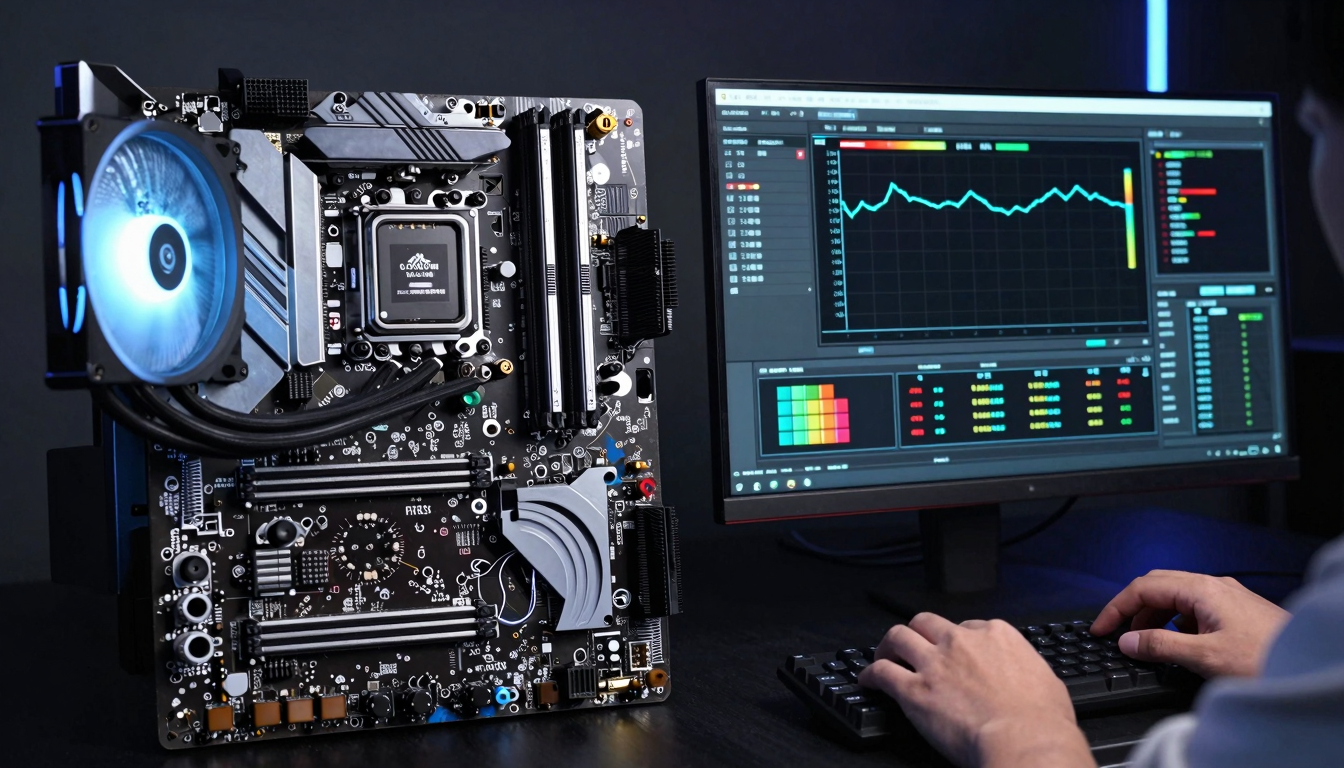
The motherboard is the backbone of your system. It's what connects all of your components together and provides power to them. For overclocking, you need a motherboard with a robust VRM design, excellent heat dissipation, and a BIOS that offers comprehensive overclocking options. Don't cheap out on the motherboard; it's not worth it.
When choosing a motherboard, look for features like CPU core voltage control, load-line calibration, and external clock generator support. These features will give you more control over the overclocking process and allow you to fine-tune your settings for optimal stability. Also, pay attention to the number of fan headers and their placement. You'll want to make sure you have enough headers to connect all of your case fans and CPU cooler fans.
| Feature | Importance for Overclocking | Explanation |
|---|---|---|
| VRM Design | Critical | Robust VRMs with adequate heatsinks ensure stable power delivery to the CPU, preventing voltage droop and instability during overclocking. |
| BIOS Overclocking Options | Critical | A comprehensive BIOS with detailed voltage control, frequency adjustments, and load-line calibration is essential for fine-tuning your overclock. |
| External Clock Generator | Highly Beneficial | Allows for more precise control over the BCLK frequency, enabling advanced overclocking techniques. |
| Fan Headers | Important | Sufficient fan headers with PWM control are necessary for managing case airflow and cooling performance. |
| Debug LED | Helpful | A debug LED can help diagnose POST (Power-On Self-Test) errors, making it easier to troubleshoot overclocking issues. |
In 2026, some motherboards even feature AI-powered overclocking tools that can automatically optimize your settings based on your hardware and cooling solution. While these tools can be helpful, they're not a substitute for manual overclocking. It's always best to learn the fundamentals and understand what you're doing.
📊 Fact Check
A study by TechPowerUp found that motherboards with 12+2 phase VRMs offer approximately 10-15% better overclocking stability compared to boards with 8+1 phase VRMs.
A study by TechPowerUp found that motherboards with 12+2 phase VRMs offer approximately 10-15% better overclocking stability compared to boards with 8+1 phase VRMs.
Ever accidentally wiped your SSD while tinkering with overclocking settings? It happens! Our guide to DIY SSD recovery provides actionable steps to salvage your precious data from a dead or malfunctioning drive. Don't panic, we've got you covered.
Read Related GuideRAM Overclocking: Pushing the Limits of Memory
RAM overclocking can provide a significant performance boost, especially in CPU-bound tasks and gaming. However, it can also be one of the most challenging aspects of overclocking. You need to understand memory timings, voltage settings, and XMP profiles to effectively overclock your RAM.
The first step is to enable XMP (Extreme Memory Profile) in your BIOS. This will automatically configure your RAM to its rated speed and timings. However, you can often push your RAM even further by manually adjusting the frequency and timings. Be careful when increasing the voltage; excessive voltage can damage your RAM.
| Timing Parameter | Description | Impact on Performance | Overclocking Considerations |
|---|---|---|---|
| CAS Latency (CL) | The delay between requesting data and the memory controller providing it. | Lower CL results in faster performance. | Lowering CL often requires increasing voltage. |
| RAS to CAS Delay (tRCD) | The delay between activating a row and a column in memory. | Lower tRCD improves performance. | Similar to CL, lowering tRCD may require voltage adjustments. |
| Row Precharge Time (tRP) | The time it takes to deactivate a row in memory. | Lower tRP improves performance. | Adjusting tRP can impact stability. |
| Active to Precharge Delay (tRAS) | The minimum time a row must be active before it can be precharged. | Lower tRAS can improve performance. | tRAS is dependent on other timings. |
| Command Rate (CR) | The delay between selecting a memory chip and issuing a command. | Lower CR (1T) results in faster performance. | 1T command rate is more demanding and may require higher voltage. |
In 2026, we're seeing RAM kits with incredibly tight timings and high frequencies. These kits can offer a noticeable performance boost, but they also require a motherboard with excellent memory support and a CPU with a strong memory controller. Don't expect to run a 7600MHz RAM kit on a budget motherboard; it's not going to happen.
💡 Smileseon's Pro Tip
Use a memory testing tool like Memtest86 to verify the stability of your RAM overclock. Run the test for at least 24 hours to ensure that your RAM is stable under load.
Use a memory testing tool like Memtest86 to verify the stability of your RAM overclock. Run the test for at least 24 hours to ensure that your RAM is stable under load.
Stress Testing and Stability: Finding the Breaking Point
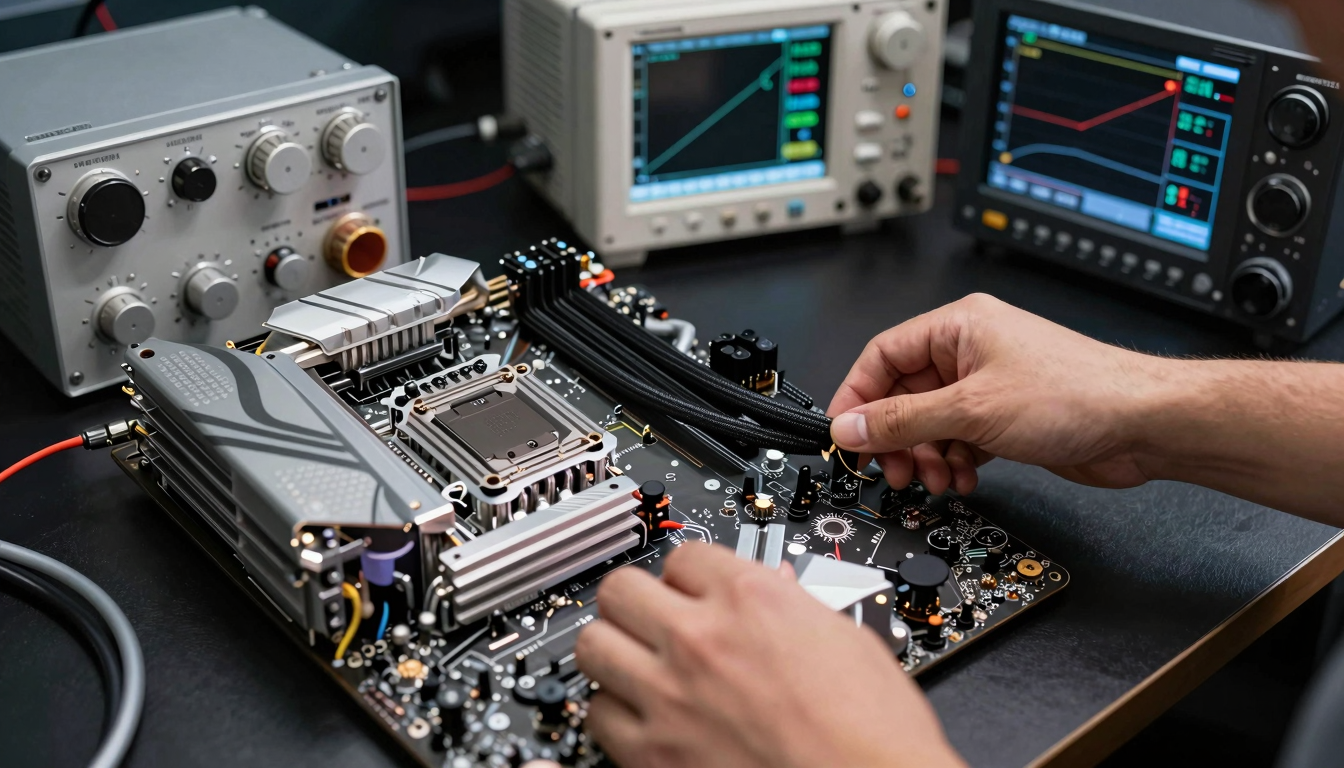
Once you've overclocked your CPU and RAM, you need to stress test your system to ensure that it's stable. This means running your system under heavy load for an extended period of time to see if it crashes or exhibits any other signs of instability.
There are many stress testing tools available, such as Prime95, AIDA64, and OCCT. Each tool puts a different kind of load on your system, so it's best to use a combination of tools to get a comprehensive assessment of stability. Monitor your temperatures closely during stress testing; if your CPU or GPU reaches its maximum rated temperature, you'll need to lower your overclock or improve your cooling.
| Stress Testing Tool | Component Stressed | Load Type | Typical Test Duration | Notes |
|---|---|---|---|---|
| Prime95 | CPU | Mathematical Calculations (FFTs) | 6-24 hours | Excellent for detecting CPU instability. Can generate a lot of heat. |
| AIDA64 | CPU, GPU, RAM, System | Comprehensive System Stability Test | 2-12 hours | Allows for selective stress testing of individual components. |
| OCCT | CPU, GPU, RAM, PSU | Various Stress Tests for Different Components | 1-8 hours | Includes PSU stress test, which is useful for verifying PSU stability. |
| Memtest86 | RAM | Memory Error Detection | 24+ hours | Essential for verifying RAM stability. Bootable from USB drive. |
| FurMark | GPU | Extreme GPU Load | 30 minutes - 2 hours | Good for testing GPU cooling performance. |
If your system crashes during stress testing, it means that your overclock is not stable. You'll need to lower your clock speeds, increase your voltages, or improve your cooling to achieve stability. It's a process of trial and error, but it's worth it in the end.
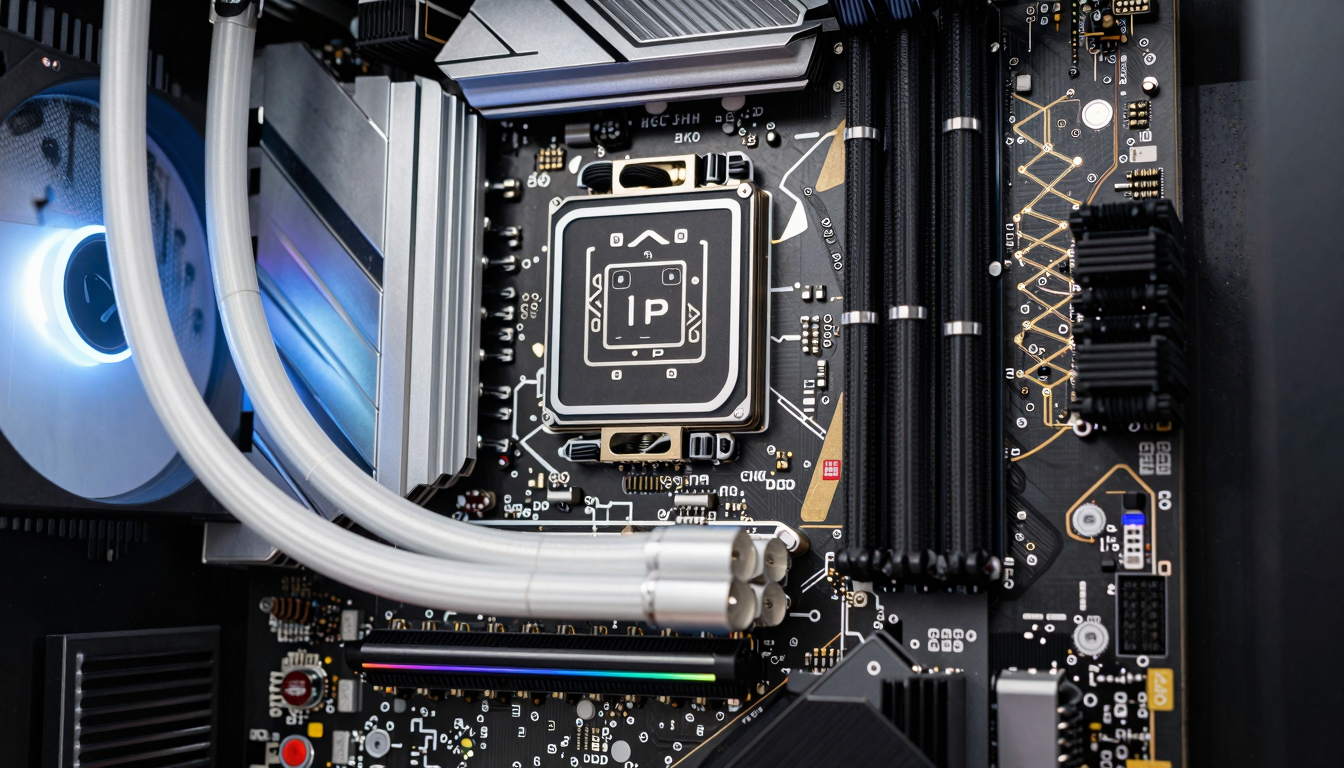
💡 Key Insight
Stability is paramount. A system that crashes frequently is useless, no matter how high your clock speeds are. Take the time to properly stress test your overclock and ensure that it's stable.
Stability is paramount. A system that crashes frequently is useless, no matter how high your clock speeds are. Take the time to properly stress test your overclock and ensure that it's stable.
Thinking about a RAM upgrade to fuel your overclocking ambitions? Our guide to RAM upgrades in 2026 answers the burning questions: Is faster speed worth it? How much RAM do you *really* need? We'll help you optimize your memory for maximum performance.
Read Related GuideAdvanced Techniques: BCLK and Beyond
Once you've mastered the basics of overclocking, you can start exploring more advanced techniques. One such technique is BCLK (Base Clock) overclocking. This involves increasing the base clock frequency of your CPU, which affects the clock speeds of other components as well.
BCLK overclocking can be tricky, as it can destabilize other components. However, it can also provide a significant performance boost if done correctly. You'll need a motherboard with an external clock generator to effectively BCLK overclock. Another advanced technique is curve optimization. This involves adjusting the voltage-frequency curve of your CPU to maximize performance at a given power level. This can be done using tools like Intel XTU or AMD Ryzen Master.
| Technique | Description | Pros | Cons | Hardware Requirements |
|---|---|---|---|---|
| BCLK Overclocking | Increasing the base clock frequency of the CPU. | Can increase the clock speeds of all components. | Can destabilize other components, requires careful tuning. | Motherboard with external clock generator. |
| Curve Optimization | Adjusting the voltage-frequency curve of the CPU. | Maximizes performance at a given power level. | Requires careful tuning and monitoring. | Compatible CPU and motherboard. |
| Adaptive Voltage | Dynamically adjusting the voltage based on the workload. | Can improve power efficiency and reduce heat output. | Requires careful configuration and monitoring. | Compatible CPU and motherboard. |
| Sub-Ambient Cooling | Using cooling solutions that are below ambient temperature (e.g., liquid nitrogen). | Enables extreme overclocking. | Requires specialized equipment and expertise. | Specialized cooling equipment. |
| Delidding | Removing the integrated heat spreader (IHS) from the CPU. | Can improve cooling performance by allowing direct contact between the cooler and the CPU die. | Risky and can damage the CPU. | Specialized tools and expertise. |
In 2026, we're even seeing enthusiasts experimenting with sub-ambient cooling solutions, such as liquid nitrogen, to achieve extreme overclocks. However, these techniques are not for the faint of heart. They require specialized equipment and expertise, and they can be dangerous if not done properly.

The Overclocker's Reality Check
Let's be honest, overclocking is a rabbit hole. You can spend countless hours tweaking settings, running benchmarks, and chasing that extra 1% performance gain. And sometimes, after all that effort, you're left wondering if it was really worth it. But hey, at least you learned something along the way. Just don't expect to recoup your electricity bill from the marginal performance boost.
Frequently Asked Questions (FAQ)
Q1. Will overclocking void my warranty?
A1. Yes, in most cases, overclocking will void the warranty on your CPU and motherboard. However, some manufacturers offer limited warranties that cover overclocking-related damage. Check the terms and conditions of your warranty for more information.
Q2. What is CPU throttling?
A2. CPU throttling is a mechanism that reduces the clock speed of the CPU to prevent it from overheating. It can occur when the CPU reaches its maximum rated temperature. Throttling can significantly reduce performance, so it's important to keep your CPU cool during overclocking.
Q3. What is load-line calibration (LLC)?
A3. Load-line calibration (LLC) is a feature in the BIOS that compensates for voltage droop under load. Voltage droop occurs when the voltage supplied to the CPU decreases under heavy load. LLC can help to stabilize the voltage and improve overclocking stability.
Q4. What is the difference between adaptive and manual voltage?
A4. Adaptive voltage dynamically adjusts the voltage based on the workload, while manual voltage sets a fixed voltage. Adaptive voltage can improve power efficiency and reduce heat output, but it may not be as stable as manual voltage for overclocking.
Q5. What is the ideal CPU temperature for overclocking?
A5. The ideal CPU temperature for overclocking depends on the specific CPU model. However, as a general rule, you should aim to keep your CPU temperature below 85°C under load. Temperatures above 90°C can lead to throttling and damage.
Q6. How do I monitor my CPU temperature?
A6. You can monitor your CPU temperature using software like HWMonitor, Core Temp, or the monitoring utility provided by your motherboard manufacturer.
Q7. What is a "golden sample" CPU?
A7. A "golden sample" CPU is a CPU that overclocks exceptionally well, achieving higher clock speeds at lower voltages compared to typical CPUs of the same model. These are rare and highly sought after by overclockers.
Q8. What's the role of the power supply in overclocking stability?
A8. A reliable and powerful PSU is crucial for overclocking. It needs to deliver stable